

Babyfood, cookies, arrowroot
Whole food · Baby Foods

Photo: Wikipedia
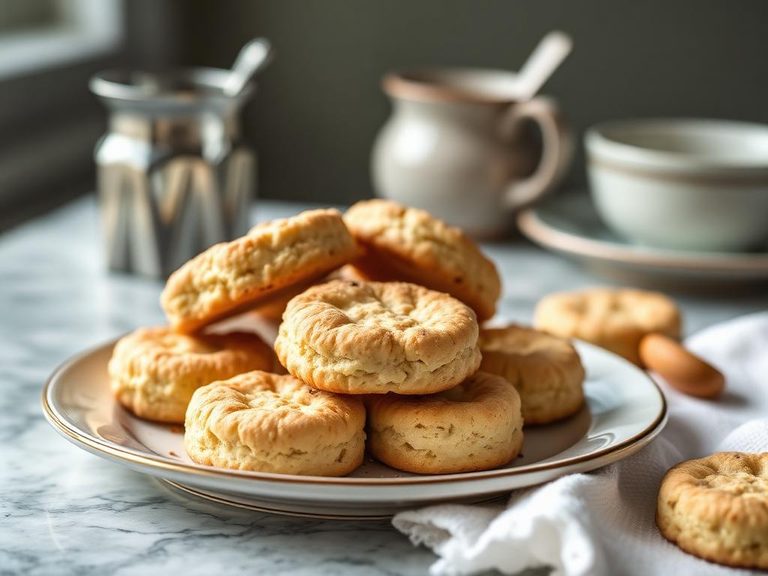
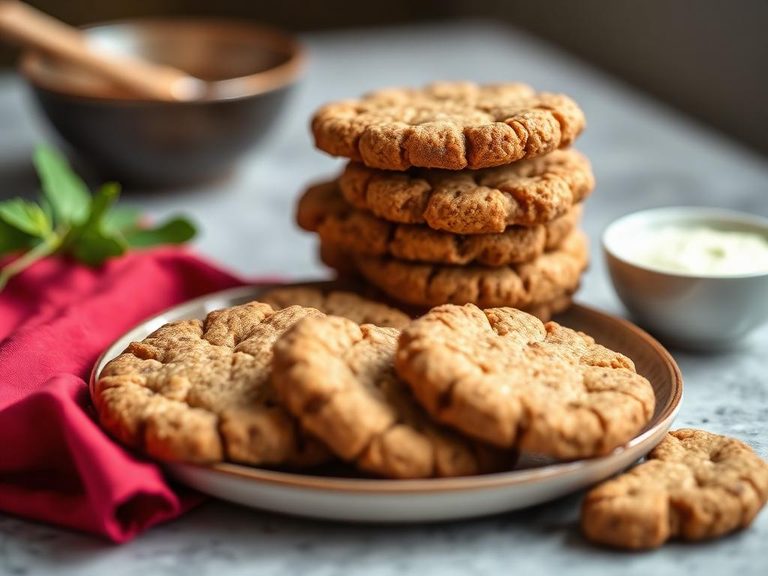
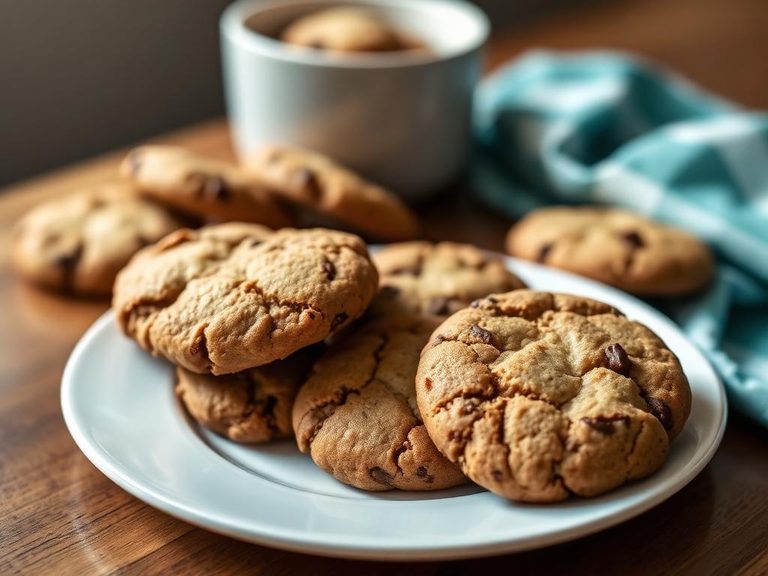
Babyfood arrowroot cookies are delicate, melt-in-your-mouth biscuits made from arrowroot starch, known for their exceptionally smooth, crumbly texture that dissolves easily on the tongue. They have a mild, slightly sweet, and neutral flavor, making them a gentle first solid food for infants. Nutritionally, they are a dense source of quick energy from carbohydrates, with minimal protein and fat.
Calorie split: 7% protein · 71% carbs · 21% fat
↓ Full nutrition💚 Why it's loved
Parents love these cookies for their simplicity and reliability as a gentle, first-finger food that babies can easily gum and digest. Their neutral taste also makes them a versatile base that can be lightly paired with fruit purees.
⚠️ Watch-outs & how to enjoy it better
The high carbohydrate and low fiber content can lead to rapid blood-sugar spikes, offering little sustained nutrition. They are also a processed food with added sugars and fats, which should be limited in a balanced diet. To counteract, serve only small portions alongside protein-rich foods like yogurt or mashed beans, and prioritize whole-food snacks as the child grows.
Key benefits
- Highly digestible due to arrowroot starch's fine texture.
- Provides quick energy from simple carbohydrates.
- Mild flavor is easily accepted by infants.
- Gluten-free, suitable for those with celiac disease or gluten sensitivity.
- Dissolves easily, reducing choking risk for early eaters.
🍽️ Popular dishes

🌍 Where it's eaten
💡 Did you know?
Arrowroot starch, the key ingredient, was historically used by indigenous Caribbean peoples to create a wound-dressing poultice, long before it became a staple in infant nutrition.
Full nutrition (USDA data · scales with serving)
| Water | 5.6 g |
| Energy | 424 kcal |
| Energy | 1772 kj |
| Protein | 7.6 g |
| Total lipid (fat) | 10.0 g |
| Ash | 1.4 g |
| Carbohydrate, by difference | 75.4 g |
| Fiber, total dietary | 0.20 g |
| Calcium, Ca | 32.0 mg |
| Iron, Fe | 3.0 mg |
| Magnesium, Mg | 22.0 mg |
| Phosphorus, P | 116 mg |
| Potassium, K | 156 mg |
| Sodium, Na | 319 mg |
| Zinc, Zn | 0.53 mg |
| Copper, Cu | 0.07 mg |
| Selenium, Se | 17.2 ug |
| Vitamin C, total ascorbic acid | 5.5 mg |
| Thiamin | 0.50 mg |
| Riboflavin | 0.43 mg |
| Niacin | 5.7 mg |
| Pantothenic acid | 0.53 mg |
| Vitamin B-6 | 0.04 mg |
| Folate, total | 35.0 ug |
| Folic acid | 25.0 ug |
| Folate, food | 10.0 ug |
| Folate, DFE | 53.0 ug |
| Vitamin B-12 | 0.07 ug |
| Vitamin A, RAE | 0.00 ug |
| Vitamin A, IU | 0.00 iu |
| Lycopene | 0.00 ug |
| Lutein + zeaxanthin | 0.00 ug |
| Vitamin E (alpha-tocopherol) | 3.9 mg |
| Vitamin E, added | 3.3 mg |
| Vitamin D (D2 + D3), International Units | 0.00 iu |
| Vitamin D (D2 + D3) | 0.00 ug |
| Vitamin K (phylloquinone) | 0.50 ug |
Fat & fatty acid profile (per 100g)
| Fatty acids, total saturated | 1.0 g |
| SFA 4:0 | 0.00 g |
| SFA 6:0 | 0.00 g |
| SFA 8:0 | 0.00 g |
| SFA 10:0 | 0.00 g |
| SFA 12:0 | 0.00 g |
| SFA 14:0 | 0.01 g |
| SFA 15:0 | 0.07 g |
| SFA 16:0 | 0.45 g |
| SFA 18:0 | 0.41 g |
| SFA 22:0 | 0.09 g |
| Fatty acids, total monounsaturated | 7.9 g |
| MUFA 16:1 | 0.01 g |
| MUFA 18:1 | 7.8 g |
| MUFA 20:1 | 0.09 g |
| MUFA 22:1 | 0.00 g |
| Fatty acids, total polyunsaturated | 0.59 g |
| PUFA 18:2 | 0.56 g |
| PUFA 18:3 | 0.03 g |
| PUFA 18:4 | 0.00 g |
| PUFA 20:4 | 0.00 g |
| PUFA 20:5 n-3 (EPA) | 0.00 g |
| PUFA 22:5 n-3 (DPA) | 0.00 g |
| PUFA 22:6 n-3 (DHA) | 0.00 g |
| Cholesterol | 0.00 mg |
Amino acid profile (per 100g)
Estimated from Babyfood, grape juice, no sugar, canned — USDA does not publish this profile for Babyfood.
| Threonine | 0.02 g |
| Isoleucine | 0.01 g |
| Leucine | 0.02 g |
| Lysine | 0.02 g |
| Methionine | 0.03 g |
| Cystine | 0.01 g |
| Phenylalanine | 0.02 g |
| Tyrosine | 0.02 g |
| Valine | 0.02 g |
| Arginine | 0.06 g |
| Histidine | 0.03 g |
| Alanine | 0.04 g |
| Aspartic acid | 0.10 g |
| Glutamic acid | 0.18 g |
| Glycine | 0.03 g |
| Proline | 0.03 g |
| Serine | 0.04 g |
FAQ
Are arrowroot cookies the same as arrowroot powder?
No. Arrowroot powder is the pure starch extracted from the arrowroot plant's rhizome. Arrowroot cookies are a prepared food product that uses this starch as a primary ingredient, along with other components like flour, sugar, and fat.
Why are they recommended for babies?
Their soft, crumbly texture that dissolves with saliva makes them a safe early finger food for babies learning to chew and swallow, minimizing choking hazards. The mild flavor is also non-threatening to new palates.
Can adults eat arrowroot cookies?
Yes, adults can eat them, but they are nutritionally formulated for infants. They are often enjoyed as a light, gluten-free snack or a nostalgic treat, though they offer limited nutritional value compared to whole-grain alternatives.
Nutrient density (calculated · NRF9.3)
Nutrient Rich Foods index: beneficial nutrients (protein, fiber, vitamins, minerals) minus saturated fat, added sugar & sodium, per 100 kcal.
NRF9.3 index — Fulgoni, Keast & Drewnowski, 2009. Computed from USDA nutrients.
Weight-loss friendliness (composite index)
Energy density 4.24 kcal/g · 7% calories from protein · 0.2 g fiber · 0.0 g sugar per 100 g.
Composite of energy density (Rolls et al., 1999), protein & fiber satiety, minus sugar. A calculated heuristic — ranks satiety-per-calorie, not a clinical measure.
Dietary load (calculated from USDA values)
Potential renal acid load. Positive = acid-forming, negative = alkaline-forming.
Sodium-to-potassium ratio: 2.04 (lower is better — aim for ≤ 1)
Sodium:potassium per WHO potassium guidance. Computed from USDA nutrients.