

Asparagus, green, raw
Whole food · Vegetables and Vegetable Products
Green asparagus is a slender, spear-shaped vegetable with a distinct, earthy flavor and a tender-crisp texture when cooked properly. It is exceptionally low in calories, providing only 28 kcal per 100g, and is a good source of dietary fiber and protein relative to its energy content. Its vibrant color and unique taste make it a prized ingredient in many cuisines.
Calorie split: 20% protein · 73% carbs · 7% fat
↓ Full nutrition💚 Why it's loved
People love asparagus for its distinctive, slightly nutty and grassy flavor that pairs beautifully with rich ingredients like butter, cheese, and lemon. Its versatility is celebrated, as it can be grilled, roasted, steamed, or eaten raw in salads, making it a staple of spring cuisine.
⚠️ Watch-outs & how to enjoy it better
Some individuals avoid asparagus due to its high purine content, which can be a concern for those with gout or certain kidney conditions. It also contains oxalates, which may contribute to kidney stone formation in susceptible people. To mitigate these, ensure adequate hydration and consider cooking methods like boiling and discarding the water to reduce oxalate levels.
Key benefits
- Low in calories and carbohydrates, supporting weight management.
- Good source of dietary fiber (1.88g per 100g) for digestive health.
- Provides a notable amount of protein (1.44g per 100g) for a vegetable.
- Rich in vitamins and minerals like Vitamin K, folate, and potassium.
- Contains antioxidants, including glutathione and flavonoids.
🍽️ Popular dishes
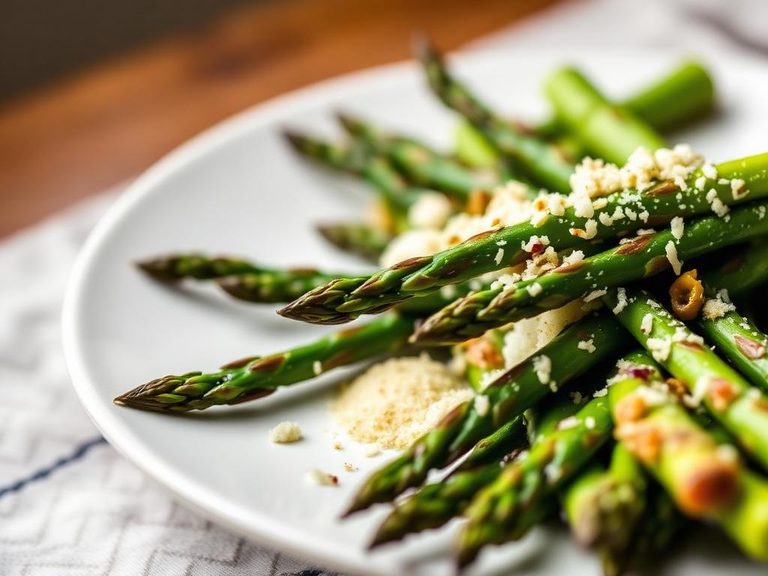
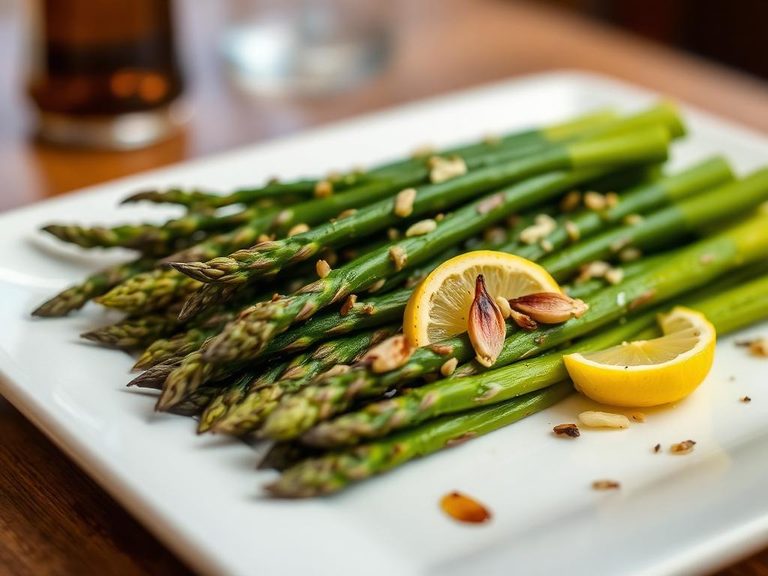
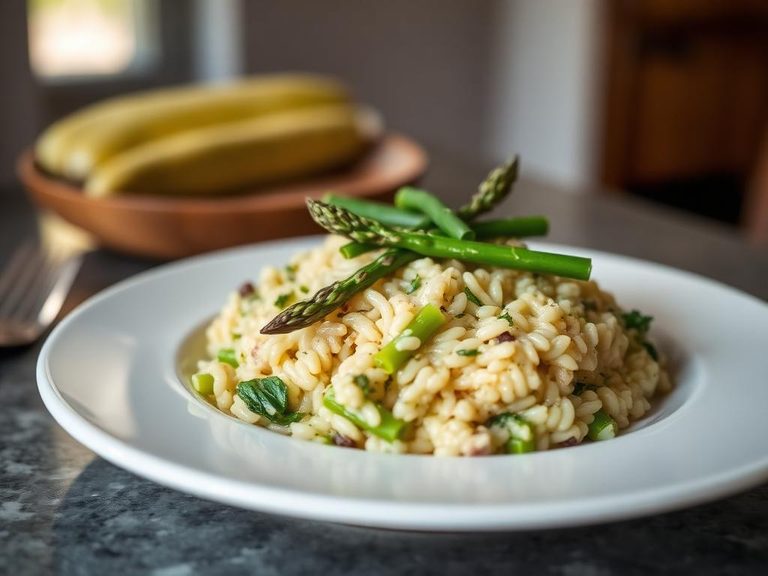
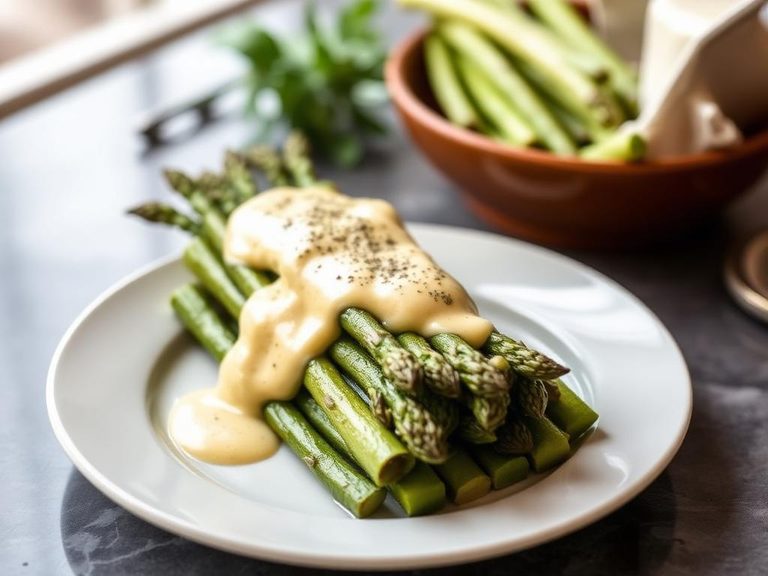
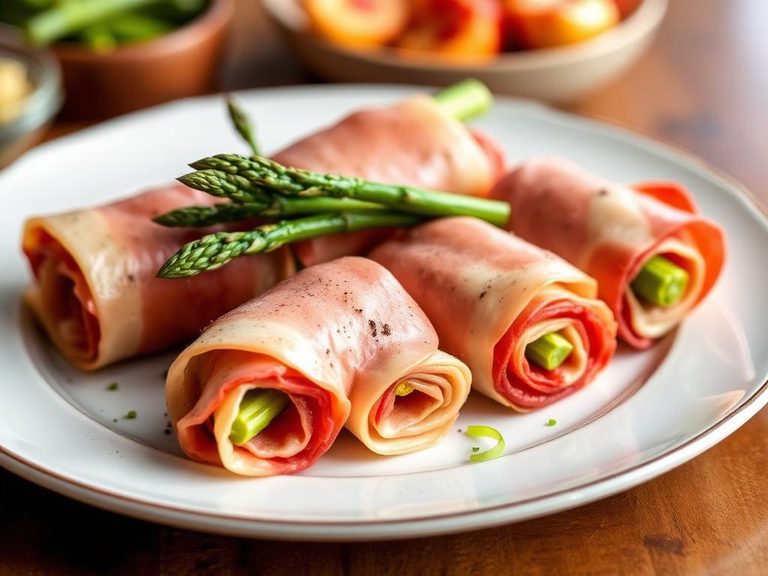
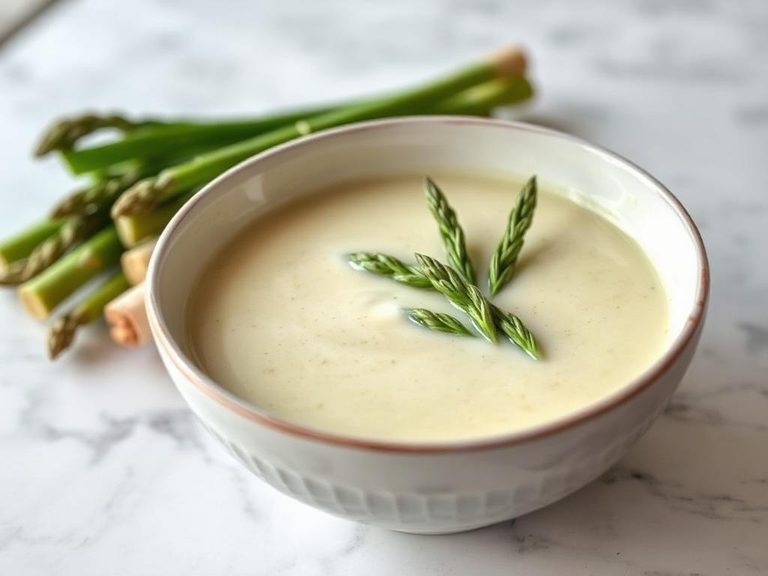
🌍 Where it's eaten
💡 Did you know?
Asparagus is a member of the lily family and is one of the few vegetables that can cause a distinct, sulfurous smell in urine due to the breakdown of asparagusic acid, though not everyone can detect this odor due to genetic variations.
Full nutrition (USDA data · scales with serving)
| Water | 92.6 g |
| Energy (Atwater General Factors) | 28.1 kcal |
| Energy (Atwater Specific Factors) | 23.5 kcal |
| Nitrogen | 0.23 g |
| Protein | 1.4 g |
| Total lipid (fat) | 0.22 g |
| Ash | 0.68 g |
| Carbohydrate, by difference | 5.1 g |
| Fiber, total dietary | 1.9 g |
| Calcium, Ca | 20.6 mg |
| Iron, Fe | 0.44 mg |
| Magnesium, Mg | 13.8 mg |
| Phosphorus, P | 53.9 mg |
| Potassium, K | 278 mg |
| Sodium, Na | 2.5 mg |
| Zinc, Zn | 0.60 mg |
| Copper, Cu | 0.13 mg |
| Manganese, Mn | 0.15 mg |
| Vitamin C, total ascorbic acid | 9.2 mg |
| Thiamin | 0.07 mg |
| Niacin | 1.1 mg |
| Vitamin B-6 | 0.11 mg |
| Folate, total | 183 ug |
Fat & fatty acid profile (per 100g)
Estimated from Asparagus, cooked, boiled, drained — USDA does not publish this profile for Asparagus.
| Fatty acids, total saturated | 0.05 g |
| SFA 4:0 | 0.00 g |
| SFA 6:0 | 0.00 g |
| SFA 8:0 | 0.00 g |
| SFA 10:0 | 0.00 g |
| SFA 12:0 | 0.00 g |
| SFA 14:0 | 0.00 g |
| SFA 15:0 | 0.00 g |
| SFA 16:0 | 0.05 g |
| SFA 17:0 | 0.00 g |
| SFA 18:0 | 0.00 g |
| SFA 20:0 | 0.00 g |
| SFA 22:0 | 0.00 g |
| SFA 24:0 | 0.00 g |
| Fatty acids, total monounsaturated | 0.00 g |
| MUFA 14:1 | 0.00 g |
| MUFA 15:1 | 0.00 g |
| MUFA 16:1 | 0.00 g |
| MUFA 17:1 | 0.00 g |
| MUFA 18:1 | 0.00 g |
| MUFA 20:1 | 0.00 g |
| MUFA 22:1 | 0.00 g |
| Fatty acids, total polyunsaturated | 0.10 g |
| PUFA 18:2 | 0.08 g |
| PUFA 18:3 | 0.03 g |
| PUFA 18:4 | 0.00 g |
| PUFA 20:2 n-6 c,c | 0.00 g |
| PUFA 20:3 | 0.00 g |
| PUFA 20:4 | 0.00 g |
| PUFA 20:5 n-3 (EPA) | 0.00 g |
| PUFA 22:5 n-3 (DPA) | 0.00 g |
| PUFA 22:6 n-3 (DHA) | 0.00 g |
| Fatty acids, total trans | 0.00 g |
| Cholesterol | 0.00 mg |
Amino acid profile (per 100g)
Estimated from Asparagus, cooked, boiled, drained — USDA does not publish this profile for Asparagus.
| Tryptophan | 0.03 g |
| Threonine | 0.09 g |
| Isoleucine | 0.08 g |
| Leucine | 0.14 g |
| Lysine | 0.11 g |
| Methionine | 0.03 g |
| Cystine | 0.03 g |
| Phenylalanine | 0.08 g |
| Tyrosine | 0.06 g |
| Valine | 0.13 g |
| Arginine | 0.10 g |
| Histidine | 0.05 g |
| Alanine | 0.13 g |
| Aspartic acid | 0.56 g |
| Glutamic acid | 0.26 g |
| Glycine | 0.10 g |
| Proline | 0.08 g |
| Serine | 0.12 g |
FAQ
Is raw asparagus safe to eat?
Yes, raw asparagus is safe and can be used in salads or shaved into dishes, though it has a firmer texture and more intense flavor than cooked asparagus.
How do I select the best asparagus?
Look for firm, straight stalks with tight, compact tips. The cut ends should be moist, not dried out or woody. Thinner spears are generally more tender.
What is the best way to store asparagus?
Trim the ends and stand the spears upright in a jar with an inch of water, like flowers. Cover loosely with a plastic bag and refrigerate for up to 4 days.
Nutrient density (calculated · NRF9.3)
Nutrient Rich Foods index: beneficial nutrients (protein, fiber, vitamins, minerals) minus saturated fat, added sugar & sodium, per 100 kcal.
NRF9.3 index — Fulgoni, Keast & Drewnowski, 2009. Computed from USDA nutrients.
Weight-loss friendliness (composite index)
Energy density 0.28 kcal/g · 20% calories from protein · 1.9 g fiber · 0.0 g sugar per 100 g.
Composite of energy density (Rolls et al., 1999), protein & fiber satiety, minus sugar. A calculated heuristic — ranks satiety-per-calorie, not a clinical measure.
Dietary load (calculated from USDA values)
Potential renal acid load. Positive = acid-forming, negative = alkaline-forming.
Sodium-to-potassium ratio: 0.01 (lower is better — aim for ≤ 1)
Sodium:potassium per WHO potassium guidance. Computed from USDA nutrients.