

Apple juice, canned or bottled, unsweetened, with added ascorbic acid, calcium, and potassium
Whole food · Fruits and Fruit Juices

Photo: Wikipedia
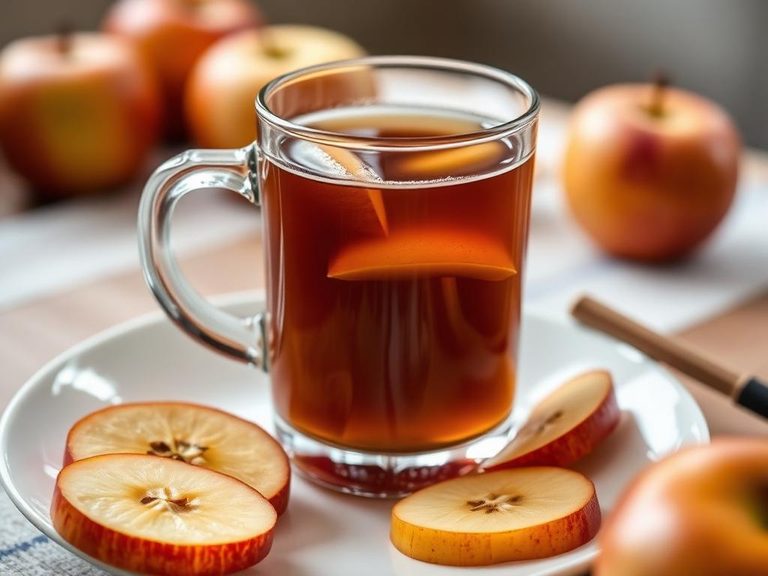
This is a clear, refreshing beverage made from apple concentrate, fortified with vitamin C, calcium, and potassium. Its taste is pure, crisp apple sweetness without the tartness of fresh juice, and it has a smooth, thin, non-pulpy texture. Nutritionally, it's a low-calorie source of quick energy from natural sugars, with added minerals that support bone and electrolyte balance.
Calorie split: 1% protein · 96% carbs · 3% fat
↓ Full nutrition💚 Why it's loved
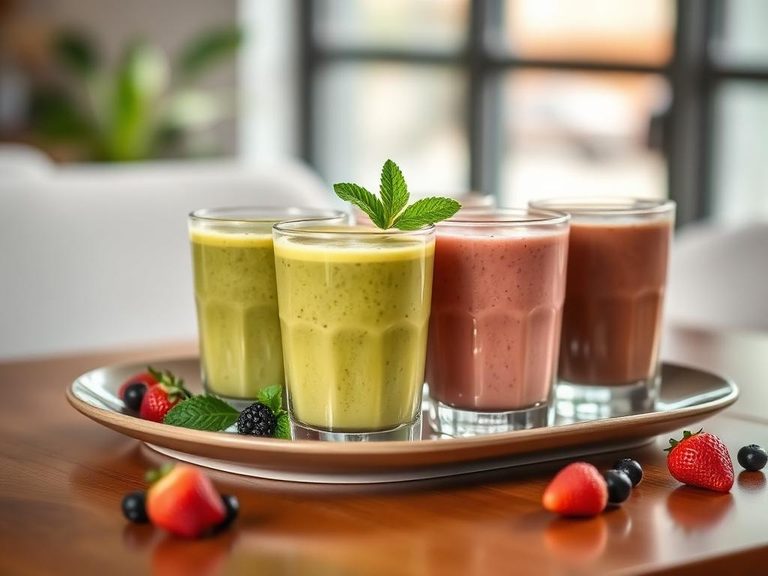
People love it for its consistently sweet, familiar apple flavor that's both comforting and thirst-quenching. It's a versatile staple, enjoyed chilled on its own, used as a base for cocktails and smoothies, or as a natural sweetener in baking.
⚠️ Watch-outs & how to enjoy it better
The primary downside is its high concentration of natural sugars (over 9g per 100g), which can cause rapid blood-sugar spikes, making it a concern for diabetics or those managing sugar intake. To counteract this, pair it with a source of protein or healthy fat (like nuts or cheese) to slow sugar absorption, and practice strict portion control. The added calcium, while beneficial, can be a consideration for individuals on certain mineral-restricted diets.
Key benefits
- Provides a quick source of natural energy from carbohydrates.
- Fortified with vitamin C (ascorbic acid) to support immune function.
- Added calcium contributes to bone health maintenance.
- Potassium content helps support normal muscle and nerve function.
- Low in fat and contains no sodium.
🍽️ Popular dishes
🌍 Where it's eaten
💡 Did you know?
The ascorbic acid (vitamin C) added to this juice isn't just for nutrition—it acts as a powerful antioxidant that prevents the juice from browning and losing its fresh flavor during storage.
Full nutrition (USDA data · scales with serving)
| Water | 87.9 g |
| Energy | 48.0 kcal |
| Energy | 201 kj |
| Protein | 0.12 g |
| Total lipid (fat) | 0.17 g |
| Ash | 0.31 g |
| Carbohydrate, by difference | 11.5 g |
| Fiber, total dietary | 0.30 g |
| Total Sugars | 9.5 g |
| Sucrose | 1.2 g |
| Glucose | 2.6 g |
| Fructose | 5.7 g |
| Lactose | 0.00 g |
| Maltose | 0.00 g |
| Galactose | 0.00 g |
| Calcium, Ca | 70.0 mg |
| Iron, Fe | 0.13 mg |
| Magnesium, Mg | 5.0 mg |
| Phosphorus, P | 9.0 mg |
| Potassium, K | 184 mg |
| Sodium, Na | 5.0 mg |
| Zinc, Zn | 0.04 mg |
| Copper, Cu | 0.01 mg |
| Manganese, Mn | 0.04 mg |
| Selenium, Se | 0.10 ug |
| Vitamin C, total ascorbic acid | 30.3 mg |
| Thiamin | 0.00 mg |
| Riboflavin | 0.01 mg |
| Niacin | 0.07 mg |
| Pantothenic acid | 0.05 mg |
| Vitamin B-6 | 0.02 mg |
| Folate, total | 0.00 ug |
| Folic acid | 0.00 ug |
| Folate, food | 0.00 ug |
| Folate, DFE | 0.00 ug |
| Choline, total | 1.8 mg |
| Betaine | 0.10 mg |
| Vitamin B-12 | 0.00 ug |
| Vitamin B-12, added | 0.00 ug |
| Vitamin A, RAE | 0.00 ug |
| Retinol | 0.00 ug |
| Carotene, beta | 0.00 ug |
| Carotene, alpha | 0.00 ug |
| Cryptoxanthin, beta | 0.00 ug |
| Vitamin A, IU | 1.0 iu |
| Lycopene | 0.00 ug |
| Lutein + zeaxanthin | 16.0 ug |
| Vitamin E (alpha-tocopherol) | 0.01 mg |
| Vitamin E, added | 0.00 mg |
| Vitamin D (D2 + D3), International Units | 0.00 iu |
| Vitamin D (D2 + D3) | 0.00 ug |
| Vitamin K (phylloquinone) | 0.00 ug |
| Alcohol, ethyl | 0.00 g |
| Caffeine | 0.00 mg |
| Theobromine | 0.00 mg |
Fat & fatty acid profile (per 100g)
| Fatty acids, total saturated | 0.03 g |
| SFA 4:0 | 0.00 g |
| SFA 6:0 | 0.00 g |
| SFA 8:0 | 0.00 g |
| SFA 10:0 | 0.00 g |
| SFA 12:0 | 0.00 g |
| SFA 14:0 | 0.00 g |
| SFA 16:0 | 0.02 g |
| SFA 18:0 | 0.00 g |
| Fatty acids, total monounsaturated | 0.01 g |
| MUFA 16:1 | 0.00 g |
| MUFA 18:1 | 0.01 g |
| MUFA 20:1 | 0.00 g |
| MUFA 22:1 | 0.00 g |
| Fatty acids, total polyunsaturated | 0.05 g |
| PUFA 18:2 | 0.04 g |
| PUFA 18:3 | 0.01 g |
| PUFA 18:4 | 0.00 g |
| PUFA 20:4 | 0.00 g |
| PUFA 20:5 n-3 (EPA) | 0.00 g |
| PUFA 22:5 n-3 (DPA) | 0.00 g |
| PUFA 22:6 n-3 (DHA) | 0.00 g |
| Fatty acids, total trans | 0.00 g |
| Cholesterol | 0.00 mg |
FAQ
Is this the same as fresh-pressed apple juice?
No. This product is typically made from reconstituted apple concentrate, which is water added back to a thick syrup. This process standardizes the flavor and extends shelf life but can result in a less complex taste profile compared to fresh-pressed or cold-pressed juices.
Why are calcium and potassium added?
They are added for fortification, boosting the nutritional profile beyond basic apple juice. Calcium supports bone health, while potassium is an essential electrolyte that helps regulate fluid balance and muscle contractions.
Is the sugar content a concern?
Yes, the sugar is naturally occurring from the apples, but it's in a concentrated, liquid form without the fiber of whole fruit. This can lead to quicker digestion and blood sugar impacts. It's best consumed in moderation, ideally with a meal, and not as a primary hydration source.
Nutrient density (calculated · NRF9.3)
Nutrient Rich Foods index: beneficial nutrients (protein, fiber, vitamins, minerals) minus saturated fat, added sugar & sodium, per 100 kcal.
NRF9.3 index — Fulgoni, Keast & Drewnowski, 2009. Computed from USDA nutrients.
Weight-loss friendliness (composite index)
Energy density 0.48 kcal/g · 1% calories from protein · 0.3 g fiber · 9.5 g sugar per 100 g.
Composite of energy density (Rolls et al., 1999), protein & fiber satiety, minus sugar. A calculated heuristic — ranks satiety-per-calorie, not a clinical measure.
Dietary load (calculated from USDA values)
Potential renal acid load. Positive = acid-forming, negative = alkaline-forming.
Sodium-to-potassium ratio: 0.03 (lower is better — aim for ≤ 1)
Sodium:potassium per WHO potassium guidance. Computed from USDA nutrients.