

Apple juice, canned or bottled, unsweetened, with added ascorbic acid
Whole food · Fruits and Fruit Juices

Photo: Wikipedia
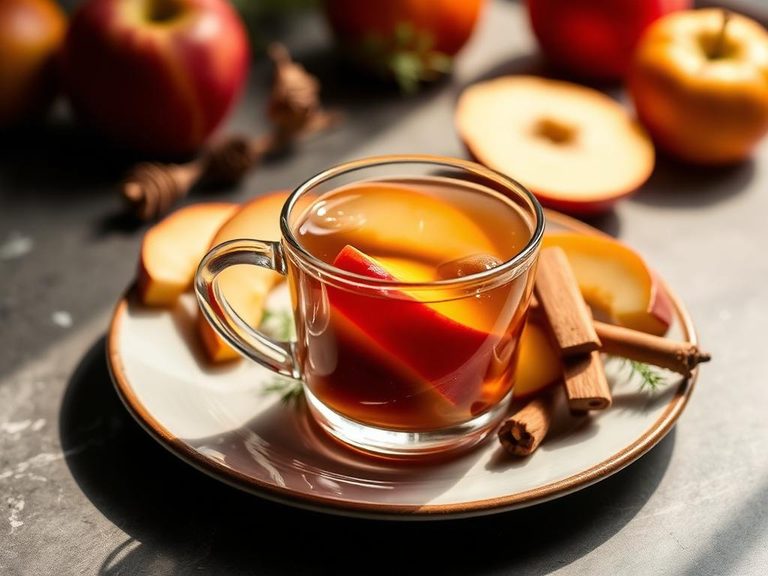
This is the crisp, clean taste of autumn captured in a bottle—a clear, golden liquid made from pressed apples, fortified with vitamin C to preserve its bright, slightly tart flavor. Its texture is smooth and refreshing, with a natural sweetness that's more nuanced than sugary sodas. Nutritionally, it's a light, hydrating beverage with minimal calories, offering a quick source of natural sugars and a boost of ascorbic acid.
Calorie split: 1% protein · 97% carbs · 3% fat
↓ Full nutrition💚 Why it's loved
People adore it for its pure, nostalgic apple flavor that's both comforting and refreshing, perfect chilled on a hot day or warmed with spices in winter. Its versatility makes it a beloved base for cocktails, smoothies, and marinades, or simply a wholesome alternative to sugary drinks.
⚠️ Watch-outs & how to enjoy it better
The main downside is its high natural sugar content (9.6g per 100g), which can cause blood-sugar spikes, especially for those with diabetes or insulin resistance. To mitigate this, always pair it with a source of protein or healthy fat (like a handful of nuts or cheese) to slow sugar absorption, and stick to a small portion of about 120-150ml.
Key benefits
- Provides a quick, natural energy source from fruit sugars.
- Fortified with vitamin C, an antioxidant that supports immune function.
- Hydrating with a higher water content than whole fruit.
- Naturally free of fat, cholesterol, and sodium.
- Offers a small amount of potassium from the apple base.
🍽️ Popular dishes
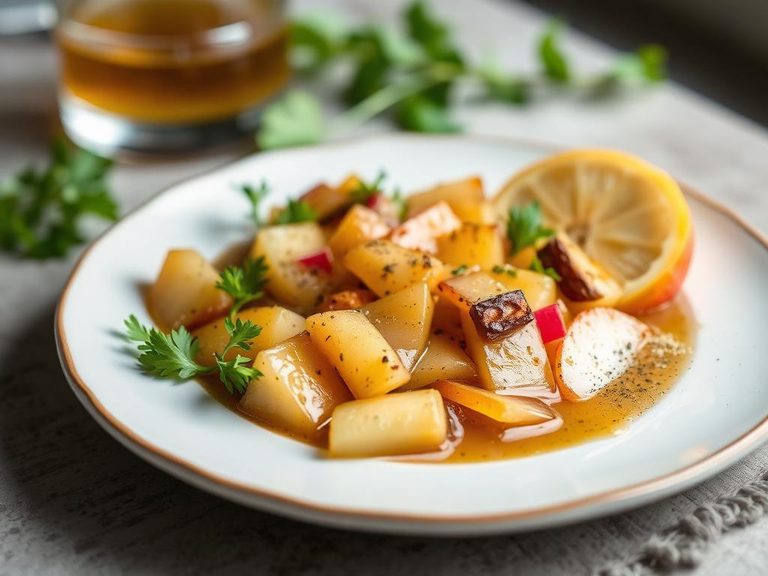

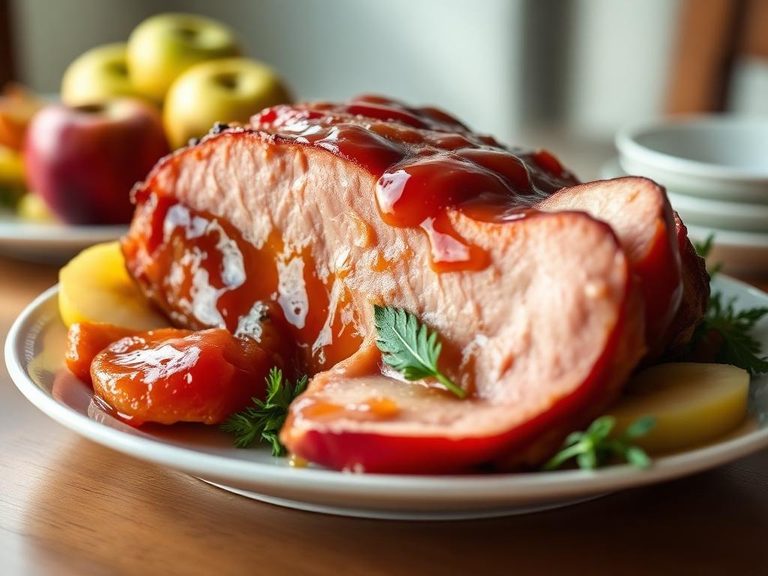
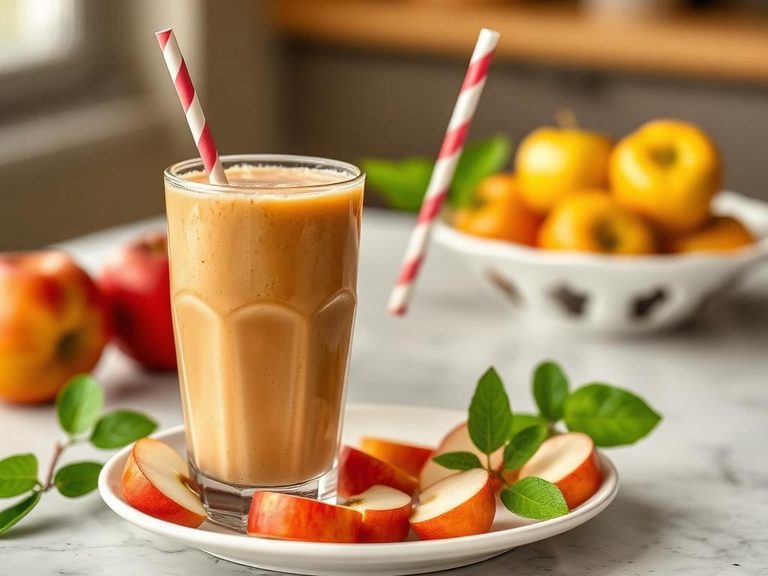
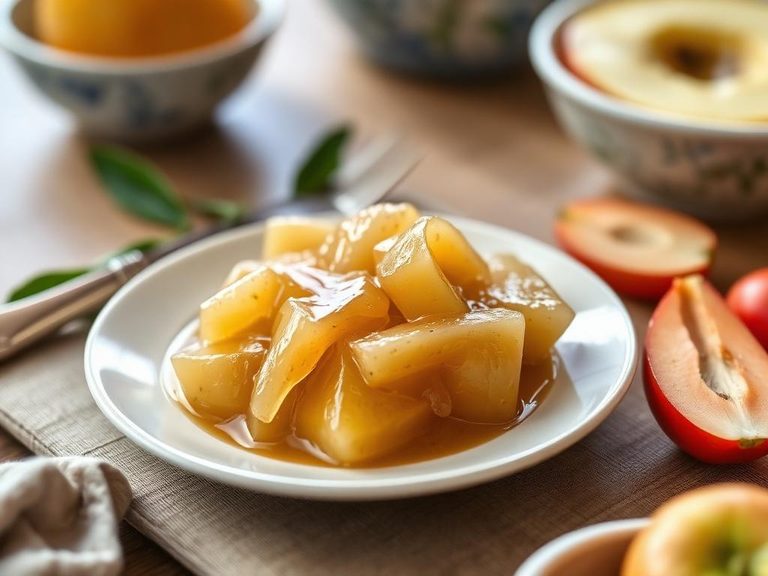
🌍 Where it's eaten
💡 Did you know?
The 'cloudy' or unfiltered versions of apple juice contain tiny apple particles and pectin, which can settle at the bottom—shaking the bottle before pouring is a ritual to reclaim the full texture and flavor.
Full nutrition (USDA data · scales with serving)
| Water | 88.2 g |
| Energy | 46.0 kcal |
| Energy | 191 kj |
| Protein | 0.10 g |
| Total lipid (fat) | 0.13 g |
| Ash | 0.23 g |
| Carbohydrate, by difference | 11.3 g |
| Fiber, total dietary | 0.20 g |
| Total Sugars | 9.6 g |
| Sucrose | 1.3 g |
| Glucose | 2.6 g |
| Fructose | 5.7 g |
| Lactose | 0.00 g |
| Maltose | 0.00 g |
| Galactose | 0.00 g |
| Calcium, Ca | 8.0 mg |
| Iron, Fe | 0.12 mg |
| Magnesium, Mg | 5.0 mg |
| Phosphorus, P | 7.0 mg |
| Potassium, K | 101 mg |
| Sodium, Na | 4.0 mg |
| Zinc, Zn | 0.02 mg |
| Copper, Cu | 0.01 mg |
| Manganese, Mn | 0.07 mg |
| Selenium, Se | 0.10 ug |
| Fluoride, F | 39.1 ug |
| Vitamin C, total ascorbic acid | 38.5 mg |
| Thiamin | 0.02 mg |
| Riboflavin | 0.02 mg |
| Niacin | 0.07 mg |
| Pantothenic acid | 0.05 mg |
| Vitamin B-6 | 0.02 mg |
| Folate, total | 0.00 ug |
| Folic acid | 0.00 ug |
| Folate, food | 0.00 ug |
| Folate, DFE | 0.00 ug |
| Choline, total | 1.8 mg |
| Betaine | 0.10 mg |
| Vitamin B-12 | 0.00 ug |
| Vitamin B-12, added | 0.00 ug |
| Vitamin A, RAE | 0.00 ug |
| Retinol | 0.00 ug |
| Carotene, beta | 0.00 ug |
| Carotene, alpha | 0.00 ug |
| Cryptoxanthin, beta | 0.00 ug |
| Vitamin A, IU | 1.0 iu |
| Lycopene | 0.00 ug |
| Lutein + zeaxanthin | 16.0 ug |
| Vitamin E (alpha-tocopherol) | 0.01 mg |
| Vitamin E, added | 0.00 mg |
| Vitamin D (D2 + D3), International Units | 0.00 iu |
| Vitamin D (D2 + D3) | 0.00 ug |
| Vitamin K (phylloquinone) | 0.00 ug |
| Alcohol, ethyl | 0.00 g |
| Caffeine | 0.00 mg |
| Theobromine | 0.00 mg |
Fat & fatty acid profile (per 100g)
| Fatty acids, total saturated | 0.02 g |
| SFA 4:0 | 0.00 g |
| SFA 6:0 | 0.00 g |
| SFA 8:0 | 0.00 g |
| SFA 10:0 | 0.00 g |
| SFA 12:0 | 0.00 g |
| SFA 14:0 | 0.00 g |
| SFA 16:0 | 0.02 g |
| SFA 18:0 | 0.00 g |
| Fatty acids, total monounsaturated | 0.01 g |
| MUFA 16:1 | 0.00 g |
| MUFA 18:1 | 0.01 g |
| MUFA 20:1 | 0.00 g |
| MUFA 22:1 | 0.00 g |
| Fatty acids, total polyunsaturated | 0.04 g |
| PUFA 18:2 | 0.03 g |
| PUFA 18:3 | 0.01 g |
| PUFA 18:4 | 0.00 g |
| PUFA 20:4 | 0.00 g |
| PUFA 20:5 n-3 (EPA) | 0.00 g |
| PUFA 22:5 n-3 (DPA) | 0.00 g |
| PUFA 22:6 n-3 (DHA) | 0.00 g |
| Fatty acids, total trans | 0.00 g |
| Cholesterol | 0.00 mg |
FAQ
Is unsweetened apple juice as healthy as eating an apple?
Not quite. While it retains some vitamins and antioxidants, juicing removes most of the beneficial fiber found in whole apples, which helps regulate sugar absorption and promotes fullness. It's better to eat the whole fruit for maximum nutritional benefit.
Why is ascorbic acid added?
Ascorbic acid (vitamin C) is added as a preservative to prevent oxidation, which would cause the juice to brown and lose its fresh flavor. It also boosts the vitamin C content of the final product.
Can I use this in baking?
Absolutely. It's a common substitute for oil or water in many cake, muffin, and quick bread recipes, adding moisture and a subtle fruity sweetness while reducing fat content.
Nutrient density (calculated · NRF9.3)
Nutrient Rich Foods index: beneficial nutrients (protein, fiber, vitamins, minerals) minus saturated fat, added sugar & sodium, per 100 kcal.
NRF9.3 index — Fulgoni, Keast & Drewnowski, 2009. Computed from USDA nutrients.
Weight-loss friendliness (composite index)
Energy density 0.46 kcal/g · 1% calories from protein · 0.2 g fiber · 9.6 g sugar per 100 g.
Composite of energy density (Rolls et al., 1999), protein & fiber satiety, minus sugar. A calculated heuristic — ranks satiety-per-calorie, not a clinical measure.
Dietary load (calculated from USDA values)
Potential renal acid load. Positive = acid-forming, negative = alkaline-forming.
Sodium-to-potassium ratio: 0.04 (lower is better — aim for ≤ 1)
Sodium:potassium per WHO potassium guidance. Computed from USDA nutrients.