

Soybeans, mature seeds, roasted, no salt added
Whole food · Legumes and Legume Products

Photo: Wikipedia
These are mature soybeans that have been dry-roasted without salt, resulting in a firm, chewy texture with a nutty, earthy flavor. They are a nutritional powerhouse, packing an impressive 38.55 grams of complete plant protein and 17.7 grams of fiber per 100g, with zero added sugar.
Calorie split: 31% protein · 24% carbs · 45% fat
↓ Full nutrition💚 Why it's loved
People love them as a satisfying, savory snack that delivers a serious protein punch without being processed. Their robust, nutty flavor and satisfying crunch make them a versatile ingredient in both sweet and savory dishes across many cultures.
⚠️ Watch-outs & how to enjoy it better
As a common allergen, soy can cause reactions in sensitive individuals. The high fiber content may cause digestive discomfort like bloating if not introduced gradually. To counteract, start with small portions, drink plenty of water, and consider soaking or sprouting before roasting if preparing from scratch to reduce anti-nutrients.
Key benefits
- Excellent source of complete plant-based protein
- High in dietary fiber for digestive health
- Provides essential minerals like iron, magnesium, and potassium
- Contains isoflavones, a type of phytonutrient
🍽️ Popular dishes
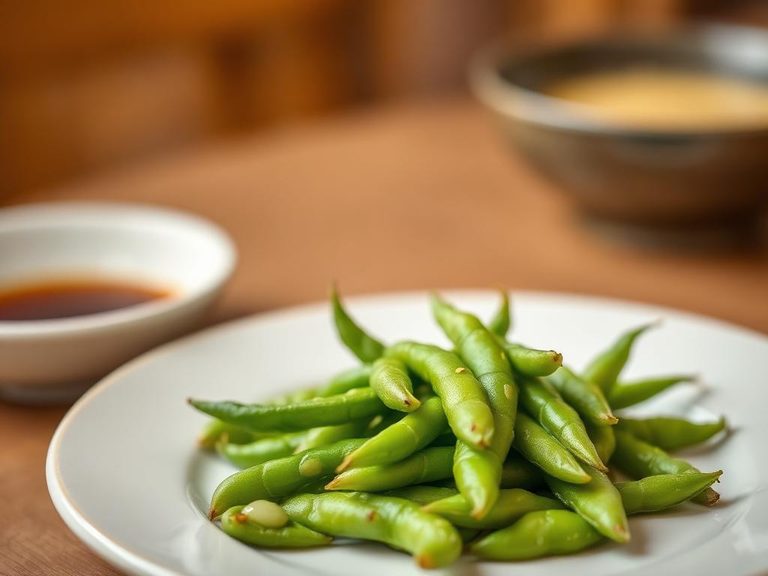
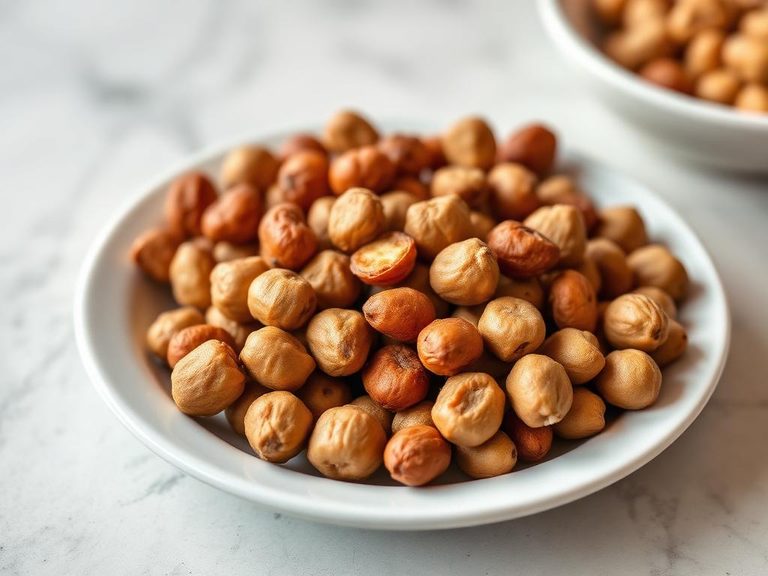
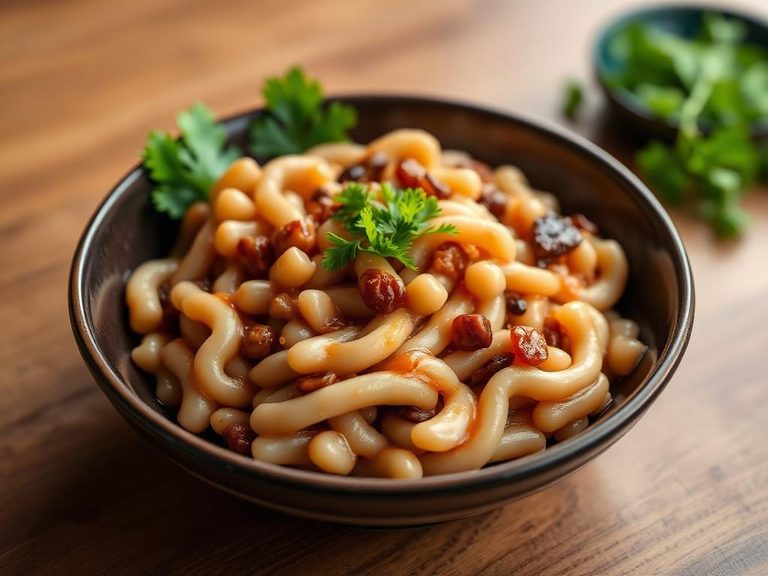

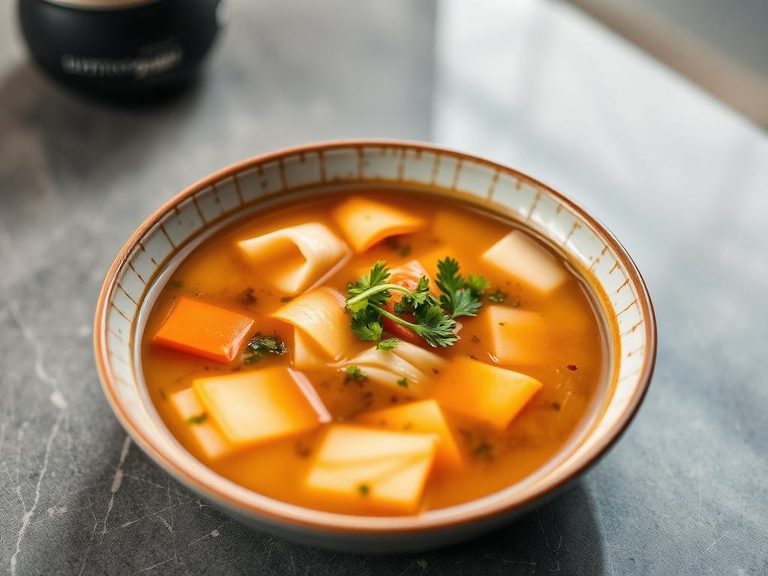

🌍 Where it's eaten
💡 Did you know?
The roasting process that creates soy nuts significantly increases their antioxidant activity compared to raw or boiled soybeans.
Full nutrition (USDA data · scales with serving)
| Water | 1.9 g |
| Energy | 469 kcal |
| Energy | 1964 kj |
| Protein | 38.5 g |
| Total lipid (fat) | 25.4 g |
| Ash | 3.9 g |
| Carbohydrate, by difference | 30.2 g |
| Fiber, total dietary | 17.7 g |
| Calcium, Ca | 138 mg |
| Iron, Fe | 3.9 mg |
| Magnesium, Mg | 145 mg |
| Phosphorus, P | 363 mg |
| Potassium, K | 1470 mg |
| Sodium, Na | 4.0 mg |
| Zinc, Zn | 3.1 mg |
| Copper, Cu | 0.83 mg |
| Manganese, Mn | 2.2 mg |
| Selenium, Se | 19.1 ug |
| Vitamin C, total ascorbic acid | 2.2 mg |
| Thiamin | 0.10 mg |
| Riboflavin | 0.14 mg |
| Niacin | 1.4 mg |
| Pantothenic acid | 0.45 mg |
| Vitamin B-6 | 0.21 mg |
| Folate, total | 211 ug |
| Folic acid | 0.00 ug |
| Folate, food | 211 ug |
| Folate, DFE | 211 ug |
| Vitamin B-12 | 0.00 ug |
| Vitamin A, RAE | 0.00 ug |
| Retinol | 0.00 ug |
| Vitamin A, IU | 0.00 iu |
| Vitamin D (D2 + D3), International Units | 0.00 iu |
| Vitamin D (D2 + D3) | 0.00 ug |
| Alcohol, ethyl | 0.00 g |
Fat & fatty acid profile (per 100g)
| Fatty acids, total saturated | 3.7 g |
| SFA 4:0 | 0.00 g |
| SFA 6:0 | 0.00 g |
| SFA 8:0 | 0.00 g |
| SFA 10:0 | 0.00 g |
| SFA 12:0 | 0.00 g |
| SFA 14:0 | 0.07 g |
| SFA 16:0 | 2.7 g |
| SFA 18:0 | 0.91 g |
| Fatty acids, total monounsaturated | 5.6 g |
| MUFA 16:1 | 0.07 g |
| MUFA 18:1 | 5.5 g |
| MUFA 20:1 | 0.00 g |
| MUFA 22:1 | 0.00 g |
| Fatty acids, total polyunsaturated | 14.3 g |
| PUFA 18:2 | 12.6 g |
| PUFA 18:3 | 1.7 g |
| PUFA 18:4 | 0.00 g |
| PUFA 20:4 | 0.00 g |
| PUFA 20:5 n-3 (EPA) | 0.00 g |
| PUFA 22:5 n-3 (DPA) | 0.00 g |
| PUFA 22:6 n-3 (DHA) | 0.00 g |
| Fatty acids, total trans | 0.00 g |
| Cholesterol | 0.00 mg |
Amino acid profile (per 100g)
| Tryptophan | 0.51 g |
| Threonine | 1.5 g |
| Isoleucine | 1.7 g |
| Leucine | 2.9 g |
| Lysine | 2.3 g |
| Methionine | 0.47 g |
| Cystine | 0.57 g |
| Phenylalanine | 1.8 g |
| Tyrosine | 1.3 g |
| Valine | 1.8 g |
| Arginine | 2.7 g |
| Histidine | 0.95 g |
| Alanine | 1.7 g |
| Aspartic acid | 4.4 g |
| Glutamic acid | 6.8 g |
| Glycine | 1.6 g |
| Proline | 2.1 g |
| Serine | 2.0 g |
FAQ
Are roasted soybeans a complete protein?
Yes, soybeans are one of the few plant foods that contain all nine essential amino acids, making them a complete protein source.
How does the fiber content compare to other snacks?
At 17.7g per 100g, roasted soybeans have significantly more fiber than most snacks, like pretzels (2.4g) or potato chips (4.8g), promoting fullness and digestive health.
Can I eat these on a low-carb diet?
With 30.22g of carbs per 100g, but a high fiber count, the net carbs are around 12.5g. They can fit into moderate low-carb plans in controlled portions.
Nutrient density (calculated · NRF9.3)
Nutrient Rich Foods index: beneficial nutrients (protein, fiber, vitamins, minerals) minus saturated fat, added sugar & sodium, per 100 kcal.
NRF9.3 index — Fulgoni, Keast & Drewnowski, 2009. Computed from USDA nutrients.
Weight-loss friendliness (composite index)
Energy density 4.69 kcal/g · 33% calories from protein · 17.7 g fiber · 0.0 g sugar per 100 g.
Composite of energy density (Rolls et al., 1999), protein & fiber satiety, minus sugar. A calculated heuristic — ranks satiety-per-calorie, not a clinical measure.
Dietary load (calculated from USDA values)
Potential renal acid load. Positive = acid-forming, negative = alkaline-forming.
Sodium-to-potassium ratio: 0.00 (lower is better — aim for ≤ 1)
Sodium:potassium per WHO potassium guidance. Computed from USDA nutrients.