Fish, anchovy, european, raw
Whole food · Finfish and Shellfish Products

Photo: Wikipedia
The European anchovy is a small, oily forage fish prized for its intense, savory umami punch and soft, melt-in-the-mouth texture when raw. It is a nutritional powerhouse, delivering an impressive 20.35g of protein per 100g with virtually no carbohydrates or fiber. Its flavor is deeply briny and complex, forming the backbone of many iconic sauces and dishes.
💚 Why it's loved
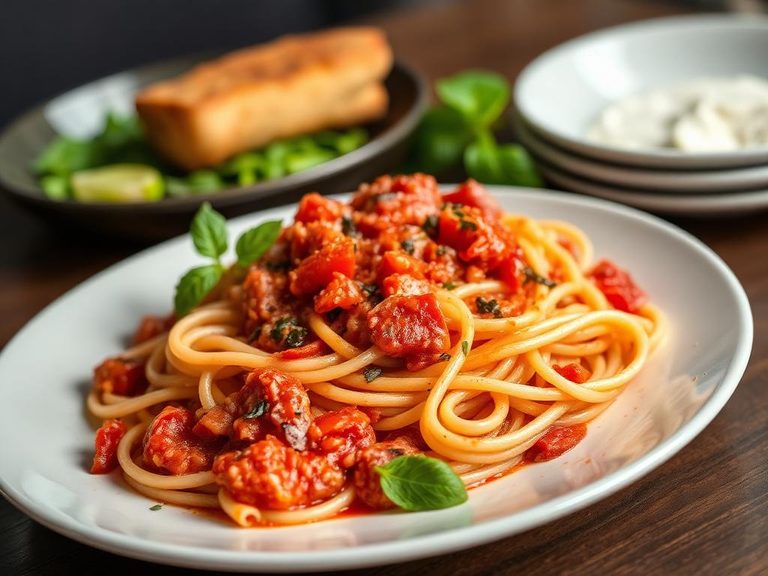
People love anchovies for their profound umami depth, which acts as a flavor amplifier in everything from pasta to pizza. They are a cornerstone of Mediterranean cuisine, valued for their ability to transform simple ingredients into complex, savory masterpieces.
⚠️ Watch-outs & how to enjoy it better
The primary downside is their extremely high sodium content, which can be a concern for those monitoring salt intake. To mitigate this, rinse canned or salt-packed anchovies under cool water before use and use them sparingly as a seasoning rather than a main component. They are also a common fish allergen, so individuals with fish allergies must avoid them entirely.
Key benefits
- Exceptionally high in protein for muscle maintenance and satiety.
- Rich in omega-3 fatty acids, particularly EPA and DHA.
- Excellent source of calcium when consumed with bones.
- Provides significant amounts of vitamin B12 and selenium.
- Low in carbohydrates and sugar, suitable for low-carb diets.
🍽️ Popular dishes
🌍 Where it's eaten
💡 Did you know?
Ancient Romans fermented anchovies in salt to create 'garum,' a pungent fish sauce that was the ketchup of the ancient world, used to flavor almost every dish.
Full nutrition (scales with serving)
| Water | 73.4 g |
| Energy | 131 kcal |
| Energy | 548 kj |
| Protein | 20.4 g |
| Total lipid (fat) | 4.8 g |
| Ash | 1.4 g |
| Carbohydrate, by difference | 0.00 g |
| Fiber, total dietary | 0.00 g |
| Total Sugars | 0.00 g |
| Calcium, Ca | 147 mg |
| Iron, Fe | 3.3 mg |
| Magnesium, Mg | 41.0 mg |
| Phosphorus, P | 174 mg |
| Potassium, K | 383 mg |
| Sodium, Na | 104 mg |
| Zinc, Zn | 1.7 mg |
| Copper, Cu | 0.21 mg |
| Manganese, Mn | 0.07 mg |
| Selenium, Se | 36.5 ug |
| Vitamin C, total ascorbic acid | 0.00 mg |
| Thiamin | 0.06 mg |
| Riboflavin | 0.26 mg |
| Niacin | 14.0 mg |
| Pantothenic acid | 0.65 mg |
| Vitamin B-6 | 0.14 mg |
| Folate, total | 9.0 ug |
| Folic acid | 0.00 ug |
| Folate, food | 9.0 ug |
| Folate, DFE | 9.0 ug |
| Vitamin B-12 | 0.62 ug |
| Vitamin B-12, added | 0.00 ug |
| Vitamin A, RAE | 15.0 ug |
| Retinol | 15.0 ug |
| Carotene, beta | 0.00 ug |
| Carotene, alpha | 0.00 ug |
| Cryptoxanthin, beta | 0.00 ug |
| Vitamin A, IU | 50.0 iu |
| Lycopene | 0.00 ug |
| Lutein + zeaxanthin | 0.00 ug |
| Vitamin E (alpha-tocopherol) | 0.57 mg |
| Vitamin E, added | 0.00 mg |
| Vitamin K (phylloquinone) | 0.10 ug |
| Alcohol, ethyl | 0.00 g |
| Caffeine | 0.00 mg |
| Theobromine | 0.00 mg |
Fat & fatty acid profile (per 100g)
| Fatty acids, total saturated | 1.3 g |
| SFA 4:0 | 0.00 g |
| SFA 6:0 | 0.00 g |
| SFA 8:0 | 0.00 g |
| SFA 10:0 | 0.00 g |
| SFA 12:0 | 0.01 g |
| SFA 14:0 | 0.30 g |
| SFA 16:0 | 0.71 g |
| SFA 18:0 | 0.25 g |
| Fatty acids, total monounsaturated | 1.2 g |
| MUFA 16:1 | 0.40 g |
| MUFA 18:1 | 0.62 g |
| MUFA 20:1 | 0.00 g |
| MUFA 22:1 | 0.12 g |
| Fatty acids, total polyunsaturated | 1.6 g |
| PUFA 18:2 | 0.10 g |
| PUFA 18:3 | 0.00 g |
| PUFA 18:4 | 0.06 g |
| PUFA 20:4 | 0.01 g |
| PUFA 20:5 n-3 (EPA) | 0.54 g |
| PUFA 22:5 n-3 (DPA) | 0.03 g |
| PUFA 22:6 n-3 (DHA) | 0.91 g |
| Cholesterol | 60.0 mg |
Amino acid profile (per 100g)
| Tryptophan | 0.23 g |
| Threonine | 0.89 g |
| Isoleucine | 0.94 g |
| Leucine | 1.7 g |
| Lysine | 1.9 g |
| Methionine | 0.60 g |
| Cystine | 0.22 g |
| Phenylalanine | 0.79 g |
| Tyrosine | 0.69 g |
| Valine | 1.0 g |
| Arginine | 1.2 g |
| Histidine | 0.60 g |
| Alanine | 1.2 g |
| Aspartic acid | 2.1 g |
| Glutamic acid | 3.0 g |
| Glycine | 0.98 g |
| Proline | 0.72 g |
| Serine | 0.83 g |
FAQ
What is the difference between raw, salt-packed, and oil-packed anchovies?
Raw anchovies are fresh and mild. Salt-packed anchovies are cured in salt, requiring rinsing and deboning, offering the most intense flavor. Oil-packed anchovies are pre-rinsed and preserved in oil, making them ready to use with a softer texture.
Are anchovies and sardines the same?
No. While both are small, oily fish, anchovies (family Engraulidae) are typically smaller, darker, and have a much stronger, saltier flavor. Sardines (family Clupeidae) are larger, milder, and often eaten whole.
Can I eat anchovies if I'm pregnant?
Yes, anchovies are generally safe and beneficial during pregnancy due to their high omega-3 content. However, choose low-sodium options and ensure they are from a reputable source to minimize any risk of contaminants.