Beef, rib, back ribs, bone-in, separable lean only, trimmed to 0" fat, choice, cooked, braised
Whole food · Beef Products
This cut is the beefy heart of the back rib, braised until the lean meat becomes incredibly tender and succulent, with a deep, concentrated beef flavor. The slow cooking process transforms the muscle into a melt-in-your-mouth texture, while the bone imparts a rich, savory essence. Nutritionally, it's a powerhouse of high-quality protein with a significant fat content that contributes to its luxurious mouthfeel.
💚 Why it's loved
People adore it for the profound, beefy flavor that intensifies with braising, and the way the meat effortlessly pulls from the bone. It's a centerpiece dish that evokes comfort and is deeply embedded in barbecue and home-cooking traditions.
⚠️ Watch-outs & how to enjoy it better
The high fat content makes it calorie-dense, which requires mindful portion control for those managing weight. The braising process often involves added salt or sugary sauces, which can be a concern for blood pressure or blood sugar management. To counteract, use low-sodium broths and season with herbs, garlic, and spices; pair with fiber-rich vegetables like roasted Brussels sprouts or a crisp slaw to balance the meal.
Key benefits
- Excellent source of complete protein for muscle maintenance and repair.
- Provides essential minerals like iron, zinc, and B12.
- The bone-in cut adds collagen and gelatin during cooking, beneficial for joints and gut lining.
- A satisfying, high-protein food that promotes satiety.
🍽️ Popular dishes
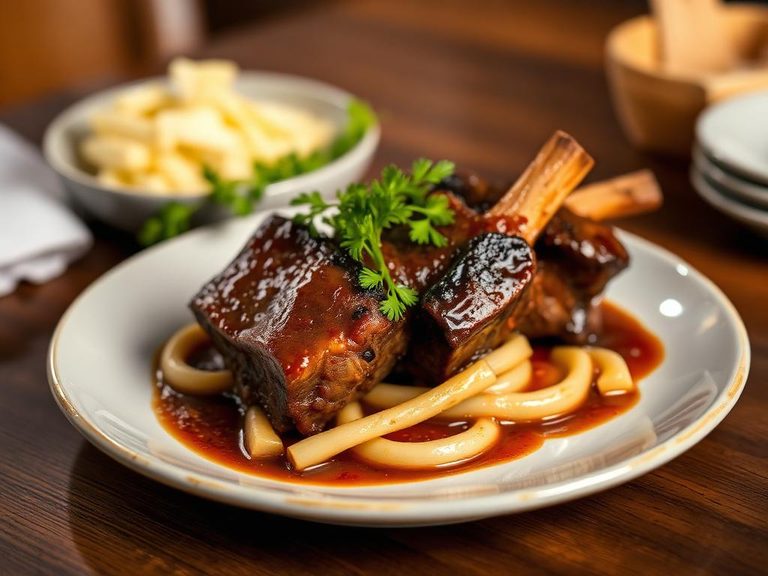
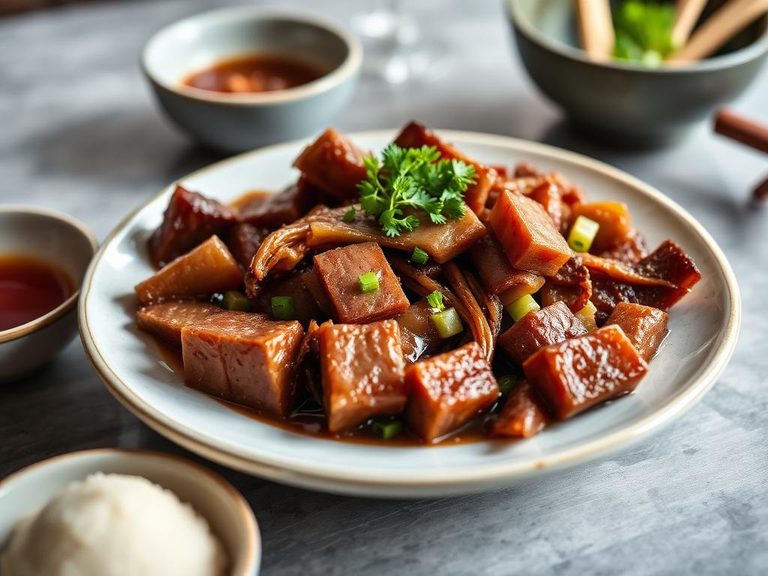
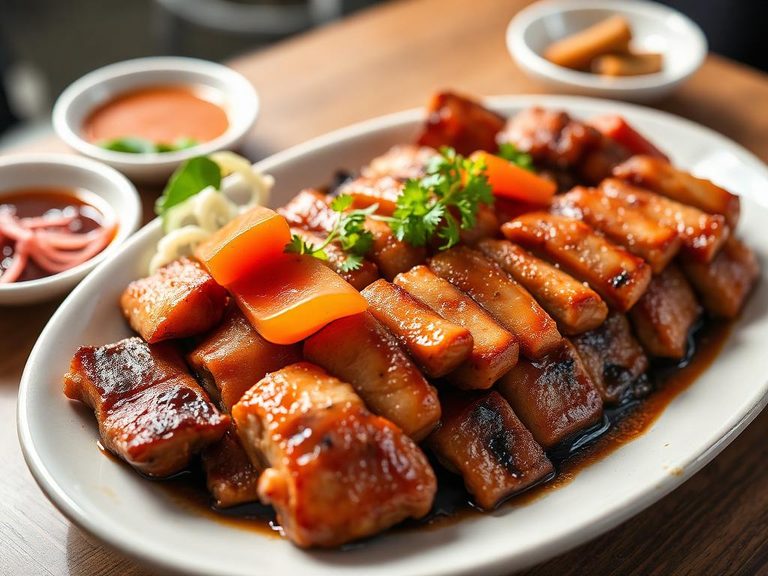
🌍 Where it's eaten
💡 Did you know?
The specific cut, 'back ribs,' comes from the rib section near the loin, and the meat between the bones is some of the most flavorful on the entire animal, often referred to as the 'butcher's cut' because butchers would keep it for themselves.
Full nutrition (scales with serving)
| Water | 50.5 g |
| Energy | 306 kcal |
| Energy | 1282 kj |
| Protein | 27.8 g |
| Total lipid (fat) | 21.7 g |
| Ash | 0.60 g |
| Carbohydrate, by difference | 0.00 g |
| Fiber, total dietary | 0.00 g |
| Total Sugars | 0.00 g |
| Calcium, Ca | 22.0 mg |
| Iron, Fe | 2.6 mg |
| Magnesium, Mg | 26.0 mg |
| Phosphorus, P | 187 mg |
| Potassium, K | 280 mg |
| Sodium, Na | 68.0 mg |
| Zinc, Zn | 6.1 mg |
| Copper, Cu | 0.08 mg |
| Selenium, Se | 28.7 ug |
| Vitamin C, total ascorbic acid | 0.00 mg |
| Thiamin | 0.10 mg |
| Riboflavin | 0.35 mg |
| Niacin | 5.8 mg |
| Vitamin B-6 | 0.54 mg |
| Folate, total | 7.0 ug |
| Folic acid | 0.00 ug |
| Folate, food | 7.0 ug |
| Folate, DFE | 7.0 ug |
| Vitamin B-12 | 2.3 ug |
| Vitamin B-12, added | 0.00 ug |
| Vitamin A, RAE | 2.0 ug |
| Retinol | 2.0 ug |
| Carotene, beta | 0.00 ug |
| Carotene, alpha | 0.00 ug |
| Cryptoxanthin, beta | 0.00 ug |
| Vitamin A, IU | 6.0 iu |
| Lycopene | 0.00 ug |
| Lutein + zeaxanthin | 0.00 ug |
| Vitamin D (D2 + D3), International Units | 7.0 iu |
| Vitamin D (D2 + D3) | 0.20 ug |
| Vitamin D3 (cholecalciferol) | 0.20 ug |
| Vitamin K (phylloquinone) | 1.6 ug |
| Alcohol, ethyl | 0.00 g |
| Caffeine | 0.00 mg |
| Theobromine | 0.00 mg |
Fat & fatty acid profile (per 100g)
| Fatty acids, total saturated | 8.8 g |
| SFA 4:0 | 0.00 g |
| SFA 6:0 | 0.00 g |
| SFA 8:0 | 0.00 g |
| SFA 10:0 | 0.01 g |
| SFA 12:0 | 0.02 g |
| SFA 14:0 | 0.55 g |
| SFA 16:0 | 4.7 g |
| SFA 18:0 | 3.0 g |
| Fatty acids, total monounsaturated | 10.0 g |
| MUFA 16:1 | 0.64 g |
| MUFA 18:1 | 9.0 g |
| MUFA 20:1 | 0.04 g |
| MUFA 22:1 | 0.00 g |
| Fatty acids, total polyunsaturated | 0.85 g |
| PUFA 18:2 | 0.72 g |
| PUFA 18:3 | 0.04 g |
| PUFA 18:4 | 0.00 g |
| PUFA 20:4 | 0.06 g |
| PUFA 20:5 n-3 (EPA) | 0.00 g |
| PUFA 22:5 n-3 (DPA) | 0.01 g |
| PUFA 22:6 n-3 (DHA) | 0.00 g |
| Cholesterol | 91.0 mg |
Amino acid profile (per 100g)
| Tryptophan | 0.33 g |
| Threonine | 1.4 g |
| Isoleucine | 1.4 g |
| Leucine | 2.5 g |
| Lysine | 2.8 g |
| Methionine | 0.77 g |
| Cystine | 0.29 g |
| Phenylalanine | 1.2 g |
| Tyrosine | 1.1 g |
| Valine | 1.4 g |
| Arginine | 1.9 g |
| Histidine | 1.1 g |
| Alanine | 1.7 g |
| Aspartic acid | 2.8 g |
| Glutamic acid | 4.7 g |
| Glycine | 1.2 g |
| Proline | 1.2 g |
| Serine | 1.2 g |
| Hydroxyproline | 0.14 g |
FAQ
What's the difference between back ribs and short ribs?
Back ribs are cut from the rib section near the loin and have less meat between the bones, while short ribs (flanken or English cut) come from the chuck or plate with a thicker layer of meat and fat. Both are excellent for braising.
How do I get the meat tender?
Low and slow cooking is key. Braise in liquid (like broth, wine, or tomatoes) at a low temperature (300-325°F / 150-160°C) for 2.5-3.5 hours until the meat is fork-tender and easily separates from the bone.
Can I make this in a pressure cooker or slow cooker?
Yes. A pressure cooker (Instant Pot) can achieve tenderness in about 45-60 minutes. A slow cooker on low for 6-8 hours works perfectly for hands-off braising.