

Succotash, (corn and limas), frozen, cooked, boiled, drained, with salt
Whole food · Vegetables and Vegetable Products

Photo: Wikipedia
Succotash is a vibrant, hearty medley of sweet corn and tender lima beans, offering a satisfying, slightly starchy bite with a natural sweetness from the corn. This frozen, boiled version provides a convenient, low-calorie side dish that is a good source of plant-based protein and dietary fiber.
Calorie split: 16% protein · 76% carbs · 8% fat
↓ Full nutrition💚 Why it's loved
People love succotash for its comforting, homestyle flavor and the pleasing textural contrast between the pop of sweet corn and the creamy bite of lima beans. It's a versatile side that evokes a sense of traditional American home cooking and harvest festivals.
⚠️ Watch-outs & how to enjoy it better
The primary concern is the added salt (2.21g sugar is low, but sodium is not listed in the provided data; commercial frozen versions often contain added sodium). To counteract this, rinse the cooked succotash briefly under cool water to reduce surface sodium, or look for low-sodium frozen varieties. For blood sugar management, pair a portion with a source of protein or healthy fat (like grilled chicken or a drizzle of olive oil) to slow carbohydrate absorption.
Key benefits
- Good source of plant-based protein (4.3g per 100g)
- High in dietary fiber (4.1g per 100g) for digestive health
- Low in fat (under 1g per 100g)
- Provides complex carbohydrates for sustained energy
- Contains naturally occurring sugars with a low glycemic load
🍽️ Popular dishes
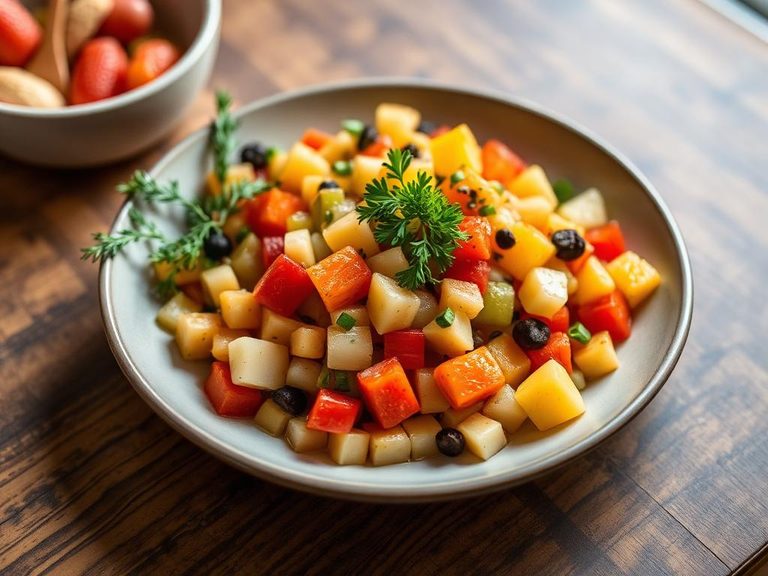
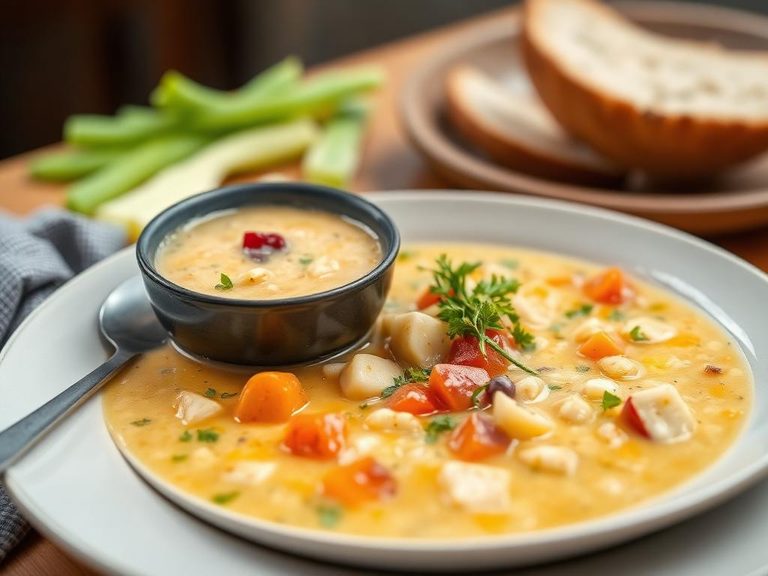
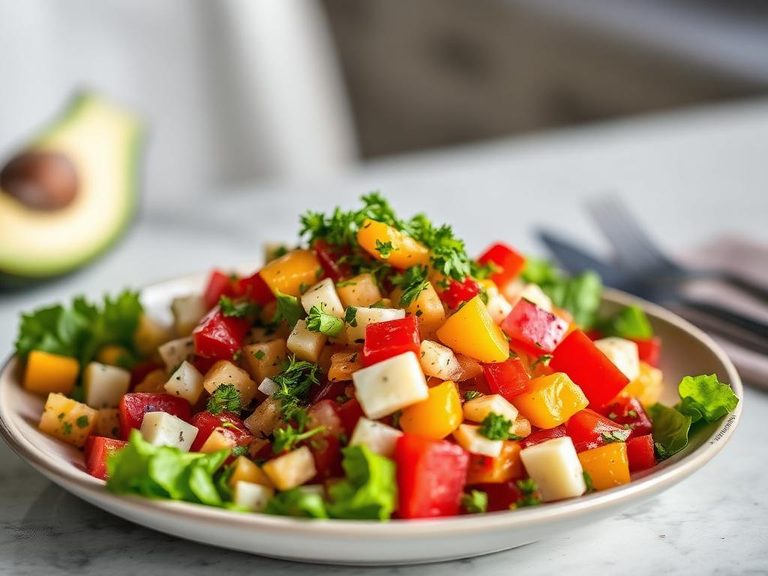
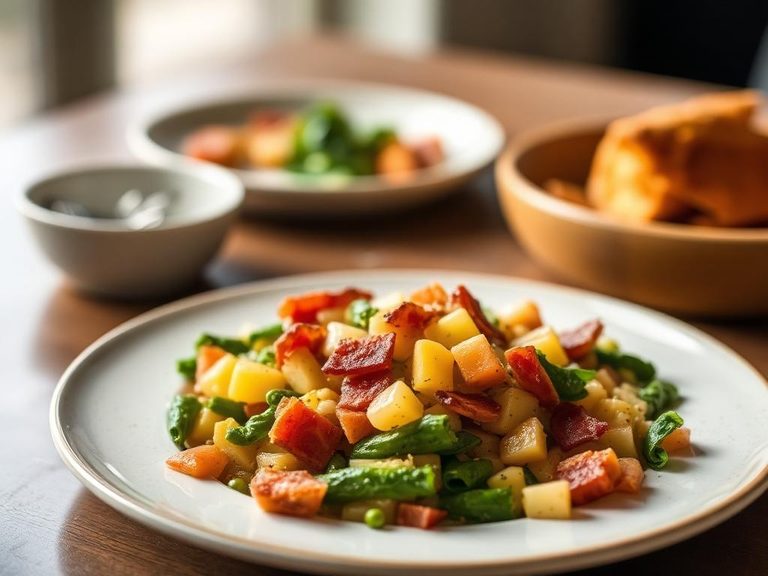
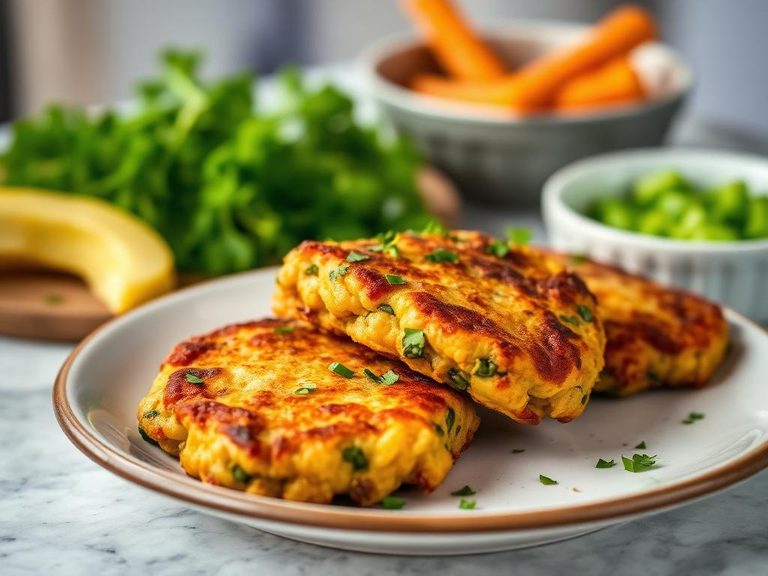
🌍 Where it's eaten
💡 Did you know?
The word 'succotash' comes from the Narragansett word 'msíckquatash,' which referred to boiled corn kernels, the core of the dish.
Full nutrition (USDA data · scales with serving)
| Water | 74.1 g |
| Energy | 93.0 kcal |
| Energy | 389 kj |
| Protein | 4.3 g |
| Total lipid (fat) | 0.89 g |
| Ash | 0.75 g |
| Carbohydrate, by difference | 19.9 g |
| Fiber, total dietary | 4.1 g |
| Total Sugars | 2.2 g |
| Calcium, Ca | 15.0 mg |
| Iron, Fe | 0.89 mg |
| Magnesium, Mg | 23.0 mg |
| Phosphorus, P | 70.0 mg |
| Potassium, K | 265 mg |
| Sodium, Na | 281 mg |
| Zinc, Zn | 0.45 mg |
| Copper, Cu | 0.06 mg |
| Manganese, Mn | 0.28 mg |
| Selenium, Se | 0.60 ug |
| Vitamin C, total ascorbic acid | 5.9 mg |
| Thiamin | 0.07 mg |
| Riboflavin | 0.07 mg |
| Niacin | 1.3 mg |
| Pantothenic acid | 0.23 mg |
| Vitamin B-6 | 0.10 mg |
| Folate, total | 33.0 ug |
| Folic acid | 0.00 ug |
| Folate, food | 33.0 ug |
| Folate, DFE | 33.0 ug |
| Choline, total | 29.1 mg |
| Vitamin B-12 | 0.00 ug |
| Vitamin B-12, added | 0.00 ug |
| Vitamin A, RAE | 10.0 ug |
| Retinol | 0.00 ug |
| Carotene, beta | 82.0 ug |
| Carotene, alpha | 9.0 ug |
| Cryptoxanthin, beta | 61.0 ug |
| Vitamin A, IU | 194 iu |
| Lycopene | 0.00 ug |
| Lutein + zeaxanthin | 342 ug |
| Vitamin E (alpha-tocopherol) | 0.18 mg |
| Vitamin E, added | 0.00 mg |
| Vitamin D (D2 + D3), International Units | 0.00 iu |
| Vitamin D (D2 + D3) | 0.00 ug |
| Vitamin K (phylloquinone) | 2.7 ug |
Fat & fatty acid profile (per 100g)
| Fatty acids, total saturated | 0.17 g |
| SFA 14:0 | 0.00 g |
| SFA 16:0 | 0.15 g |
| SFA 18:0 | 0.01 g |
| Fatty acids, total monounsaturated | 0.17 g |
| MUFA 18:1 | 0.17 g |
| Fatty acids, total polyunsaturated | 0.43 g |
| PUFA 18:2 | 0.36 g |
| PUFA 18:3 | 0.07 g |
| Fatty acids, total trans | 0.00 g |
| Cholesterol | 0.00 mg |
Amino acid profile (per 100g)
| Tryptophan | 0.05 g |
| Threonine | 0.18 g |
| Isoleucine | 0.24 g |
| Leucine | 0.38 g |
| Lysine | 0.25 g |
| Methionine | 0.06 g |
| Cystine | 0.05 g |
| Phenylalanine | 0.21 g |
| Tyrosine | 0.15 g |
| Valine | 0.26 g |
| Arginine | 0.25 g |
| Histidine | 0.14 g |
| Alanine | 0.24 g |
| Aspartic acid | 0.42 g |
| Glutamic acid | 0.65 g |
| Glycine | 0.17 g |
| Proline | 0.17 g |
| Serine | 0.25 g |
FAQ
Is frozen succotash as nutritious as fresh?
Yes, often equally or more so. Vegetables are typically flash-frozen at peak ripeness, which locks in nutrients. The boiling process for frozen succotash is brief, minimizing nutrient loss compared to prolonged cooking of fresh produce.
What can I substitute for lima beans if I don't like them?
You can use edamame (soybeans), butter beans (a larger lima bean), or even green peas for a similar texture and nutritional profile. Some variations use black-eyed peas.
How can I enhance the flavor of plain boiled succotash?
Sauté it briefly in a little butter or olive oil with minced garlic or shallots. A sprinkle of smoked paprika, black pepper, or fresh herbs like thyme or parsley can add depth. A squeeze of lemon juice at the end brightens the flavors.
Nutrient density (calculated · NRF9.3)
Nutrient Rich Foods index: beneficial nutrients (protein, fiber, vitamins, minerals) minus saturated fat, added sugar & sodium, per 100 kcal.
NRF9.3 index — Fulgoni, Keast & Drewnowski, 2009. Computed from USDA nutrients.
Weight-loss friendliness (composite index)
Energy density 0.93 kcal/g · 19% calories from protein · 4.1 g fiber · 2.2 g sugar per 100 g.
Composite of energy density (Rolls et al., 1999), protein & fiber satiety, minus sugar. A calculated heuristic — ranks satiety-per-calorie, not a clinical measure.
Dietary load (calculated from USDA values)
Potential renal acid load. Positive = acid-forming, negative = alkaline-forming.
Sodium-to-potassium ratio: 1.06 (lower is better — aim for ≤ 1)
Sodium:potassium per WHO potassium guidance. Computed from USDA nutrients.