

Squash, winter, butternut, cooked, baked, without salt
Whole food · Vegetables and Vegetable Products

Photo: Wikipedia
Baked butternut squash transforms into a velvety, sweet, and nutty flesh with a caramelized edge, its vibrant orange color a visual promise of its rich flavor. Nutritionally, it's a low-calorie powerhouse, delivering over 3 grams of fiber per 100g to support digestion, along with a notable amount of natural sugars for energy. Its soft, spoonable texture makes it a comforting staple for cooler months.
Calorie split: 8% protein · 90% carbs · 2% fat
↓ Full nutrition💚 Why it's loved
People adore its deep, honeyed sweetness and creamy texture that requires minimal seasoning. It's beloved for its incredible versatility, seamlessly fitting into savory soups, sweet pies, or simple side dishes across many culinary traditions.
⚠️ Watch-outs & how to enjoy it better
Its natural sugars can cause a quicker blood sugar rise compared to non-starchy vegetables. To mitigate this, pair it with a source of protein (like beans or chicken) or healthy fat (like olive oil or nuts) to slow absorption and increase satiety.
Key benefits
- Excellent source of fiber for digestive health
- Very low in calories and fat
- Rich in beta-carotene, a precursor to vitamin A
- Provides natural, quick energy from complex carbs
- Naturally gluten-free and versatile
🍽️ Popular dishes

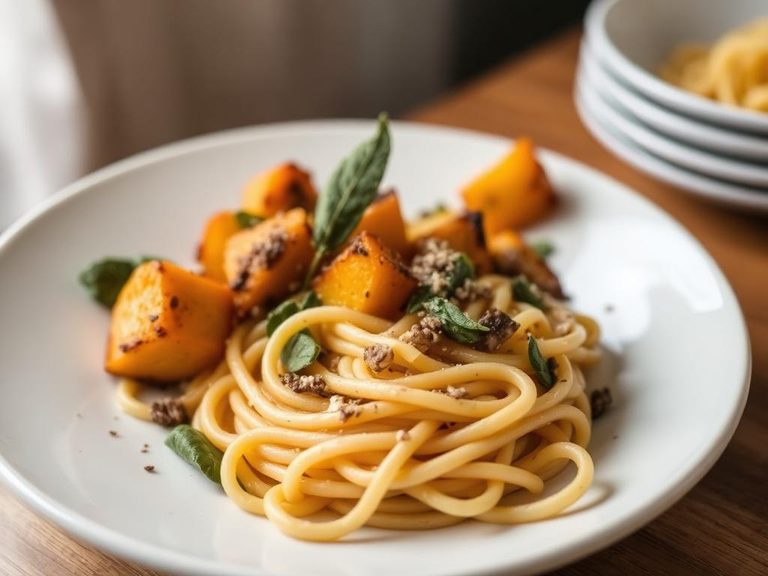
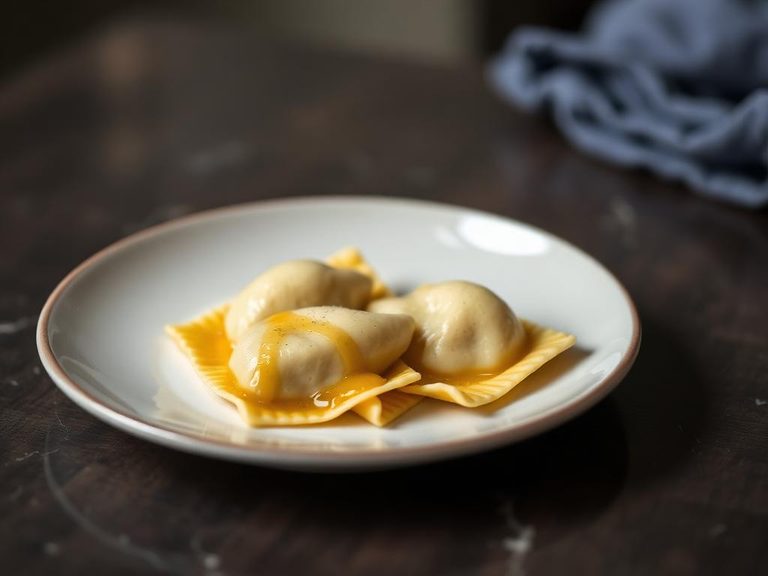
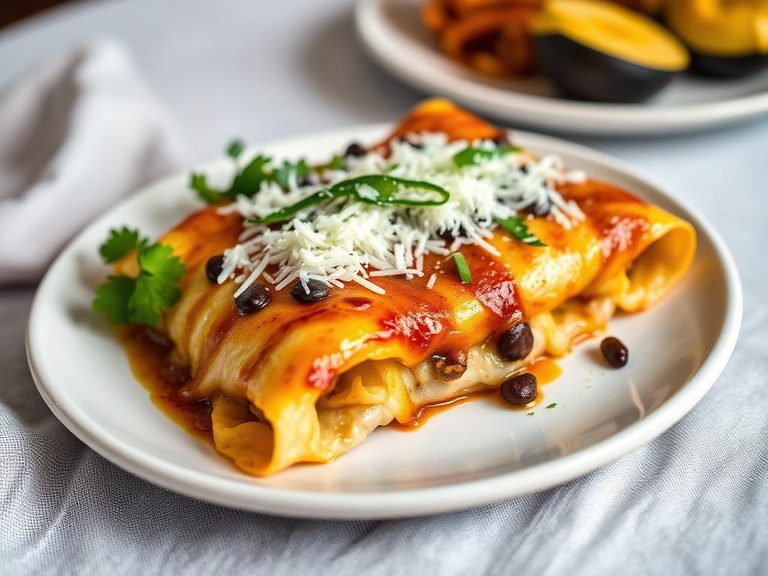
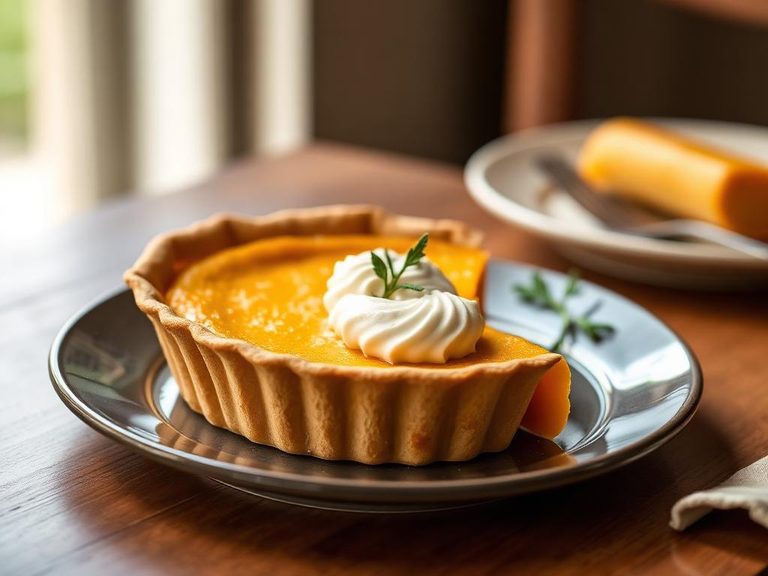

🌍 Where it's eaten
💡 Did you know?
The hard, hollow seed cavity of a butternut squash is sometimes used as a natural, edible bowl for baking fillings like quinoa or ground meat.
Full nutrition (USDA data · scales with serving)
| Water | 87.8 g |
| Energy | 40.0 kcal |
| Energy | 167 kj |
| Protein | 0.90 g |
| Total lipid (fat) | 0.09 g |
| Ash | 0.72 g |
| Carbohydrate, by difference | 10.5 g |
| Fiber, total dietary | 3.2 g |
| Total Sugars | 2.0 g |
| Calcium, Ca | 41.0 mg |
| Iron, Fe | 0.60 mg |
| Magnesium, Mg | 29.0 mg |
| Phosphorus, P | 27.0 mg |
| Potassium, K | 284 mg |
| Sodium, Na | 4.0 mg |
| Zinc, Zn | 0.13 mg |
| Copper, Cu | 0.07 mg |
| Manganese, Mn | 0.17 mg |
| Selenium, Se | 0.50 ug |
| Vitamin C, total ascorbic acid | 15.1 mg |
| Thiamin | 0.07 mg |
| Riboflavin | 0.02 mg |
| Niacin | 0.97 mg |
| Pantothenic acid | 0.36 mg |
| Vitamin B-6 | 0.12 mg |
| Folate, total | 19.0 ug |
| Folic acid | 0.00 ug |
| Folate, food | 19.0 ug |
| Folate, DFE | 19.0 ug |
| Vitamin B-12 | 0.00 ug |
| Vitamin A, RAE | 558 ug |
| Retinol | 0.00 ug |
| Carotene, beta | 4570 ug |
| Carotene, alpha | 1130 ug |
| Cryptoxanthin, beta | 3116 ug |
| Vitamin A, IU | 11155 iu |
| Lycopene | 0.00 ug |
| Lutein + zeaxanthin | 0.00 ug |
| Vitamin E (alpha-tocopherol) | 1.3 mg |
| Vitamin D (D2 + D3), International Units | 0.00 iu |
| Vitamin D (D2 + D3) | 0.00 ug |
| Vitamin K (phylloquinone) | 1.0 ug |
Fat & fatty acid profile (per 100g)
| Fatty acids, total saturated | 0.02 g |
| SFA 12:0 | 0.00 g |
| SFA 14:0 | 0.00 g |
| SFA 16:0 | 0.02 g |
| SFA 18:0 | 0.00 g |
| Fatty acids, total monounsaturated | 0.01 g |
| MUFA 16:1 | 0.00 g |
| MUFA 18:1 | 0.01 g |
| Fatty acids, total polyunsaturated | 0.04 g |
| PUFA 18:2 | 0.01 g |
| PUFA 18:3 | 0.02 g |
| Fatty acids, total trans | 0.00 g |
| Cholesterol | 0.00 mg |
Amino acid profile (per 100g)
| Tryptophan | 0.01 g |
| Threonine | 0.03 g |
| Isoleucine | 0.04 g |
| Leucine | 0.05 g |
| Lysine | 0.03 g |
| Methionine | 0.01 g |
| Cystine | 0.01 g |
| Phenylalanine | 0.04 g |
| Tyrosine | 0.03 g |
| Valine | 0.04 g |
| Arginine | 0.05 g |
| Histidine | 0.02 g |
| Alanine | 0.04 g |
| Aspartic acid | 0.10 g |
| Glutamic acid | 0.16 g |
| Glycine | 0.03 g |
| Proline | 0.03 g |
| Serine | 0.04 g |
FAQ
How is baked butternut squash different from raw?
Baking caramelizes its natural sugars, intensifying the sweet, nutty flavor and creating a soft, creamy texture, whereas raw squash is hard, mild, and crunchy.
Can I eat the skin of baked butternut squash?
Yes, the skin becomes tender when baked and is edible, though some prefer to scoop out the flesh for a smoother texture in soups or purees.
Is baked butternut squash good for weight management?
Yes, it's very low in calories and high in fiber, which helps promote fullness and can aid in controlling overall calorie intake when part of a balanced diet.
Nutrient density (calculated · NRF9.3)
Nutrient Rich Foods index: beneficial nutrients (protein, fiber, vitamins, minerals) minus saturated fat, added sugar & sodium, per 100 kcal.
NRF9.3 index — Fulgoni, Keast & Drewnowski, 2009. Computed from USDA nutrients.
Weight-loss friendliness (composite index)
Energy density 0.40 kcal/g · 9% calories from protein · 3.2 g fiber · 2.0 g sugar per 100 g.
Composite of energy density (Rolls et al., 1999), protein & fiber satiety, minus sugar. A calculated heuristic — ranks satiety-per-calorie, not a clinical measure.
Dietary load (calculated from USDA values)
Potential renal acid load. Positive = acid-forming, negative = alkaline-forming.
Sodium-to-potassium ratio: 0.01 (lower is better — aim for ≤ 1)
Sodium:potassium per WHO potassium guidance. Computed from USDA nutrients.