

Rice, wild, 100%, cooked, fat added
Common food

Photo: Wikipedia
Wild rice is not actually rice but the seed of an aquatic grass, offering a distinct nutty, smoky flavor and a satisfyingly chewy texture. Cooked with a touch of fat, its long, dark grains become tender yet retain a pleasant pop. It's a nutrient-dense whole grain, notably high in protein and fiber for a grain.
Calorie split: 12% protein · 66% carbs · 22% fat
↓ Full nutrition💚 Why it's loved
People cherish its deep, earthy, almost tea-like flavor and the satisfying chew that holds up beautifully in salads and pilafs. It's also valued for its cultural significance as a traditional food for many Native American nations.
⚠️ Watch-outs & how to enjoy it better
Its strong, distinct flavor can be overpowering if you're expecting mild white rice, and its chewy texture requires a longer cooking time. To balance its robust profile, it's often blended with milder grains like brown rice or quinoa, and it pairs exceptionally well with creamy or savory sauces.
Key benefits
- Excellent source of plant-based protein (3.86g per 100g)
- High in dietary fiber (1.7g per 100g) for digestive health
- Rich in minerals like magnesium, phosphorus, and zinc
- Naturally gluten-free whole grain
- Lower glycemic index than many white rices
🍽️ Popular dishes
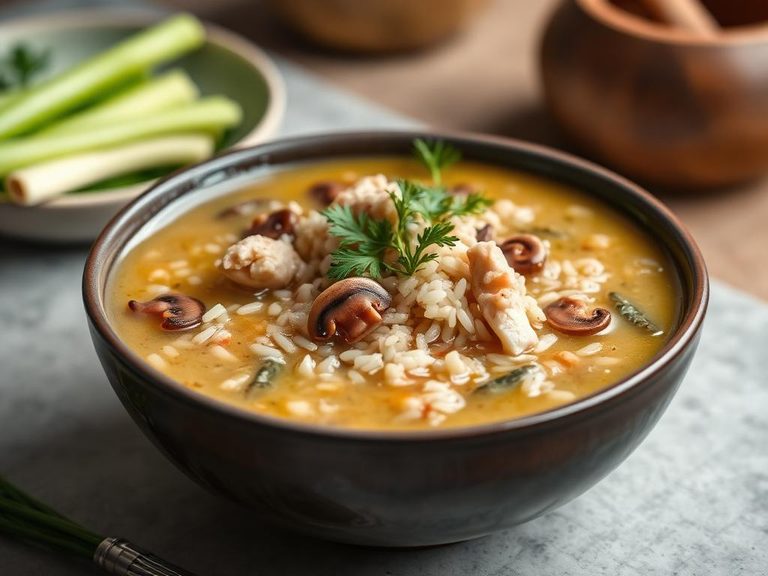
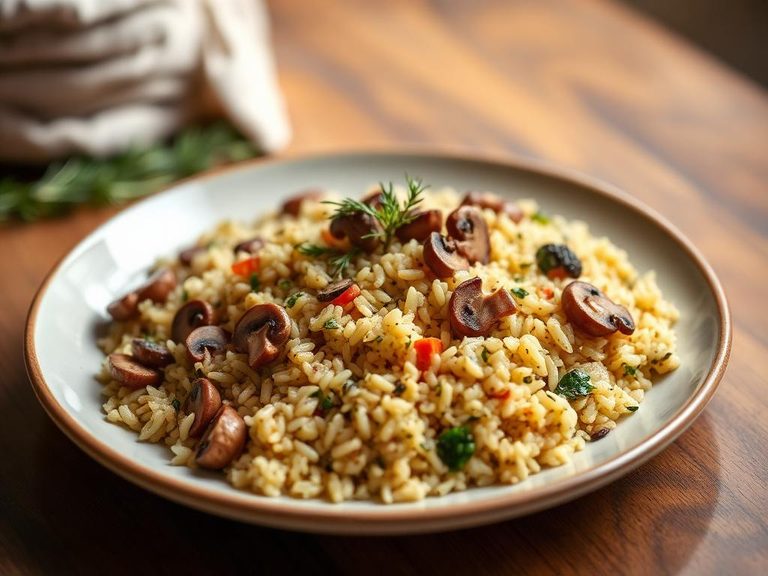
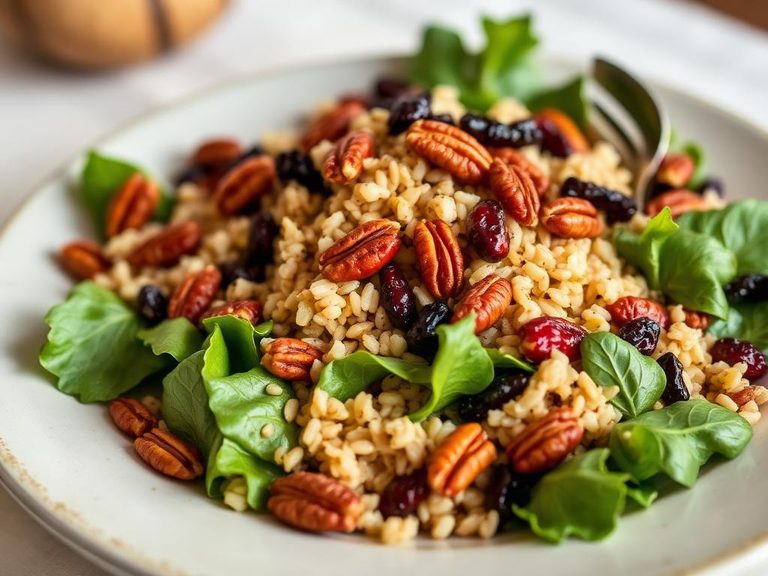
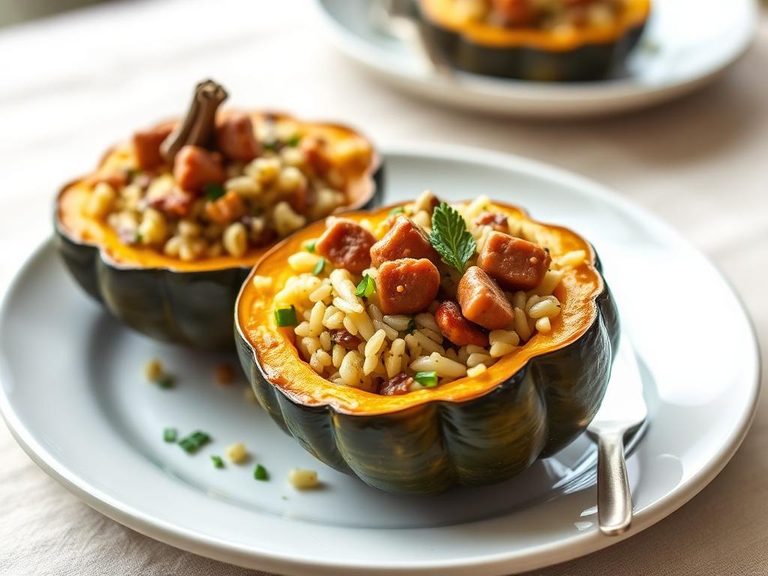
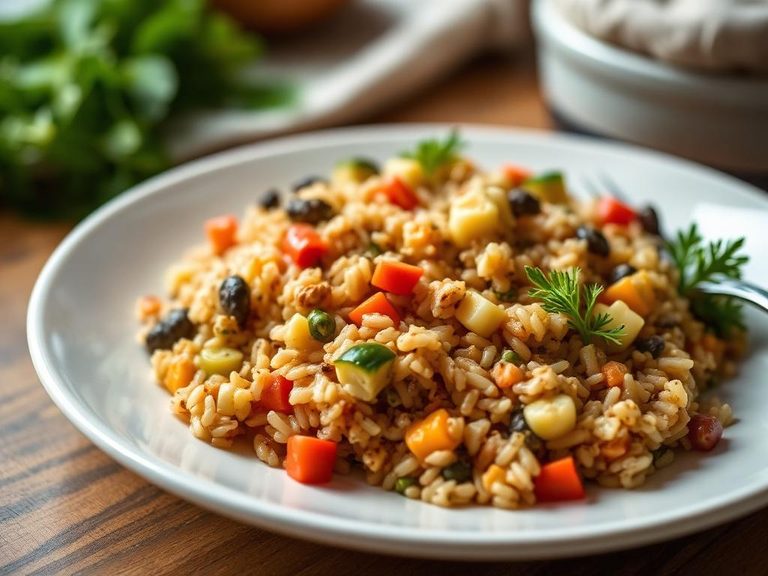
🌍 Where it's eaten
💡 Did you know?
True wild rice (Zizania) is legally defined in the US and Canada as hand-harvested from canoes in natural waters, a practice that supports both the ecosystem and traditional indigenous communities.
Full nutrition (USDA data · scales with serving)
| Water | 71.5 g |
| Energy | 122 kcal |
| Protein | 3.9 g |
| Total lipid (fat) | 3.1 g |
| Carbohydrate, by difference | 20.6 g |
| Fiber, total dietary | 1.7 g |
| Total Sugars | 0.71 g |
| Calcium, Ca | 3.0 mg |
| Iron, Fe | 0.58 mg |
| Magnesium, Mg | 31.0 mg |
| Phosphorus, P | 79.0 mg |
| Potassium, K | 98.0 mg |
| Sodium, Na | 231 mg |
| Zinc, Zn | 1.3 mg |
| Copper, Cu | 0.12 mg |
| Selenium, Se | 0.80 ug |
| Vitamin C, total ascorbic acid | 0.00 mg |
| Thiamin | 0.05 mg |
| Riboflavin | 0.08 mg |
| Niacin | 1.2 mg |
| Vitamin B-6 | 0.13 mg |
| Folate, total | 25.0 ug |
| Folic acid | 0.00 ug |
| Folate, food | 25.0 ug |
| Folate, DFE | 25.0 ug |
| Choline, total | 9.9 mg |
| Vitamin B-12 | 0.00 ug |
| Vitamin B-12, added | 0.00 ug |
| Vitamin A, RAE | 0.00 ug |
| Retinol | 0.00 ug |
| Carotene, beta | 2.0 ug |
| Carotene, alpha | 0.00 ug |
| Cryptoxanthin, beta | 0.00 ug |
| Lycopene | 0.00 ug |
| Lutein + zeaxanthin | 62.0 ug |
| Vitamin E (alpha-tocopherol) | 0.75 mg |
| Vitamin E, added | 0.00 mg |
| Vitamin D (D2 + D3) | 0.00 ug |
| Vitamin K (phylloquinone) | 3.2 ug |
| Alcohol, ethyl | 0.00 g |
| Caffeine | 0.00 mg |
| Theobromine | 0.00 mg |
Fat & fatty acid profile (per 100g)
| Fatty acids, total saturated | 0.41 g |
| SFA 4:0 | 0.00 g |
| SFA 6:0 | 0.00 g |
| SFA 8:0 | 0.00 g |
| SFA 10:0 | 0.00 g |
| SFA 12:0 | 0.00 g |
| SFA 14:0 | 0.00 g |
| SFA 16:0 | 0.31 g |
| SFA 18:0 | 0.08 g |
| Fatty acids, total monounsaturated | 1.2 g |
| MUFA 16:1 | 0.01 g |
| MUFA 18:1 | 1.2 g |
| MUFA 20:1 | 0.02 g |
| MUFA 22:1 | 0.00 g |
| Fatty acids, total polyunsaturated | 1.3 g |
| PUFA 18:2 | 1.1 g |
| PUFA 18:3 | 0.21 g |
| PUFA 18:4 | 0.00 g |
| PUFA 20:4 | 0.00 g |
| PUFA 20:5 n-3 (EPA) | 0.00 g |
| PUFA 22:5 n-3 (DPA) | 0.00 g |
| PUFA 22:6 n-3 (DHA) | 0.00 g |
| Cholesterol | 0.00 mg |
Amino acid profile (per 100g)
Estimated from Snacks, rice cakes, brown rice, sesame seed — USDA does not publish this profile for Rice.
| Tryptophan | 0.10 g |
| Threonine | 0.28 g |
| Isoleucine | 0.32 g |
| Leucine | 0.63 g |
| Lysine | 0.29 g |
| Methionine | 0.17 g |
| Cystine | 0.09 g |
| Phenylalanine | 0.39 g |
| Tyrosine | 0.29 g |
| Valine | 0.44 g |
| Arginine | 0.59 g |
| Histidine | 0.19 g |
| Alanine | 0.44 g |
| Aspartic acid | 0.71 g |
| Glutamic acid | 1.6 g |
| Glycine | 0.38 g |
| Proline | 0.35 g |
| Serine | 0.39 g |
FAQ
Is wild rice actually rice?
No, despite its name and culinary use, wild rice is the seed of an aquatic grass (genus Zizania), not a true rice (Oryza sativa).
Why is my wild rice still crunchy after cooking?
Wild rice typically requires 45-60 minutes of simmering. If still crunchy, it may need more water and time. Also, older batches can take longer to soften.
How do I store cooked wild rice?
Cool it completely and store in an airtight container in the refrigerator for up to 5 days, or freeze for up to 3 months.
Nutrient density (calculated · NRF9.3)
Nutrient Rich Foods index: beneficial nutrients (protein, fiber, vitamins, minerals) minus saturated fat, added sugar & sodium, per 100 kcal.
NRF9.3 index — Fulgoni, Keast & Drewnowski, 2009. Computed from USDA nutrients.
Weight-loss friendliness (composite index)
Energy density 1.22 kcal/g · 13% calories from protein · 1.7 g fiber · 0.7 g sugar per 100 g.
Composite of energy density (Rolls et al., 1999), protein & fiber satiety, minus sugar. A calculated heuristic — ranks satiety-per-calorie, not a clinical measure.
Dietary load (calculated from USDA values)
Potential renal acid load. Positive = acid-forming, negative = alkaline-forming.
Sodium-to-potassium ratio: 2.36 (lower is better — aim for ≤ 1)
Sodium:potassium per WHO potassium guidance. Computed from USDA nutrients.