

Pretzels, soft, multigrain
Common food

Photo: Wikipedia
A soft, chewy, multigrain pretzel is a hearty, slightly nutty twist on the classic street snack, boasting a satisfyingly dense texture and a malty, wheat-forward flavor. Its nutritional profile is notably high in carbohydrates for energy, with a respectable protein content for a baked good, making it a more substantial choice than its refined-flour counterpart.
Calorie split: 10% protein · 82% carbs · 8% fat
↓ Full nutrition💚 Why it's loved
People love its comforting, chewy texture and the satisfying balance of a slightly sweet, malty exterior with a hearty, wholesome interior. It's a versatile staple, equally at home as a quick snack, a post-workout bite, or the base for a loaded pretzel sandwich.
⚠️ Watch-outs & how to enjoy it better
The high carbohydrate content can cause blood-sugar spikes, especially when eaten alone. Soft pretzels are also typically high in sodium. To counteract this, pair it with a protein or healthy fat (like hummus, nut butter, or cheese) to slow digestion and stabilize energy, and be mindful of portion size. Those with gluten sensitivities must avoid it.
Key benefits
- Good source of complex carbohydrates for sustained energy
- Provides plant-based protein (8.49g per 100g)
- Contains dietary fiber from whole grains
- Low in fat and added sugar
- Often a source of B vitamins and minerals like iron from the grains
🍽️ Popular dishes




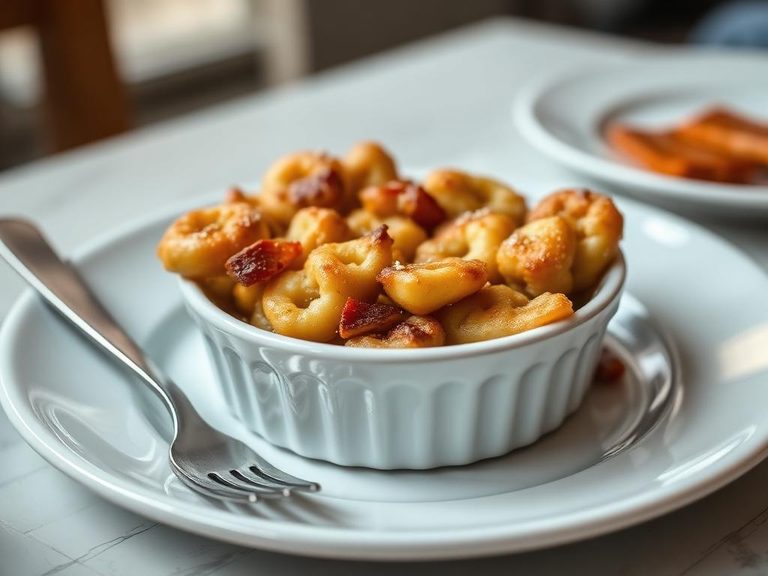
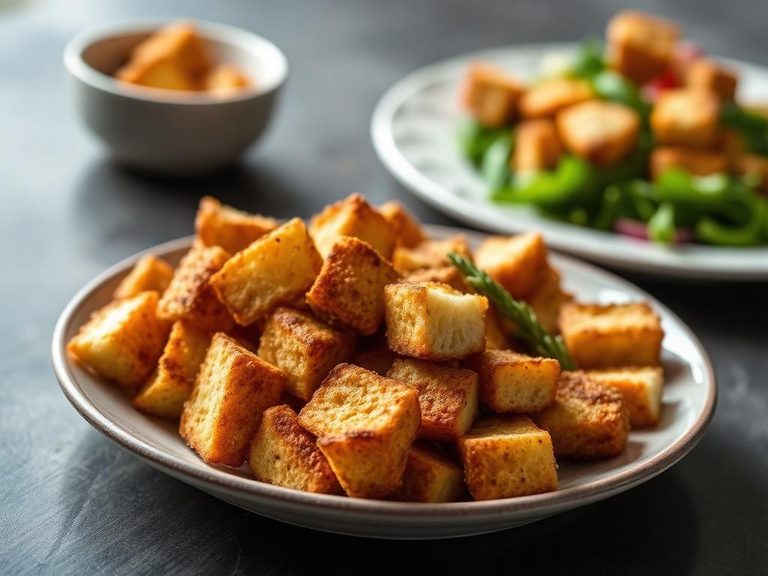
🌍 Where it's eaten
💡 Did you know?
The traditional pretzel shape is said to represent a child's arms folded in prayer, and the word 'pretzel' may derive from the Latin 'bracellae' (little arms) or 'pretiola' (little reward).
Full nutrition (USDA data · scales with serving)
| Water | 14.7 g |
| Energy | 337 kcal |
| Protein | 8.5 g |
| Total lipid (fat) | 3.1 g |
| Carbohydrate, by difference | 70.3 g |
| Fiber, total dietary | 3.6 g |
| Total Sugars | 0.26 g |
| Calcium, Ca | 26.0 mg |
| Iron, Fe | 4.2 mg |
| Magnesium, Mg | 49.0 mg |
| Phosphorus, P | 123 mg |
| Potassium, K | 139 mg |
| Sodium, Na | 495 mg |
| Zinc, Zn | 1.2 mg |
| Copper, Cu | 0.17 mg |
| Selenium, Se | 19.9 ug |
| Vitamin C, total ascorbic acid | 0.00 mg |
| Thiamin | 0.41 mg |
| Riboflavin | 0.30 mg |
| Niacin | 4.7 mg |
| Vitamin B-6 | 0.08 mg |
| Folate, total | 26.0 ug |
| Folic acid | 0.00 ug |
| Folate, food | 26.0 ug |
| Folate, DFE | 26.0 ug |
| Choline, total | 20.3 mg |
| Vitamin B-12 | 0.00 ug |
| Vitamin B-12, added | 0.00 ug |
| Vitamin A, RAE | 0.00 ug |
| Retinol | 0.00 ug |
| Carotene, beta | 0.00 ug |
| Carotene, alpha | 0.00 ug |
| Cryptoxanthin, beta | 0.00 ug |
| Lycopene | 0.00 ug |
| Lutein + zeaxanthin | 27.0 ug |
| Vitamin E (alpha-tocopherol) | 0.58 mg |
| Vitamin E, added | 0.00 mg |
| Vitamin D (D2 + D3) | 0.00 ug |
| Vitamin K (phylloquinone) | 2.6 ug |
| Alcohol, ethyl | 0.00 g |
| Caffeine | 0.00 mg |
| Theobromine | 0.00 mg |
Fat & fatty acid profile (per 100g)
| Fatty acids, total saturated | 0.69 g |
| SFA 4:0 | 0.00 g |
| SFA 6:0 | 0.00 g |
| SFA 8:0 | 0.00 g |
| SFA 10:0 | 0.00 g |
| SFA 12:0 | 0.00 g |
| SFA 14:0 | 0.01 g |
| SFA 16:0 | 0.45 g |
| SFA 18:0 | 0.23 g |
| Fatty acids, total monounsaturated | 1.0 g |
| MUFA 16:1 | 0.00 g |
| MUFA 18:1 | 1.0 g |
| MUFA 20:1 | 0.00 g |
| MUFA 22:1 | 0.00 g |
| Fatty acids, total polyunsaturated | 1.0 g |
| PUFA 18:2 | 0.94 g |
| PUFA 18:3 | 0.06 g |
| PUFA 18:4 | 0.00 g |
| PUFA 20:4 | 0.00 g |
| PUFA 20:5 n-3 (EPA) | 0.00 g |
| PUFA 22:5 n-3 (DPA) | 0.00 g |
| PUFA 22:6 n-3 (DHA) | 0.00 g |
| Cholesterol | 0.00 mg |
Amino acid profile (per 100g)
Estimated from Snacks, pretzels, hard, confectioner's coating, chocolate-flavor — USDA does not publish this profile for Pretzels.
| Tryptophan | 0.10 g |
| Threonine | 0.25 g |
| Isoleucine | 0.29 g |
| Leucine | 0.53 g |
| Lysine | 0.25 g |
| Methionine | 0.13 g |
| Cystine | 0.15 g |
| Phenylalanine | 0.36 g |
| Tyrosine | 0.23 g |
| Valine | 0.33 g |
| Arginine | 0.31 g |
| Histidine | 0.16 g |
| Alanine | 0.27 g |
| Aspartic acid | 0.42 g |
| Glutamic acid | 2.2 g |
| Glycine | 0.27 g |
| Proline | 0.74 g |
| Serine | 0.36 g |
FAQ
How is a multigrain soft pretzel different from a regular one?
It incorporates whole grains like oats, rye, or whole wheat flour, which adds more fiber, a nuttier flavor, and a denser texture compared to the primarily white-flour version.
Is it a good post-workout snack?
Yes, its high carbohydrate content helps replenish glycogen stores, and the protein supports muscle repair. Pairing it with a protein source like Greek yogurt makes it even more effective.
Can I freeze soft pretzels?
Absolutely. Wrap them tightly in plastic wrap and foil, then freeze for up to 3 months. Reheat in a 350°F (175°C) oven for 10-15 minutes to restore their texture.
Nutrient density (calculated · NRF9.3)
Nutrient Rich Foods index: beneficial nutrients (protein, fiber, vitamins, minerals) minus saturated fat, added sugar & sodium, per 100 kcal.
NRF9.3 index — Fulgoni, Keast & Drewnowski, 2009. Computed from USDA nutrients.
Weight-loss friendliness (composite index)
Energy density 3.37 kcal/g · 10% calories from protein · 3.6 g fiber · 0.3 g sugar per 100 g.
Composite of energy density (Rolls et al., 1999), protein & fiber satiety, minus sugar. A calculated heuristic — ranks satiety-per-calorie, not a clinical measure.
Dietary load (calculated from USDA values)
Potential renal acid load. Positive = acid-forming, negative = alkaline-forming.
Sodium-to-potassium ratio: 3.56 (lower is better — aim for ≤ 1)
Sodium:potassium per WHO potassium guidance. Computed from USDA nutrients.