

Pork, fresh, variety meats and by-products, ears, frozen, cooked, simmered
Whole food · Pork Products
This is the ear of a pig, simmered until tender after being frozen. It offers a unique, gelatinous, and slightly chewy texture with a mild, savory flavor that readily absorbs seasonings. Nutritionally, it's a low-carb, high-protein cut with a notable fat content, making it a rich source of collagen.
Calorie split: 39% protein · 0% carbs · 60% fat
↓ Full nutrition💚 Why it's loved
People love pork ears for their incredibly satisfying, bouncy texture and their ability to soak up the flavors of broths, sauces, and marinades. In many cultures, they are a beloved, affordable comfort food and a staple in hearty, slow-cooked dishes.
⚠️ Watch-outs & how to enjoy it better
The high fat and cholesterol content means it should be consumed in moderation by those managing heart health or calorie intake. The cartilage can also be a textural challenge for some. To mitigate, consider pairing it with fiber-rich vegetables in a balanced meal and practicing portion control.
Key benefits
- High in collagen for skin and joint health
- Excellent source of protein with zero carbs
- Provides essential minerals like zinc and selenium
- Rich in gelatin, which may support gut lining health
- A traditional, nose-to-tail cut that reduces food waste
🍽️ Popular dishes
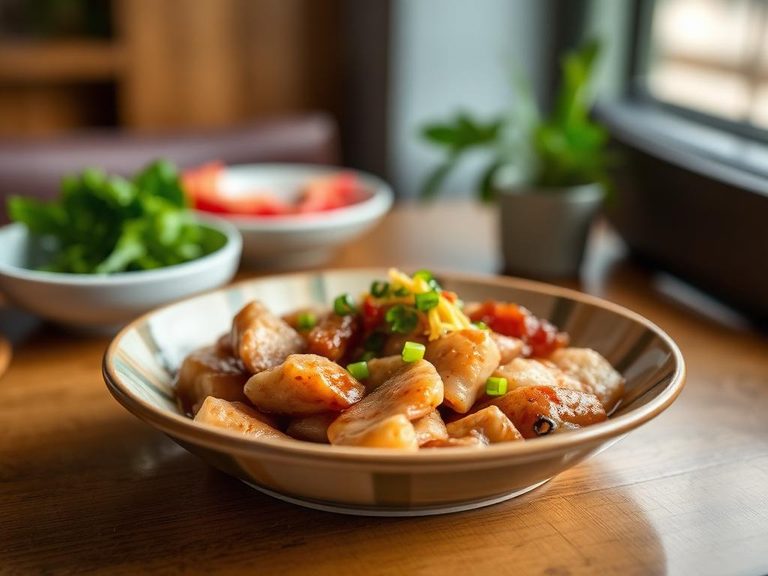

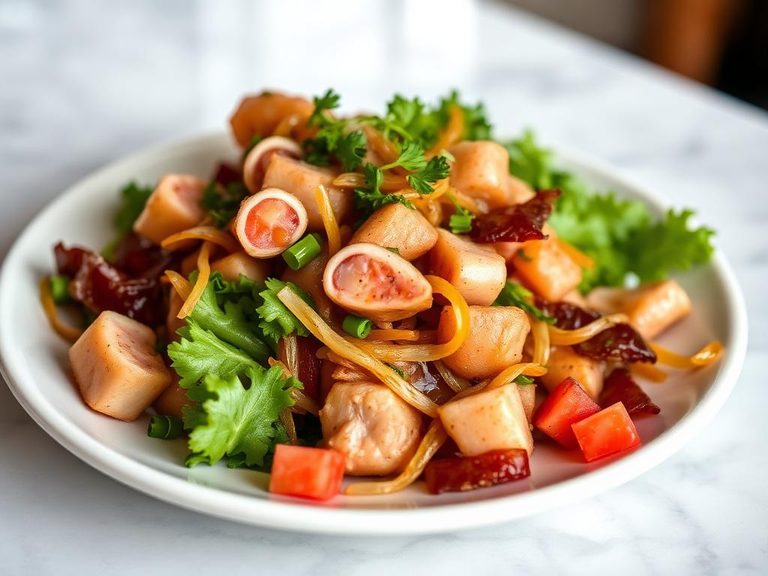
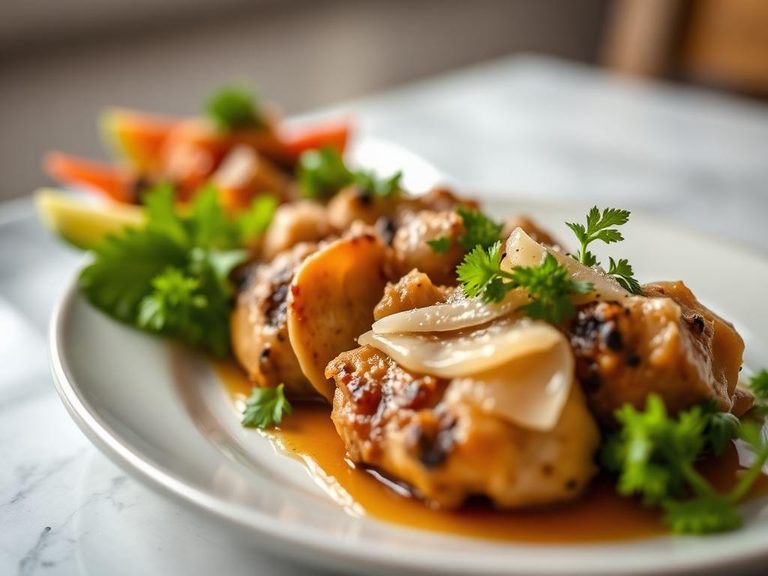
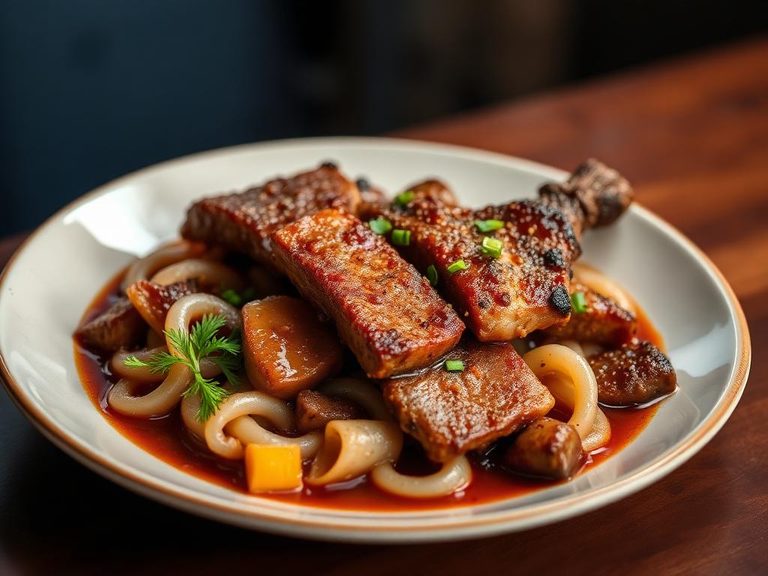
🌍 Where it's eaten
💡 Did you know?
Pig's ears are a classic example of a 'nose-to-tail' ingredient, and their high collagen content is what gives them their signature wobbly texture when cooled, similar to a natural aspic.
Full nutrition (USDA data · scales with serving)
| Water | 72.7 g |
| Energy | 166 kcal |
| Energy | 695 kj |
| Protein | 15.9 g |
| Total lipid (fat) | 10.8 g |
| Ash | 0.40 g |
| Carbohydrate, by difference | 0.20 g |
| Fiber, total dietary | 0.00 g |
| Calcium, Ca | 18.0 mg |
| Iron, Fe | 1.5 mg |
| Magnesium, Mg | 7.0 mg |
| Phosphorus, P | 24.0 mg |
| Potassium, K | 40.0 mg |
| Sodium, Na | 167 mg |
| Zinc, Zn | 0.20 mg |
| Copper, Cu | 0.01 mg |
| Manganese, Mn | 0.01 mg |
| Selenium, Se | 4.4 ug |
| Vitamin C, total ascorbic acid | 0.00 mg |
| Thiamin | 0.02 mg |
| Riboflavin | 0.07 mg |
| Niacin | 0.56 mg |
| Pantothenic acid | 0.04 mg |
| Vitamin B-6 | 0.01 mg |
| Folate, total | 0.00 ug |
| Folic acid | 0.00 ug |
| Folate, food | 0.00 ug |
| Folate, DFE | 0.00 ug |
| Vitamin B-12 | 0.04 ug |
| Vitamin A, RAE | 0.00 ug |
| Retinol | 0.00 ug |
| Vitamin A, IU | 0.00 iu |
| Alcohol, ethyl | 0.00 g |
Fat & fatty acid profile (per 100g)
| Fatty acids, total saturated | 3.9 g |
| SFA 4:0 | 0.00 g |
| SFA 6:0 | 0.00 g |
| SFA 8:0 | 0.00 g |
| SFA 10:0 | 0.00 g |
| SFA 12:0 | 0.01 g |
| SFA 14:0 | 0.14 g |
| SFA 16:0 | 2.4 g |
| SFA 18:0 | 1.3 g |
| Fatty acids, total monounsaturated | 4.9 g |
| MUFA 16:1 | 0.31 g |
| MUFA 18:1 | 4.6 g |
| MUFA 20:1 | 0.00 g |
| MUFA 22:1 | 0.00 g |
| Fatty acids, total polyunsaturated | 1.1 g |
| PUFA 18:2 | 1.0 g |
| PUFA 18:3 | 0.09 g |
| PUFA 18:4 | 0.00 g |
| PUFA 20:4 | 0.05 g |
| PUFA 20:5 n-3 (EPA) | 0.00 g |
| PUFA 22:5 n-3 (DPA) | 0.00 g |
| PUFA 22:6 n-3 (DHA) | 0.00 g |
| Cholesterol | 90.0 mg |
| Phytosterols | 0.00 mg |
Amino acid profile (per 100g)
| Tryptophan | 0.03 g |
| Threonine | 0.48 g |
| Isoleucine | 0.36 g |
| Leucine | 0.88 g |
| Lysine | 0.73 g |
| Methionine | 0.13 g |
| Cystine | 0.14 g |
| Phenylalanine | 0.51 g |
| Tyrosine | 0.32 g |
| Valine | 0.64 g |
| Arginine | 1.3 g |
| Histidine | 0.19 g |
| Alanine | 1.5 g |
| Aspartic acid | 1.2 g |
| Glutamic acid | 2.0 g |
| Glycine | 3.1 g |
| Proline | 1.9 g |
| Serine | 0.68 g |
FAQ
How do you prepare pig's ears from frozen?
Thaw them in the refrigerator overnight. Before simmering, they should be thoroughly cleaned and often blanched in boiling water to remove any impurities. They then require a long, slow simmer (1.5-2 hours) to become tender.
What do pig's ears taste like?
The flavor is mild and porky, but the primary experience is the texture: a mix of soft, gelatinous skin, tender meat, and a pleasant, crunchy cartilage. They act as a flavor sponge for whatever they are cooked in.
Are pork ears healthy?
They are a good source of protein and minerals like zinc, and are prized for their collagen. However, they are also high in fat and cholesterol, so they are best enjoyed as an occasional part of a balanced diet rather than a daily staple.
Nutrient density (calculated · NRF9.3)
Nutrient Rich Foods index: beneficial nutrients (protein, fiber, vitamins, minerals) minus saturated fat, added sugar & sodium, per 100 kcal.
NRF9.3 index — Fulgoni, Keast & Drewnowski, 2009. Computed from USDA nutrients.
Weight-loss friendliness (composite index)
Energy density 1.66 kcal/g · 38% calories from protein · 0.0 g fiber · 0.0 g sugar per 100 g.
Composite of energy density (Rolls et al., 1999), protein & fiber satiety, minus sugar. A calculated heuristic — ranks satiety-per-calorie, not a clinical measure.
Dietary load (calculated from USDA values)
Potential renal acid load. Positive = acid-forming, negative = alkaline-forming.
Sodium-to-potassium ratio: 4.17 (lower is better — aim for ≤ 1)
Sodium:potassium per WHO potassium guidance. Computed from USDA nutrients.