

Popcorn, microwave, plain, light
Common food

Photo: Wikipedia
Microwave plain light popcorn is a quick, airy snack made from kernels heated until they burst into fluffy, white morsels. It has a neutral, slightly toasty corn flavor and a light, crisp texture that's less greasy than traditional movie-theater versions. Nutritionally, it's a high-fiber, whole-grain snack with a surprisingly good protein-to-calorie ratio.
Calorie split: 11% protein · 67% carbs · 21% fat
↓ Full nutrition💚 Why it's loved
People love it for its satisfying crunch and the nostalgic, comforting ritual of making it at home in minutes. Its mild, versatile flavor makes it a perfect blank canvas for both sweet and savory seasonings, from nutritional yeast to cinnamon.
⚠️ Watch-outs & how to enjoy it better
The main downside is the potential for sodium in pre-packaged varieties and the risk of blood-sugar spikes from the refined carbs if eaten in large amounts. To counteract this, choose a no-salt-added version or season lightly yourself, and pair it with a source of protein or healthy fat (like a handful of nuts or cheese) to slow digestion and stabilize energy. Always check labels for common allergens like soy or dairy in flavorings.
Key benefits
- Excellent source of dietary fiber (13.4g per 100g)
- Whole-grain snack providing complex carbohydrates
- Relatively high in protein for a grain-based snack (11.92g per 100g)
- Low in sugar (0.8g per 100g)
- Convenient, portion-controlled, and low in fat compared to oil-popped versions
🍽️ Popular dishes
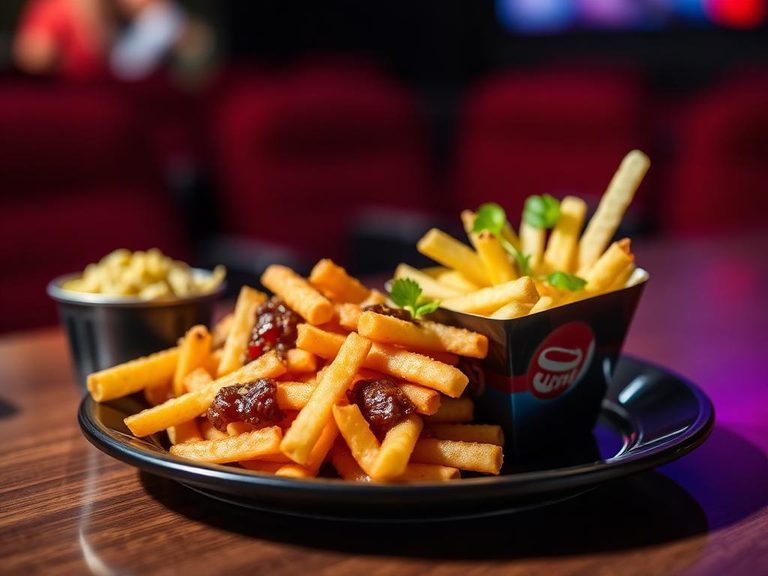
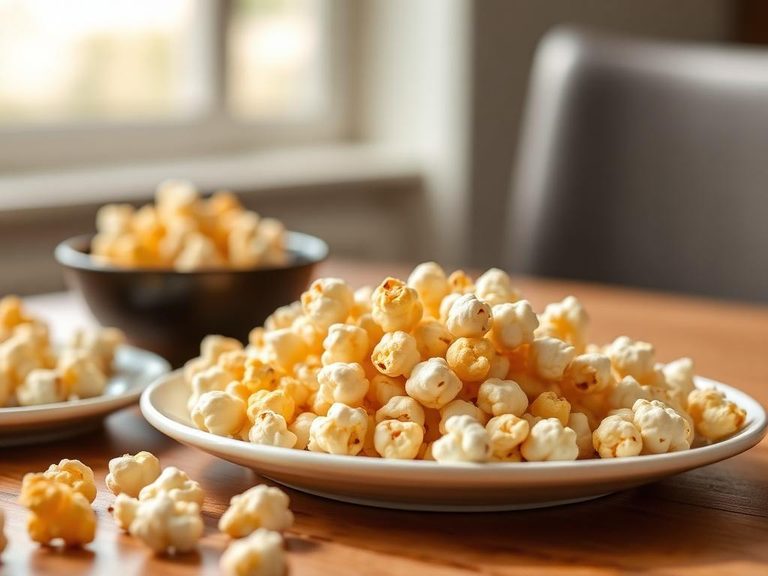
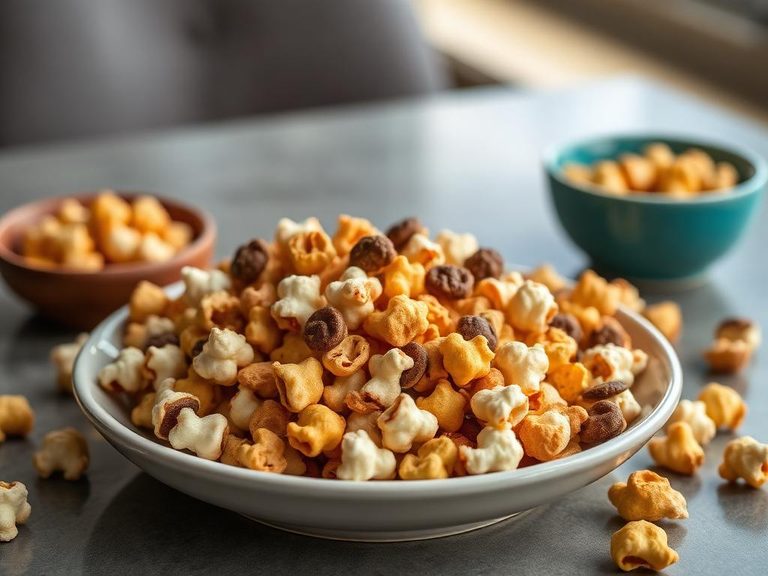
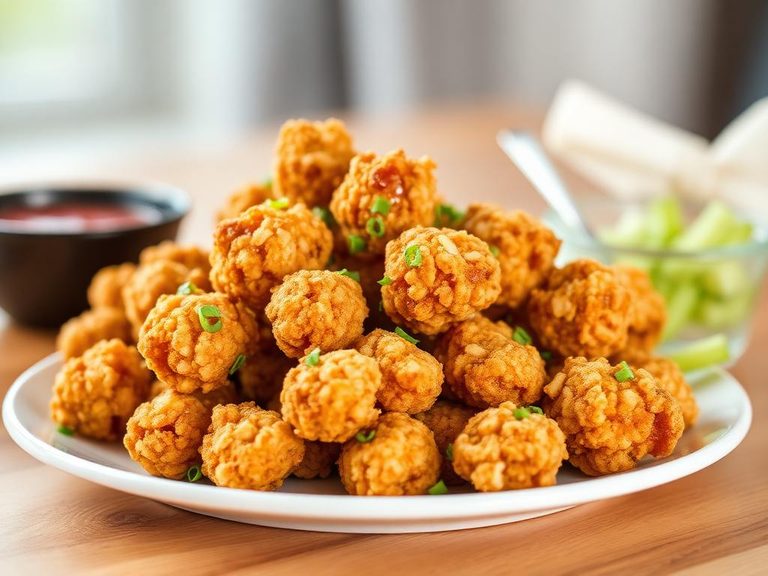


🌍 Where it's eaten
💡 Did you know?
Archaeologists have found 6,700-year-old popcorn kernels in Peru that still puff up when heated.
Full nutrition (USDA data · scales with serving)
| Water | 3.1 g |
| Energy | 409 kcal |
| Protein | 11.9 g |
| Total lipid (fat) | 10.1 g |
| Carbohydrate, by difference | 71.7 g |
| Fiber, total dietary | 13.4 g |
| Total Sugars | 0.80 g |
| Calcium, Ca | 7.0 mg |
| Iron, Fe | 2.9 mg |
| Magnesium, Mg | 133 mg |
| Phosphorus, P | 330 mg |
| Potassium, K | 303 mg |
| Sodium, Na | 766 mg |
| Zinc, Zn | 2.8 mg |
| Copper, Cu | 0.24 mg |
| Selenium, Se | 0.00 ug |
| Vitamin C, total ascorbic acid | 0.00 mg |
| Thiamin | 0.10 mg |
| Riboflavin | 0.08 mg |
| Niacin | 2.1 mg |
| Vitamin B-6 | 0.14 mg |
| Folate, total | 29.0 ug |
| Folic acid | 0.00 ug |
| Folate, food | 29.0 ug |
| Folate, DFE | 29.0 ug |
| Choline, total | 19.5 mg |
| Vitamin B-12 | 0.00 ug |
| Vitamin B-12, added | 0.00 ug |
| Vitamin A, RAE | 9.0 ug |
| Retinol | 0.00 ug |
| Carotene, beta | 82.0 ug |
| Carotene, alpha | 53.0 ug |
| Cryptoxanthin, beta | 0.00 ug |
| Lycopene | 0.00 ug |
| Lutein + zeaxanthin | 1336 ug |
| Vitamin E (alpha-tocopherol) | 0.88 mg |
| Vitamin E, added | 0.00 mg |
| Vitamin D (D2 + D3) | 0.00 ug |
| Vitamin K (phylloquinone) | 10.3 ug |
| Alcohol, ethyl | 0.00 g |
| Caffeine | 0.00 mg |
| Theobromine | 0.00 mg |
Fat & fatty acid profile (per 100g)
| Fatty acids, total saturated | 2.5 g |
| SFA 4:0 | 0.00 g |
| SFA 6:0 | 0.00 g |
| SFA 8:0 | 0.00 g |
| SFA 10:0 | 0.00 g |
| SFA 12:0 | 0.00 g |
| SFA 14:0 | 0.00 g |
| SFA 16:0 | 0.99 g |
| SFA 18:0 | 1.4 g |
| Fatty acids, total monounsaturated | 2.7 g |
| MUFA 16:1 | 0.01 g |
| MUFA 18:1 | 2.7 g |
| MUFA 20:1 | 0.03 g |
| MUFA 22:1 | 0.00 g |
| Fatty acids, total polyunsaturated | 4.0 g |
| PUFA 18:2 | 3.9 g |
| PUFA 18:3 | 0.15 g |
| PUFA 18:4 | 0.00 g |
| PUFA 20:4 | 0.00 g |
| PUFA 20:5 n-3 (EPA) | 0.00 g |
| PUFA 22:5 n-3 (DPA) | 0.00 g |
| PUFA 22:6 n-3 (DHA) | 0.00 g |
| Cholesterol | 0.00 mg |
Amino acid profile (per 100g)
Estimated from Snacks, popcorn, oil-popped, white popcorn, salt added — USDA does not publish this profile for Popcorn.
| Tryptophan | 0.06 g |
| Threonine | 0.34 g |
| Isoleucine | 0.32 g |
| Leucine | 1.1 g |
| Lysine | 0.25 g |
| Methionine | 0.19 g |
| Cystine | 0.16 g |
| Phenylalanine | 0.44 g |
| Tyrosine | 0.37 g |
| Valine | 0.46 g |
| Arginine | 0.45 g |
| Histidine | 0.28 g |
| Alanine | 0.67 g |
| Aspartic acid | 0.63 g |
| Glutamic acid | 1.7 g |
| Glycine | 0.37 g |
| Proline | 0.79 g |
| Serine | 0.43 g |
FAQ
Is microwave popcorn a whole grain?
Yes, the popped kernel is considered a whole grain, retaining its bran, germ, and endosperm, which contributes to its high fiber content.
Why is 'light' popcorn lower in calories?
'Light' versions typically use less oil or fat in the popping process and may have a larger air-to-kernel ratio, reducing the calories per volume compared to 'butter' or 'movie theater' styles.
Can I eat popcorn on a low-carb diet?
While it's a whole grain, popcorn is relatively high in carbohydrates (71.68g per 100g). It can fit into moderate low-carb diets in small portions, but strict keto diets usually avoid it.
Nutrient density (calculated · NRF9.3)
Nutrient Rich Foods index: beneficial nutrients (protein, fiber, vitamins, minerals) minus saturated fat, added sugar & sodium, per 100 kcal.
NRF9.3 index — Fulgoni, Keast & Drewnowski, 2009. Computed from USDA nutrients.
Weight-loss friendliness (composite index)
Energy density 4.09 kcal/g · 12% calories from protein · 13.4 g fiber · 0.8 g sugar per 100 g.
Composite of energy density (Rolls et al., 1999), protein & fiber satiety, minus sugar. A calculated heuristic — ranks satiety-per-calorie, not a clinical measure.
Dietary load (calculated from USDA values)
Potential renal acid load. Positive = acid-forming, negative = alkaline-forming.
Sodium-to-potassium ratio: 2.53 (lower is better — aim for ≤ 1)
Sodium:potassium per WHO potassium guidance. Computed from USDA nutrients.