

Pomegranates, raw
Whole food · Fruits and Fruit Juices

Photo: Wikipedia
A pomegranate is a round, leathery-skinned fruit filled with hundreds of juicy, jewel-like arils, each containing a seed. The taste is a vibrant, sweet-tart burst with a refreshing, slightly floral note and a satisfying crunch from the seed. Nutritionally, it's a standout for its high fiber content and potent antioxidants, particularly punicalagins and punicic acid.
Calorie split: 7% protein · 81% carbs · 11% fat
↓ Full nutrition💚 Why it's loved
People adore pomegranates for their explosive, juice-filled arils that deliver a perfect balance of sweetness and tartness. They are cherished not just as a fresh snack but as a versatile ingredient that adds color, texture, and a gourmet touch to both sweet and savory dishes across many cultures.
⚠️ Watch-outs & how to enjoy it better
The primary downside is the labor-intensive process of deseeding, which can be messy and time-consuming. For individuals monitoring blood sugar, the natural sugars (13.67g per 100g) should be considered; pairing the fruit with a source of protein or fat (like nuts or yogurt) can help moderate the glycemic response. Some people may also experience digestive discomfort if consuming very large quantities due to the high fiber and tannin content.
Key benefits
- Rich in unique antioxidants (punicalagins, punicic acid)
- Good source of dietary fiber (4g per 100g)
- Contains vitamin C and vitamin K
- May support heart health by improving cholesterol profiles
- Anti-inflammatory properties
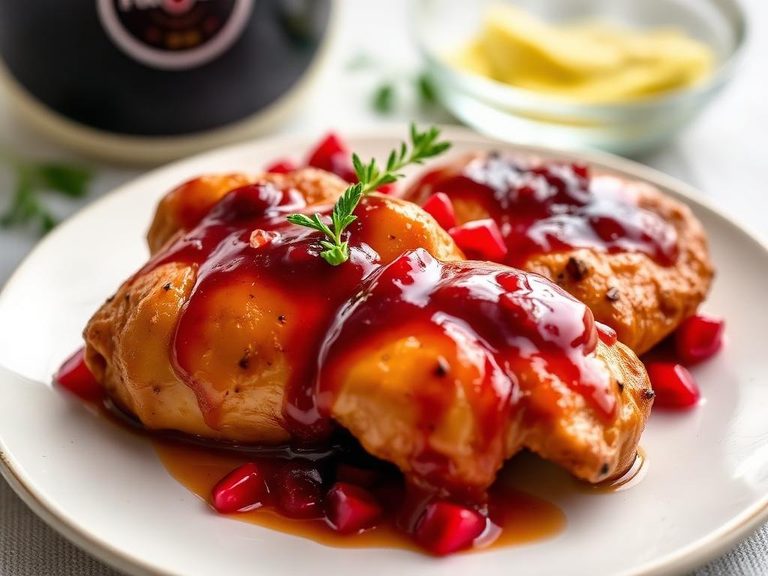
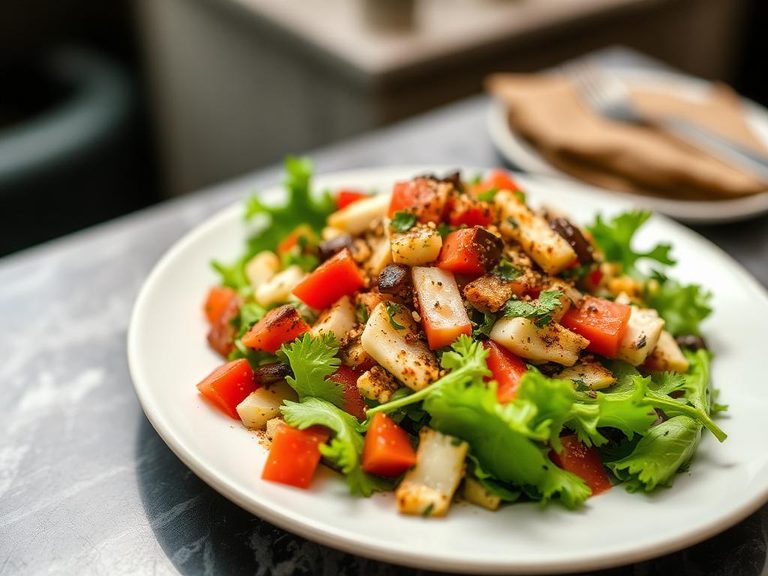
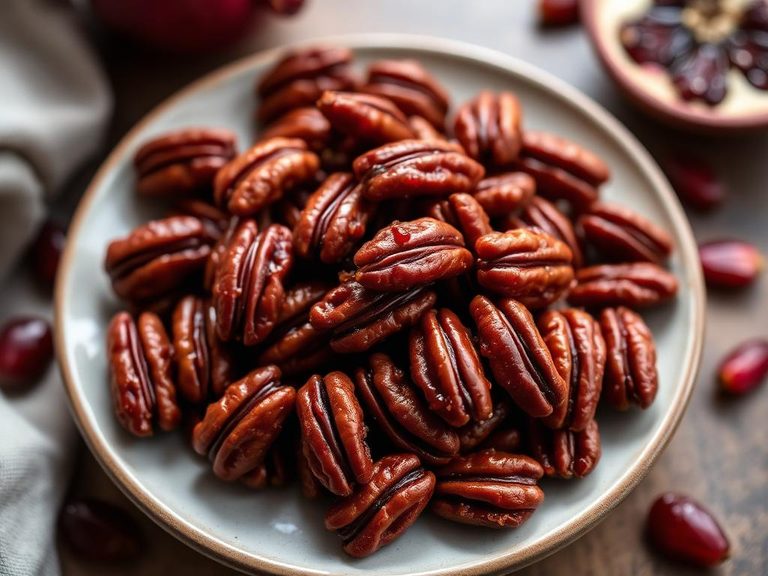
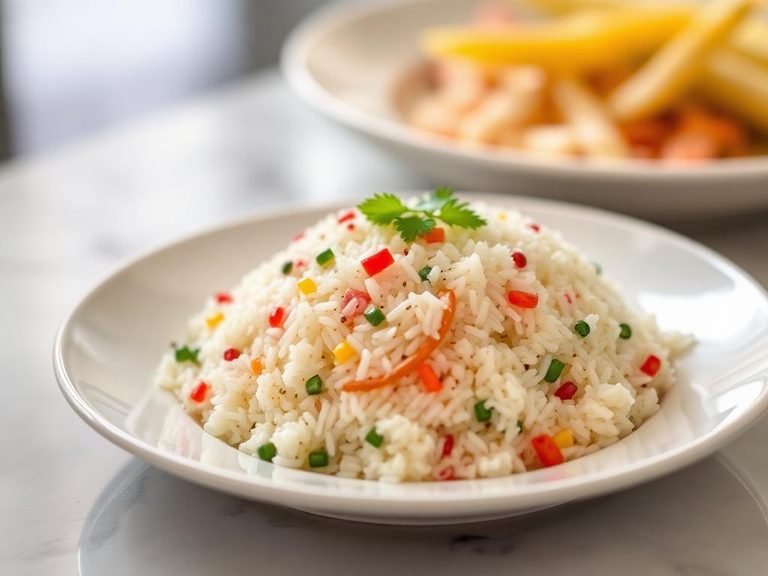
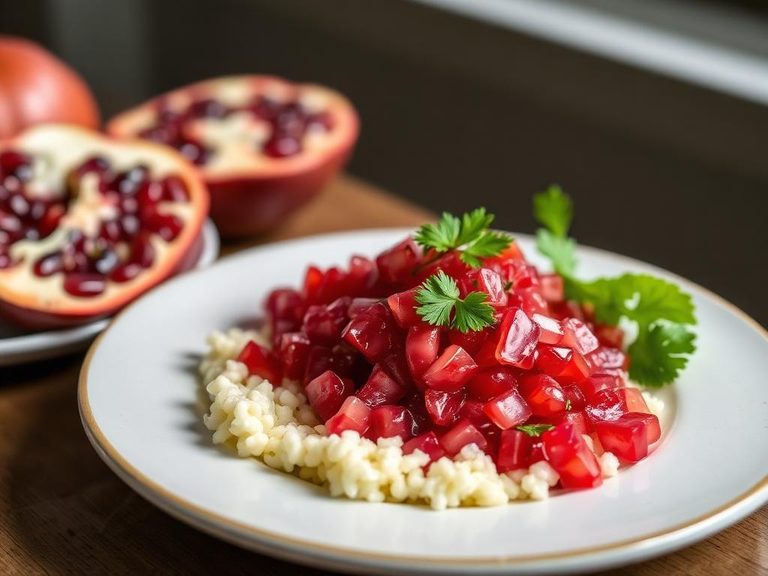
🍽️ Popular dishes
🌍 Where it's eaten
💡 Did you know?
The word 'pomegranate' derives from the Latin 'pōmum grānātum,' meaning 'seeded apple,' a remarkably accurate description of its interior.
Full nutrition (USDA data · scales with serving)
| Water | 77.9 g |
| Energy | 83.0 kcal |
| Energy | 346 kj |
| Protein | 1.7 g |
| Total lipid (fat) | 1.2 g |
| Ash | 0.53 g |
| Carbohydrate, by difference | 18.7 g |
| Fiber, total dietary | 4.0 g |
| Total Sugars | 13.7 g |
| Calcium, Ca | 10.0 mg |
| Iron, Fe | 0.30 mg |
| Magnesium, Mg | 12.0 mg |
| Phosphorus, P | 36.0 mg |
| Potassium, K | 236 mg |
| Sodium, Na | 3.0 mg |
| Zinc, Zn | 0.35 mg |
| Copper, Cu | 0.16 mg |
| Manganese, Mn | 0.12 mg |
| Selenium, Se | 0.50 ug |
| Vitamin C, total ascorbic acid | 10.2 mg |
| Thiamin | 0.07 mg |
| Riboflavin | 0.05 mg |
| Niacin | 0.29 mg |
| Pantothenic acid | 0.38 mg |
| Vitamin B-6 | 0.07 mg |
| Folate, total | 38.0 ug |
| Folic acid | 0.00 ug |
| Folate, food | 38.0 ug |
| Folate, DFE | 38.0 ug |
| Choline, total | 7.6 mg |
| Vitamin B-12 | 0.00 ug |
| Vitamin B-12, added | 0.00 ug |
| Vitamin A, RAE | 0.00 ug |
| Retinol | 0.00 ug |
| Carotene, beta | 0.00 ug |
| Carotene, alpha | 0.00 ug |
| Cryptoxanthin, beta | 0.00 ug |
| Vitamin A, IU | 0.00 iu |
| Lycopene | 0.00 ug |
| Lutein + zeaxanthin | 0.00 ug |
| Vitamin E (alpha-tocopherol) | 0.60 mg |
| Vitamin E, added | 0.00 mg |
| Vitamin D (D2 + D3), International Units | 0.00 iu |
| Vitamin D (D2 + D3) | 0.00 ug |
| Vitamin K (phylloquinone) | 16.4 ug |
| Alcohol, ethyl | 0.00 g |
| Caffeine | 0.00 mg |
| Theobromine | 0.00 mg |
Fat & fatty acid profile (per 100g)
| Fatty acids, total saturated | 0.12 g |
| SFA 4:0 | 0.00 g |
| SFA 6:0 | 0.00 g |
| SFA 8:0 | 0.00 g |
| SFA 10:0 | 0.00 g |
| SFA 12:0 | 0.01 g |
| SFA 14:0 | 0.01 g |
| SFA 16:0 | 0.07 g |
| SFA 18:0 | 0.04 g |
| Fatty acids, total monounsaturated | 0.09 g |
| MUFA 16:1 | 0.01 g |
| MUFA 18:1 | 0.08 g |
| MUFA 20:1 | 0.00 g |
| MUFA 22:1 | 0.00 g |
| Fatty acids, total polyunsaturated | 0.08 g |
| PUFA 18:2 | 0.08 g |
| PUFA 18:3 | 0.00 g |
| PUFA 18:4 | 0.00 g |
| PUFA 20:4 | 0.00 g |
| PUFA 20:5 n-3 (EPA) | 0.00 g |
| PUFA 22:5 n-3 (DPA) | 0.00 g |
| PUFA 22:6 n-3 (DHA) | 0.00 g |
| Fatty acids, total trans | 0.00 g |
| Cholesterol | 0.00 mg |
| Stigmasterol | 0.00 mg |
| Campesterol | 1.0 mg |
| Beta-sitosterol | 4.0 mg |
FAQ
How do you easily seed a pomegranate?
Cut the crown off, score the skin into sections, and submerge the fruit in a bowl of water. Gently break it apart underwater; the seeds will sink while the white pith floats, making separation easy and mess-free.
Are pomegranate seeds (arils) edible?
Yes, the entire aril, including the crunchy seed inside, is edible and provides a good source of fiber. Most people spit out the hard inner seed after chewing, but it is safe to swallow.
What is the difference between pomegranate juice and molasses?
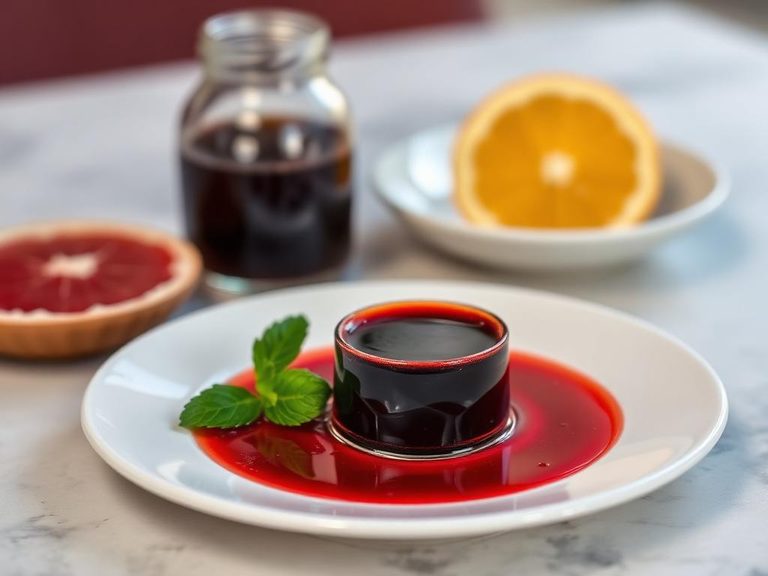
Pomegranate juice is the fresh, pressed liquid. Pomegranate molasses is a thick, syrupy reduction of the juice, often with added sugar, used as a tangy-sweet condiment in Middle Eastern cooking.
Nutrient density (calculated · NRF9.3)
Nutrient Rich Foods index: beneficial nutrients (protein, fiber, vitamins, minerals) minus saturated fat, added sugar & sodium, per 100 kcal.
NRF9.3 index — Fulgoni, Keast & Drewnowski, 2009. Computed from USDA nutrients.
Weight-loss friendliness (composite index)
Energy density 0.83 kcal/g · 8% calories from protein · 4.0 g fiber · 13.7 g sugar per 100 g.
Composite of energy density (Rolls et al., 1999), protein & fiber satiety, minus sugar. A calculated heuristic — ranks satiety-per-calorie, not a clinical measure.
Dietary load (calculated from USDA values)
Potential renal acid load. Positive = acid-forming, negative = alkaline-forming.
Sodium-to-potassium ratio: 0.01 (lower is better — aim for ≤ 1)
Sodium:potassium per WHO potassium guidance. Computed from USDA nutrients.