

Ostrich, tenderloin, raw
Whole food · Poultry Products

Photo: Wikipedia
Ostrich tenderloin is a remarkably lean, deep-red muscle cut from the bird's back, prized for its fine-grained texture and clean, beef-like flavor without the gaminess. Nutritionally, it's a powerhouse, delivering over 22 grams of high-quality protein per 100 grams with virtually no carbohydrates and minimal fat.
Calorie split: 75% protein · 0% carbs · 25% fat
↓ Full nutrition💚 Why it's loved
People love ostrich tenderloin for its rich, satisfying flavor that closely resembles lean beef, making it a familiar yet novel choice. Its versatility allows it to be prepared quickly with high-heat methods like grilling or searing, perfect for a fast, gourmet meal.
⚠️ Watch-outs & how to enjoy it better
Due to its extreme leanness, it can become tough and dry if overcooked, requiring careful temperature control. Those monitoring iron intake should be aware it is a significant source. To counteract dryness, use a meat thermometer (aim for 130-135°F for medium-rare), marinate briefly, or pair with a flavorful sauce or chutney.
Key benefits
- Extremely high in protein for muscle maintenance and satiety
- Very low in fat and calories compared to red meats
- Rich in iron and B vitamins, particularly B12
- Naturally free of carbohydrates and sugars
🍽️ Popular dishes
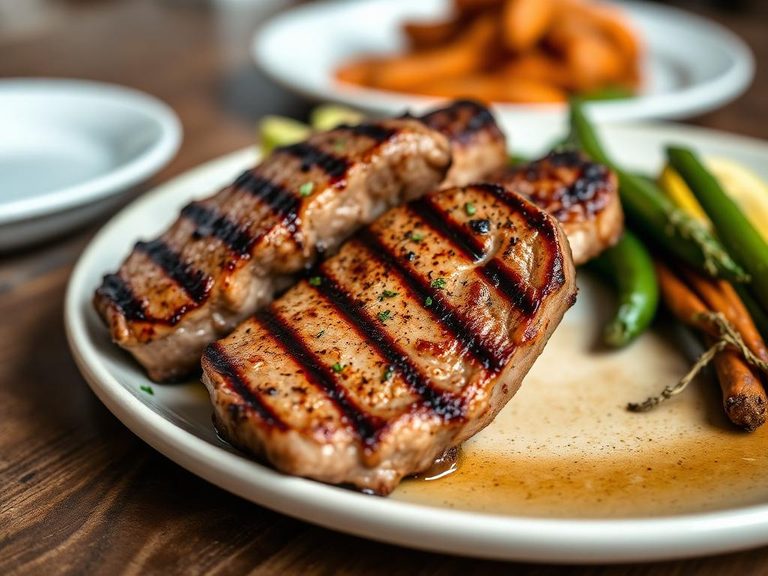
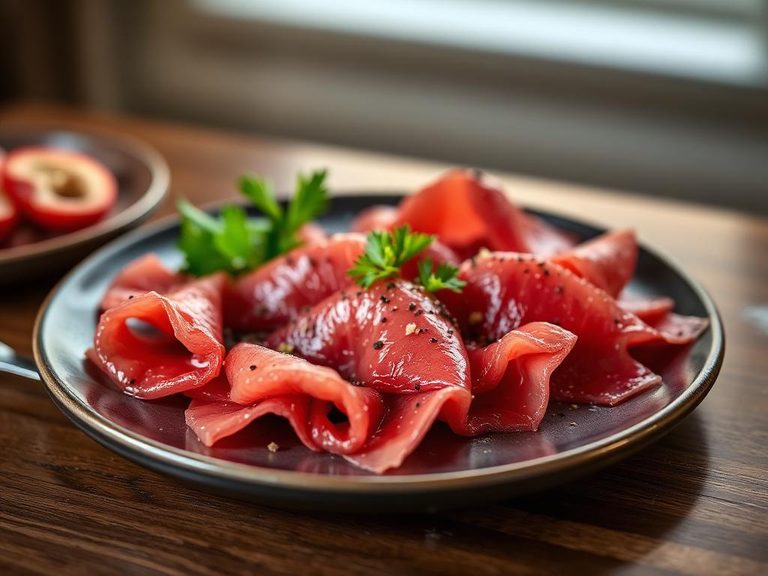
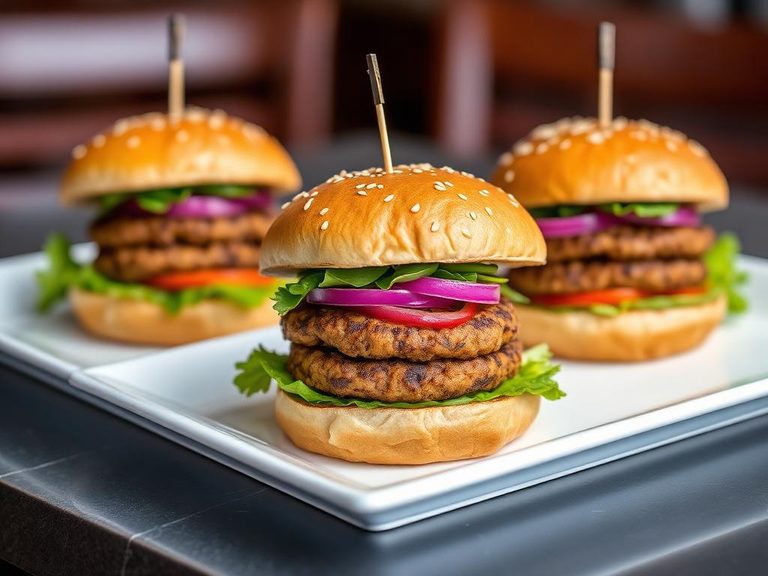
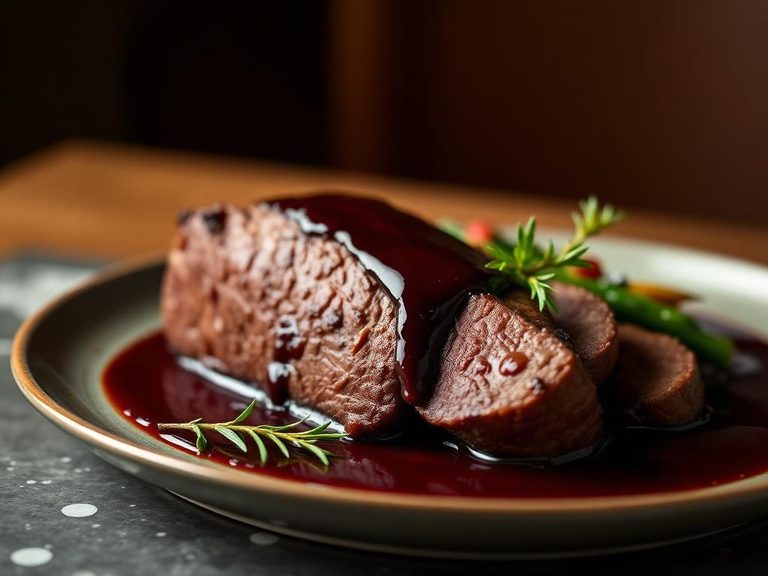
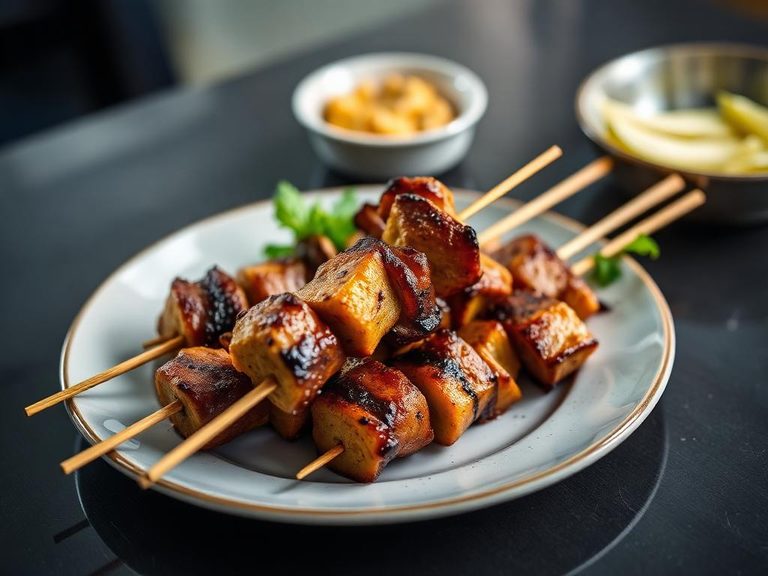
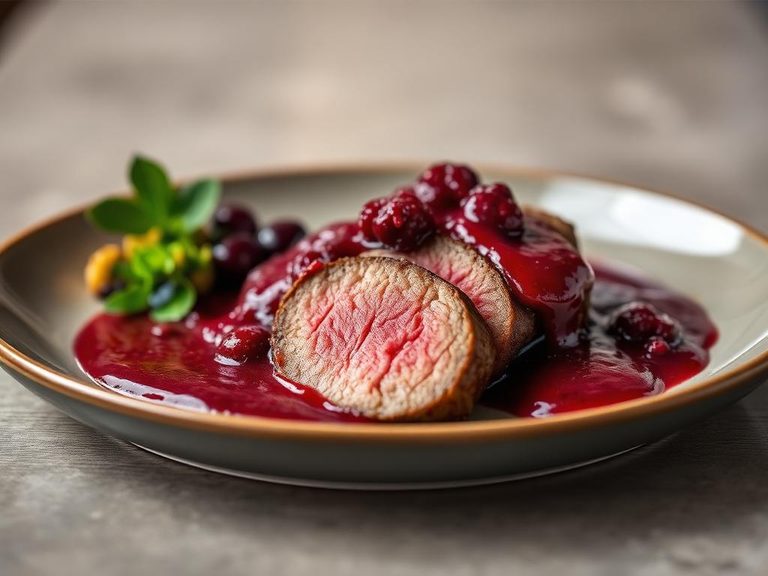
🌍 Where it's eaten
💡 Did you know?
Ostrich meat was once considered a luxury for the elite in the 1990s but is now farmed globally, with a single bird yielding over 30 kg of red meat.
Full nutrition (USDA data · scales with serving)
| Water | 74.5 g |
| Energy | 123 kcal |
| Energy | 515 kj |
| Protein | 22.1 g |
| Total lipid (fat) | 3.2 g |
| Ash | 0.73 g |
| Carbohydrate, by difference | 0.00 g |
| Fiber, total dietary | 0.00 g |
| Total Sugars | 0.00 g |
| Calcium, Ca | 6.0 mg |
| Iron, Fe | 4.9 mg |
| Magnesium, Mg | 22.0 mg |
| Phosphorus, P | 220 mg |
| Potassium, K | 320 mg |
| Sodium, Na | 86.0 mg |
| Zinc, Zn | 3.9 mg |
| Copper, Cu | 0.14 mg |
| Manganese, Mn | 0.02 mg |
| Selenium, Se | 36.4 ug |
| Vitamin C, total ascorbic acid | 0.00 mg |
| Thiamin | 0.20 mg |
| Riboflavin | 0.29 mg |
| Niacin | 4.8 mg |
| Pantothenic acid | 1.2 mg |
| Vitamin B-6 | 0.52 mg |
| Folate, total | 8.0 ug |
| Folic acid | 0.00 ug |
| Folate, food | 8.0 ug |
| Folate, DFE | 8.0 ug |
| Vitamin B-12 | 5.0 ug |
| Vitamin A, RAE | 0.00 ug |
| Retinol | 0.00 ug |
| Carotene, beta | 0.00 ug |
| Carotene, alpha | 0.00 ug |
| Cryptoxanthin, beta | 0.00 ug |
| Vitamin A, IU | 0.00 iu |
| Lycopene | 0.00 ug |
| Lutein + zeaxanthin | 0.00 ug |
| Vitamin E (alpha-tocopherol) | 0.21 mg |
| Alcohol, ethyl | 0.00 g |
| Caffeine | 0.00 mg |
| Theobromine | 0.00 mg |
Fat & fatty acid profile (per 100g)
| Fatty acids, total saturated | 1.2 g |
| SFA 14:0 | 0.04 g |
| SFA 16:0 | 0.81 g |
| SFA 18:0 | 0.32 g |
| Fatty acids, total monounsaturated | 1.2 g |
| MUFA 16:1 | 0.24 g |
| MUFA 18:1 | 0.99 g |
| Fatty acids, total polyunsaturated | 0.75 g |
| PUFA 18:2 | 0.48 g |
| PUFA 18:3 | 0.04 g |
| PUFA 20:4 | 0.23 g |
| Cholesterol | 80.0 mg |
Amino acid profile (per 100g)
| Tryptophan | 0.20 g |
| Threonine | 0.97 g |
| Isoleucine | 1.0 g |
| Leucine | 1.8 g |
| Lysine | 1.9 g |
| Methionine | 0.62 g |
| Cystine | 0.23 g |
| Phenylalanine | 0.91 g |
| Tyrosine | 0.72 g |
| Valine | 1.1 g |
| Arginine | 1.5 g |
| Histidine | 0.55 g |
| Alanine | 1.4 g |
| Aspartic acid | 2.1 g |
| Glutamic acid | 3.4 g |
| Glycine | 1.5 g |
| Proline | 1.2 g |
| Serine | 0.88 g |
| Hydroxyproline | 0.39 g |
FAQ
How does ostrich meat taste compared to beef?
It has a very similar taste and texture to lean beef, but is often described as slightly sweeter and more delicate, without any 'gamey' flavor.
What is the best way to cook ostrich tenderloin?
Quick, high-heat cooking methods like grilling, pan-searing, or broiling are ideal. Because it's so lean, it should be cooked to medium-rare (130-135°F internal temperature) and allowed to rest to retain juiciness.
Is ostrich meat a common allergen?
No, ostrich meat is not a common allergen. It is a novel protein and is not related to common allergens like nuts, dairy, gluten, or shellfish.
Nutrient density (calculated · NRF9.3)
Nutrient Rich Foods index: beneficial nutrients (protein, fiber, vitamins, minerals) minus saturated fat, added sugar & sodium, per 100 kcal.
NRF9.3 index — Fulgoni, Keast & Drewnowski, 2009. Computed from USDA nutrients.
Weight-loss friendliness (composite index)
Energy density 1.23 kcal/g · 72% calories from protein · 0.0 g fiber · 0.0 g sugar per 100 g.
Composite of energy density (Rolls et al., 1999), protein & fiber satiety, minus sugar. A calculated heuristic — ranks satiety-per-calorie, not a clinical measure.
Dietary load (calculated from USDA values)
Potential renal acid load. Positive = acid-forming, negative = alkaline-forming.
Sodium-to-potassium ratio: 0.27 (lower is better — aim for ≤ 1)
Sodium:potassium per WHO potassium guidance. Computed from USDA nutrients.