

Leeks, (bulb and lower leaf-portion), cooked, boiled, drained, without salt
Whole food · Vegetables and Vegetable Products

Photo: Wikipedia
Boiled leek bulbs and lower leaves offer a milder, sweeter flavor than their green tops, with a tender, silky texture. They are a low-calorie, nutrient-dense vegetable, providing a good source of vitamin K and manganese with minimal fat. Their subtle, onion-like sweetness makes them a versatile base for soups and a delicate side dish.
Calorie split: 9% protein · 86% carbs · 5% fat
↓ Full nutrition💚 Why it's loved
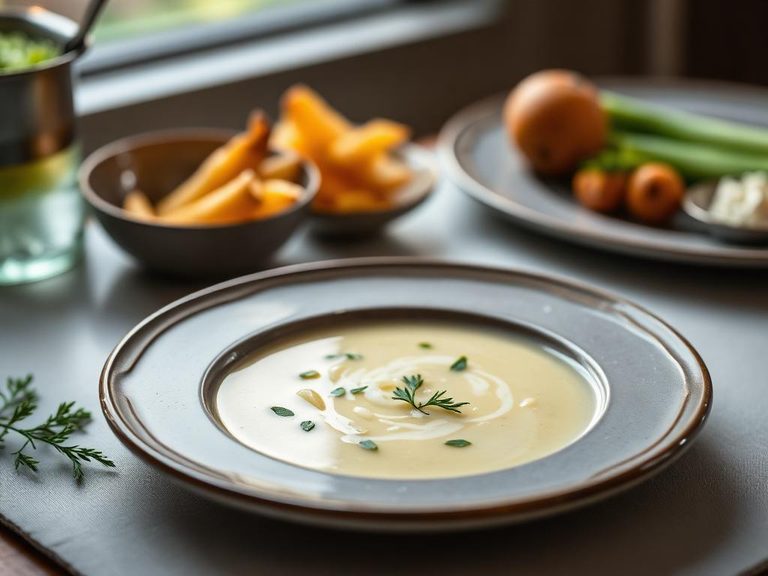
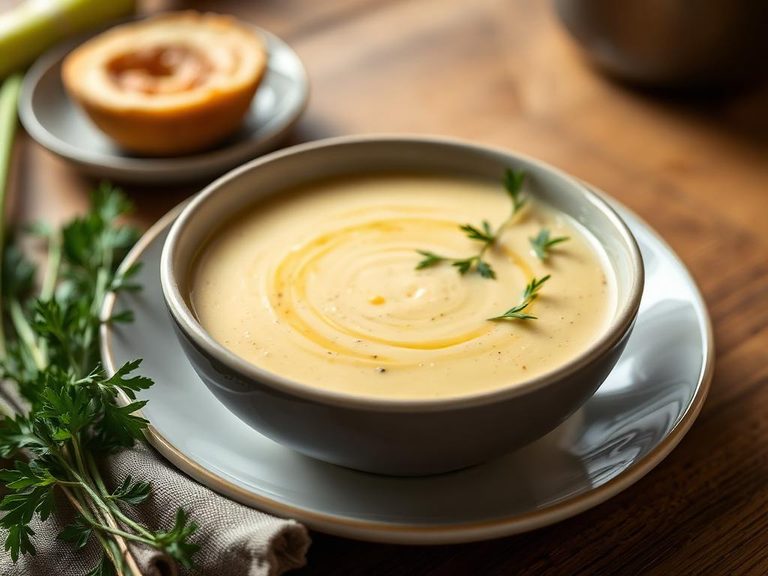
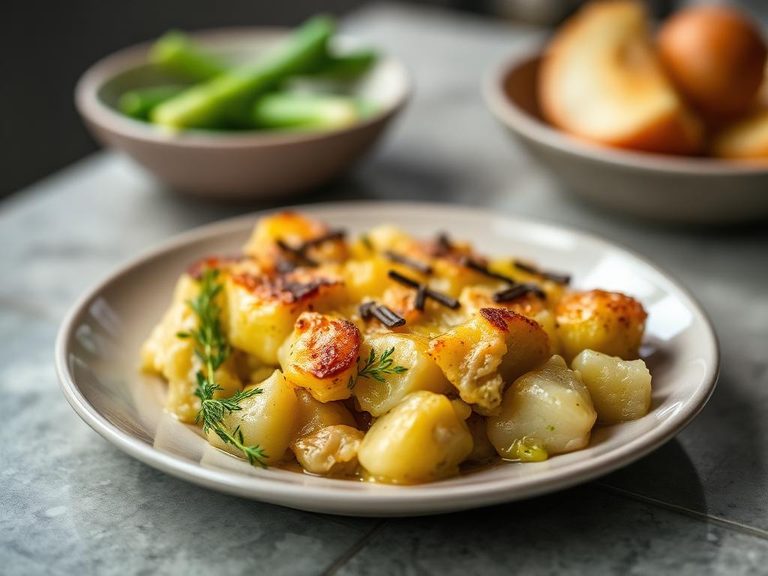
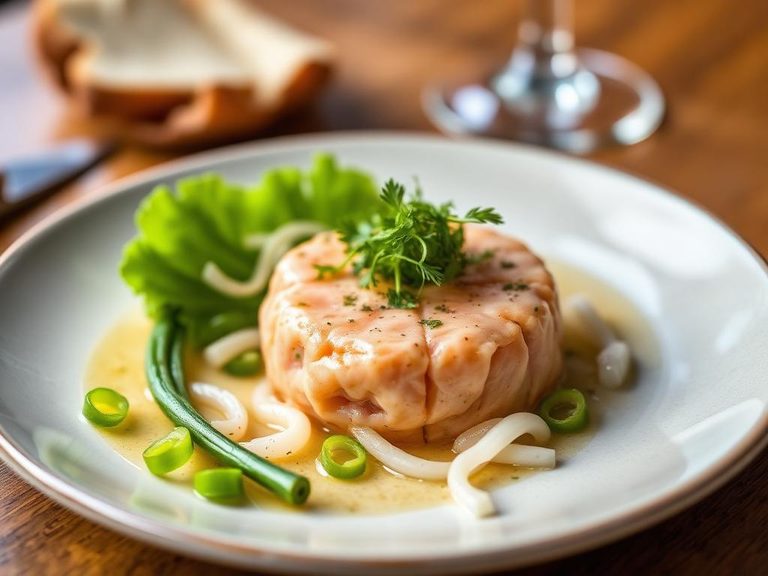
People love cooked leeks for their unique, sweet and mild allium flavor that is less pungent than onions or garlic. They are cherished for their versatility, seamlessly blending into creamy soups, savory tarts, and elegant gratins.
⚠️ Watch-outs & how to enjoy it better
Leeks contain fructans, a type of FODMAP carbohydrate that can cause digestive discomfort for some individuals, particularly those with IBS. To minimize issues, ensure they are thoroughly cooked, start with smaller portions, and consider pairing them with a protein or fat source to slow digestion.
Key benefits
- Excellent source of vitamin K for bone health
- Good source of manganese, an essential mineral
- High in prebiotic fiber to support gut health
- Very low in calories and fat
- Provides antioxidant compounds like kaempferol
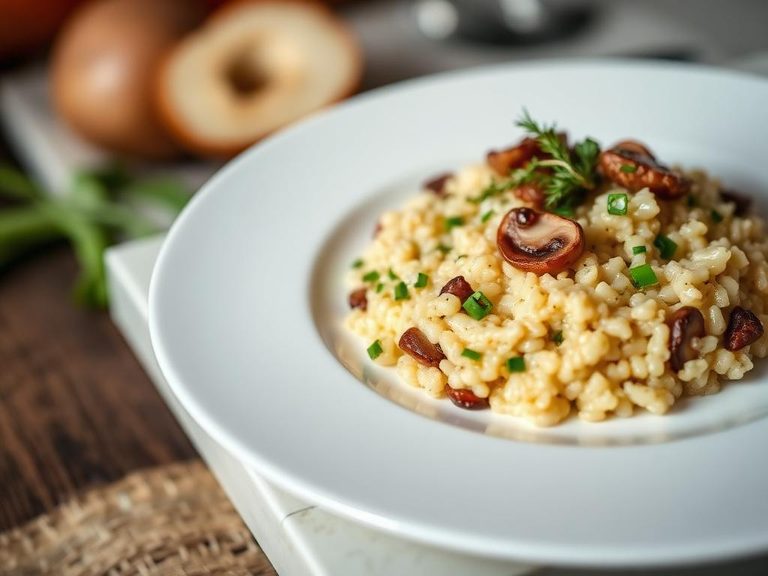
🍽️ Popular dishes

🌍 Where it's eaten
💡 Did you know?
The ancient Egyptians, Greeks, and Romans valued leeks not just as food but as medicine, believing they could purify the blood and improve the voice of singers.
Full nutrition (USDA data · scales with serving)
| Water | 90.8 g |
| Energy | 31.0 kcal |
| Energy | 130 kj |
| Protein | 0.81 g |
| Total lipid (fat) | 0.20 g |
| Ash | 0.57 g |
| Carbohydrate, by difference | 7.6 g |
| Fiber, total dietary | 1.0 g |
| Total Sugars | 2.1 g |
| Calcium, Ca | 30.0 mg |
| Iron, Fe | 1.1 mg |
| Magnesium, Mg | 14.0 mg |
| Phosphorus, P | 17.0 mg |
| Potassium, K | 87.0 mg |
| Sodium, Na | 10.0 mg |
| Zinc, Zn | 0.06 mg |
| Copper, Cu | 0.06 mg |
| Manganese, Mn | 0.25 mg |
| Selenium, Se | 0.50 ug |
| Vitamin C, total ascorbic acid | 4.2 mg |
| Thiamin | 0.03 mg |
| Riboflavin | 0.02 mg |
| Niacin | 0.20 mg |
| Pantothenic acid | 0.07 mg |
| Vitamin B-6 | 0.11 mg |
| Folate, total | 24.0 ug |
| Folic acid | 0.00 ug |
| Folate, food | 24.0 ug |
| Folate, DFE | 24.0 ug |
| Vitamin B-12 | 0.00 ug |
| Vitamin A, RAE | 41.0 ug |
| Retinol | 0.00 ug |
| Carotene, beta | 487 ug |
| Carotene, alpha | 0.00 ug |
| Cryptoxanthin, beta | 0.00 ug |
| Vitamin A, IU | 812 iu |
| Lycopene | 0.00 ug |
| Lutein + zeaxanthin | 925 ug |
| Vitamin E (alpha-tocopherol) | 0.50 mg |
| Vitamin D (D2 + D3), International Units | 0.00 iu |
| Vitamin D (D2 + D3) | 0.00 ug |
| Vitamin K (phylloquinone) | 25.4 ug |
Fat & fatty acid profile (per 100g)
| Fatty acids, total saturated | 0.03 g |
| SFA 16:0 | 0.03 g |
| SFA 18:0 | 0.00 g |
| Fatty acids, total monounsaturated | 0.00 g |
| MUFA 18:1 | 0.00 g |
| Fatty acids, total polyunsaturated | 0.11 g |
| PUFA 18:2 | 0.04 g |
| PUFA 18:3 | 0.07 g |
| Fatty acids, total trans | 0.00 g |
| Cholesterol | 0.00 mg |
Amino acid profile (per 100g)
| Tryptophan | 0.01 g |
| Threonine | 0.03 g |
| Isoleucine | 0.03 g |
| Leucine | 0.05 g |
| Lysine | 0.04 g |
| Methionine | 0.01 g |
| Cystine | 0.01 g |
| Phenylalanine | 0.03 g |
| Tyrosine | 0.02 g |
| Valine | 0.03 g |
| Arginine | 0.04 g |
| Histidine | 0.01 g |
| Alanine | 0.04 g |
| Aspartic acid | 0.08 g |
| Glutamic acid | 0.12 g |
| Glycine | 0.04 g |
| Proline | 0.04 g |
| Serine | 0.05 g |
FAQ
How do you properly clean leeks before cooking?
Leeks trap dirt between their layers. The best method is to slice off the dark green tops and root end, slice the white and light green parts lengthwise, then chop. Rinse the chopped pieces thoroughly in a bowl of cold water, swishing them around, and let the grit settle before scooping out the leeks with a slotted spoon or draining in a colander.
What's the difference between the white and green parts of a leek?
The white and pale green lower portion is tender, mild, and sweet, ideal for eating. The dark green tops are tougher and more fibrous but have a stronger flavor; they are best used for making stocks, broths, or bouquet garni, not typically eaten directly.
Can boiled leeks be eaten raw?
No, the description specifies 'cooked, boiled.' While some leek varieties can be used very thinly sliced in salads, the boiled preparation results in a soft, cooked texture that is not suitable for raw consumption. The boiling process significantly changes the texture and mellows the flavor.
Nutrient density (calculated · NRF9.3)
Nutrient Rich Foods index: beneficial nutrients (protein, fiber, vitamins, minerals) minus saturated fat, added sugar & sodium, per 100 kcal.
NRF9.3 index — Fulgoni, Keast & Drewnowski, 2009. Computed from USDA nutrients.
Weight-loss friendliness (composite index)
Energy density 0.31 kcal/g · 10% calories from protein · 1.0 g fiber · 2.1 g sugar per 100 g.
Composite of energy density (Rolls et al., 1999), protein & fiber satiety, minus sugar. A calculated heuristic — ranks satiety-per-calorie, not a clinical measure.
Dietary load (calculated from USDA values)
Potential renal acid load. Positive = acid-forming, negative = alkaline-forming.
Sodium-to-potassium ratio: 0.11 (lower is better — aim for ≤ 1)
Sodium:potassium per WHO potassium guidance. Computed from USDA nutrients.