

Leeks, (bulb and lower leaf-portion), cooked, boiled, drained, with salt
Whole food · Vegetables and Vegetable Products

Photo: Wikipedia
Boiled leeks offer a tender, silky texture and a mild, sweet onion flavor that melts into the background of a dish. At just 31 calories per 100g, they are a light yet nutrient-dense vegetable option. Their low fat content and subtle sweetness make them a versatile base for soups, stews, and side dishes.
Calorie split: 9% protein · 86% carbs · 5% fat
↓ Full nutrition💚 Why it's loved
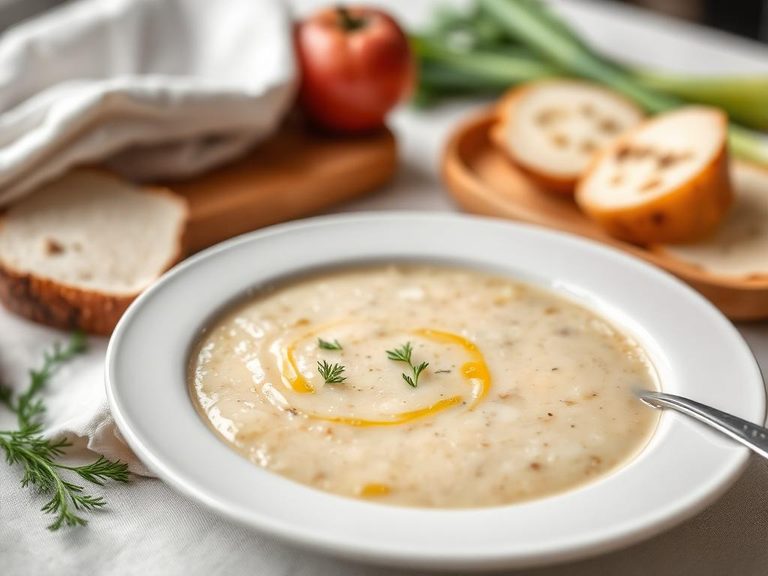
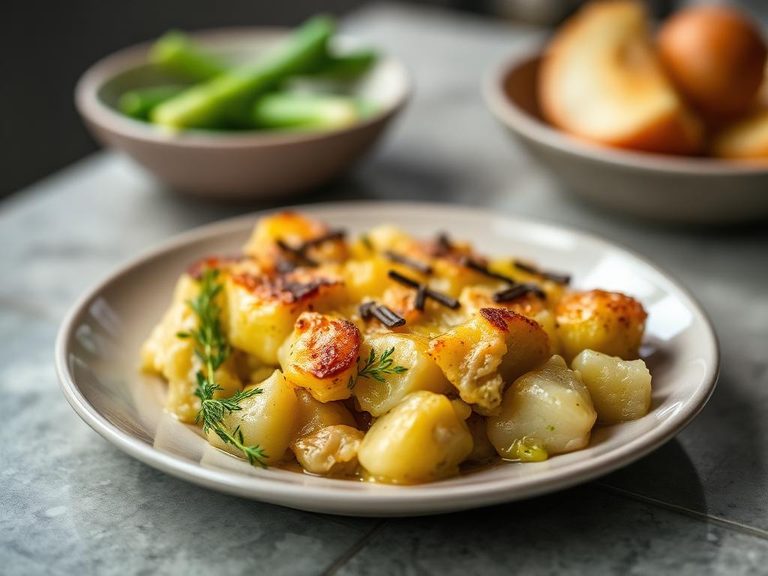
People love boiled leeks for their gentle, sweet flavor that lacks the sharp bite of onions, making them a family-friendly vegetable. They are incredibly versatile, acting as a flavor base for everything from classic potato leek soup to creamy gratins and simple buttered sides.
⚠️ Watch-outs & how to enjoy it better
The primary downside is the added sodium from boiling with salt, which can be a concern for those monitoring blood pressure. To counteract this, use minimal salt in the cooking water, rinse the leeks after draining, or pair them with potassium-rich foods like potatoes or spinach to help balance sodium levels. Some individuals may also experience digestive discomfort due to the FODMAP content; starting with smaller portions can help.
Key benefits
- Low-calorie, high-volume food for weight management
- Source of vitamin K for bone health
- Contains prebiotic fiber to support gut health
- Provides manganese for metabolism and antioxidant function
- Rich in flavonoids like kaempferol
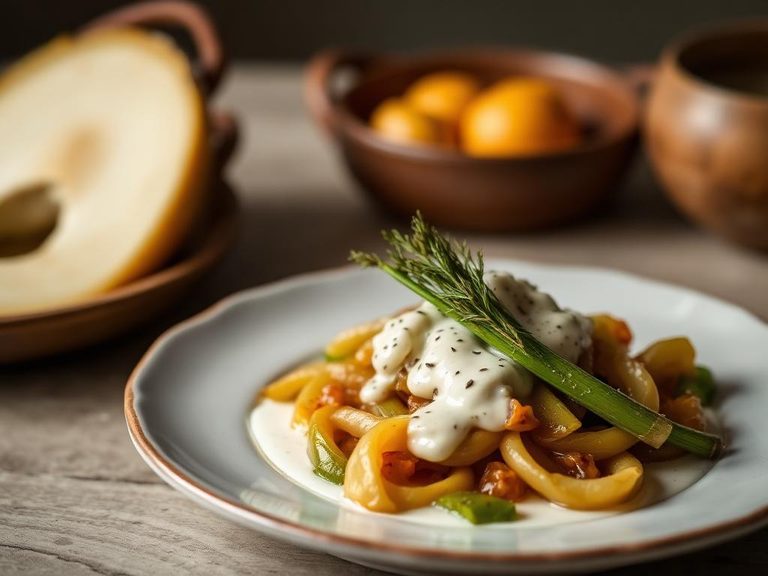
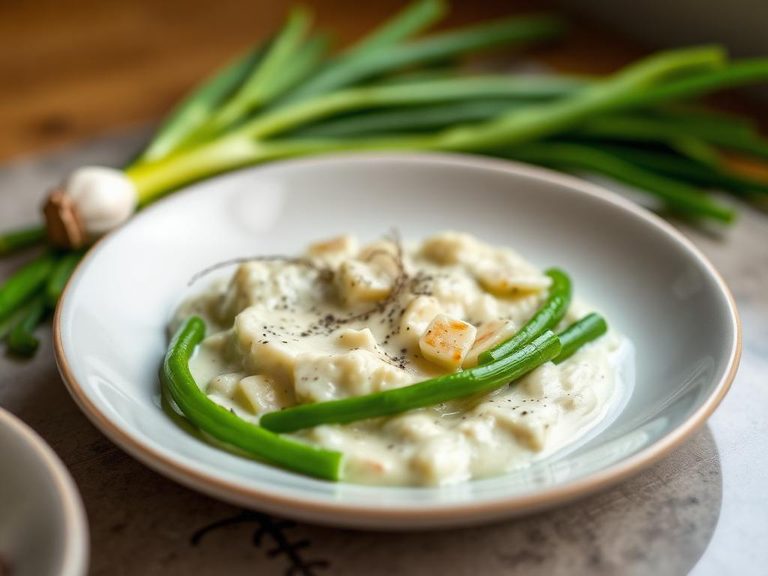
🍽️ Popular dishes

🌍 Where it's eaten
💡 Did you know?
The ancient Egyptians and Romans considered leeks a superior food to onions, and the Roman Emperor Nero reportedly ate leeks daily to improve his singing voice.
Full nutrition (USDA data · scales with serving)
| Water | 90.8 g |
| Energy | 31.0 kcal |
| Energy | 130 kj |
| Protein | 0.81 g |
| Total lipid (fat) | 0.20 g |
| Ash | 0.57 g |
| Carbohydrate, by difference | 7.6 g |
| Fiber, total dietary | 1.0 g |
| Total Sugars | 2.1 g |
| Calcium, Ca | 30.0 mg |
| Iron, Fe | 1.1 mg |
| Magnesium, Mg | 14.0 mg |
| Phosphorus, P | 17.0 mg |
| Potassium, K | 87.0 mg |
| Sodium, Na | 246 mg |
| Zinc, Zn | 0.06 mg |
| Copper, Cu | 0.06 mg |
| Manganese, Mn | 0.25 mg |
| Selenium, Se | 0.50 ug |
| Vitamin C, total ascorbic acid | 4.2 mg |
| Thiamin | 0.03 mg |
| Riboflavin | 0.02 mg |
| Niacin | 0.20 mg |
| Pantothenic acid | 0.07 mg |
| Vitamin B-6 | 0.11 mg |
| Folate, total | 24.0 ug |
| Folic acid | 0.00 ug |
| Folate, food | 24.0 ug |
| Folate, DFE | 24.0 ug |
| Vitamin B-12 | 0.00 ug |
| Vitamin A, RAE | 41.0 ug |
| Retinol | 0.00 ug |
| Carotene, beta | 487 ug |
| Carotene, alpha | 0.00 ug |
| Cryptoxanthin, beta | 0.00 ug |
| Vitamin A, IU | 812 iu |
| Lycopene | 0.00 ug |
| Lutein + zeaxanthin | 925 ug |
| Vitamin E (alpha-tocopherol) | 0.50 mg |
| Vitamin D (D2 + D3), International Units | 0.00 iu |
| Vitamin D (D2 + D3) | 0.00 ug |
| Vitamin K (phylloquinone) | 25.4 ug |
Fat & fatty acid profile (per 100g)
| Fatty acids, total saturated | 0.03 g |
| SFA 16:0 | 0.03 g |
| SFA 18:0 | 0.00 g |
| Fatty acids, total monounsaturated | 0.00 g |
| MUFA 18:1 | 0.00 g |
| Fatty acids, total polyunsaturated | 0.11 g |
| PUFA 18:2 | 0.04 g |
| PUFA 18:3 | 0.07 g |
| Fatty acids, total trans | 0.00 g |
| Cholesterol | 0.00 mg |
Amino acid profile (per 100g)
| Tryptophan | 0.01 g |
| Threonine | 0.03 g |
| Isoleucine | 0.03 g |
| Leucine | 0.05 g |
| Lysine | 0.04 g |
| Methionine | 0.01 g |
| Cystine | 0.01 g |
| Phenylalanine | 0.03 g |
| Tyrosine | 0.02 g |
| Valine | 0.03 g |
| Arginine | 0.04 g |
| Histidine | 0.01 g |
| Alanine | 0.04 g |
| Aspartic acid | 0.08 g |
| Glutamic acid | 0.12 g |
| Glycine | 0.04 g |
| Proline | 0.04 g |
| Serine | 0.05 g |
FAQ
How do I properly clean leeks before cooking?
Leeks trap dirt between their layers. Slice them lengthwise, then chop into half-moons. Rinse thoroughly in a bowl of cold water, agitating them, and let the dirt settle before draining. Alternatively, slice and rinse under running water.
What part of the leek is edible?
The white and light green parts are the most tender and commonly used. The dark green tops are tougher but can be used in stocks or soups where they will be strained out.
Are boiled leeks a good option for a low-carb diet?
Yes, with about 7.6g of carbohydrates per 100g, they are relatively low in carbs, especially considering 1g is fiber. They are a good vegetable choice for many low-carb eating plans.
Nutrient density (calculated · NRF9.3)
Nutrient Rich Foods index: beneficial nutrients (protein, fiber, vitamins, minerals) minus saturated fat, added sugar & sodium, per 100 kcal.
NRF9.3 index — Fulgoni, Keast & Drewnowski, 2009. Computed from USDA nutrients.
Weight-loss friendliness (composite index)
Energy density 0.31 kcal/g · 10% calories from protein · 1.0 g fiber · 2.1 g sugar per 100 g.
Composite of energy density (Rolls et al., 1999), protein & fiber satiety, minus sugar. A calculated heuristic — ranks satiety-per-calorie, not a clinical measure.
Dietary load (calculated from USDA values)
Potential renal acid load. Positive = acid-forming, negative = alkaline-forming.
Sodium-to-potassium ratio: 2.83 (lower is better — aim for ≤ 1)
Sodium:potassium per WHO potassium guidance. Computed from USDA nutrients.