

Cranberry sauce, canned, sweetened
Whole food · Fruits and Fruit Juices

Photo: Wikipedia
Canned cranberry sauce is a glossy, ruby-red condiment with a sweet-tart flavor and a smooth, jelly-like texture that holds the shape of the can. It's a concentrated source of simple carbohydrates, primarily from added sugar, providing a quick energy boost. This iconic staple is defined by its balance of sweetness and the natural, bright acidity of cranberries.
Calorie split: 2% protein · 97% carbs · 1% fat
↓ Full nutrition💚 Why it's loved
People love it for its nostalgic, sweet-tart flavor that perfectly cuts through rich, savory holiday dishes like turkey and stuffing. Its firm, sliceable texture and vibrant color make it an easy, festive addition to the plate.
⚠️ Watch-outs & how to enjoy it better
The primary downside is its very high added sugar content (over 30g per 100g), which can cause blood sugar spikes. To counteract this, practice strict portion control (a thin slice is often enough) and pair it with protein and fat from the main meal to slow sugar absorption.
Key benefits
- Provides a quick source of energy from carbohydrates.
- Contains some dietary fiber from cranberry pulp.
- Offers a small amount of antioxidants like vitamin C and proanthocyanidins.
- A traditional and convenient holiday staple.
🍽️ Popular dishes
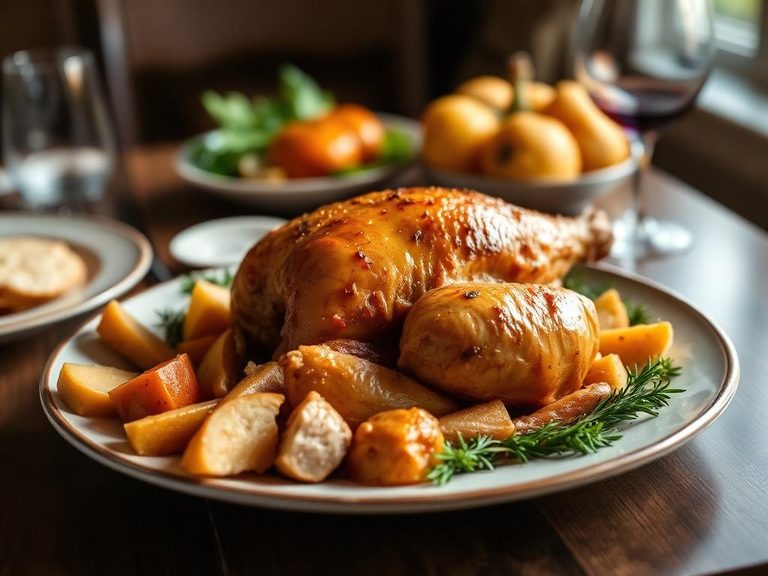
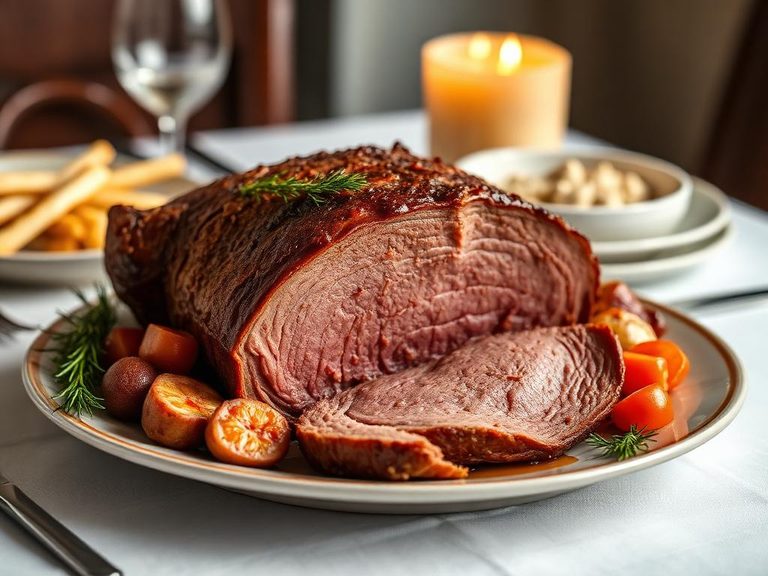
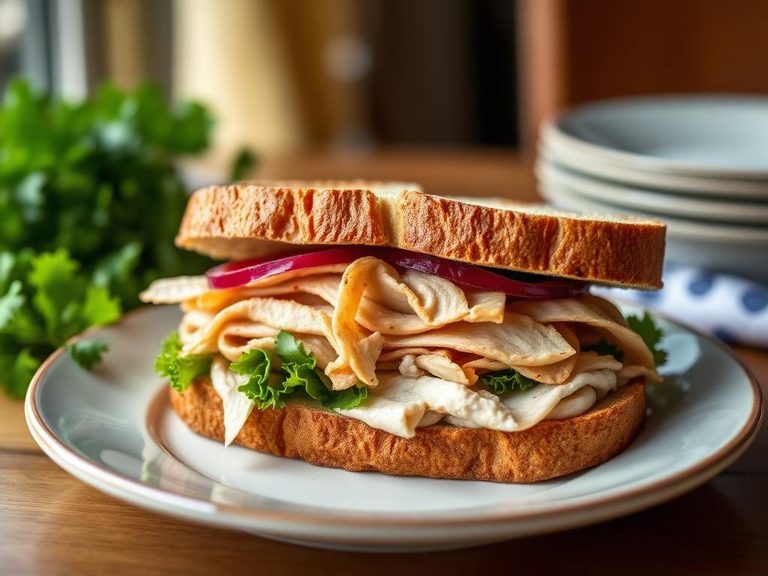
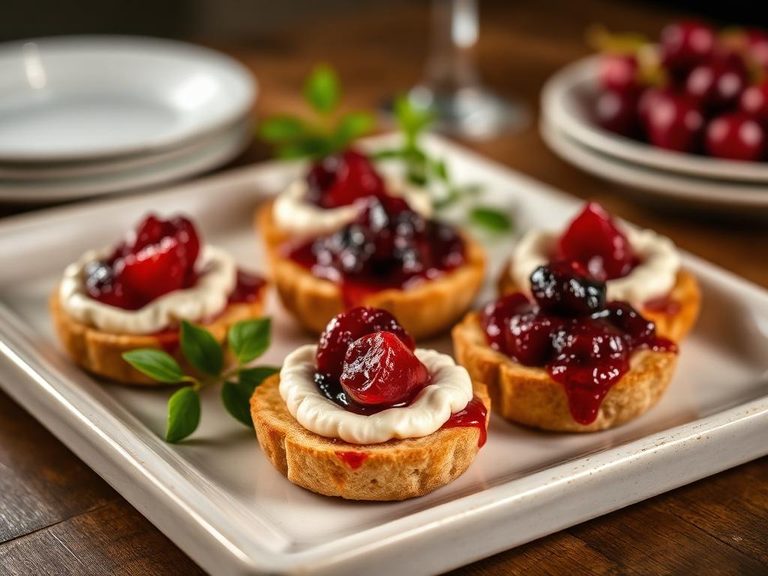
🌍 Where it's eaten
💡 Did you know?
The classic cylindrical shape of canned cranberry sauce is a direct result of the canning process; the sauce is cooked and poured into the can, where it sets into a perfect, sliceable log.
Full nutrition (USDA data · scales with serving)
| Water | 58.5 g |
| Energy | 159 kcal |
| Energy | 667 kj |
| Protein | 0.90 g |
| Total lipid (fat) | 0.15 g |
| Ash | 0.10 g |
| Carbohydrate, by difference | 40.4 g |
| Fiber, total dietary | 1.1 g |
| Total Sugars | 31.8 g |
| Sucrose | 0.10 g |
| Glucose | 17.4 g |
| Fructose | 9.8 g |
| Lactose | 0.00 g |
| Maltose | 4.5 g |
| Galactose | 0.00 g |
| Calcium, Ca | 3.0 mg |
| Iron, Fe | 0.41 mg |
| Magnesium, Mg | 2.0 mg |
| Phosphorus, P | 4.0 mg |
| Potassium, K | 28.0 mg |
| Sodium, Na | 5.0 mg |
| Zinc, Zn | 0.03 mg |
| Copper, Cu | 0.03 mg |
| Manganese, Mn | 0.07 mg |
| Selenium, Se | 0.40 ug |
| Fluoride, F | 1.9 ug |
| Vitamin C, total ascorbic acid | 1.0 mg |
| Thiamin | 0.01 mg |
| Riboflavin | 0.02 mg |
| Niacin | 0.10 mg |
| Vitamin B-6 | 0.01 mg |
| Folate, total | 1.0 ug |
| Folic acid | 0.00 ug |
| Folate, food | 1.0 ug |
| Folate, DFE | 1.0 ug |
| Choline, total | 3.8 mg |
| Vitamin B-12 | 0.00 ug |
| Vitamin B-12, added | 0.00 ug |
| Vitamin A, RAE | 2.0 ug |
| Retinol | 0.00 ug |
| Carotene, beta | 20.0 ug |
| Carotene, alpha | 0.00 ug |
| Cryptoxanthin, beta | 0.00 ug |
| Vitamin A, IU | 33.0 iu |
| Lycopene | 0.00 ug |
| Lutein + zeaxanthin | 48.0 ug |
| Vitamin E (alpha-tocopherol) | 0.93 mg |
| Vitamin E, added | 0.00 mg |
| Vitamin D (D2 + D3), International Units | 0.00 iu |
| Vitamin D (D2 + D3) | 0.00 ug |
| Vitamin K (phylloquinone) | 1.4 ug |
| Alcohol, ethyl | 0.00 g |
| Caffeine | 0.00 mg |
| Theobromine | 0.00 mg |
Fat & fatty acid profile (per 100g)
| Fatty acids, total saturated | 0.01 g |
| SFA 4:0 | 0.00 g |
| SFA 6:0 | 0.00 g |
| SFA 8:0 | 0.00 g |
| SFA 10:0 | 0.00 g |
| SFA 12:0 | 0.00 g |
| SFA 14:0 | 0.00 g |
| SFA 16:0 | 0.01 g |
| SFA 18:0 | 0.00 g |
| Fatty acids, total monounsaturated | 0.01 g |
| MUFA 16:1 | 0.00 g |
| MUFA 18:1 | 0.01 g |
| MUFA 20:1 | 0.00 g |
| MUFA 22:1 | 0.00 g |
| Fatty acids, total polyunsaturated | 0.03 g |
| PUFA 18:2 | 0.02 g |
| PUFA 18:3 | 0.01 g |
| PUFA 18:4 | 0.00 g |
| PUFA 20:4 | 0.00 g |
| PUFA 20:5 n-3 (EPA) | 0.00 g |
| PUFA 22:5 n-3 (DPA) | 0.00 g |
| PUFA 22:6 n-3 (DHA) | 0.00 g |
| Fatty acids, total trans | 0.00 g |
| Cholesterol | 0.00 mg |
FAQ
Is canned cranberry sauce the same as homemade?
No. Canned sauce is typically sweeter, smoother, and more jelly-like, while homemade sauce is often chunkier, tarter, and made with whole cranberries, sugar, and water or juice.
Why is canned cranberry sauce so high in sugar?
Cranberries are naturally very tart and astringent. Significant amounts of sugar are added during processing to balance the flavor and create the sweet taste most people expect from the condiment.
Can I use canned cranberry sauce in baking?
Yes, it's a popular ingredient in recipes like cranberry sauce bread, muffins, or as a filling for pastries, adding moisture, sweetness, and a fruity flavor.
Nutrient density (calculated · NRF9.3)
Nutrient Rich Foods index: beneficial nutrients (protein, fiber, vitamins, minerals) minus saturated fat, added sugar & sodium, per 100 kcal.
NRF9.3 index — Fulgoni, Keast & Drewnowski, 2009. Computed from USDA nutrients.
Weight-loss friendliness (composite index)
Energy density 1.59 kcal/g · 2% calories from protein · 1.1 g fiber · 31.8 g sugar per 100 g.
Composite of energy density (Rolls et al., 1999), protein & fiber satiety, minus sugar. A calculated heuristic — ranks satiety-per-calorie, not a clinical measure.
Dietary load (calculated from USDA values)
Potential renal acid load. Positive = acid-forming, negative = alkaline-forming.
Sodium-to-potassium ratio: 0.18 (lower is better — aim for ≤ 1)
Sodium:potassium per WHO potassium guidance. Computed from USDA nutrients.