

Cranberry juice, not fortified, from concentrate, shelf stable
Whole food · Fruits and Fruit Juices

Photo: Wikipedia
This is a tart, ruby-red beverage made by reconstituting cranberry concentrate with water. It has a clean, slightly viscous texture and a sharp, fruity flavor profile. Nutritionally, it is a low-calorie, virtually fat-free drink with a modest carbohydrate content.
Calorie split: 0% protein · 91% carbs · 9% fat
↓ Full nutrition💚 Why it's loved
People love its bold, tart punch that cuts through sweetness and pairs well with both savory and sweet dishes. It's a staple of North American holiday tables and a versatile mixer in cocktails and mocktails.
⚠️ Watch-outs & how to enjoy it better
The high acidity can be harsh on tooth enamel and uncomfortable for those with acid reflux. Its natural tartness often leads to added sugars in commercial versions, which can spike blood sugar. To counteract this, choose 'no sugar added' varieties, dilute with water or sparkling water, and consume with a meal containing protein or fat to slow absorption.
Key benefits
- Low in calories at 32 kcal per 100g.
- Contains naturally occurring proanthocyanidins (PACs) from cranberries.
- Source of vitamin C, especially if not pasteurized at high heat.
- Provides hydration with a distinctive, non-sweet flavor.
🍽️ Popular dishes
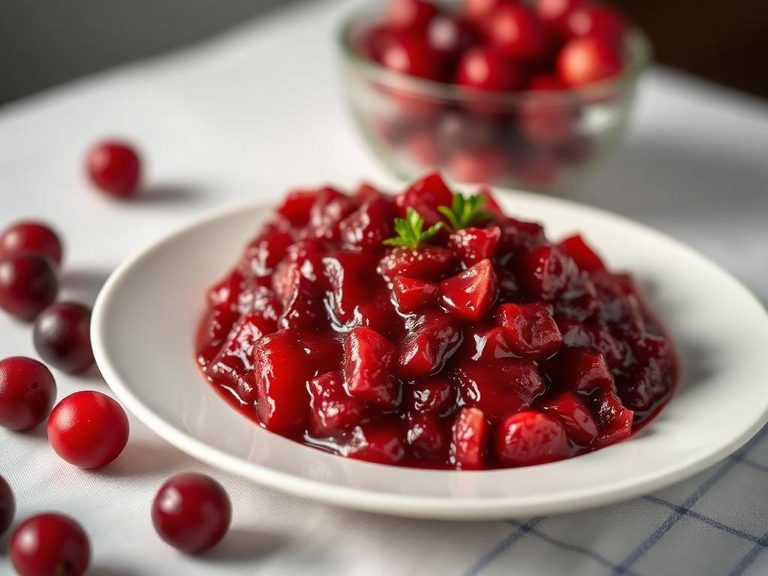
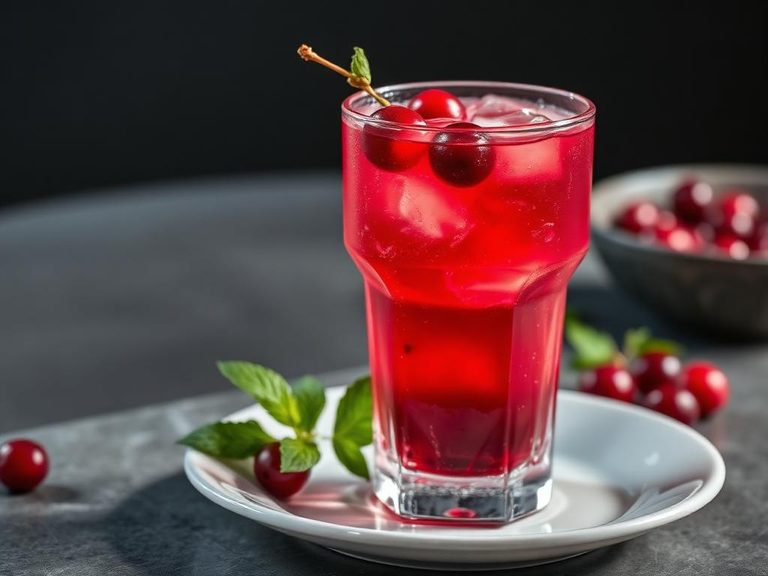
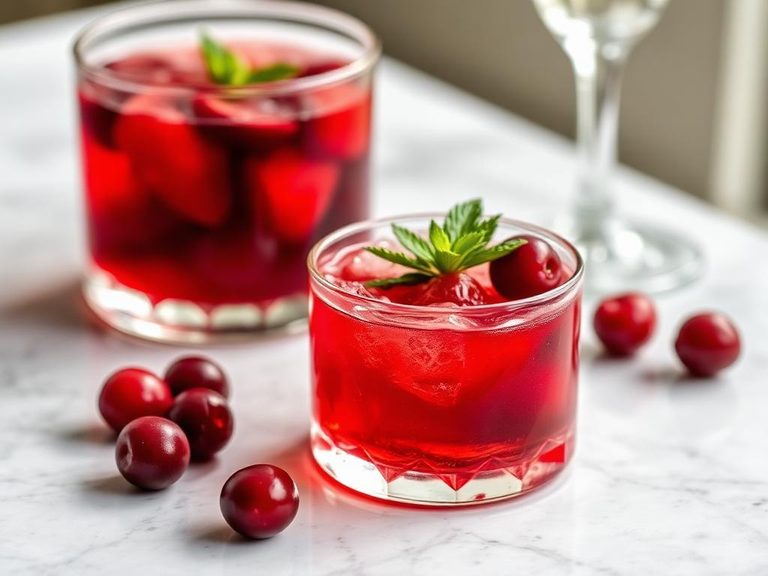
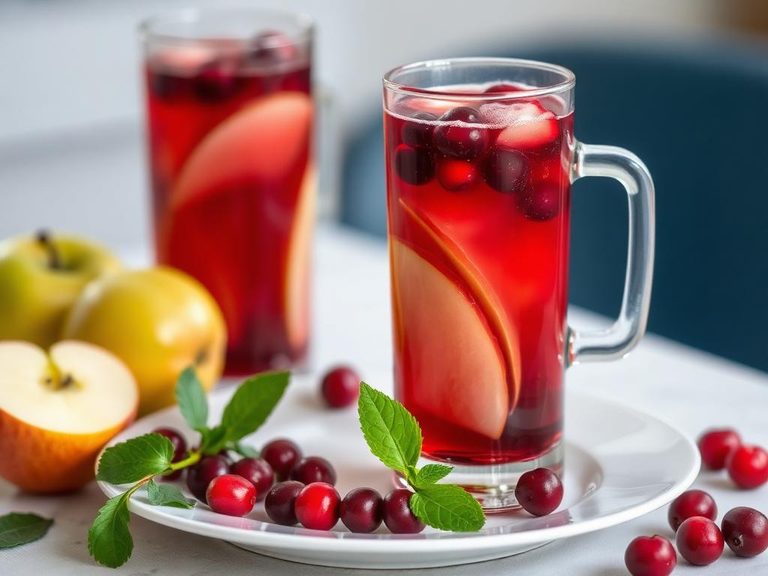
🌍 Where it's eaten
💡 Did you know?
The bouncing ball legend of cranberries is true—fresh, good-quality cranberries will bounce when dropped, due to small air pockets inside the fruit.
Full nutrition (USDA data · scales with serving)
| Water | 92.3 g |
| Energy (Atwater General Factors) | 32.1 kcal |
| Energy (Atwater Specific Factors) | 31.3 kcal |
| Nitrogen | 0.00 g |
| Protein | 0.00 g |
| Total lipid (fat) | 0.34 g |
| Ash | 0.10 g |
| Carbohydrate, by difference | 7.3 g |
| Sugars, Total | 3.4 g |
| Sucrose | 0.00 g |
| Glucose | 2.7 g |
| Fructose | 0.71 g |
| Lactose | 0.00 g |
| Maltose | 0.00 g |
| Galactose | 0.00 g |
| Citric acid | 1164 mg |
| Malic acid | 756 mg |
| Oxalic acid | 0.00 mg |
| Quinic acid | 1016 mg |
| Calcium, Ca | 6.6 mg |
| Iron, Fe | 0.13 mg |
| Magnesium, Mg | 4.4 mg |
| Phosphorus, P | 3.3 mg |
| Potassium, K | 70.6 mg |
| Sodium, Na | 6.3 mg |
| Zinc, Zn | 0.04 mg |
| Copper, Cu | 0.01 mg |
| Manganese, Mn | 0.21 mg |
| Vitamin C, total ascorbic acid | 0.00 mg |
| Thiamin | 0.02 mg |
| Niacin | 0.01 mg |
| Vitamin B-6 | 0.01 mg |
| Folate, total | 9.0 ug |
Fat & fatty acid profile (per 100g)
Estimated from Cranberry juice cocktail, bottled, low calorie, with calcium, saccharin and corn sweetener — USDA does not publish this profile for Cranberry juice.
| Fatty acids, total saturated | 0.00 g |
| SFA 4:0 | 0.00 g |
| SFA 6:0 | 0.00 g |
| SFA 8:0 | 0.00 g |
| SFA 10:0 | 0.00 g |
| SFA 12:0 | 0.00 g |
| SFA 14:0 | 0.00 g |
| SFA 16:0 | 0.00 g |
| SFA 18:0 | 0.00 g |
| Fatty acids, total monounsaturated | 0.00 g |
| MUFA 16:1 | 0.00 g |
| MUFA 18:1 | 0.00 g |
| MUFA 20:1 | 0.00 g |
| MUFA 22:1 | 0.00 g |
| Fatty acids, total polyunsaturated | 0.00 g |
| PUFA 18:2 | 0.00 g |
| PUFA 18:3 | 0.00 g |
| PUFA 18:4 | 0.00 g |
| PUFA 20:4 | 0.00 g |
| PUFA 20:5 n-3 (EPA) | 0.00 g |
| PUFA 22:5 n-3 (DPA) | 0.00 g |
| PUFA 22:6 n-3 (DHA) | 0.00 g |
| Fatty acids, total trans | 0.00 g |
| Cholesterol | 0.00 mg |
Amino acid profile (per 100g)
Estimated from Cranberry juice cocktail, bottled, low calorie, with calcium, saccharin and corn sweetener — USDA does not publish this profile for Cranberry juice.
| Tryptophan | 0.00 g |
| Threonine | 0.00 g |
| Isoleucine | 0.00 g |
| Leucine | 0.00 g |
| Lysine | 0.00 g |
| Methionine | 0.00 g |
| Cystine | 0.00 g |
| Phenylalanine | 0.00 g |
| Tyrosine | 0.00 g |
| Valine | 0.00 g |
| Arginine | 0.00 g |
| Histidine | 0.00 g |
| Alanine | 0.00 g |
| Aspartic acid | 0.00 g |
| Glutamic acid | 0.00 g |
| Glycine | 0.00 g |
| Proline | 0.00 g |
| Serine | 0.00 g |
FAQ
Is cranberry juice from concentrate the same as pure cranberry juice?
No. 'From concentrate' means water was removed for shipping and added back later. Pure or 'not from concentrate' juice has had water removed and re-added without the concentrate step. Both can be 100% juice, but the process differs.
Why is shelf-stable cranberry juice often so tart?
Cranberries are naturally very tart due to high levels of citric and malic acids. Shelf-stable versions are pasteurized, which can slightly alter flavor, but the core tartness remains unless significant sugar is added.
Does the 'not fortified' label mean it's less nutritious?
Not necessarily. 'Not fortified' means no extra vitamins (like Vitamin C or D) were added after processing. The juice still contains its natural nutrients, but it won't have boosted levels of specific vitamins.
Nutrient density (calculated · NRF9.3)
Nutrient Rich Foods index: beneficial nutrients (protein, fiber, vitamins, minerals) minus saturated fat, added sugar & sodium, per 100 kcal.
NRF9.3 index — Fulgoni, Keast & Drewnowski, 2009. Computed from USDA nutrients.
Weight-loss friendliness (composite index)
Energy density 0.32 kcal/g · 0% calories from protein · 0.0 g fiber · 0.0 g sugar per 100 g.
Composite of energy density (Rolls et al., 1999), protein & fiber satiety, minus sugar. A calculated heuristic — ranks satiety-per-calorie, not a clinical measure.
Dietary load (calculated from USDA values)
Potential renal acid load. Positive = acid-forming, negative = alkaline-forming.
Sodium-to-potassium ratio: 0.09 (lower is better — aim for ≤ 1)
Sodium:potassium per WHO potassium guidance. Computed from USDA nutrients.