

Cookie, animal, with frosting or icing
Common food

Photo: Wikipedia
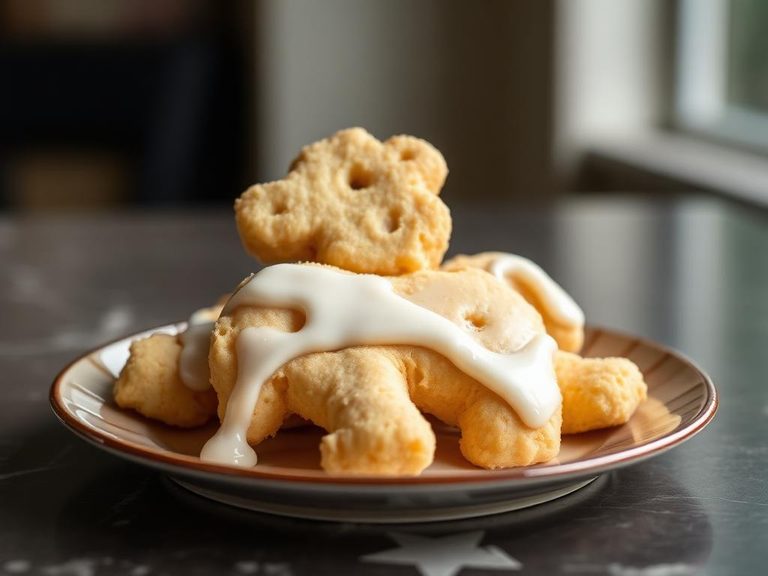
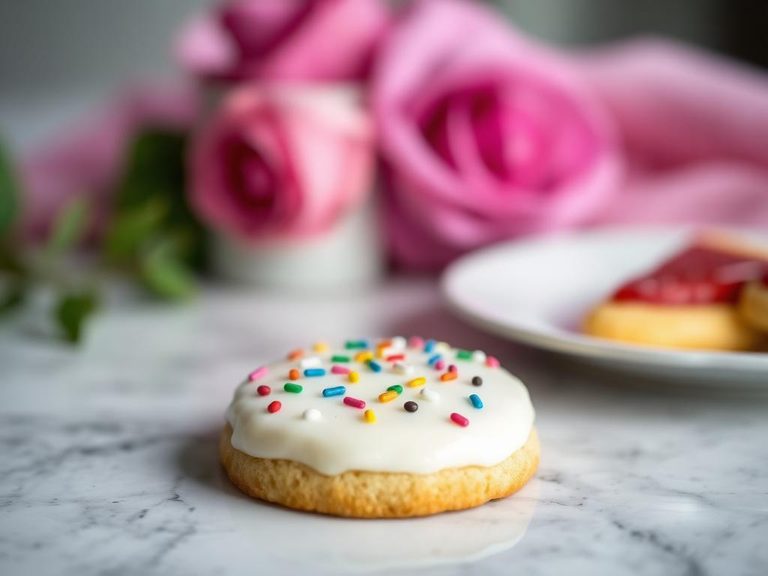
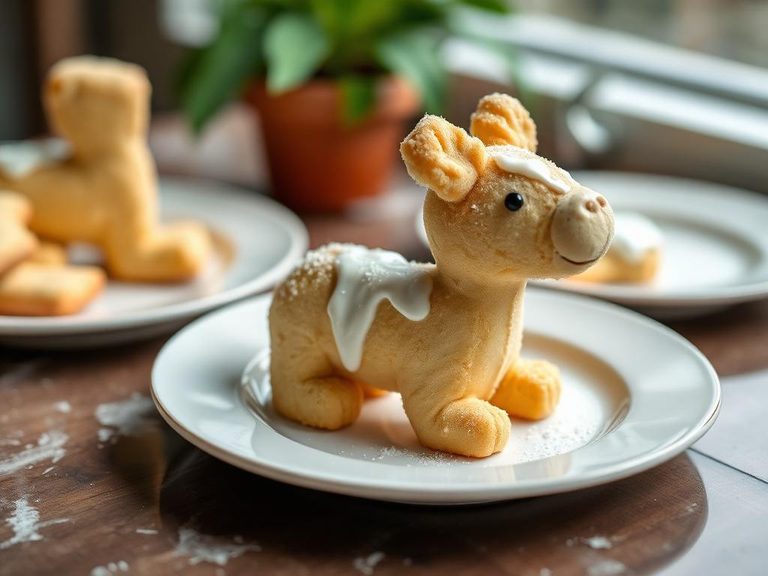
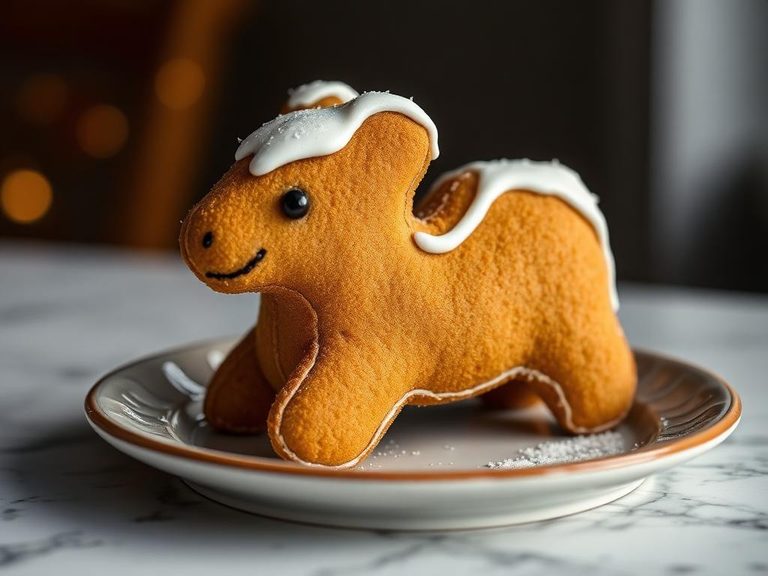
A playful, animal-shaped cookie, often made from a crisp or soft shortbread-style dough, completely blanketed in a thick layer of sweet, colorful frosting or icing. The texture is typically a satisfying contrast between the firm, crumbly cookie base and the smooth, sugary topping. Nutritionally, it's a high-energy treat, delivering about 509 kcal per 100g, with the vast majority of its calories coming from carbohydrates and fat.
Calorie split: 2% protein · 55% carbs · 43% fat
↓ Full nutrition💚 Why it's loved
People love these cookies for their whimsical, nostalgic appeal and the satisfying combination of a buttery cookie base with a sweet, decorative icing. They are a versatile treat, easily customized for holidays, birthdays, or just a fun snack.
⚠️ Watch-outs & how to enjoy it better
The high sugar content (over 41g per 100g) can lead to rapid blood-sugar spikes and subsequent energy crashes. The low protein and fiber content (3g and 0.9g respectively) means they offer little satiety. To counteract this, enjoy them in small portions, perhaps alongside a source of protein like nuts or a glass of milk to help slow sugar absorption.
Key benefits
- Quick source of energy
- Provides a moment of enjoyment or reward
- Often used in children's parties or themed events
- Can be a creative canvas for decorative icing
🍽️ Popular dishes


🌍 Where it's eaten
💡 Did you know?
The tradition of animal-shaped cookies dates back to the 18th century, but the iconic frosted animal crackers we know today were popularized in the early 20th century, often sold in small, circus-themed boxes.
Full nutrition (USDA data · scales with serving)
| Water | 2.0 g |
| Energy | 509 kcal |
| Protein | 3.0 g |
| Total lipid (fat) | 24.1 g |
| Carbohydrate, by difference | 70.1 g |
| Fiber, total dietary | 0.90 g |
| Total Sugars | 41.1 g |
| Calcium, Ca | 6.0 mg |
| Iron, Fe | 1.6 mg |
| Magnesium, Mg | 7.0 mg |
| Phosphorus, P | 5.0 mg |
| Potassium, K | 96.0 mg |
| Sodium, Na | 257 mg |
| Zinc, Zn | 0.24 mg |
| Copper, Cu | 0.05 mg |
| Selenium, Se | 11.3 ug |
| Vitamin C, total ascorbic acid | 0.00 mg |
| Thiamin | 0.28 mg |
| Riboflavin | 0.15 mg |
| Niacin | 1.7 mg |
| Vitamin B-6 | 0.01 mg |
| Folate, total | 59.0 ug |
| Folic acid | 50.0 ug |
| Folate, food | 9.0 ug |
| Folate, DFE | 94.0 ug |
| Choline, total | 3.5 mg |
| Vitamin B-12 | 0.00 ug |
| Vitamin B-12, added | 0.00 ug |
| Vitamin A, RAE | 0.00 ug |
| Retinol | 0.00 ug |
| Carotene, beta | 0.00 ug |
| Carotene, alpha | 0.00 ug |
| Cryptoxanthin, beta | 0.00 ug |
| Lycopene | 0.00 ug |
| Lutein + zeaxanthin | 6.0 ug |
| Vitamin E (alpha-tocopherol) | 0.93 mg |
| Vitamin E, added | 0.00 mg |
| Vitamin D (D2 + D3) | 0.00 ug |
| Vitamin K (phylloquinone) | 6.0 ug |
| Alcohol, ethyl | 0.00 g |
| Caffeine | 0.00 mg |
| Theobromine | 0.00 mg |
Fat & fatty acid profile (per 100g)
| Fatty acids, total saturated | 16.2 g |
| SFA 4:0 | 0.01 g |
| SFA 6:0 | 0.06 g |
| SFA 8:0 | 0.71 g |
| SFA 10:0 | 0.60 g |
| SFA 12:0 | 8.2 g |
| SFA 14:0 | 2.5 g |
| SFA 16:0 | 1.4 g |
| SFA 18:0 | 2.6 g |
| Fatty acids, total monounsaturated | 2.4 g |
| MUFA 16:1 | 0.00 g |
| MUFA 18:1 | 2.4 g |
| MUFA 20:1 | 0.00 g |
| MUFA 22:1 | 0.00 g |
| Fatty acids, total polyunsaturated | 4.5 g |
| PUFA 18:2 | 4.3 g |
| PUFA 18:3 | 0.24 g |
| PUFA 18:4 | 0.00 g |
| PUFA 20:4 | 0.00 g |
| PUFA 20:5 n-3 (EPA) | 0.00 g |
| PUFA 22:5 n-3 (DPA) | 0.00 g |
| PUFA 22:6 n-3 (DHA) | 0.00 g |
| Cholesterol | 0.00 mg |
Amino acid profile (per 100g)
Estimated from Pie Crust, Cookie-type, Chocolate, Ready Crust — USDA does not publish this profile for Cookie.
| Tryptophan | 0.08 g |
| Threonine | 0.20 g |
| Isoleucine | 0.23 g |
| Leucine | 0.38 g |
| Lysine | 0.24 g |
| Methionine | 0.07 g |
| Cystine | 0.11 g |
| Phenylalanine | 0.28 g |
| Tyrosine | 0.16 g |
| Valine | 0.32 g |
| Arginine | 0.29 g |
| Histidine | 0.11 g |
| Alanine | 0.24 g |
| Aspartic acid | 0.45 g |
| Glutamic acid | 1.3 g |
| Glycine | 0.24 g |
| Proline | 0.42 g |
| Serine | 0.26 g |
FAQ
Are animal cookies with frosting the same as frosted sugar cookies?
They are very similar in composition, but animal cookies are specifically molded into animal shapes and are often a crispier, more cracker-like shortbread, while sugar cookies can be softer and are cut into any shape.
Why are they so high in sugar and fat?
The high sugar comes directly from the icing and is also in the cookie dough, while the fat primarily comes from butter or shortening used to create a tender, crumbly texture.
Can I make a healthier version at home?
Yes. You can reduce sugar in both the dough and icing, use whole wheat flour for some fiber, and opt for a thinner glaze or natural sprinkles instead of thick, sugary frosting.
Nutrient density (calculated · NRF9.3)
Nutrient Rich Foods index: beneficial nutrients (protein, fiber, vitamins, minerals) minus saturated fat, added sugar & sodium, per 100 kcal.
NRF9.3 index — Fulgoni, Keast & Drewnowski, 2009. Computed from USDA nutrients.
Weight-loss friendliness (composite index)
Energy density 5.09 kcal/g · 2% calories from protein · 0.9 g fiber · 41.1 g sugar per 100 g.
Composite of energy density (Rolls et al., 1999), protein & fiber satiety, minus sugar. A calculated heuristic — ranks satiety-per-calorie, not a clinical measure.
Dietary load (calculated from USDA values)
Potential renal acid load. Positive = acid-forming, negative = alkaline-forming.
Sodium-to-potassium ratio: 2.68 (lower is better — aim for ≤ 1)
Sodium:potassium per WHO potassium guidance. Computed from USDA nutrients.