

Cheese, feta, whole milk, crumbled
Whole food · Dairy and Egg Products

Photo: Wikipedia
Feta is a brined, semi-soft white cheese traditionally made from sheep's milk or a sheep-goat milk blend. It has a distinctively tangy, salty flavor and a crumbly, moist texture that softens slightly when heated. Nutritionally, it's a protein-rich food with a significant portion of its calories coming from fat, and it's notably high in sodium.
Calorie split: 29% protein · 8% carbs · 63% fat
↓ Full nutrition💚 Why it's loved
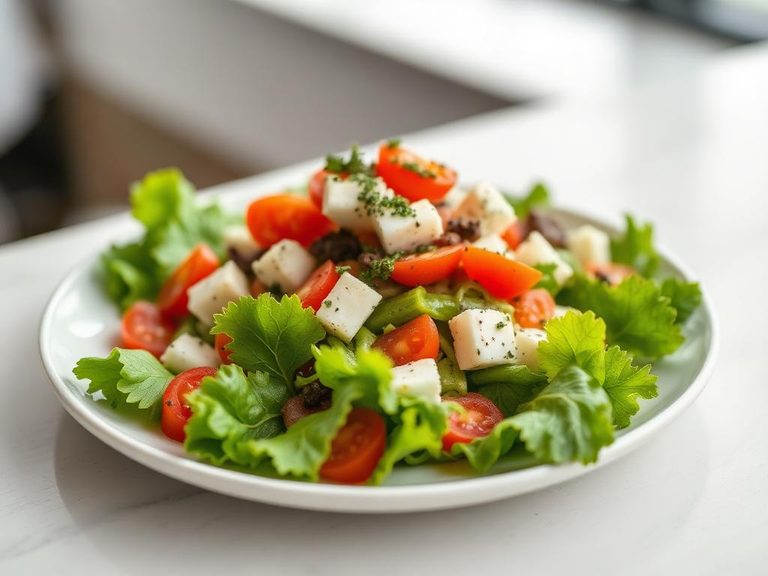
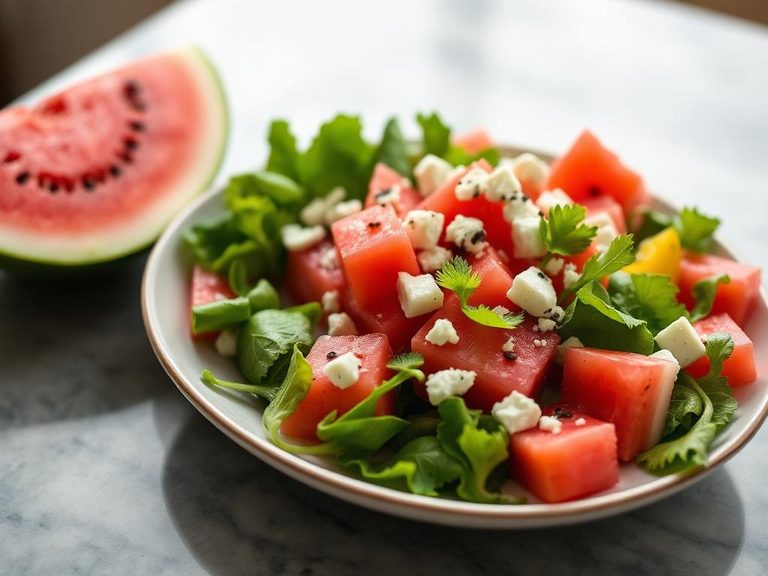
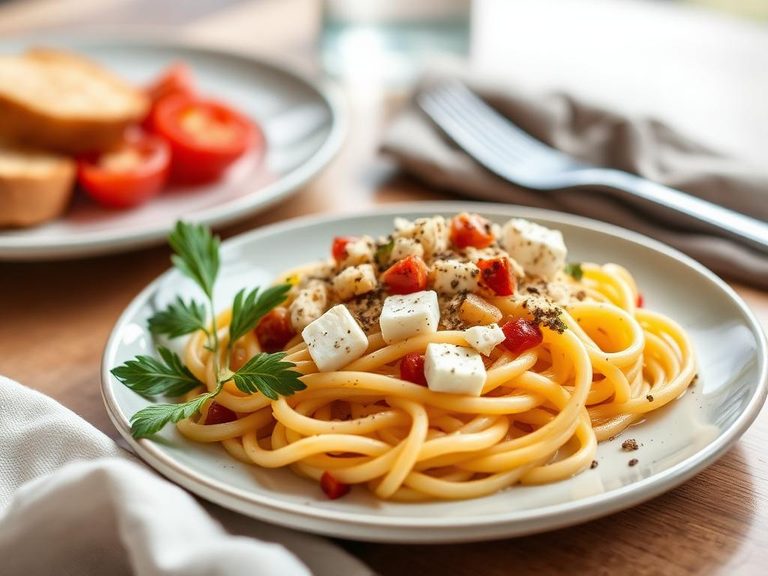
People love feta for its bold, briny tang that instantly brightens salads, pastries, and grilled dishes. Its crumbly texture and ability to pair with everything from watermelon to lamb make it a cornerstone of Mediterranean cuisine and a versatile pantry staple.
⚠️ Watch-outs & how to enjoy it better
The primary drawback is its very high sodium content, which can be a concern for those monitoring blood pressure. It's also a common dairy allergen and contains saturated fat. To manage sodium, rinse crumbled feta briefly under water or choose low-sodium varieties; pair it with potassium-rich foods like leafy greens or tomatoes to help balance electrolytes.
Key benefits
- Excellent source of high-quality protein (19.7g per 100g).
- Provides calcium for bone health.
- Contains conjugated linoleic acid (CLA), a fatty acid studied for potential health benefits.
- Lower in lactose than many other cheeses due to its aging process.
- Adds intense flavor to dishes, allowing for smaller portions to be satisfying.
🍽️ Popular dishes



🌍 Where it's eaten
💡 Did you know?
True Greek Feta PDO (Protected Designation of Origin) must be made with at least 70% sheep's milk from specific regions of Greece and aged in brine for at least two months.
Full nutrition (USDA data · scales with serving)
| Water | 51.9 g |
| Energy (Atwater General Factors) | 273 kcal |
| Energy (Atwater Specific Factors) | 273 kcal |
| Nitrogen | 3.1 g |
| Protein | 19.7 g |
| Total lipid (fat) | 19.1 g |
| Ash | 3.7 g |
| Carbohydrate, by difference | 5.6 g |
| Sugars, Total | 1.6 g |
| Sucrose | 0.00 g |
| Glucose | 0.59 g |
| Fructose | 0.00 g |
| Lactose | 0.61 g |
| Maltose | 0.00 g |
| Galactose | 0.43 g |
| Calcium, Ca | 371 mg |
| Iron, Fe | 0.07 mg |
| Magnesium, Mg | 17.7 mg |
| Phosphorus, P | 328 mg |
| Potassium, K | 105 mg |
| Sodium, Na | 1034 mg |
| Zinc, Zn | 2.4 mg |
| Copper, Cu | 0.03 mg |
| Manganese, Mn | 0.02 mg |
| Iodine, I | 48.4 ug |
| Thiamin | 0.06 mg |
| Riboflavin | 0.44 mg |
| Niacin | 0.26 mg |
| Vitamin B-6 | 0.04 mg |
| Biotin | 0.46 ug |
| Retinol | 147 ug |
| Vitamin D (D2 + D3), International Units | 0.00 iu |
| Vitamin D (D2 + D3) | 0.00 ug |
| Vitamin D2 (ergocalciferol) | 0.00 ug |
| Vitamin D3 (cholecalciferol) | 0.00 ug |
| Vitamin K (phylloquinone) | 1.2 ug |
| Vitamin K (Dihydrophylloquinone) | 0.00 ug |
| Vitamin K (Menaquinone-4) | 4.8 ug |
Fat & fatty acid profile (per 100g)
| Fatty acids, total saturated | 11.2 g |
| SFA 4:0 | 0.40 g |
| SFA 6:0 | 0.33 g |
| SFA 10:0 | 0.48 g |
| SFA 12:0 | 0.54 g |
| SFA 14:0 | 1.8 g |
| SFA 16:0 | 5.3 g |
| SFA 18:0 | 1.7 g |
| Fatty acids, total monounsaturated | 4.2 g |
| MUFA 16:1 c | 0.28 g |
| MUFA 18:1 c | 3.7 g |
| PUFA 18:2 n-6 c,c | 0.42 g |
| Cholesterol | 57.5 mg |
Amino acid profile (per 100g)
Estimated from Cheese, cottage, with vegetables — USDA does not publish this profile for Cheese.
| Tryptophan | 0.13 g |
| Threonine | 0.53 g |
| Isoleucine | 0.70 g |
| Leucine | 1.2 g |
| Lysine | 0.97 g |
| Methionine | 0.36 g |
| Cystine | 0.11 g |
| Phenylalanine | 0.65 g |
| Tyrosine | 0.64 g |
| Valine | 0.74 g |
| Arginine | 0.55 g |
| Histidine | 0.40 g |
| Alanine | 0.62 g |
| Aspartic acid | 0.82 g |
| Glutamic acid | 2.6 g |
| Glycine | 0.27 g |
| Proline | 1.4 g |
| Serine | 0.67 g |
FAQ
Is feta cheese gluten-free?
Pure feta cheese is naturally gluten-free. However, always check labels for potential cross-contamination or additives in pre-crumbled or flavored varieties.
Can I freeze feta cheese?
Freezing alters feta's texture, making it more crumbly and less creamy. It's best used for cooked dishes after thawing, not for fresh applications like salads.
What's the difference between Greek feta and other feta-style cheeses?
Authentic Greek Feta PDO is made from specific milk blends in designated regions. Other 'feta-style' cheeses are often made from cow's milk and may have a milder taste and different texture.
Nutrient density (calculated · NRF9.3)
Nutrient Rich Foods index: beneficial nutrients (protein, fiber, vitamins, minerals) minus saturated fat, added sugar & sodium, per 100 kcal.
NRF9.3 index — Fulgoni, Keast & Drewnowski, 2009. Computed from USDA nutrients.
Weight-loss friendliness (composite index)
Energy density 2.73 kcal/g · 29% calories from protein · 0.0 g fiber · 0.0 g sugar per 100 g.
Composite of energy density (Rolls et al., 1999), protein & fiber satiety, minus sugar. A calculated heuristic — ranks satiety-per-calorie, not a clinical measure.
Dietary load (calculated from USDA values)
Potential renal acid load. Positive = acid-forming, negative = alkaline-forming.
Sodium-to-potassium ratio: 9.82 (lower is better — aim for ≤ 1)
Sodium:potassium per WHO potassium guidance. Computed from USDA nutrients.