

Beef, shank crosscuts, separable lean only, trimmed to 1/4" fat, choice, cooked, simmered
Whole food · Beef Products

Photo: Wikipedia
Beef shank crosscuts are lean, muscular cuts from the lower leg, prized for their deep beefy flavor and firm, satisfying texture when slow-simmered. With a robust protein content of 33.68g per 100g and minimal fat, it transforms into tender, fork-shredded meat ideal for hearty broths and stews. The cooking process renders it exceptionally lean, making it a powerhouse for high-protein, low-carb meals.
Calorie split: 70% protein · 0% carbs · 30% fat
↓ Full nutrition💚 Why it's loved
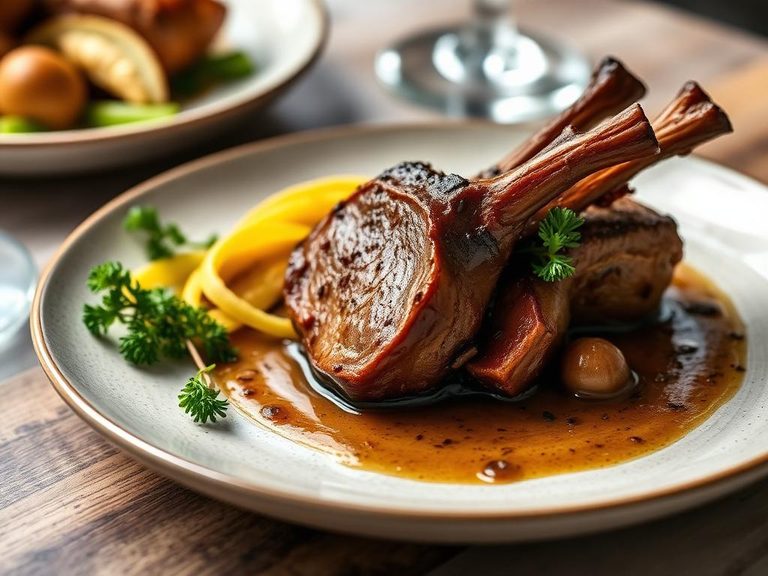
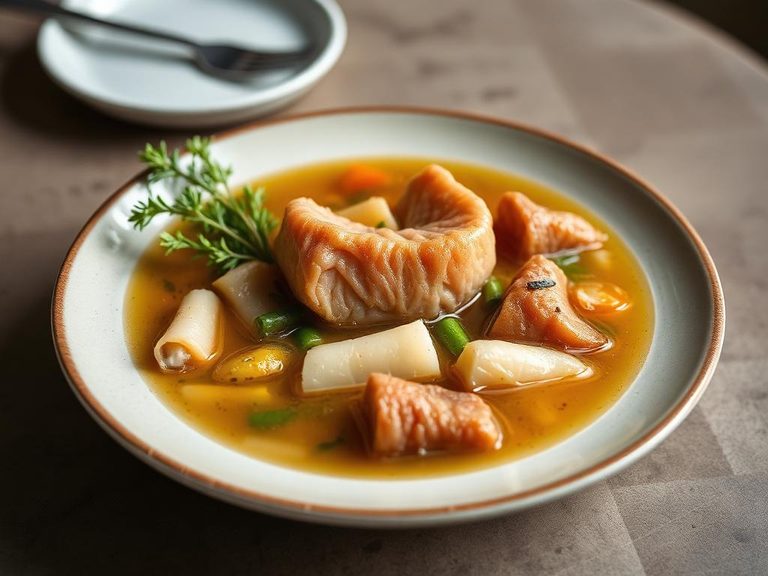
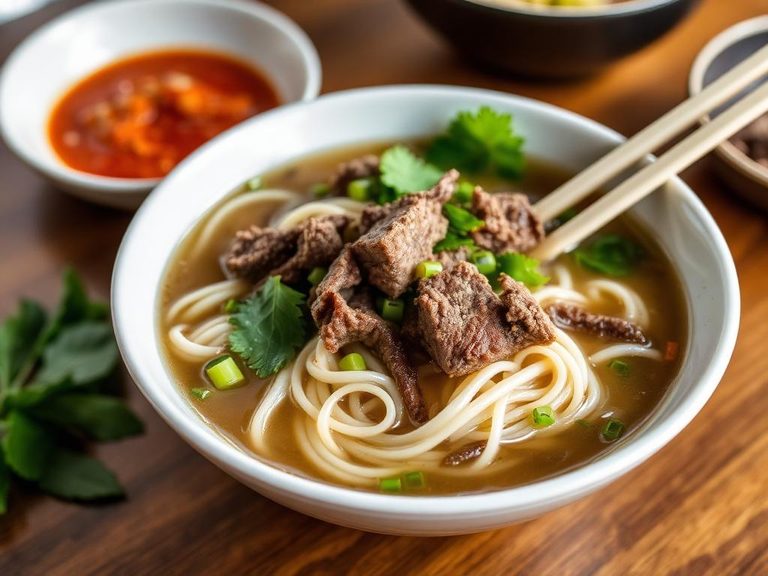
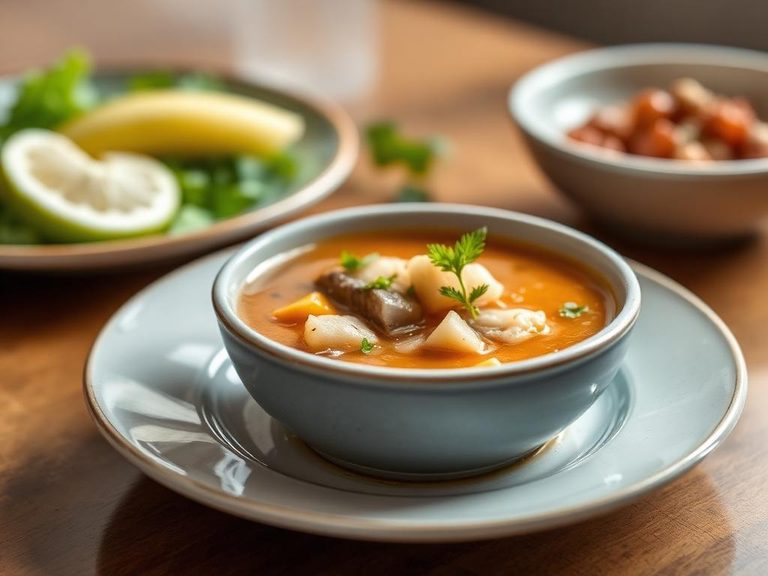
People cherish beef shank for its rich, meaty flavor that forms the soul of comforting broths and stews. Its versatility allows it to be the star in dishes ranging from Italian Osso Buco to Mexican Caldo de Res, where it absorbs and delivers complex seasonings.
⚠️ Watch-outs & how to enjoy it better
The cut's inherent toughness requires long, slow cooking times to become tender, which can be a drawback for quick meals. Its lean nature means it can dry out if overcooked or boiled rapidly. To counter this, always use a low simmer or braise with sufficient liquid, and consider adding a small amount of fat or acidic ingredient like tomatoes to aid in tenderization.
Key benefits
- Excellent source of high-quality protein for muscle maintenance
- Very low in carbohydrates, suitable for ketogenic diets
- Provides essential minerals like iron and zinc
- Naturally low in sugar, supporting stable energy levels
- Contains collagen which breaks down into gelatin during simmering
🍽️ Popular dishes
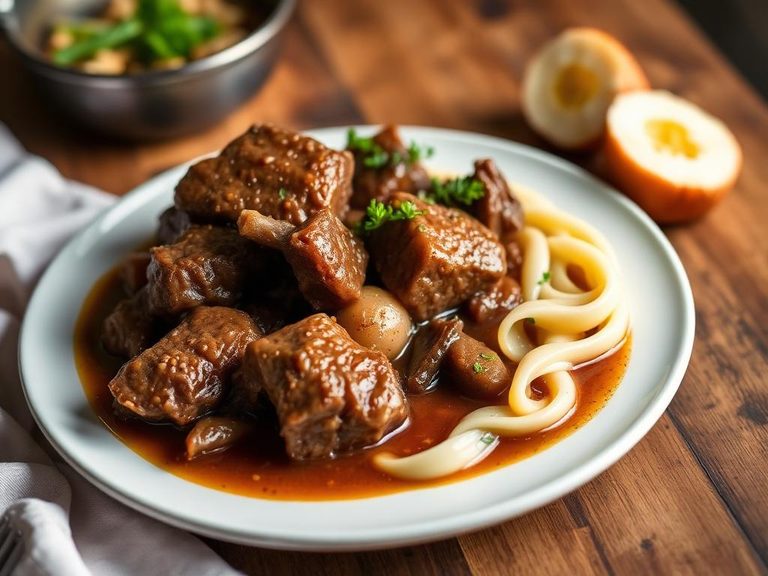
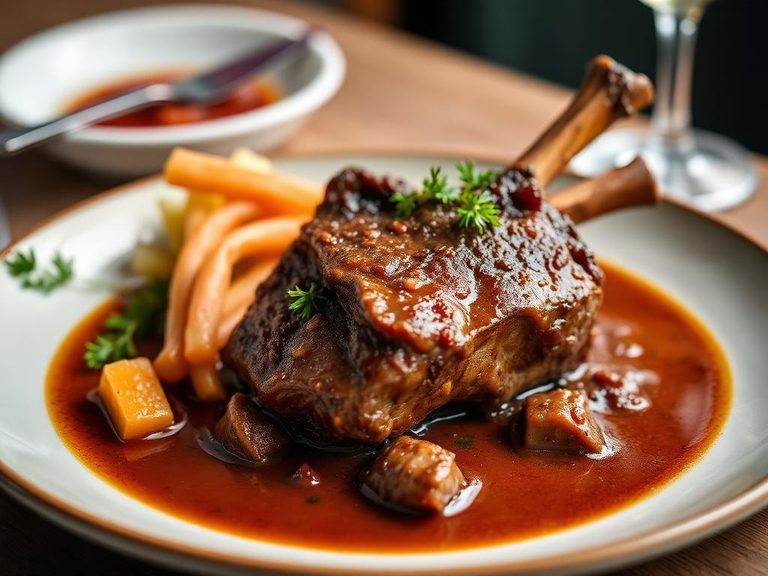
🌍 Where it's eaten
💡 Did you know?
The bone in a beef shank crosscut contains marrow, which, when simmered, releases a rich, buttery flavor and gelatin that naturally thickens soups and sauces without any added thickeners.
Full nutrition (USDA data · scales with serving)
| Water | 58.2 g |
| Energy | 201 kcal |
| Energy | 841 kj |
| Protein | 33.7 g |
| Total lipid (fat) | 6.4 g |
| Ash | 2.4 g |
| Carbohydrate, by difference | 0.00 g |
| Fiber, total dietary | 0.00 g |
| Calcium, Ca | 32.0 mg |
| Iron, Fe | 3.9 mg |
| Magnesium, Mg | 30.0 mg |
| Phosphorus, P | 263 mg |
| Potassium, K | 447 mg |
| Sodium, Na | 64.0 mg |
| Zinc, Zn | 10.5 mg |
| Copper, Cu | 0.17 mg |
| Manganese, Mn | 0.02 mg |
| Selenium, Se | 30.0 ug |
| Vitamin C, total ascorbic acid | 0.00 mg |
| Thiamin | 0.14 mg |
| Riboflavin | 0.21 mg |
| Niacin | 5.9 mg |
| Pantothenic acid | 0.41 mg |
| Vitamin B-6 | 0.37 mg |
| Folate, total | 10.0 ug |
| Folic acid | 0.00 ug |
| Folate, food | 10.0 ug |
| Folate, DFE | 10.0 ug |
| Vitamin B-12 | 3.8 ug |
| Vitamin A, RAE | 0.00 ug |
| Retinol | 0.00 ug |
| Vitamin A, IU | 0.00 iu |
Fat & fatty acid profile (per 100g)
| Fatty acids, total saturated | 2.3 g |
| SFA 4:0 | 0.00 g |
| SFA 6:0 | 0.00 g |
| SFA 8:0 | 0.00 g |
| SFA 10:0 | 0.00 g |
| SFA 12:0 | 0.01 g |
| SFA 14:0 | 0.18 g |
| SFA 16:0 | 1.4 g |
| SFA 18:0 | 0.61 g |
| Fatty acids, total monounsaturated | 2.9 g |
| MUFA 16:1 | 0.31 g |
| MUFA 18:1 | 2.4 g |
| MUFA 20:1 | 0.01 g |
| MUFA 22:1 | 0.00 g |
| Fatty acids, total polyunsaturated | 0.21 g |
| PUFA 18:2 | 0.17 g |
| PUFA 18:3 | 0.01 g |
| PUFA 18:4 | 0.00 g |
| PUFA 20:4 | 0.03 g |
| PUFA 20:5 n-3 (EPA) | 0.00 g |
| PUFA 22:5 n-3 (DPA) | 0.00 g |
| PUFA 22:6 n-3 (DHA) | 0.00 g |
| Cholesterol | 78.0 mg |
Amino acid profile (per 100g)
| Tryptophan | 0.38 g |
| Threonine | 1.5 g |
| Isoleucine | 1.5 g |
| Leucine | 2.7 g |
| Lysine | 2.8 g |
| Methionine | 0.86 g |
| Cystine | 0.38 g |
| Phenylalanine | 1.3 g |
| Tyrosine | 1.1 g |
| Valine | 1.6 g |
| Arginine | 2.1 g |
| Histidine | 1.2 g |
| Alanine | 2.0 g |
| Aspartic acid | 3.1 g |
| Glutamic acid | 5.1 g |
| Glycine | 1.8 g |
| Proline | 1.5 g |
| Serine | 1.3 g |
FAQ
How do I make beef shank tender?
The key is low-and-slow cooking. Simmer it gently in liquid (like broth or water) for 2-3 hours, or until the meat is easily pierced with a fork. A pressure cooker or slow cooker also works perfectly.
Is the marrow edible?
Yes, the marrow inside the bone is a delicacy. It becomes soft and spreadable after long cooking. You can scoop it out and eat it directly, spread it on toast, or stir it into sauces for extra richness.
What's the difference between beef shank and osso buco?
Osso buco is a specific Italian preparation of cross-cut beef or veal shank, braised with vegetables, broth, and often finished with a gremolata. All osso buco is made from shank, but not all cooked shank is osso buco.
Nutrient density (calculated · NRF9.3)
Nutrient Rich Foods index: beneficial nutrients (protein, fiber, vitamins, minerals) minus saturated fat, added sugar & sodium, per 100 kcal.
NRF9.3 index — Fulgoni, Keast & Drewnowski, 2009. Computed from USDA nutrients.
Weight-loss friendliness (composite index)
Energy density 2.01 kcal/g · 67% calories from protein · 0.0 g fiber · 0.0 g sugar per 100 g.
Composite of energy density (Rolls et al., 1999), protein & fiber satiety, minus sugar. A calculated heuristic — ranks satiety-per-calorie, not a clinical measure.
Dietary load (calculated from USDA values)
Potential renal acid load. Positive = acid-forming, negative = alkaline-forming.
Sodium-to-potassium ratio: 0.14 (lower is better — aim for ≤ 1)
Sodium:potassium per WHO potassium guidance. Computed from USDA nutrients.