

Beef, cured, breakfast strips, raw or unheated
Whole food · Beef Products
Beef breakfast strips are thin, raw cuts of cured beef, typically from the round or chuck, seasoned with salt, sugar, and spices like black pepper or paprika. They have a firm, dense texture and a deeply savory, salty, and slightly smoky flavor profile when cooked. Nutritionally, they are a concentrated source of protein and fat, with virtually no carbohydrates.
Calorie split: 12% protein · 1% carbs · 87% fat
↓ Full nutrition💚 Why it's loved
People love breakfast strips for their intense, satisfying umami flavor and the satisfying sizzle and crisp they develop when pan-fried. They are a cultural staple of the American diner-style breakfast, offering a quick, hearty, and nostalgic start to the day.
⚠️ Watch-outs & how to enjoy it better
The high sodium content from curing can contribute to water retention and may be a concern for those monitoring blood pressure. The high saturated fat content means it should be enjoyed in moderation by individuals managing cholesterol levels. To counteract, pair with fiber-rich vegetables or whole-grain toast, and practice strict portion control.
Key benefits
- High-quality complete protein for muscle maintenance.
- Provides essential minerals like iron, zinc, and B12.
- Zero carbohydrates, suitable for low-carb and ketogenic diets.
- Quick-cooking and convenient for a fast, savory breakfast.
🍽️ Popular dishes

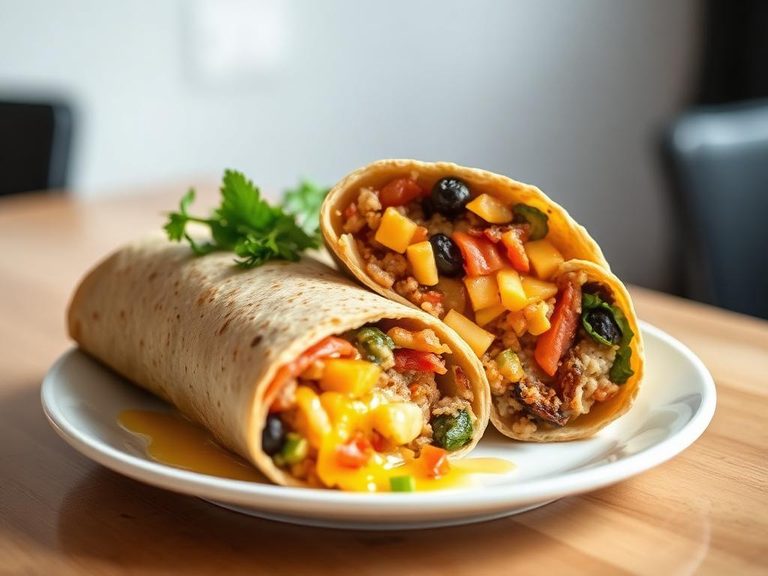

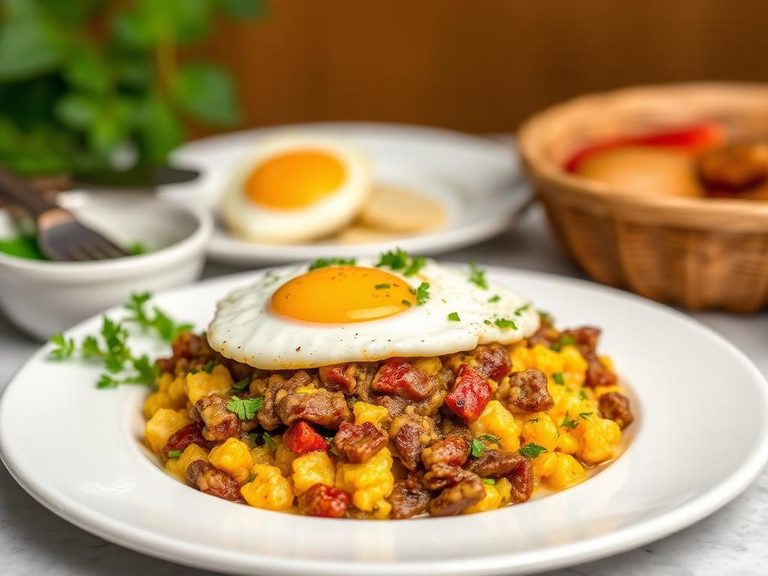

🌍 Where it's eaten
💡 Did you know?
The 'cured' in the name refers to the use of salt and often sodium nitrite, which not only preserves the meat and gives it a characteristic pink color but also inhibits the growth of harmful bacteria like *Clostridium botulinum*.
Full nutrition (USDA data · scales with serving)
| Water | 45.2 g |
| Energy | 406 kcal |
| Energy | 1699 kj |
| Protein | 12.5 g |
| Total lipid (fat) | 38.8 g |
| Ash | 2.8 g |
| Carbohydrate, by difference | 0.70 g |
| Fiber, total dietary | 0.00 g |
| Calcium, Ca | 4.0 mg |
| Iron, Fe | 1.2 mg |
| Magnesium, Mg | 11.0 mg |
| Phosphorus, P | 100 mg |
| Potassium, K | 153 mg |
| Sodium, Na | 955 mg |
| Zinc, Zn | 2.4 mg |
| Copper, Cu | 0.06 mg |
| Manganese, Mn | 0.01 mg |
| Selenium, Se | 25.9 ug |
| Vitamin C, total ascorbic acid | 24.0 mg |
| Thiamin | 0.06 mg |
| Riboflavin | 0.12 mg |
| Niacin | 3.0 mg |
| Pantothenic acid | 0.22 mg |
| Vitamin B-6 | 0.17 mg |
| Folate, total | 5.0 ug |
| Folic acid | 0.00 ug |
| Folate, food | 5.0 ug |
| Folate, DFE | 5.0 ug |
| Vitamin B-12 | 1.6 ug |
| Vitamin A, RAE | 0.00 ug |
| Retinol | 0.00 ug |
| Vitamin A, IU | 0.00 iu |
Fat & fatty acid profile (per 100g)
| Fatty acids, total saturated | 15.9 g |
| SFA 4:0 | 0.00 g |
| SFA 6:0 | 0.00 g |
| SFA 8:0 | 0.00 g |
| SFA 10:0 | 0.16 g |
| SFA 12:0 | 0.11 g |
| SFA 14:0 | 1.3 g |
| SFA 16:0 | 8.5 g |
| SFA 18:0 | 5.0 g |
| Fatty acids, total monounsaturated | 18.7 g |
| MUFA 16:1 | 2.5 g |
| MUFA 18:1 | 16.2 g |
| MUFA 20:1 | 0.00 g |
| MUFA 22:1 | 0.00 g |
| Fatty acids, total polyunsaturated | 2.2 g |
| PUFA 18:2 | 1.7 g |
| PUFA 18:3 | 0.52 g |
| PUFA 18:4 | 0.00 g |
| PUFA 20:4 | 0.00 g |
| PUFA 20:5 n-3 (EPA) | 0.00 g |
| PUFA 22:5 n-3 (DPA) | 0.00 g |
| PUFA 22:6 n-3 (DHA) | 0.00 g |
| Cholesterol | 82.0 mg |
| Phytosterols | 0.00 mg |
Amino acid profile (per 100g)
| Tryptophan | 0.11 g |
| Threonine | 0.47 g |
| Isoleucine | 0.54 g |
| Leucine | 0.92 g |
| Lysine | 0.96 g |
| Methionine | 0.29 g |
| Cystine | 0.16 g |
| Phenylalanine | 0.45 g |
| Tyrosine | 0.41 g |
| Valine | 0.55 g |
| Arginine | 0.77 g |
| Histidine | 0.40 g |
| Alanine | 0.90 g |
| Aspartic acid | 1.2 g |
| Glutamic acid | 2.0 g |
| Glycine | 1.0 g |
| Proline | 0.90 g |
| Serine | 0.50 g |
FAQ
What's the difference between breakfast strips and bacon?
Breakfast strips are made from beef, while traditional bacon is made from pork belly. Beef strips are typically leaner, have a denser texture, and a more pronounced beefy flavor compared to the fattier, smokier profile of pork bacon.
How should I cook raw breakfast strips?
Cook them in a skillet over medium heat, turning occasionally, for 3-5 minutes per side until they are browned, slightly crispy at the edges, and cooked through. They can also be baked in an oven at 400°F (200°C) for about 10-15 minutes.
Can I freeze uncooked breakfast strips?
Yes, you can freeze them. Separate the strips with parchment paper, place them in a freezer-safe bag or container, and they will keep for 1-2 months. Thaw in the refrigerator before cooking.
Nutrient density (calculated · NRF9.3)
Nutrient Rich Foods index: beneficial nutrients (protein, fiber, vitamins, minerals) minus saturated fat, added sugar & sodium, per 100 kcal.
NRF9.3 index — Fulgoni, Keast & Drewnowski, 2009. Computed from USDA nutrients.
Weight-loss friendliness (composite index)
Energy density 4.06 kcal/g · 12% calories from protein · 0.0 g fiber · 0.0 g sugar per 100 g.
Composite of energy density (Rolls et al., 1999), protein & fiber satiety, minus sugar. A calculated heuristic — ranks satiety-per-calorie, not a clinical measure.
Dietary load (calculated from USDA values)
Potential renal acid load. Positive = acid-forming, negative = alkaline-forming.
Sodium-to-potassium ratio: 6.24 (lower is better — aim for ≤ 1)
Sodium:potassium per WHO potassium guidance. Computed from USDA nutrients.