

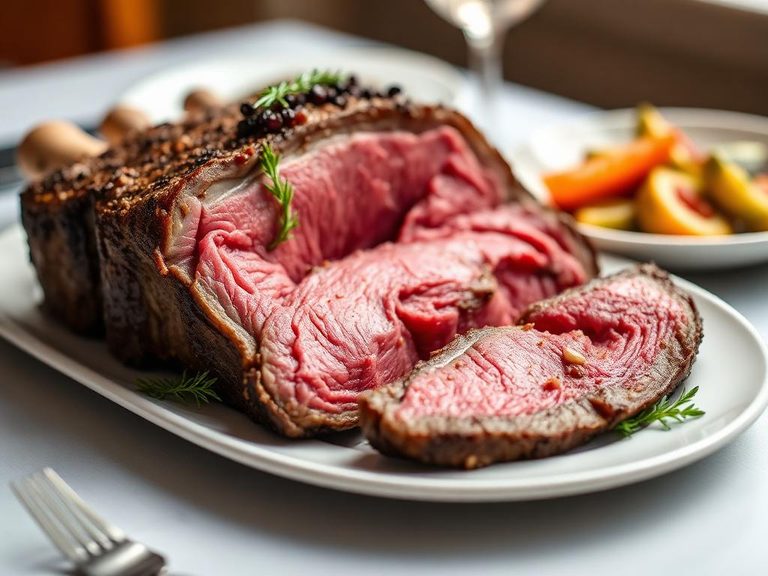
Beef, Australian, imported, grass-fed, rib, ribeye steak/roast lip-on, boneless, separable lean only, raw
Whole food · Beef Products

Photo: Wikipedia
This is a lean, boneless cut from the rib section of Australian grass-fed cattle, prized for its deep, mineral-rich beef flavor and fine marbling that melts into a buttery texture when cooked. Nutritionally, it's a powerhouse of high-quality protein with minimal fat, offering a clean, robust taste that reflects the animal's natural pasture diet.
Calorie split: 54% protein · 0% carbs · 46% fat
↓ Full nutrition💚 Why it's loved
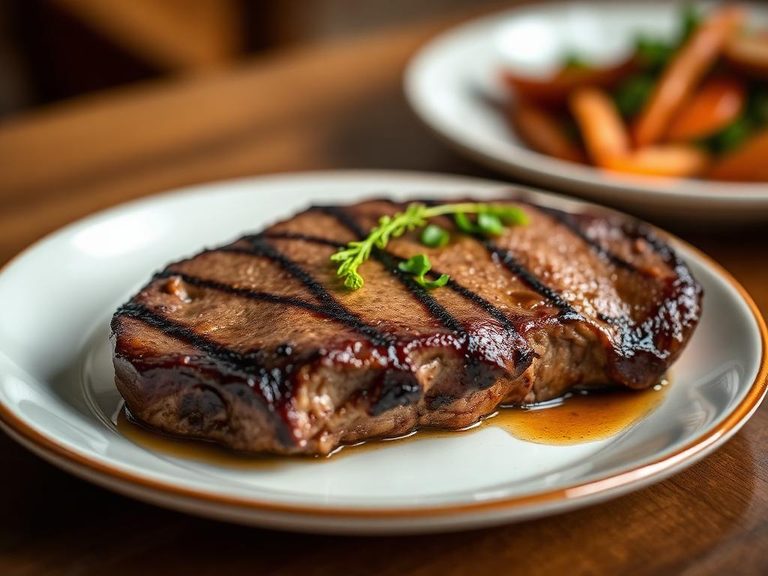
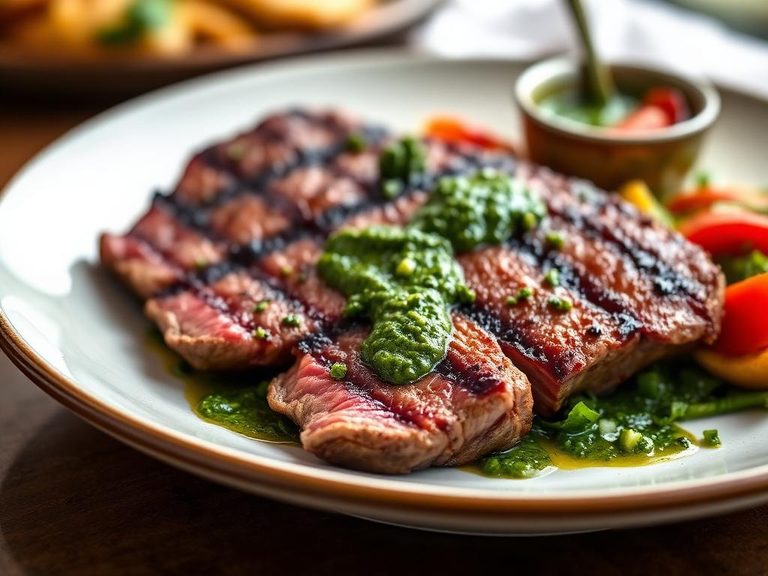
People love it for its intense, clean beef flavor and tender yet substantial texture that holds up beautifully to high-heat searing. It's a versatile centerpiece, equally at home in a simple pan-seared steak or a slow-roasted feast.
⚠️ Watch-outs & how to enjoy it better
As a red meat, it can be high in saturated fat, which some individuals may need to moderate. To counteract this, practice portion control (aim for a 118g serving) and pair it with fiber-rich vegetables like roasted Brussels sprouts or a leafy salad to balance the meal.
Key benefits
- Excellent source of complete protein for muscle maintenance
- Rich in bioavailable iron and zinc
- Contains conjugated linoleic acid (CLA) from grass-feeding
- Low in carbohydrates, suitable for ketogenic diets
- Provides B vitamins, especially B12, for energy metabolism
🍽️ Popular dishes
🌍 Where it's eaten
💡 Did you know?
The 'lip-on' designation refers to a small, flavorful strip of fat and muscle from the rib's outer edge, which many chefs consider a cook's treat for its intense flavor.
Full nutrition (USDA data · scales with serving)
| Water | 70.1 g |
| Energy | 160 kcal |
| Energy | 668 kj |
| Protein | 21.5 g |
| Total lipid (fat) | 8.2 g |
| Ash | 0.96 g |
| Carbohydrate, by difference | 0.00 g |
| Fiber, total dietary | 0.00 g |
| Total Sugars | 0.00 g |
| Calcium, Ca | 5.0 mg |
| Iron, Fe | 1.9 mg |
| Sodium, Na | 65.0 mg |
| Vitamin C, total ascorbic acid | 0.00 mg |
| Vitamin A, RAE | 0.00 ug |
| Carotene, beta | 0.00 ug |
| Carotene, alpha | 0.00 ug |
| Cryptoxanthin, beta | 0.00 ug |
| Vitamin A, IU | 0.00 iu |
| Lycopene | 0.00 ug |
| Lutein + zeaxanthin | 0.00 ug |
| Alcohol, ethyl | 0.00 g |
| Caffeine | 0.00 mg |
| Theobromine | 0.00 mg |
Fat & fatty acid profile (per 100g)
| Fatty acids, total saturated | 3.6 g |
| SFA 4:0 | 0.00 g |
| SFA 6:0 | 0.00 g |
| SFA 8:0 | 0.00 g |
| SFA 10:0 | 0.01 g |
| SFA 12:0 | 0.01 g |
| SFA 14:0 | 0.22 g |
| SFA 15:0 | 0.03 g |
| SFA 16:0 | 2.0 g |
| SFA 17:0 | 0.09 g |
| SFA 18:0 | 1.2 g |
| SFA 20:0 | 0.01 g |
| SFA 22:0 | 0.01 g |
| Fatty acids, total monounsaturated | 3.5 g |
| MUFA 14:1 | 0.04 g |
| MUFA 16:1 | 0.23 g |
| MUFA 18:1 | 3.2 g |
| MUFA 18:1 c | 3.0 g |
| MUFA 20:1 | 0.01 g |
| Fatty acids, total polyunsaturated | 0.28 g |
| PUFA 18:2 | 0.18 g |
| PUFA 18:2 n-6 c,c | 0.13 g |
| PUFA 18:3 | 0.05 g |
| PUFA 18:3 n-3 c,c,c (ALA) | 0.04 g |
| PUFA 18:3i | 0.01 g |
| PUFA 18:4 | 0.00 g |
| PUFA 20:4 | 0.02 g |
| PUFA 20:5 n-3 (EPA) | 0.01 g |
| PUFA 22:5 n-3 (DPA) | 0.02 g |
| Fatty acids, total trans | 0.29 g |
| Fatty acids, total trans-monoenoic | 0.23 g |
| TFA 18:1 t | 0.23 g |
| TFA 18:2 t not further defined | 0.06 g |
| Fatty acids, total trans-polyenoic | 0.06 g |
| Cholesterol | 50.0 mg |
Amino acid profile (per 100g)
| Tryptophan | 0.25 g |
| Threonine | 0.97 g |
| Isoleucine | 0.94 g |
| Leucine | 1.8 g |
| Lysine | 1.9 g |
| Methionine | 0.63 g |
| Cystine | 0.23 g |
| Phenylalanine | 0.84 g |
| Tyrosine | 0.76 g |
| Valine | 0.99 g |
| Arginine | 1.4 g |
| Histidine | 0.71 g |
| Alanine | 1.2 g |
| Aspartic acid | 2.0 g |
| Glutamic acid | 3.5 g |
| Glycine | 0.96 g |
| Proline | 0.88 g |
| Serine | 0.84 g |
| Hydroxyproline | 0.11 g |
FAQ
What's the difference between grass-fed and grain-fed ribeye?
Grass-fed beef, like this Australian cut, typically has a leaner profile, a more pronounced mineral or 'gamey' flavor, and a higher concentration of omega-3 fatty acids and CLA compared to grain-fed beef, which is often milder and more consistently marbled.
How should I cook this cut to preserve its nutrition?
For lean cuts, dry-heat methods like grilling, broiling, or pan-searing are ideal. Cook to medium-rare or medium to retain moisture and nutrients, and avoid charring, which can create harmful compounds.
Is this cut suitable for a low-sodium diet?
Naturally, raw beef is very low in sodium. However, be mindful of added salt in marinades, rubs, or sauces. Use herbs, spices, and citrus juice to add flavor instead.
Nutrient density (calculated · NRF9.3)
Nutrient Rich Foods index: beneficial nutrients (protein, fiber, vitamins, minerals) minus saturated fat, added sugar & sodium, per 100 kcal.
NRF9.3 index — Fulgoni, Keast & Drewnowski, 2009. Computed from USDA nutrients.
Weight-loss friendliness (composite index)
Energy density 1.60 kcal/g · 54% calories from protein · 0.0 g fiber · 0.0 g sugar per 100 g.
Composite of energy density (Rolls et al., 1999), protein & fiber satiety, minus sugar. A calculated heuristic — ranks satiety-per-calorie, not a clinical measure.