

Babyfood, dinner, vegetables and dumplings and beef, junior
Whole food · Baby Foods

Photo: Wikipedia
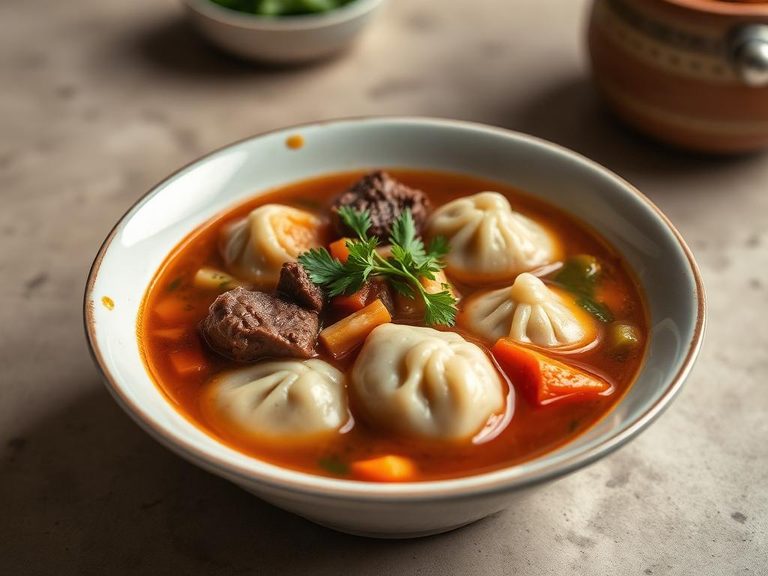
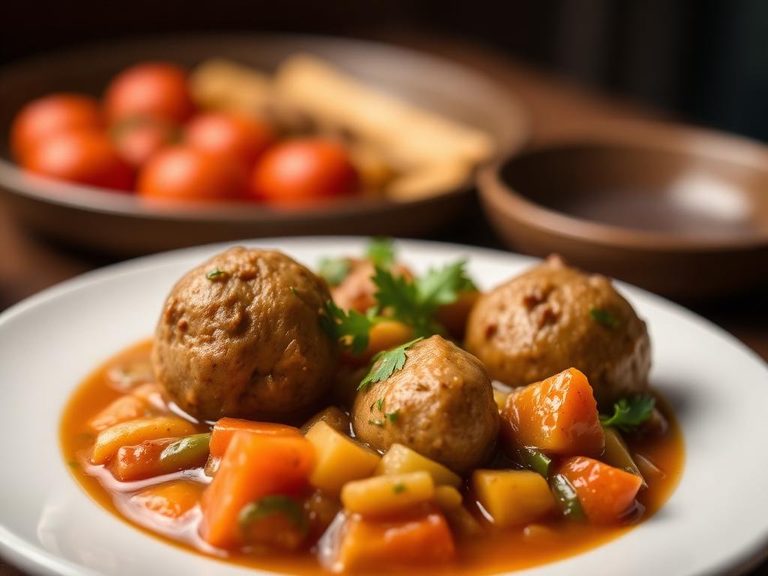
This is a savory, soft-textured baby food combining tender minced beef with finely diced vegetables and small, soft dumplings in a light broth. It offers a mild, comforting flavor profile with a balanced, easy-to-chew texture ideal for early eaters. Nutritionally, it provides a modest calorie boost with a good protein-to-carb ratio for growing toddlers.
Calorie split: 18% protein · 67% carbs · 15% fat
↓ Full nutrition💚 Why it's loved
Parents love it for its practical, all-in-one nutrition and familiar, comforting flavors that introduce babies to savory, mixed-component meals. It's a trusted staple in many cultures for transitioning from purees to more complex textures.
⚠️ Watch-outs & how to enjoy it better
The low fiber and sugar content, while appropriate for babies, can lead to quicker hunger and potential blood sugar fluctuations if used as a sole meal. For babies with beef allergies or sensitivity to common allergens like wheat (in dumplings), caution is needed. To counteract, pair this meal with a side of mashed avocado or soft fruit to add healthy fats and fiber, promoting satiety.
Key benefits
- Provides complete protein from beef for muscle and tissue development.
- Offers a blend of vegetables for essential vitamins and minerals.
- Soft, mashed texture is safe for developing chewing and swallowing skills.
- Convenient, balanced one-pot meal for busy caregivers.
- Low in fat and sugar, aligning with early childhood dietary guidelines.
🍽️ Popular dishes
🌍 Where it's eaten
💡 Did you know?
The concept of combining minced meat, vegetables, and a starch like dumplings or noodles in a single dish is a global comfort food archetype, found in everything from Chinese wonton soup to Italian wedding soup.
Full nutrition (USDA data · scales with serving)
| Water | 88.6 g |
| Energy | 48.0 kcal |
| Energy | 201 kj |
| Protein | 2.1 g |
| Total lipid (fat) | 0.80 g |
| Ash | 0.60 g |
| Carbohydrate, by difference | 8.0 g |
| Total Sugars | 0.00 g |
| Calcium, Ca | 14.0 mg |
| Iron, Fe | 0.47 mg |
| Magnesium, Mg | 7.0 mg |
| Phosphorus, P | 29.0 mg |
| Potassium, K | 47.0 mg |
| Sodium, Na | 52.0 mg |
| Zinc, Zn | 0.33 mg |
| Copper, Cu | 0.03 mg |
| Selenium, Se | 2.1 ug |
| Vitamin C, total ascorbic acid | 0.80 mg |
| Thiamin | 0.04 mg |
| Riboflavin | 0.04 mg |
| Niacin | 0.49 mg |
| Pantothenic acid | 0.21 mg |
| Vitamin B-6 | 0.05 mg |
| Folate, total | 7.0 ug |
| Folic acid | 0.00 ug |
| Folate, food | 7.0 ug |
| Folate, DFE | 7.0 ug |
| Vitamin B-12 | 0.09 ug |
| Vitamin B-12, added | 0.00 ug |
| Vitamin A, RAE | 33.0 ug |
| Retinol | 0.00 ug |
| Vitamin A, IU | 660 iu |
Fat & fatty acid profile (per 100g)
Estimated from Babyfood, grape juice, no sugar, canned — USDA does not publish this profile for Babyfood.
| Fatty acids, total saturated | 0.00 g |
| SFA 4:0 | 0.00 g |
| SFA 6:0 | 0.00 g |
| SFA 8:0 | 0.00 g |
| SFA 10:0 | 0.00 g |
| SFA 12:0 | 0.00 g |
| SFA 14:0 | 0.00 g |
| SFA 16:0 | 0.00 g |
| SFA 18:0 | 0.00 g |
| Fatty acids, total monounsaturated | 0.00 g |
| MUFA 16:1 | 0.00 g |
| MUFA 18:1 | 0.00 g |
| MUFA 20:1 | 0.00 g |
| MUFA 22:1 | 0.00 g |
| Fatty acids, total polyunsaturated | 0.00 g |
| PUFA 18:2 | 0.00 g |
| PUFA 18:3 | 0.00 g |
| PUFA 18:4 | 0.00 g |
| PUFA 20:4 | 0.00 g |
| PUFA 20:5 n-3 (EPA) | 0.00 g |
| PUFA 22:5 n-3 (DPA) | 0.00 g |
| PUFA 22:6 n-3 (DHA) | 0.00 g |
| Cholesterol | 0.00 mg |
Amino acid profile (per 100g)
Estimated from Babyfood, grape juice, no sugar, canned — USDA does not publish this profile for Babyfood.
| Threonine | 0.02 g |
| Isoleucine | 0.01 g |
| Leucine | 0.02 g |
| Lysine | 0.02 g |
| Methionine | 0.03 g |
| Cystine | 0.01 g |
| Phenylalanine | 0.02 g |
| Tyrosine | 0.02 g |
| Valine | 0.02 g |
| Arginine | 0.06 g |
| Histidine | 0.03 g |
| Alanine | 0.04 g |
| Aspartic acid | 0.10 g |
| Glutamic acid | 0.18 g |
| Glycine | 0.03 g |
| Proline | 0.03 g |
| Serine | 0.04 g |
FAQ
Is this suitable for a 6-month-old starting solids?
Generally, yes, but the texture may need to be smoother. Always consult your pediatrician and ensure the dumplings are very soft and the vegetables are thoroughly puréed or mashed for the earliest eaters.
Can I make this at home?
Absolutely. Finely mince lean beef, cook with soft-cooked vegetables (like carrots, peas, potatoes), and add tiny, soft flour dumplings. Ensure everything is cooked until very tender and mash or blend to the desired consistency.
Why is there no added sugar?
Health guidelines for infants recommend avoiding added sugars. The natural flavors of the meat and vegetables are sufficient, and this helps establish a preference for unsweetened foods.
Nutrient density (calculated · NRF9.3)
Nutrient Rich Foods index: beneficial nutrients (protein, fiber, vitamins, minerals) minus saturated fat, added sugar & sodium, per 100 kcal.
NRF9.3 index — Fulgoni, Keast & Drewnowski, 2009. Computed from USDA nutrients.
Weight-loss friendliness (composite index)
Energy density 0.48 kcal/g · 18% calories from protein · 0.0 g fiber · 0.0 g sugar per 100 g.
Composite of energy density (Rolls et al., 1999), protein & fiber satiety, minus sugar. A calculated heuristic — ranks satiety-per-calorie, not a clinical measure.
Dietary load (calculated from USDA values)
Potential renal acid load. Positive = acid-forming, negative = alkaline-forming.
Sodium-to-potassium ratio: 1.11 (lower is better — aim for ≤ 1)
Sodium:potassium per WHO potassium guidance. Computed from USDA nutrients.