

Oranges, raw, with peel
Whole food · Fruits and Fruit Juices

Photo: Wikipedia
This is the entire fruit, eaten raw with its vibrant, textured peel. It offers a bright, tangy-sweet flavor and a juicy, fibrous texture, with a surprisingly robust nutritional profile that includes significant fiber and a notable calorie count from its natural sugars.
Calorie split: 7% protein · 89% carbs · 4% fat
↓ Full nutrition💚 Why it's loved
People love the intense, zesty burst of citrus flavor and the satisfying chew of the peel, which adds a complex, slightly bitter note. It's a versatile ingredient that can be eaten whole, zested, or candied, and holds deep cultural significance in festivals and symbolism.
⚠️ Watch-outs & how to enjoy it better
The peel can be tough and bitter if not prepared well, and the high fiber and acid content may cause digestive discomfort for some. The natural sugars can affect blood glucose, so pairing it with a protein or fat (like nuts or yogurt) can help. Those with citrus allergies should avoid it.
Key benefits
- Excellent source of dietary fiber (4.5g per 100g)
- Provides vitamin C and antioxidants
- Contains flavonoids with anti-inflammatory properties
- The peel adds significant pectin, a prebiotic fiber
- Low in fat and a source of natural energy
🍽️ Popular dishes
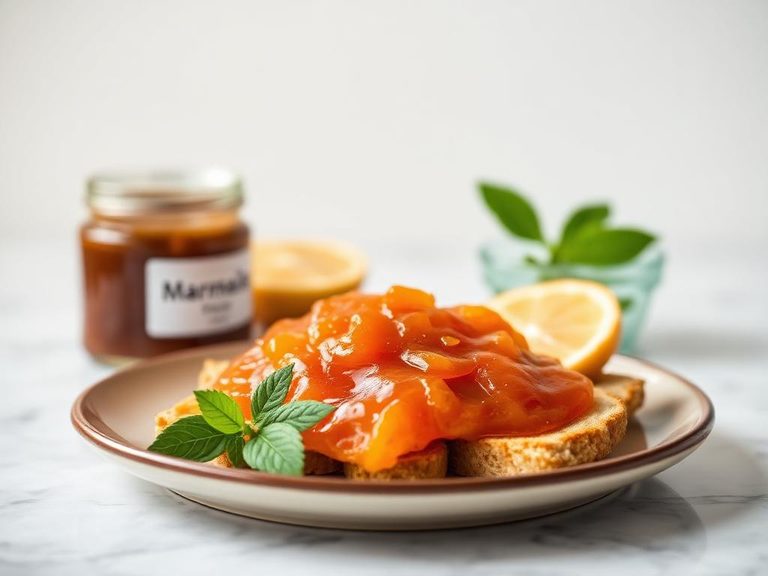
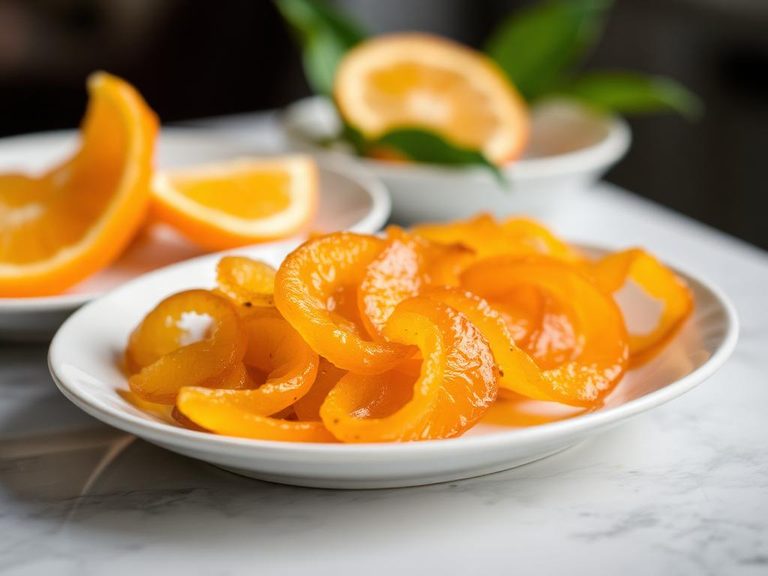
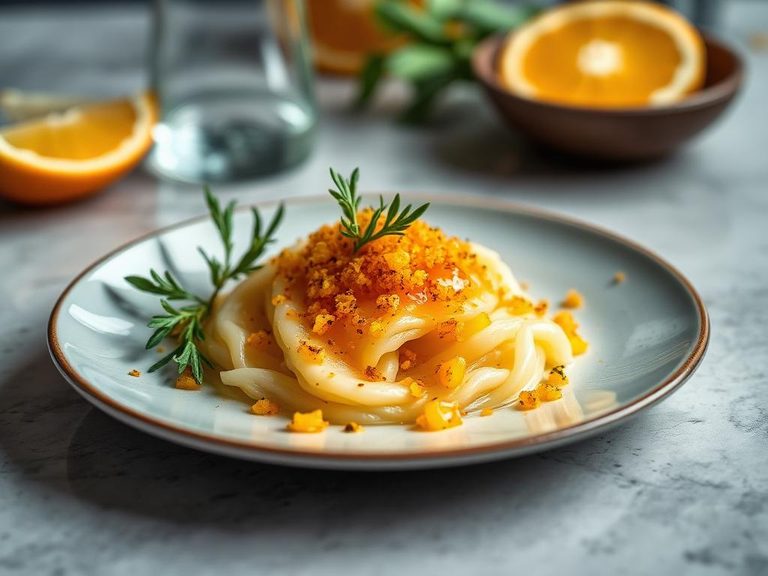

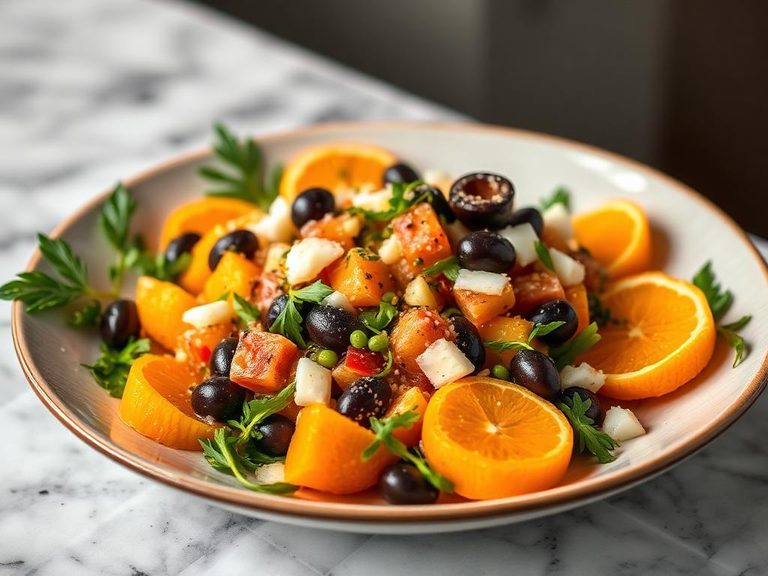
🌍 Where it's eaten
💡 Did you know?
The white pith between the peel and the fruit is one of the most concentrated dietary sources of bioflavonoids like hesperidin, which is studied for its effects on vascular health.
Full nutrition (USDA data · scales with serving)
| Water | 82.3 g |
| Energy | 63.0 kcal |
| Energy | 262 kj |
| Protein | 1.3 g |
| Total lipid (fat) | 0.30 g |
| Ash | 0.60 g |
| Carbohydrate, by difference | 15.5 g |
| Fiber, total dietary | 4.5 g |
| Calcium, Ca | 70.0 mg |
| Iron, Fe | 0.80 mg |
| Magnesium, Mg | 14.0 mg |
| Phosphorus, P | 22.0 mg |
| Potassium, K | 196 mg |
| Sodium, Na | 2.0 mg |
| Zinc, Zn | 0.11 mg |
| Copper, Cu | 0.06 mg |
| Selenium, Se | 0.70 ug |
| Vitamin C, total ascorbic acid | 71.0 mg |
| Thiamin | 0.10 mg |
| Riboflavin | 0.05 mg |
| Niacin | 0.50 mg |
| Pantothenic acid | 0.33 mg |
| Vitamin B-6 | 0.09 mg |
| Folate, total | 30.0 ug |
| Folic acid | 0.00 ug |
| Folate, food | 30.0 ug |
| Folate, DFE | 30.0 ug |
| Vitamin B-12 | 0.00 ug |
| Vitamin A, RAE | 13.0 ug |
| Retinol | 0.00 ug |
| Vitamin A, IU | 250 iu |
| Alcohol, ethyl | 0.00 g |
| Caffeine | 0.00 mg |
| Theobromine | 0.00 mg |
Fat & fatty acid profile (per 100g)
| Fatty acids, total saturated | 0.04 g |
| SFA 4:0 | 0.00 g |
| SFA 6:0 | 0.00 g |
| SFA 8:0 | 0.00 g |
| SFA 10:0 | 0.00 g |
| SFA 12:0 | 0.00 g |
| SFA 14:0 | 0.00 g |
| SFA 16:0 | 0.03 g |
| SFA 18:0 | 0.00 g |
| Fatty acids, total monounsaturated | 0.06 g |
| MUFA 16:1 | 0.01 g |
| MUFA 18:1 | 0.05 g |
| MUFA 20:1 | 0.00 g |
| MUFA 22:1 | 0.00 g |
| Fatty acids, total polyunsaturated | 0.06 g |
| PUFA 18:2 | 0.04 g |
| PUFA 18:3 | 0.02 g |
| PUFA 18:4 | 0.00 g |
| PUFA 20:4 | 0.00 g |
| PUFA 20:5 n-3 (EPA) | 0.00 g |
| PUFA 22:5 n-3 (DPA) | 0.00 g |
| PUFA 22:6 n-3 (DHA) | 0.00 g |
| Fatty acids, total trans | 0.00 g |
| Cholesterol | 0.00 mg |
Amino acid profile (per 100g)
| Tryptophan | 0.01 g |
| Threonine | 0.02 g |
| Isoleucine | 0.04 g |
| Leucine | 0.03 g |
| Lysine | 0.07 g |
| Methionine | 0.03 g |
| Cystine | 0.01 g |
| Phenylalanine | 0.04 g |
| Tyrosine | 0.02 g |
| Valine | 0.06 g |
| Arginine | 0.09 g |
| Histidine | 0.02 g |
| Alanine | 0.07 g |
| Aspartic acid | 0.16 g |
| Glutamic acid | 0.13 g |
| Glycine | 0.13 g |
| Proline | 0.06 g |
| Serine | 0.04 g |
FAQ
Is it safe to eat the peel?
Yes, the peel is edible and nutritious, but it's often tough and bitter. It's best used in small amounts, finely grated as zest, or cooked (like in marmalade or candied) to soften it and mellow the bitterness.
How does the nutrition differ from the fruit alone?
Eating the whole fruit with peel dramatically increases the fiber content (from ~2g to 4.5g per 100g) and adds unique antioxidants and flavonoids found primarily in the peel and pith.
How should I store oranges with the peel?
Store them at room temperature for up to a week, or in the refrigerator's crisper drawer for 2-3 weeks. The peel helps protect the fruit inside, extending its freshness.
Nutrient density (calculated · NRF9.3)
Nutrient Rich Foods index: beneficial nutrients (protein, fiber, vitamins, minerals) minus saturated fat, added sugar & sodium, per 100 kcal.
NRF9.3 index — Fulgoni, Keast & Drewnowski, 2009. Computed from USDA nutrients.
Weight-loss friendliness (composite index)
Energy density 0.63 kcal/g · 8% calories from protein · 4.5 g fiber · 0.0 g sugar per 100 g.
Composite of energy density (Rolls et al., 1999), protein & fiber satiety, minus sugar. A calculated heuristic — ranks satiety-per-calorie, not a clinical measure.
Dietary load (calculated from USDA values)
Potential renal acid load. Positive = acid-forming, negative = alkaline-forming.
Sodium-to-potassium ratio: 0.01 (lower is better — aim for ≤ 1)
Sodium:potassium per WHO potassium guidance. Computed from USDA nutrients.