

Watermelon, seedless, rind only, raw
Whole food · Fruits and Fruit Juices
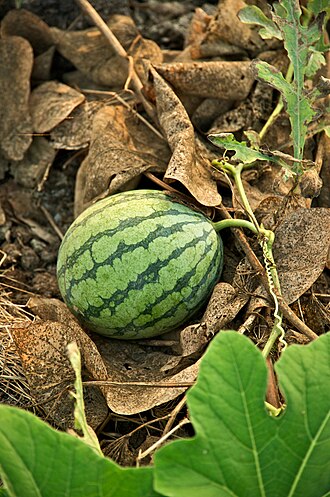
Photo: Wikipedia
Watermelon rind is the firm, pale green-to-white layer between the red flesh and the tough outer skin, often discarded but surprisingly edible. It has a mild, subtly sweet flavor with a crisp, slightly crunchy texture akin to a cucumber or zucchini. Nutritionally, it is exceptionally low in calories and sugar while providing a decent amount of dietary fiber.
Calorie split: 11% protein · 86% carbs · 3% fat
↓ Full nutrition💚 Why it's loved
People love watermelon rind for its unique, refreshing crunch and its ability to absorb flavors in pickles and stir-fries. It's celebrated in many cultures as a resourceful ingredient that transforms a kitchen scrap into a nutritious, versatile component of both sweet and savory dishes.
⚠️ Watch-outs & how to enjoy it better
The rind can be bland or tough if not prepared properly, and its mild sweetness might not appeal to everyone. For those with sensitive digestive systems, the high fiber content could cause bloating; pairing it with a small amount of protein or fat can help mitigate this, and cooking or pickling it can improve digestibility.
Key benefits
- Extremely low-calorie and low-sugar food option
- Good source of dietary fiber for digestive health
- Contains citrulline, an amino acid linked to blood flow
- Provides hydration due to high water content
- Reduces food waste by utilizing a discarded part
🍽️ Popular dishes
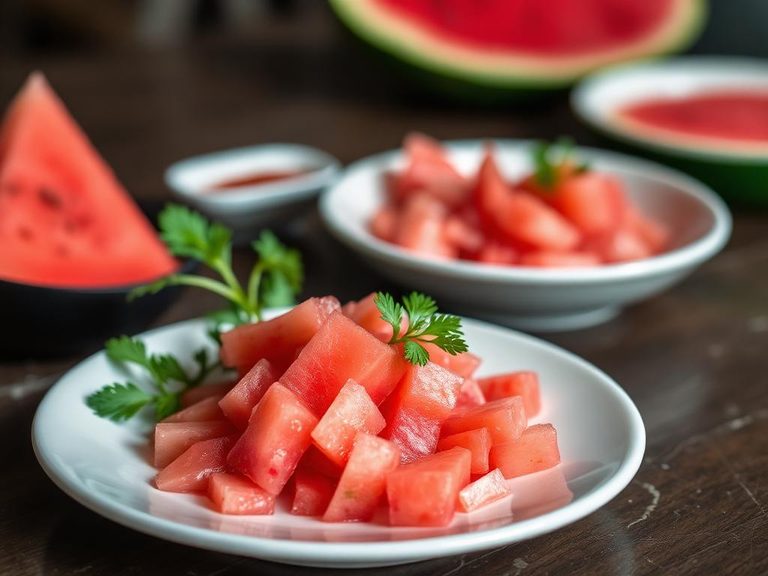
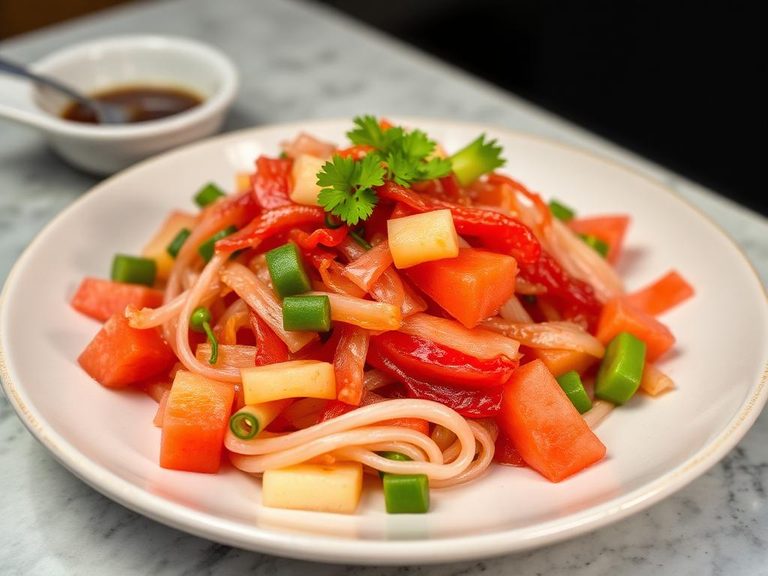
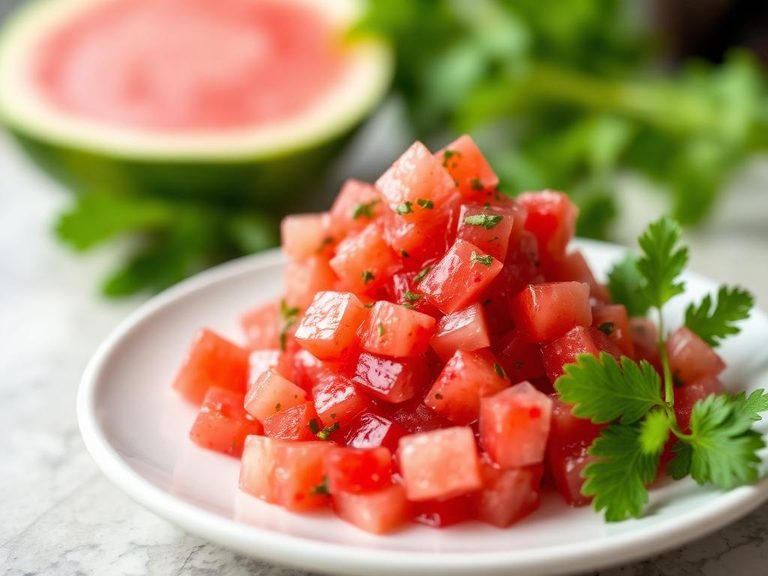
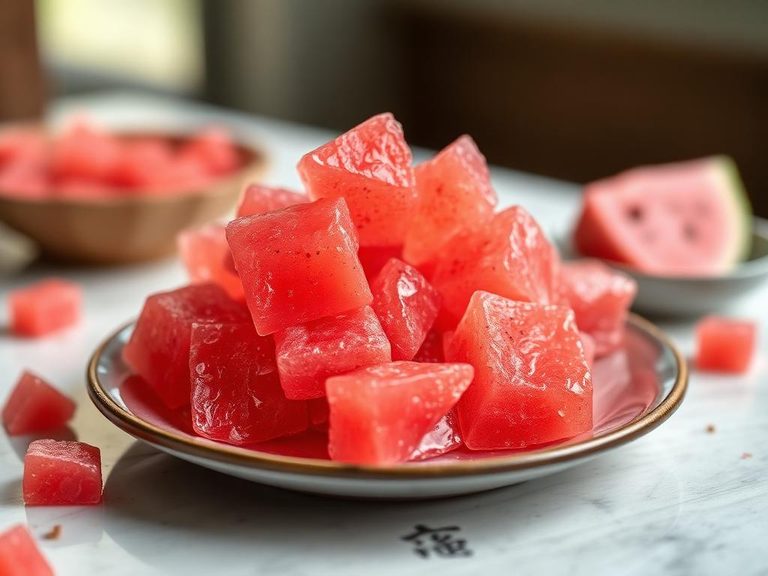
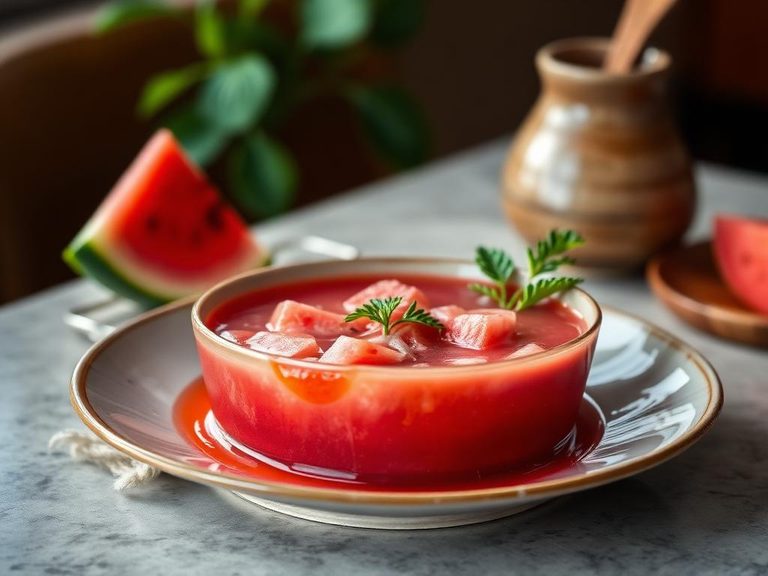
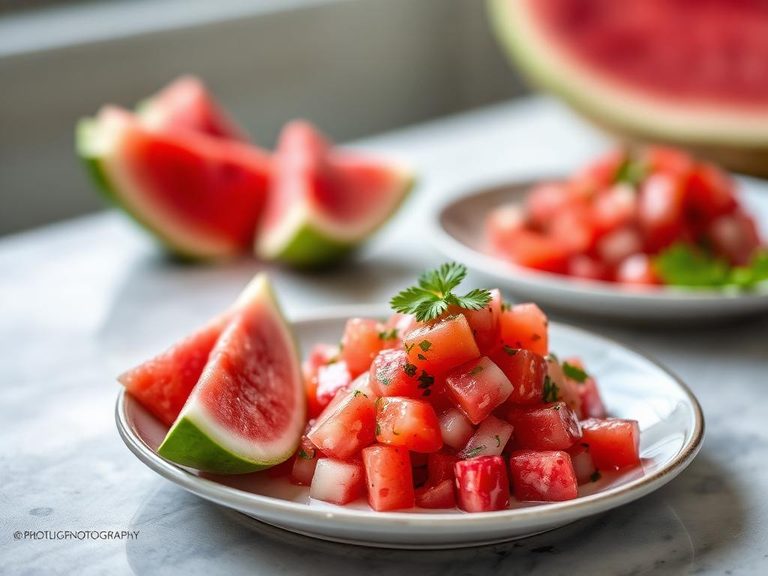
🌍 Where it's eaten
💡 Did you know?
In China, the rind is stir-fried with pork and is considered a classic summer dish, while in the American South, it's traditionally pickled into a sweet, spiced condiment.
Full nutrition (USDA data · scales with serving)
| Water | 94.7 g |
| Energy (Atwater General Factors) | 19.4 kcal |
| Nitrogen | 0.09 g |
| Protein | 0.53 g |
| Total lipid (fat) | 0.07 g |
| Ash | 0.57 g |
| Carbohydrate, by difference | 4.2 g |
| Fiber, total dietary | 1.5 g |
| Sugars, Total | 2.2 g |
| Sucrose | 0.00 g |
| Glucose | 0.76 g |
| Fructose | 1.5 g |
| Lactose | 0.00 g |
| Maltose | 0.00 g |
| Calcium, Ca | 16.9 mg |
| Iron, Fe | 0.00 mg |
| Magnesium, Mg | 9.7 mg |
| Phosphorus, P | 20.7 mg |
| Potassium, K | 273 mg |
| Sodium, Na | 3.8 mg |
| Zinc, Zn | 0.12 mg |
| Copper, Cu | 0.01 mg |
| Manganese, Mn | 0.07 mg |
| Vitamin C, total ascorbic acid | 7.1 mg |
| Thiamin | 0.03 mg |
| Riboflavin | 0.07 mg |
| Niacin | 0.17 mg |
| Vitamin B-6 | 0.03 mg |
| Folate, total | 29.7 ug |
Fat & fatty acid profile (per 100g)
Estimated from Watermelon, raw — USDA does not publish this profile for Watermelon.
| Fatty acids, total saturated | 0.02 g |
| SFA 4:0 | 0.00 g |
| SFA 6:0 | 0.00 g |
| SFA 8:0 | 0.00 g |
| SFA 10:0 | 0.00 g |
| SFA 12:0 | 0.00 g |
| SFA 14:0 | 0.00 g |
| SFA 16:0 | 0.01 g |
| SFA 18:0 | 0.01 g |
| Fatty acids, total monounsaturated | 0.04 g |
| MUFA 16:1 | 0.00 g |
| MUFA 18:1 | 0.04 g |
| MUFA 20:1 | 0.00 g |
| MUFA 22:1 | 0.00 g |
| Fatty acids, total polyunsaturated | 0.05 g |
| PUFA 18:2 | 0.05 g |
| PUFA 18:3 | 0.00 g |
| PUFA 18:4 | 0.00 g |
| PUFA 20:4 | 0.00 g |
| PUFA 20:5 n-3 (EPA) | 0.00 g |
| PUFA 22:5 n-3 (DPA) | 0.00 g |
| PUFA 22:6 n-3 (DHA) | 0.00 g |
| Fatty acids, total trans | 0.00 g |
| Cholesterol | 0.00 mg |
| Phytosterols | 2.0 mg |
Amino acid profile (per 100g)
Estimated from Watermelon, raw — USDA does not publish this profile for Watermelon.
| Tryptophan | 0.01 g |
| Threonine | 0.03 g |
| Isoleucine | 0.02 g |
| Leucine | 0.02 g |
| Lysine | 0.06 g |
| Methionine | 0.01 g |
| Cystine | 0.00 g |
| Phenylalanine | 0.01 g |
| Tyrosine | 0.01 g |
| Valine | 0.02 g |
| Arginine | 0.06 g |
| Histidine | 0.01 g |
| Alanine | 0.02 g |
| Aspartic acid | 0.04 g |
| Glutamic acid | 0.06 g |
| Glycine | 0.01 g |
| Proline | 0.02 g |
| Serine | 0.02 g |
FAQ
Is watermelon rind safe to eat raw?
Yes, it is safe to eat raw, though it is often more palatable when cooked or pickled. Ensure the outer green skin is removed, as it can be tough.
How do I prepare watermelon rind for cooking?
Wash the melon, cut away the red flesh and the hard green outer skin, then slice or chop the remaining white and light green part for use in recipes.
Does watermelon rind have any notable nutritional benefits?
It is low in calories and sugar, provides dietary fiber, and contains citrulline, which may support cardiovascular health.
Nutrient density (calculated · NRF9.3)
Nutrient Rich Foods index: beneficial nutrients (protein, fiber, vitamins, minerals) minus saturated fat, added sugar & sodium, per 100 kcal.
NRF9.3 index — Fulgoni, Keast & Drewnowski, 2009. Computed from USDA nutrients.
Weight-loss friendliness (composite index)
Energy density 0.19 kcal/g · 11% calories from protein · 1.5 g fiber · 0.0 g sugar per 100 g.
Composite of energy density (Rolls et al., 1999), protein & fiber satiety, minus sugar. A calculated heuristic — ranks satiety-per-calorie, not a clinical measure.
Dietary load (calculated from USDA values)
Potential renal acid load. Positive = acid-forming, negative = alkaline-forming.
Sodium-to-potassium ratio: 0.01 (lower is better — aim for ≤ 1)
Sodium:potassium per WHO potassium guidance. Computed from USDA nutrients.