

Popcorn, ready-to-eat, kettle
Common food

Photo: Wikipedia
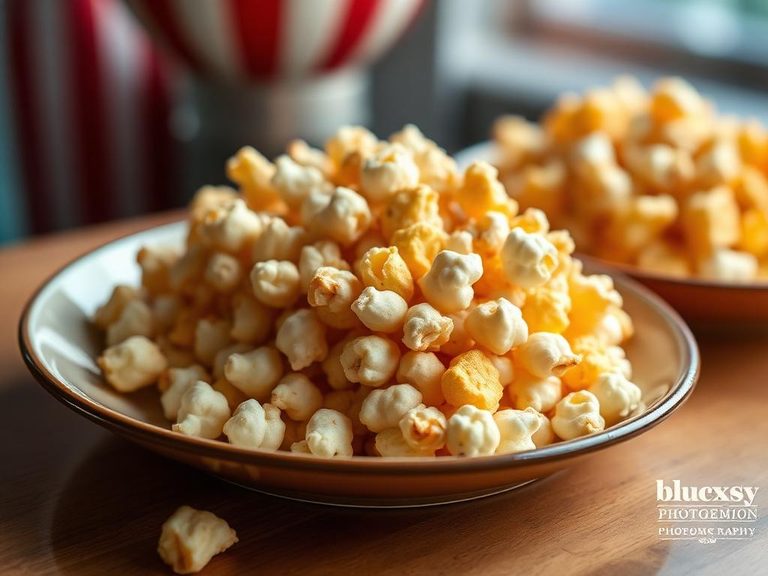
Kettle corn is a sweet and salty snack made by popping corn kernels in a large pot or kettle with oil and then tossing them with a mixture of sugar and salt while still hot. The result is a light, crunchy popcorn with a caramelized, slightly sticky coating that delivers a satisfying contrast of flavors. Nutritionally, it's a high-energy treat, providing over 500 calories per 100g, primarily from carbohydrates and fats.
Calorie split: 4% protein · 45% carbs · 51% fat
↓ Full nutrition💚 Why it's loved
People love kettle corn for its irresistible sweet-salty flavor combination and satisfying crunch, which makes it a highly addictive snack. It's deeply tied to nostalgic experiences at fairs, carnivals, and movie theaters, evoking a sense of fun and communal enjoyment.
⚠️ Watch-outs & how to enjoy it better
The high sugar and refined carbohydrate content can cause rapid blood sugar spikes, making it a poor choice for individuals managing diabetes or insulin resistance. The added sugar and potential sodium also contribute to empty calories. To enjoy it mindfully, practice strict portion control (stick to a single small bag or serving) and pair it with a source of protein or healthy fat (like a handful of nuts or cheese) to slow sugar absorption.
Key benefits
- Provides a quick source of energy from carbohydrates.
- Contains dietary fiber, which can aid in digestion.
- Offers a small amount of plant-based protein.
- Can be a source of antioxidants like polyphenols from the corn itself.
- Serves as a portion-controlled, pre-portioned snack option.
🍽️ Popular dishes
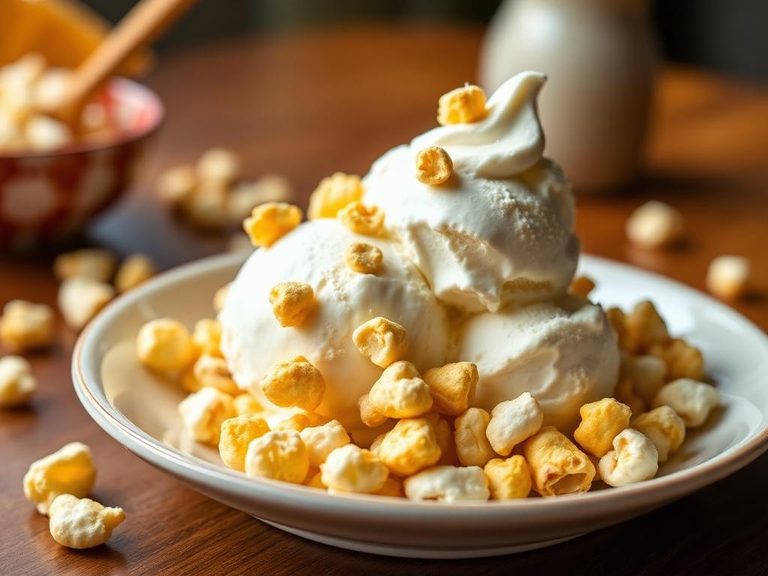
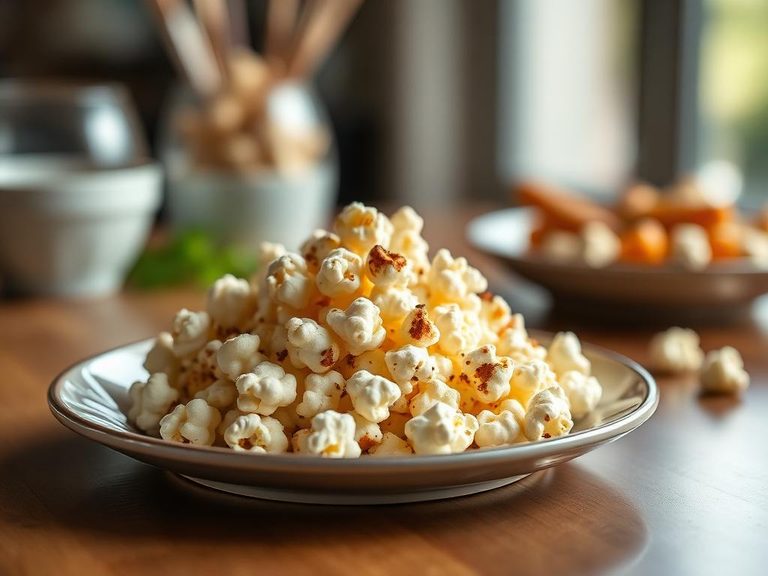
🌍 Where it's eaten
💡 Did you know?
The classic 'kettle' in kettle corn refers to the large, cast-iron kettle or pot traditionally used to pop the corn over an open fire at fairs and markets, a method dating back to the 18th century.
Full nutrition (USDA data · scales with serving)
| Water | 1.4 g |
| Energy | 531 kcal |
| Protein | 5.5 g |
| Total lipid (fat) | 30.2 g |
| Carbohydrate, by difference | 61.0 g |
| Fiber, total dietary | 6.1 g |
| Total Sugars | 28.5 g |
| Calcium, Ca | 4.0 mg |
| Iron, Fe | 1.4 mg |
| Magnesium, Mg | 61.0 mg |
| Phosphorus, P | 151 mg |
| Potassium, K | 140 mg |
| Sodium, Na | 495 mg |
| Zinc, Zn | 1.3 mg |
| Copper, Cu | 0.11 mg |
| Selenium, Se | 0.20 ug |
| Vitamin C, total ascorbic acid | 0.00 mg |
| Thiamin | 0.04 mg |
| Riboflavin | 0.04 mg |
| Niacin | 0.98 mg |
| Vitamin B-6 | 0.07 mg |
| Folate, total | 13.0 ug |
| Folic acid | 0.00 ug |
| Folate, food | 13.0 ug |
| Folate, DFE | 13.0 ug |
| Choline, total | 9.0 mg |
| Vitamin B-12 | 0.00 ug |
| Vitamin B-12, added | 0.00 ug |
| Vitamin A, RAE | 4.0 ug |
| Retinol | 0.00 ug |
| Carotene, beta | 38.0 ug |
| Carotene, alpha | 25.0 ug |
| Cryptoxanthin, beta | 0.00 ug |
| Lycopene | 0.00 ug |
| Lutein + zeaxanthin | 614 ug |
| Vitamin E (alpha-tocopherol) | 6.5 mg |
| Vitamin E, added | 0.00 mg |
| Vitamin D (D2 + D3) | 0.00 ug |
| Vitamin K (phylloquinone) | 1.0 ug |
| Alcohol, ethyl | 0.00 g |
| Caffeine | 0.00 mg |
| Theobromine | 0.00 mg |
Fat & fatty acid profile (per 100g)
| Fatty acids, total saturated | 4.0 g |
| SFA 4:0 | 0.00 g |
| SFA 6:0 | 0.00 g |
| SFA 8:0 | 0.00 g |
| SFA 10:0 | 0.00 g |
| SFA 12:0 | 0.00 g |
| SFA 14:0 | 0.01 g |
| SFA 16:0 | 3.4 g |
| SFA 18:0 | 0.48 g |
| Fatty acids, total monounsaturated | 8.2 g |
| MUFA 16:1 | 0.03 g |
| MUFA 18:1 | 8.1 g |
| MUFA 20:1 | 0.11 g |
| MUFA 22:1 | 0.00 g |
| Fatty acids, total polyunsaturated | 15.9 g |
| PUFA 18:2 | 15.6 g |
| PUFA 18:3 | 0.32 g |
| PUFA 18:4 | 0.00 g |
| PUFA 20:4 | 0.00 g |
| PUFA 20:5 n-3 (EPA) | 0.00 g |
| PUFA 22:5 n-3 (DPA) | 0.00 g |
| PUFA 22:6 n-3 (DHA) | 0.00 g |
| Cholesterol | 0.00 mg |
Amino acid profile (per 100g)
Estimated from Snacks, popcorn, oil-popped, white popcorn, salt added — USDA does not publish this profile for Popcorn.
| Tryptophan | 0.06 g |
| Threonine | 0.34 g |
| Isoleucine | 0.32 g |
| Leucine | 1.1 g |
| Lysine | 0.25 g |
| Methionine | 0.19 g |
| Cystine | 0.16 g |
| Phenylalanine | 0.44 g |
| Tyrosine | 0.37 g |
| Valine | 0.46 g |
| Arginine | 0.45 g |
| Histidine | 0.28 g |
| Alanine | 0.67 g |
| Aspartic acid | 0.63 g |
| Glutamic acid | 1.7 g |
| Glycine | 0.37 g |
| Proline | 0.79 g |
| Serine | 0.43 g |
FAQ
Is kettle corn the same as caramel corn?
No. Kettle corn is popped with sugar and salt during cooking, resulting in a lighter, less intensely sweet coating. Caramel corn is typically coated after popping with a thick, baked caramel sauce, making it crunchier and much sweeter.
Why is kettle corn so high in calories?
The high calorie density comes from the combination of oil used for popping and the added sugar, which coats the lightweight popcorn. A small volume can contain a significant amount of energy.
Can I make a healthier version at home?
Yes. You can use an air-popper or a small amount of heart-healthy oil (like avocado oil), and reduce the sugar by half or use a small amount of a natural sweetener like monk fruit. Control the salt by using a fine grind or reducing the amount.
Nutrient density (calculated · NRF9.3)
Nutrient Rich Foods index: beneficial nutrients (protein, fiber, vitamins, minerals) minus saturated fat, added sugar & sodium, per 100 kcal.
NRF9.3 index — Fulgoni, Keast & Drewnowski, 2009. Computed from USDA nutrients.
Weight-loss friendliness (composite index)
Energy density 5.31 kcal/g · 4% calories from protein · 6.1 g fiber · 28.5 g sugar per 100 g.
Composite of energy density (Rolls et al., 1999), protein & fiber satiety, minus sugar. A calculated heuristic — ranks satiety-per-calorie, not a clinical measure.
Dietary load (calculated from USDA values)
Potential renal acid load. Positive = acid-forming, negative = alkaline-forming.
Sodium-to-potassium ratio: 3.54 (lower is better — aim for ≤ 1)
Sodium:potassium per WHO potassium guidance. Computed from USDA nutrients.