

Popcorn, microwave, cheese flavored
Common food

Photo: Wikipedia
Microwave cheese popcorn is a bright orange, salty snack with a satisfying crunch and a powdery, savory coating. Each kernel bursts with a concentrated, umami-rich cheese flavor that coats the tongue. Nutritionally, it's a high-energy, high-fat treat with a surprising amount of fiber per serving.
Calorie split: 7% protein · 41% carbs · 52% fat
↓ Full nutrition💚 Why it's loved
People love it for the nostalgic, intensely savory cheese powder that delivers a powerful flavor hit. It's the quintessential, easy movie-night snack that requires no preparation beyond pressing a button.
⚠️ Watch-outs & how to enjoy it better
The high fat, sodium, and refined carbohydrate content can contribute to blood sugar spikes and isn't ideal for those monitoring heart health or weight. To counteract this, practice strict portion control (e.g., measure out a single serving) and pair it with a protein source like Greek yogurt or a handful of nuts to slow digestion.
Key benefits
- Quick and convenient snack preparation
- Provides a quick source of energy from carbohydrates and fat
- Contains dietary fiber (10.2g per 100g)
- Offers a small amount of plant-based protein (9.1g per 100g)
- Satisfies savory cravings effectively
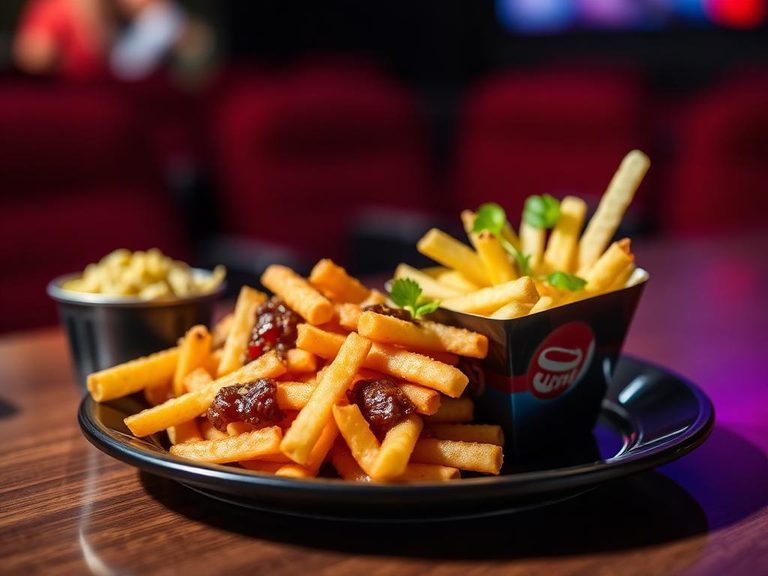
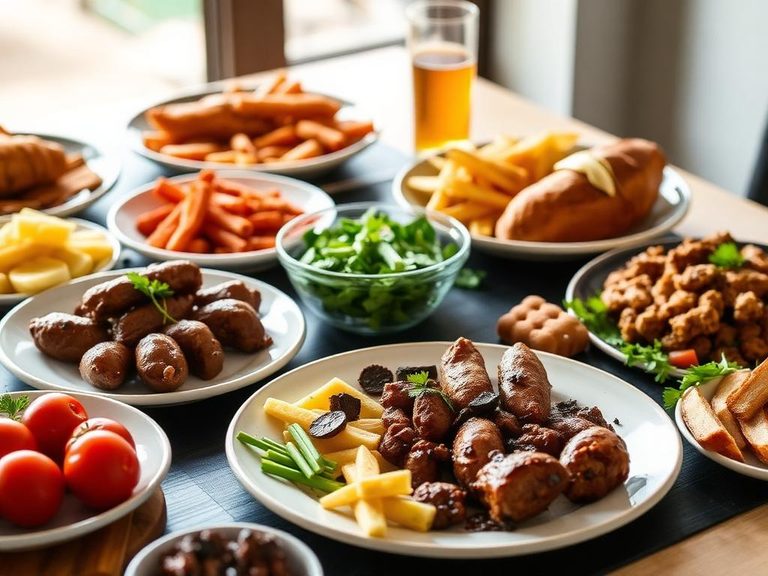
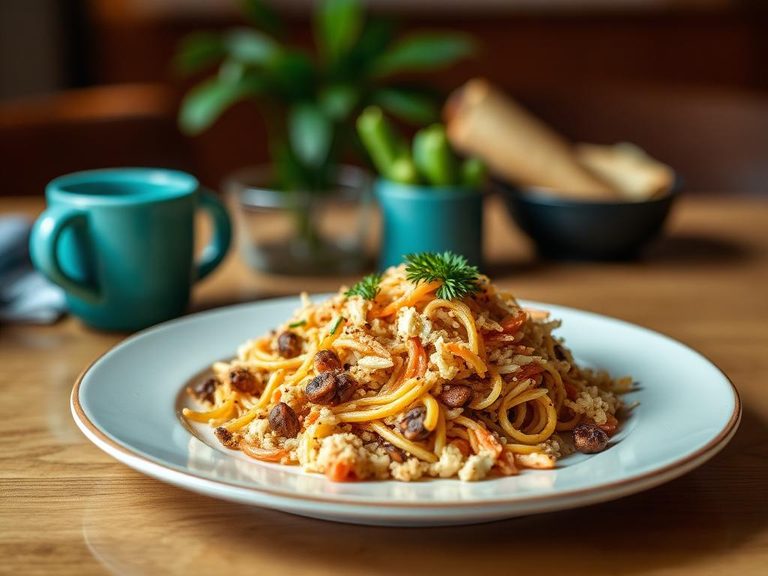
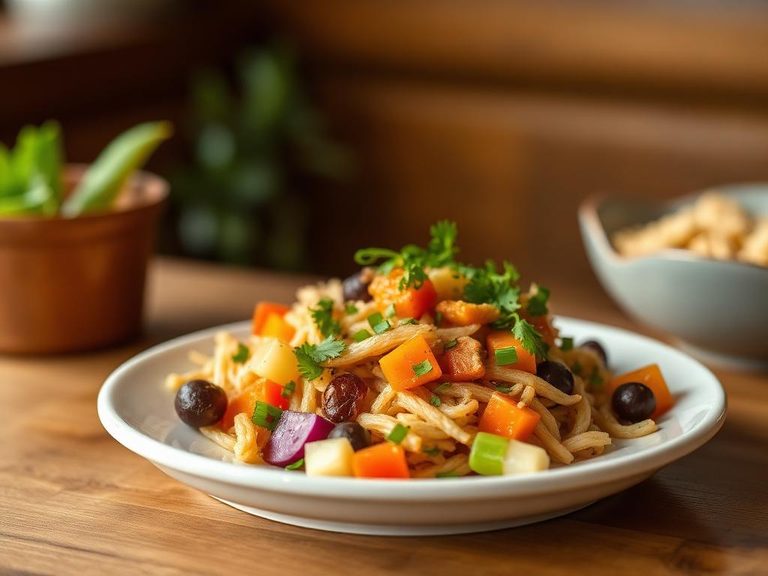
🍽️ Popular dishes

🌍 Where it's eaten
💡 Did you know?
The cheese powder used in microwave popcorn is often made from real cheese that has been dehydrated and then re-sprayed with additional flavor compounds to ensure it sticks perfectly to the kernels.
Full nutrition (USDA data · scales with serving)
| Water | 2.4 g |
| Energy | 516 kcal |
| Protein | 9.1 g |
| Total lipid (fat) | 30.4 g |
| Carbohydrate, by difference | 54.8 g |
| Fiber, total dietary | 10.2 g |
| Total Sugars | 0.61 g |
| Calcium, Ca | 6.0 mg |
| Iron, Fe | 2.3 mg |
| Magnesium, Mg | 101 mg |
| Phosphorus, P | 252 mg |
| Potassium, K | 231 mg |
| Sodium, Na | 916 mg |
| Zinc, Zn | 2.2 mg |
| Copper, Cu | 0.18 mg |
| Selenium, Se | 0.00 ug |
| Vitamin C, total ascorbic acid | 0.00 mg |
| Thiamin | 0.07 mg |
| Riboflavin | 0.06 mg |
| Niacin | 1.6 mg |
| Vitamin B-6 | 0.11 mg |
| Folate, total | 22.0 ug |
| Folic acid | 0.00 ug |
| Folate, food | 22.0 ug |
| Folate, DFE | 22.0 ug |
| Choline, total | 15.0 mg |
| Vitamin B-12 | 0.00 ug |
| Vitamin B-12, added | 0.00 ug |
| Vitamin A, RAE | 7.0 ug |
| Retinol | 0.00 ug |
| Carotene, beta | 63.0 ug |
| Carotene, alpha | 41.0 ug |
| Cryptoxanthin, beta | 0.00 ug |
| Lycopene | 0.00 ug |
| Lutein + zeaxanthin | 1019 ug |
| Vitamin E (alpha-tocopherol) | 2.1 mg |
| Vitamin E, added | 0.00 mg |
| Vitamin D (D2 + D3) | 0.00 ug |
| Vitamin K (phylloquinone) | 28.3 ug |
| Alcohol, ethyl | 0.00 g |
| Caffeine | 0.00 mg |
| Theobromine | 0.00 mg |
Fat & fatty acid profile (per 100g)
| Fatty acids, total saturated | 14.2 g |
| SFA 4:0 | 0.00 g |
| SFA 6:0 | 0.05 g |
| SFA 8:0 | 0.66 g |
| SFA 10:0 | 0.53 g |
| SFA 12:0 | 4.1 g |
| SFA 14:0 | 1.6 g |
| SFA 16:0 | 2.7 g |
| SFA 18:0 | 4.4 g |
| Fatty acids, total monounsaturated | 6.8 g |
| MUFA 16:1 | 0.02 g |
| MUFA 18:1 | 6.7 g |
| MUFA 20:1 | 0.07 g |
| MUFA 22:1 | 0.00 g |
| Fatty acids, total polyunsaturated | 7.4 g |
| PUFA 18:2 | 7.0 g |
| PUFA 18:3 | 0.34 g |
| PUFA 18:4 | 0.00 g |
| PUFA 20:4 | 0.00 g |
| PUFA 20:5 n-3 (EPA) | 0.00 g |
| PUFA 22:5 n-3 (DPA) | 0.00 g |
| PUFA 22:6 n-3 (DHA) | 0.00 g |
| Cholesterol | 0.00 mg |
Amino acid profile (per 100g)
Estimated from Snacks, popcorn, oil-popped, white popcorn, salt added — USDA does not publish this profile for Popcorn.
| Tryptophan | 0.06 g |
| Threonine | 0.34 g |
| Isoleucine | 0.32 g |
| Leucine | 1.1 g |
| Lysine | 0.25 g |
| Methionine | 0.19 g |
| Cystine | 0.16 g |
| Phenylalanine | 0.44 g |
| Tyrosine | 0.37 g |
| Valine | 0.46 g |
| Arginine | 0.45 g |
| Histidine | 0.28 g |
| Alanine | 0.67 g |
| Aspartic acid | 0.63 g |
| Glutamic acid | 1.7 g |
| Glycine | 0.37 g |
| Proline | 0.79 g |
| Serine | 0.43 g |
FAQ
Is the cheese in microwave popcorn real cheese?
Typically, it's a processed cheese product made from dehydrated cheese, whey, and various flavor enhancers like salt, oil, and artificial colorings to achieve that signature taste and bright orange hue.
Why does cheese popcorn sometimes have unpopped kernels?
The moisture content in the kernels and the heat distribution in the microwave can lead to some kernels failing to pop. The added oil and cheese powder can also slightly affect the popping process.
Can I make a healthier version at home?
Yes. You can air-pop plain kernels and then toss them with a light drizzle of olive oil and nutritional yeast for a cheesy flavor with less sodium and artificial additives.
Nutrient density (calculated · NRF9.3)
Nutrient Rich Foods index: beneficial nutrients (protein, fiber, vitamins, minerals) minus saturated fat, added sugar & sodium, per 100 kcal.
NRF9.3 index — Fulgoni, Keast & Drewnowski, 2009. Computed from USDA nutrients.
Weight-loss friendliness (composite index)
Energy density 5.16 kcal/g · 7% calories from protein · 10.2 g fiber · 0.6 g sugar per 100 g.
Composite of energy density (Rolls et al., 1999), protein & fiber satiety, minus sugar. A calculated heuristic — ranks satiety-per-calorie, not a clinical measure.
Dietary load (calculated from USDA values)
Potential renal acid load. Positive = acid-forming, negative = alkaline-forming.
Sodium-to-potassium ratio: 3.97 (lower is better — aim for ≤ 1)
Sodium:potassium per WHO potassium guidance. Computed from USDA nutrients.