

Pomegranate juice, bottled
Whole food · Fruits and Fruit Juices

Photo: Wikipedia
Bottled pomegranate juice is a deep ruby-red, tart-sweet liquid, often with a slightly viscous texture from its natural fruit solids. It delivers a potent, tangy punch of flavor and is a concentrated source of natural sugars and antioxidants like punicalagins. Its nutritional profile is defined by its high carbohydrate content, primarily from sugar, with minimal protein or fat.
Calorie split: 1% protein · 94% carbs · 5% fat
↓ Full nutrition💚 Why it's loved
People love its unique, bold flavor that balances sweet and tart, making it a refreshing standalone drink or a vibrant mixer. It's also cherished for its deep, jewel-toned color and its association with festive occasions and traditional health tonics in many cultures.
⚠️ Watch-outs & how to enjoy it better
Its high natural sugar content (over 12g per 100g) can cause blood sugar spikes, making portion control essential for diabetics or those monitoring intake. To counteract this, pair it with a source of protein or healthy fat (like a handful of nuts) to slow sugar absorption. Additionally, some commercial brands may contain added sugars or preservatives, so reading labels for 100% juice is advised.
Key benefits
- Rich in potent antioxidants, particularly punicalagins and anthocyanins.
- May support heart health by helping to maintain healthy blood pressure and cholesterol levels.
- Contains anti-inflammatory compounds that can help reduce oxidative stress in the body.
- Provides a good source of potassium and vitamin C.
🍽️ Popular dishes
🌍 Where it's eaten
💡 Did you know?
It takes about 100 pomegranates to produce just one gallon of pure pomegranate juice.
Full nutrition (USDA data · scales with serving)
| Water | 86.0 g |
| Energy | 54.0 kcal |
| Energy | 228 kj |
| Protein | 0.15 g |
| Total lipid (fat) | 0.29 g |
| Ash | 0.49 g |
| Carbohydrate, by difference | 13.1 g |
| Fiber, total dietary | 0.10 g |
| Total Sugars | 12.7 g |
| Sucrose | 0.00 g |
| Glucose | 6.3 g |
| Fructose | 6.4 g |
| Lactose | 0.00 g |
| Maltose | 0.00 g |
| Galactose | 0.00 g |
| Calcium, Ca | 11.0 mg |
| Iron, Fe | 0.10 mg |
| Magnesium, Mg | 7.0 mg |
| Phosphorus, P | 11.0 mg |
| Potassium, K | 214 mg |
| Sodium, Na | 9.0 mg |
| Zinc, Zn | 0.09 mg |
| Copper, Cu | 0.02 mg |
| Manganese, Mn | 0.10 mg |
| Selenium, Se | 0.30 ug |
| Vitamin C, total ascorbic acid | 0.10 mg |
| Thiamin | 0.01 mg |
| Riboflavin | 0.01 mg |
| Niacin | 0.23 mg |
| Pantothenic acid | 0.28 mg |
| Vitamin B-6 | 0.04 mg |
| Folate, total | 24.0 ug |
| Folic acid | 0.00 ug |
| Folate, food | 24.0 ug |
| Folate, DFE | 24.0 ug |
| Choline, total | 4.8 mg |
| Vitamin B-12 | 0.00 ug |
| Vitamin B-12, added | 0.00 ug |
| Vitamin A, RAE | 0.00 ug |
| Retinol | 0.00 ug |
| Carotene, beta | 0.00 ug |
| Carotene, alpha | 0.00 ug |
| Cryptoxanthin, beta | 0.00 ug |
| Vitamin A, IU | 0.00 iu |
| Lycopene | 0.00 ug |
| Lutein + zeaxanthin | 0.00 ug |
| Vitamin E (alpha-tocopherol) | 0.38 mg |
| Vitamin E, added | 0.00 mg |
| Vitamin D (D2 + D3), International Units | 0.00 iu |
| Vitamin D (D2 + D3) | 0.00 ug |
| Vitamin K (phylloquinone) | 10.4 ug |
| Alcohol, ethyl | 0.00 g |
| Caffeine | 0.00 mg |
| Theobromine | 0.00 mg |
Fat & fatty acid profile (per 100g)
| Fatty acids, total saturated | 0.08 g |
| SFA 4:0 | 0.00 g |
| SFA 6:0 | 0.00 g |
| SFA 8:0 | 0.00 g |
| SFA 10:0 | 0.00 g |
| SFA 12:0 | 0.00 g |
| SFA 14:0 | 0.00 g |
| SFA 16:0 | 0.04 g |
| SFA 18:0 | 0.02 g |
| Fatty acids, total monounsaturated | 0.06 g |
| MUFA 16:1 | 0.01 g |
| MUFA 18:1 | 0.05 g |
| MUFA 20:1 | 0.00 g |
| MUFA 22:1 | 0.00 g |
| Fatty acids, total polyunsaturated | 0.05 g |
| PUFA 18:2 | 0.05 g |
| PUFA 18:3 | 0.00 g |
| PUFA 18:4 | 0.00 g |
| PUFA 20:4 | 0.00 g |
| PUFA 20:5 n-3 (EPA) | 0.00 g |
| PUFA 22:5 n-3 (DPA) | 0.00 g |
| PUFA 22:6 n-3 (DHA) | 0.00 g |
| Fatty acids, total trans | 0.00 g |
| Cholesterol | 0.00 mg |
FAQ
Is bottled pomegranate juice as healthy as fresh?
It can be, but it depends on processing. Pasteurized 100% juice retains most antioxidants but loses some heat-sensitive vitamins. Cold-pressed or not-from-concentrate options are closest to fresh. Always avoid cocktails with added sugars.
Why does some pomegranate juice taste different?
Flavor varies by pomegranate variety (like Wonderful or POM Wonderful), processing method (from concentrate vs. not), and whether it's blended with other juices like apple or grape to mellow the tartness.
Can I cook with it?
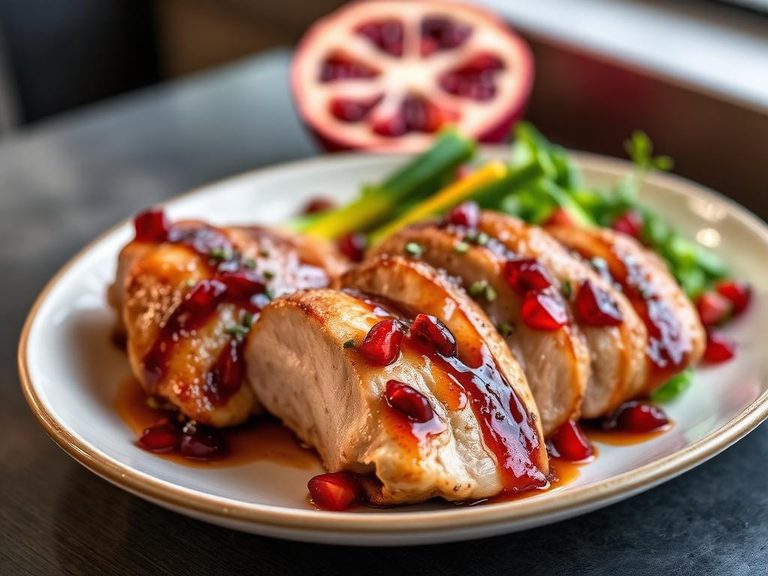
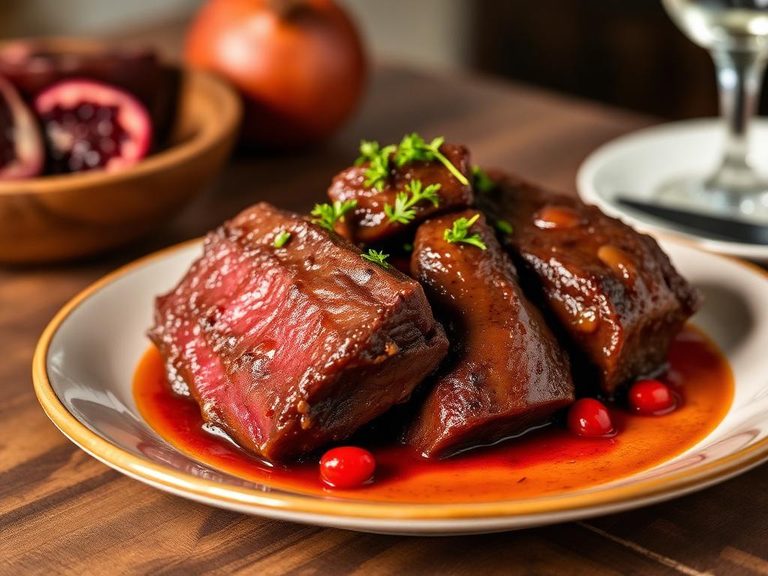
Absolutely! It's fantastic for making reductions, glazes for meats (like duck or pork), tangy vinaigrettes, or as a braising liquid. Its high sugar content caramelizes beautifully.
Nutrient density (calculated · NRF9.3)
Nutrient Rich Foods index: beneficial nutrients (protein, fiber, vitamins, minerals) minus saturated fat, added sugar & sodium, per 100 kcal.
NRF9.3 index — Fulgoni, Keast & Drewnowski, 2009. Computed from USDA nutrients.
Weight-loss friendliness (composite index)
Energy density 0.54 kcal/g · 1% calories from protein · 0.1 g fiber · 12.7 g sugar per 100 g.
Composite of energy density (Rolls et al., 1999), protein & fiber satiety, minus sugar. A calculated heuristic — ranks satiety-per-calorie, not a clinical measure.
Dietary load (calculated from USDA values)
Potential renal acid load. Positive = acid-forming, negative = alkaline-forming.
Sodium-to-potassium ratio: 0.04 (lower is better — aim for ≤ 1)
Sodium:potassium per WHO potassium guidance. Computed from USDA nutrients.