

Pie crust, standard-type, dry mix
Whole food · Baked Products
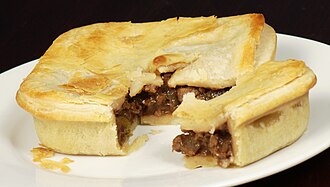
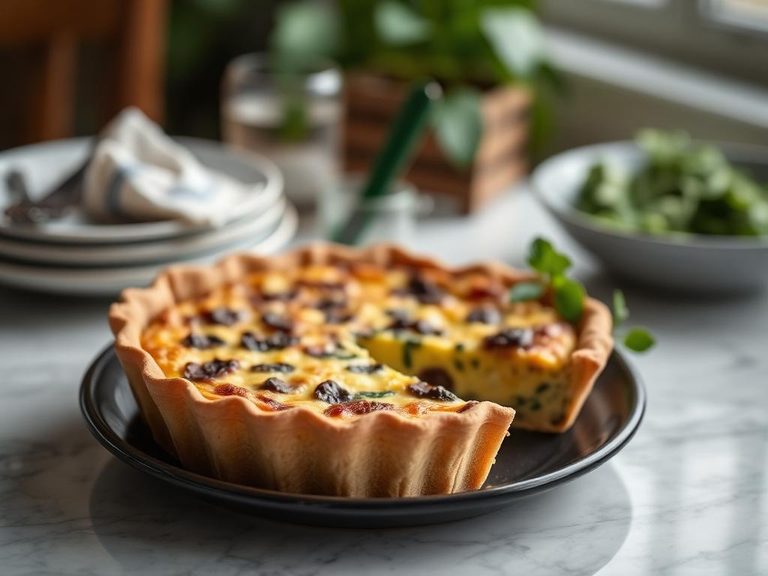
Photo: Wikipedia
This is a pre-made, shelf-stable dry mix designed to create a flaky, buttery pie crust with minimal effort. When combined with fat (like butter or shortening) and water, it yields a tender, golden-brown shell with a rich, savory flavor. Nutritionally, it is energy-dense, with over 31g of fat and 52g of carbohydrates per 100g, but contains negligible fiber or sugar.
Calorie split: 5% protein · 40% carbs · 54% fat
↓ Full nutrition💚 Why it's loved
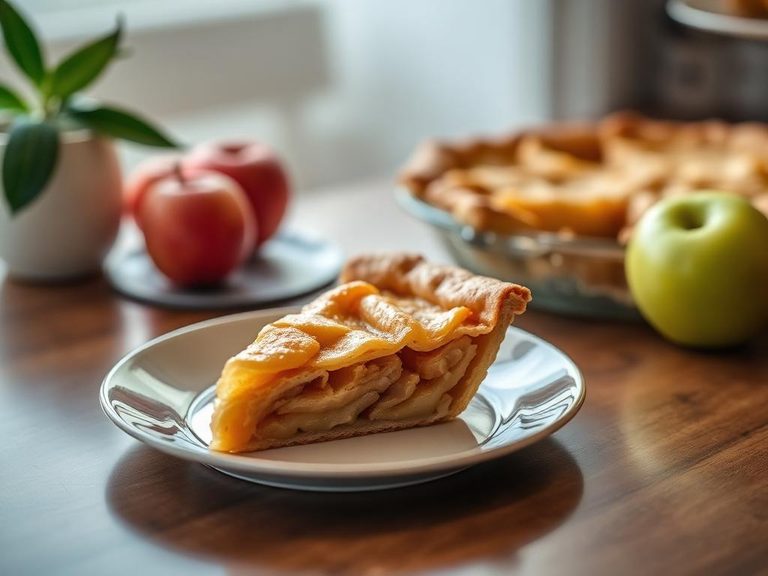
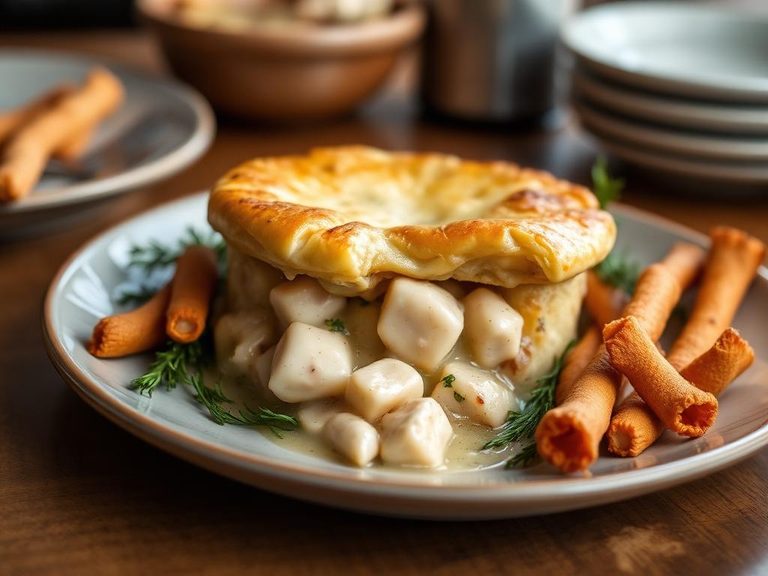
People love it for its foolproof convenience, allowing them to enjoy homemade-tasting pies without the skill or time commitment of traditional baking. Its versatility makes it the perfect canvas for everything from classic apple pie to savory chicken pot pie.
⚠️ Watch-outs & how to enjoy it better
The mix is high in refined carbohydrates and fat, which can contribute to blood-sugar spikes and is not ideal for low-carb or heart-healthy diets. To counteract this, pair the pie with a protein-rich side (like a scoop of Greek yogurt or a slice of cheese) and practice portion control by enjoying a smaller slice with a balanced meal.
Key benefits
- Saves significant time and effort compared to making crust from scratch.
- Provides a consistent, reliable texture and flavor for bakers.
- Shelf-stable, making it a convenient pantry staple.
- Creates a structurally sound base for both sweet and savory pies.
🍽️ Popular dishes

🌍 Where it's eaten
💡 Did you know?
The first recorded recipe for a pie crust in English dates back to 1390, in a cookbook called 'The Forme of Cury,' and it was originally used as a sturdy, inedible container called a 'coffin' to hold and cook the filling.
Full nutrition (USDA data · scales with serving)
| Water | 7.6 g |
| Energy | 518 kcal |
| Energy | 2167 kj |
| Protein | 6.9 g |
| Total lipid (fat) | 31.4 g |
| Ash | 2.0 g |
| Carbohydrate, by difference | 52.1 g |
| Calcium, Ca | 61.0 mg |
| Iron, Fe | 2.2 mg |
| Magnesium, Mg | 15.0 mg |
| Phosphorus, P | 86.0 mg |
| Potassium, K | 64.0 mg |
| Sodium, Na | 753 mg |
| Zinc, Zn | 0.40 mg |
| Copper, Cu | 0.07 mg |
| Manganese, Mn | 0.32 mg |
| Selenium, Se | 22.9 ug |
| Vitamin C, total ascorbic acid | 0.00 mg |
| Thiamin | 0.39 mg |
| Riboflavin | 0.21 mg |
| Niacin | 2.7 mg |
| Pantothenic acid | 0.27 mg |
| Vitamin B-6 | 0.06 mg |
| Folate, total | 104 ug |
| Folic acid | 86.0 ug |
| Folate, food | 18.0 ug |
| Folate, DFE | 164 ug |
| Vitamin B-12 | 0.00 ug |
| Vitamin A, RAE | 0.00 ug |
| Retinol | 0.00 ug |
| Vitamin A, IU | 0.00 iu |
Fat & fatty acid profile (per 100g)
| Fatty acids, total saturated | 8.0 g |
| SFA 4:0 | 0.00 g |
| SFA 6:0 | 0.00 g |
| SFA 8:0 | 0.00 g |
| SFA 10:0 | 0.00 g |
| SFA 12:0 | 0.00 g |
| SFA 14:0 | 0.15 g |
| SFA 16:0 | 4.1 g |
| SFA 18:0 | 3.7 g |
| Fatty acids, total monounsaturated | 17.9 g |
| MUFA 16:1 | 0.00 g |
| MUFA 18:1 | 17.9 g |
| MUFA 20:1 | 0.00 g |
| MUFA 22:1 | 0.00 g |
| Fatty acids, total polyunsaturated | 4.0 g |
| PUFA 18:2 | 3.8 g |
| PUFA 18:3 | 0.20 g |
| PUFA 18:4 | 0.00 g |
| PUFA 20:4 | 0.00 g |
| PUFA 20:5 n-3 (EPA) | 0.00 g |
| PUFA 22:5 n-3 (DPA) | 0.00 g |
| PUFA 22:6 n-3 (DHA) | 0.00 g |
| Cholesterol | 0.00 mg |
Amino acid profile (per 100g)
| Tryptophan | 0.08 g |
| Threonine | 0.18 g |
| Isoleucine | 0.26 g |
| Leucine | 0.48 g |
| Lysine | 0.13 g |
| Methionine | 0.12 g |
| Cystine | 0.15 g |
| Phenylalanine | 0.34 g |
| Tyrosine | 0.19 g |
| Valine | 0.29 g |
| Arginine | 0.24 g |
| Histidine | 0.15 g |
| Alanine | 0.21 g |
| Aspartic acid | 0.28 g |
| Glutamic acid | 2.4 g |
| Glycine | 0.24 g |
| Proline | 0.81 g |
| Serine | 0.33 g |
FAQ
What is the difference between a standard pie crust mix and a puff pastry mix?
A standard pie crust mix is designed to be flaky and tender, often used for single-crust or double-crust pies. A puff pastry mix is specifically formulated to create many thin, buttery layers that rise dramatically when baked, resulting in a lighter, airier texture.
Can I use this mix for a savory tart or quiche?
Yes, absolutely. This type of dry mix is a versatile base for both sweet and savory applications. For a savory tart or quiche, simply prepare the crust as directed, pre-bake it (blind bake), and then fill it with your savory custard and fillings.
How do I prevent my pie crust from becoming soggy?
To prevent a soggy bottom, ensure your oven is fully preheated, bake the pie on the lower rack, and consider blind-baking the crust (partially baking it before adding the filling). Using a metal pie pan instead of glass can also help conduct heat more efficiently.
Nutrient density (calculated · NRF9.3)
Nutrient Rich Foods index: beneficial nutrients (protein, fiber, vitamins, minerals) minus saturated fat, added sugar & sodium, per 100 kcal.
NRF9.3 index — Fulgoni, Keast & Drewnowski, 2009. Computed from USDA nutrients.
Weight-loss friendliness (composite index)
Energy density 5.18 kcal/g · 5% calories from protein · 0.0 g fiber · 0.0 g sugar per 100 g.
Composite of energy density (Rolls et al., 1999), protein & fiber satiety, minus sugar. A calculated heuristic — ranks satiety-per-calorie, not a clinical measure.
Dietary load (calculated from USDA values)
Potential renal acid load. Positive = acid-forming, negative = alkaline-forming.
Sodium-to-potassium ratio: 11.77 (lower is better — aim for ≤ 1)
Sodium:potassium per WHO potassium guidance. Computed from USDA nutrients.