

Pate de foie gras, canned (goose liver pate), smoked
Whole food · Poultry Products

Photo: Wikipedia
Pâté de foie gras, canned (goose liver pate), smoked is a rich, velvety spread made from the liver of a force-fed goose, with a deep, buttery flavor and a smooth, dense texture. Its nutritional profile is dominated by high fat content, providing a luxurious, calorie-dense experience. The smoking process adds a subtle, savory depth to its already complex taste.
Calorie split: 10% protein · 4% carbs · 86% fat
↓ Full nutrition💚 Why it's loved
People love it for its decadent, melt-in-your-mouth texture and its complex, savory flavor that pairs beautifully with bread, toast, or fruit. It is also a symbol of luxury and tradition, often associated with festive occasions and fine dining.
⚠️ Watch-outs & how to enjoy it better
Due to its high fat and calorie content, it should be consumed in moderation, especially by those watching their cholesterol or weight. It is also high in sodium, which can be a concern for individuals with high blood pressure. To counteract this, pair it with a side of fresh, crunchy vegetables or a light salad, and practice portion control by using a small amount as a spread rather than a main course.
Key benefits
- High in fat-soluble vitamins like A, D, E, and K.
- Good source of protein and iron.
- Contains essential fatty acids like omega-3 and omega-6.
- Provides a concentrated source of energy.
- Rich in choline, which supports liver function.
🍽️ Popular dishes
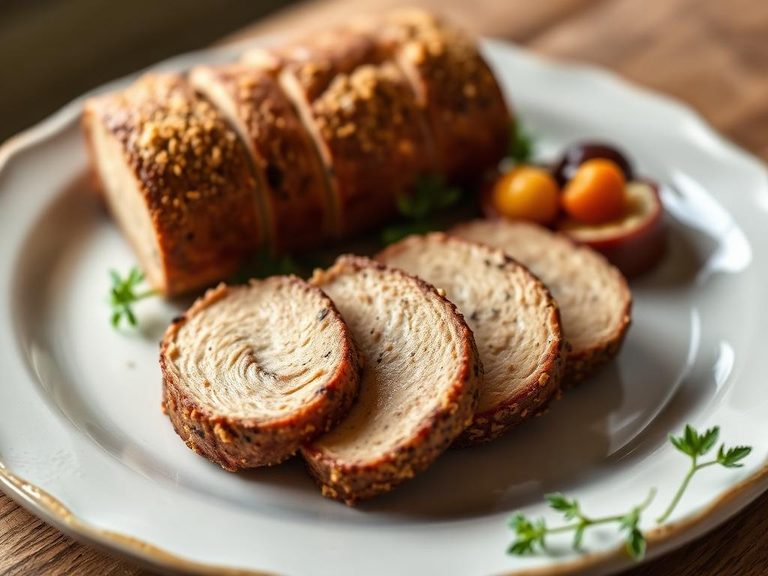
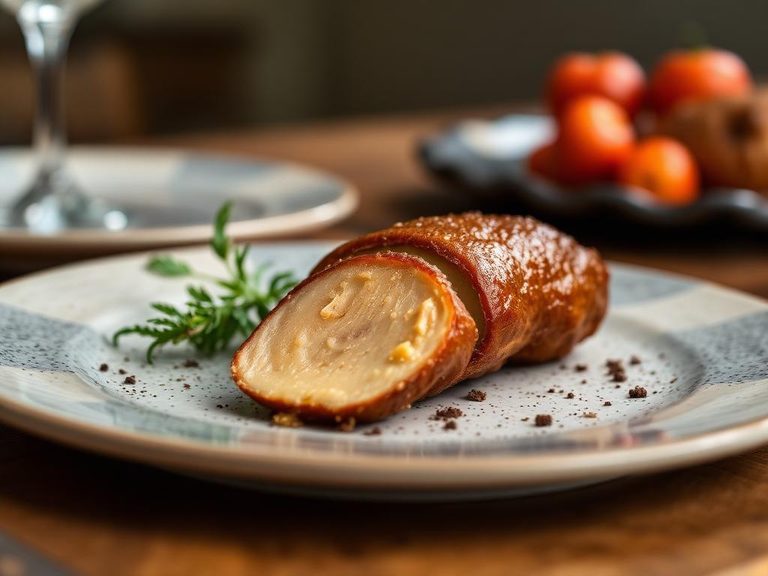
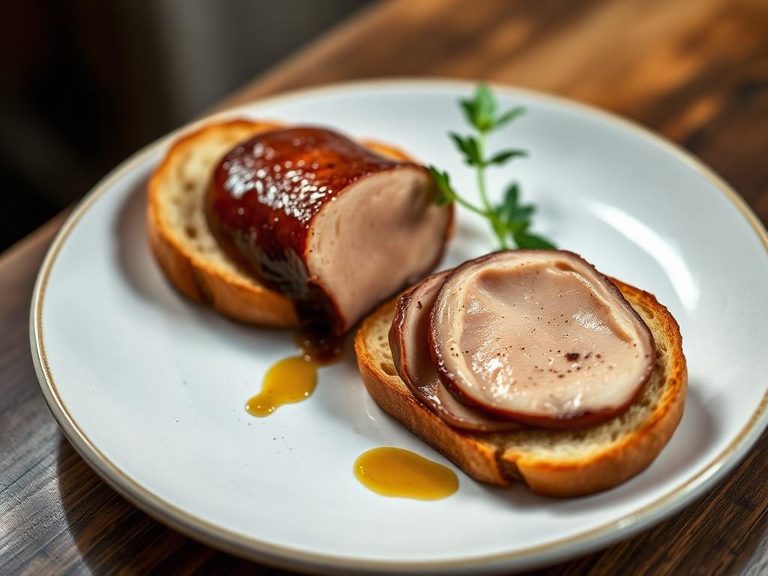
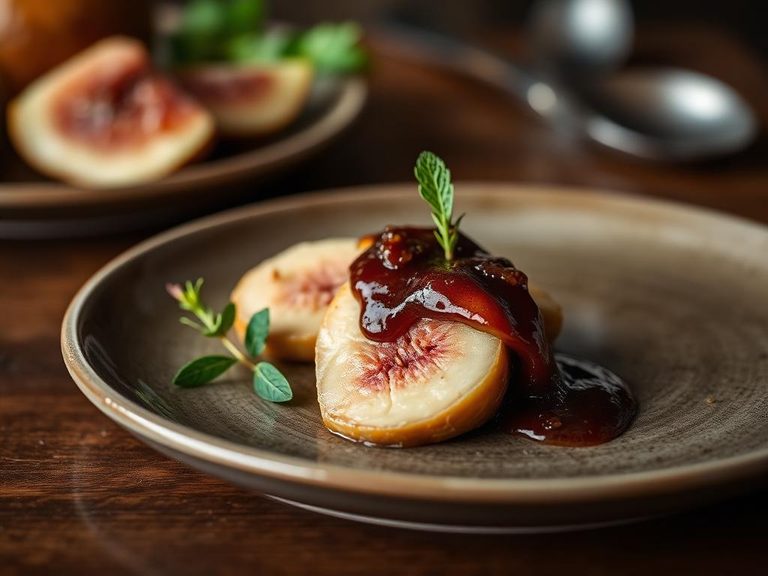
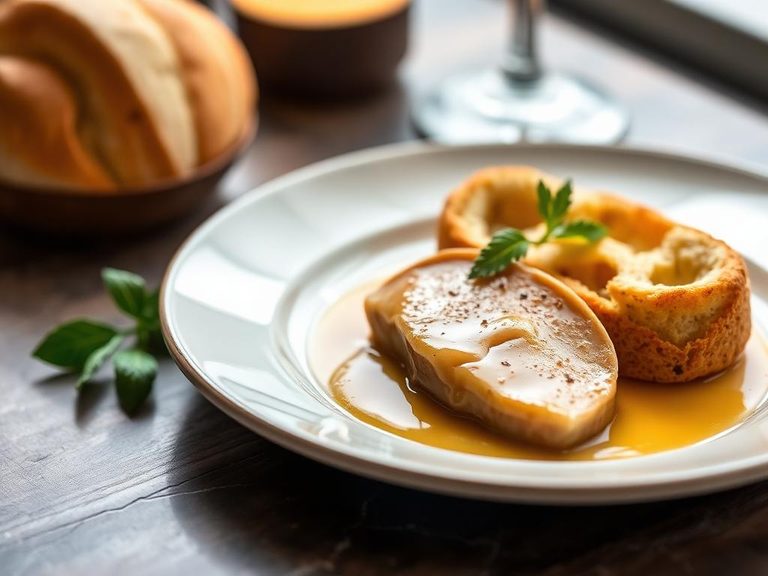
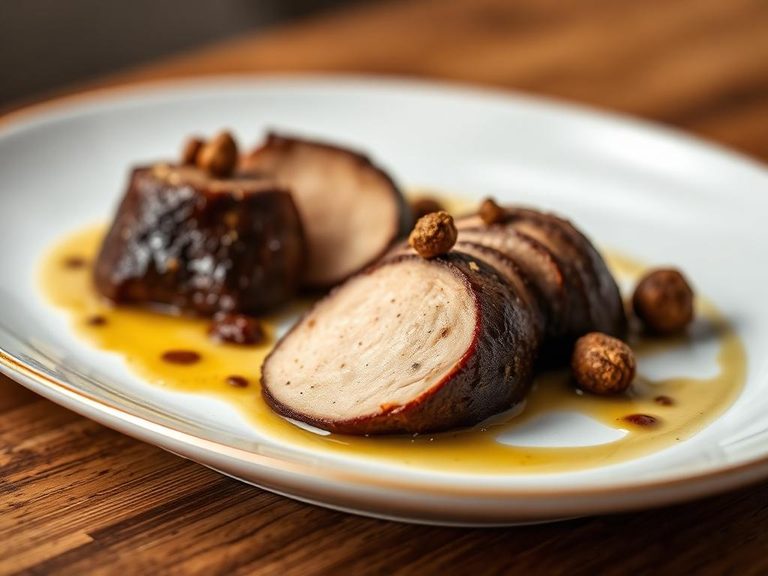
🌍 Where it's eaten
💡 Did you know?
Foie gras production is banned in several countries, including the UK, Germany, and Israel, due to animal welfare concerns.
Full nutrition (USDA data · scales with serving)
| Water | 37.0 g |
| Energy | 462 kcal |
| Energy | 1933 kj |
| Protein | 11.4 g |
| Total lipid (fat) | 43.8 g |
| Ash | 3.0 g |
| Carbohydrate, by difference | 4.7 g |
| Fiber, total dietary | 0.00 g |
| Calcium, Ca | 70.0 mg |
| Iron, Fe | 5.5 mg |
| Magnesium, Mg | 13.0 mg |
| Phosphorus, P | 200 mg |
| Potassium, K | 138 mg |
| Sodium, Na | 697 mg |
| Zinc, Zn | 0.92 mg |
| Copper, Cu | 0.40 mg |
| Manganese, Mn | 0.12 mg |
| Selenium, Se | 44.0 ug |
| Vitamin C, total ascorbic acid | 2.0 mg |
| Thiamin | 0.09 mg |
| Riboflavin | 0.30 mg |
| Niacin | 2.5 mg |
| Pantothenic acid | 1.2 mg |
| Vitamin B-6 | 0.06 mg |
| Folate, total | 60.0 ug |
| Folic acid | 0.00 ug |
| Folate, food | 60.0 ug |
| Folate, DFE | 60.0 ug |
| Vitamin B-12 | 9.4 ug |
| Vitamin A, RAE | 1001 ug |
| Retinol | 1001 ug |
| Vitamin A, IU | 3333 iu |
Fat & fatty acid profile (per 100g)
| Fatty acids, total saturated | 14.4 g |
| SFA 10:0 | 0.00 g |
| SFA 12:0 | 0.03 g |
| SFA 14:0 | 0.29 g |
| SFA 16:0 | 9.4 g |
| SFA 18:0 | 4.6 g |
| Fatty acids, total monounsaturated | 25.6 g |
| MUFA 16:1 | 1.4 g |
| MUFA 18:1 | 24.0 g |
| MUFA 20:1 | 0.13 g |
| MUFA 22:1 | 0.00 g |
| Fatty acids, total polyunsaturated | 0.84 g |
| PUFA 18:2 | 0.57 g |
| PUFA 18:3 | 0.01 g |
| PUFA 20:4 | 0.25 g |
| PUFA 20:5 n-3 (EPA) | 0.00 g |
| PUFA 22:5 n-3 (DPA) | 0.00 g |
| PUFA 22:6 n-3 (DHA) | 0.00 g |
| Cholesterol | 150 mg |
Amino acid profile (per 100g)
| Tryptophan | 0.16 g |
| Threonine | 0.51 g |
| Isoleucine | 0.61 g |
| Leucine | 1.0 g |
| Lysine | 0.86 g |
| Methionine | 0.27 g |
| Cystine | 0.15 g |
| Phenylalanine | 0.57 g |
| Tyrosine | 0.40 g |
| Valine | 0.72 g |
| Arginine | 0.70 g |
| Histidine | 0.30 g |
| Alanine | 0.66 g |
| Aspartic acid | 1.1 g |
| Glutamic acid | 1.5 g |
| Glycine | 0.66 g |
| Proline | 0.56 g |
| Serine | 0.49 g |
FAQ
What is the difference between foie gras and pâté de foie gras?
Foie gras refers to the liver itself, while pâté de foie gras is a preparation where the liver is ground and often mixed with other ingredients, then canned or preserved.
Is foie gras healthy?
While it is rich in vitamins and minerals, its high fat and calorie content means it should be enjoyed in moderation as part of a balanced diet.
How should I serve canned foie gras?
Serve it chilled or at room temperature, spread on toast, brioche, or crackers, often accompanied by fruit preserves, onions, or a light salad.
Nutrient density (calculated · NRF9.3)
Nutrient Rich Foods index: beneficial nutrients (protein, fiber, vitamins, minerals) minus saturated fat, added sugar & sodium, per 100 kcal.
NRF9.3 index — Fulgoni, Keast & Drewnowski, 2009. Computed from USDA nutrients.
Weight-loss friendliness (composite index)
Energy density 4.62 kcal/g · 10% calories from protein · 0.0 g fiber · 0.0 g sugar per 100 g.
Composite of energy density (Rolls et al., 1999), protein & fiber satiety, minus sugar. A calculated heuristic — ranks satiety-per-calorie, not a clinical measure.
Dietary load (calculated from USDA values)
Potential renal acid load. Positive = acid-forming, negative = alkaline-forming.
Sodium-to-potassium ratio: 5.05 (lower is better — aim for ≤ 1)
Sodium:potassium per WHO potassium guidance. Computed from USDA nutrients.