Foie gras with toast
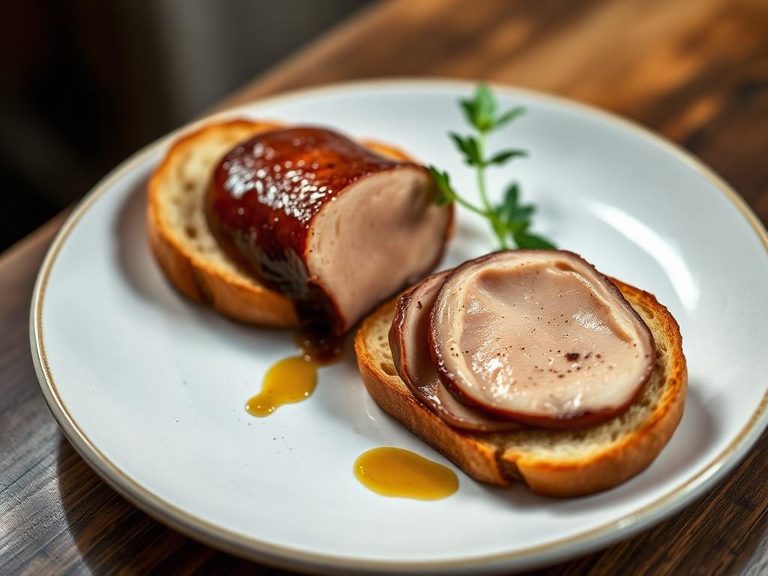
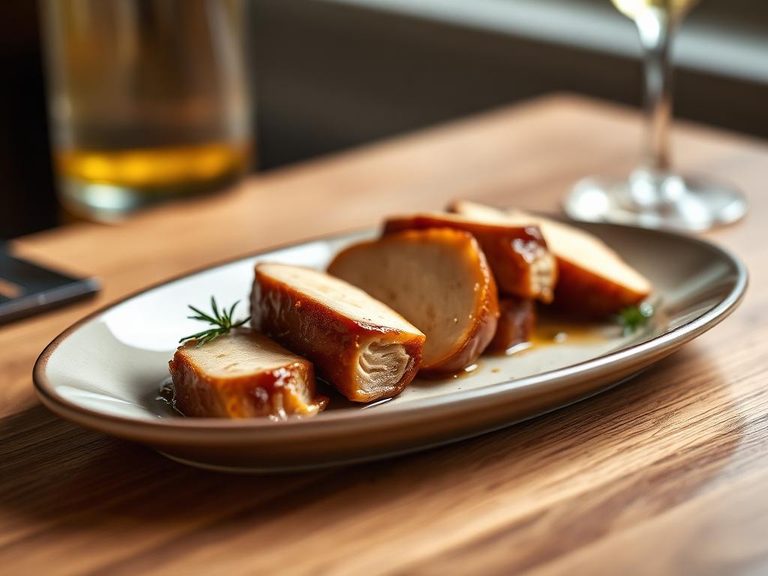
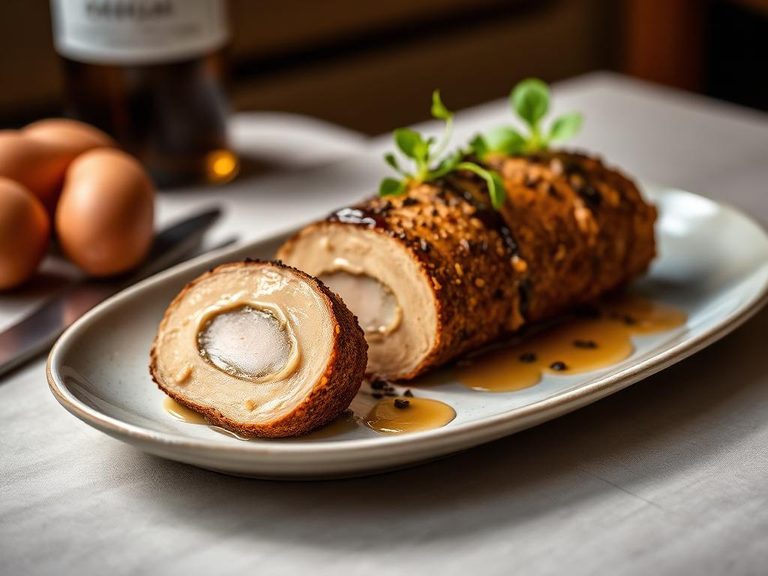
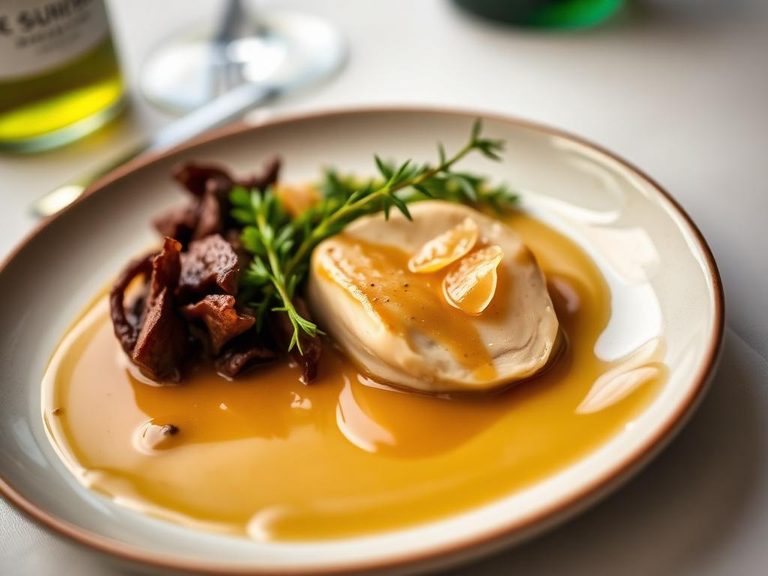
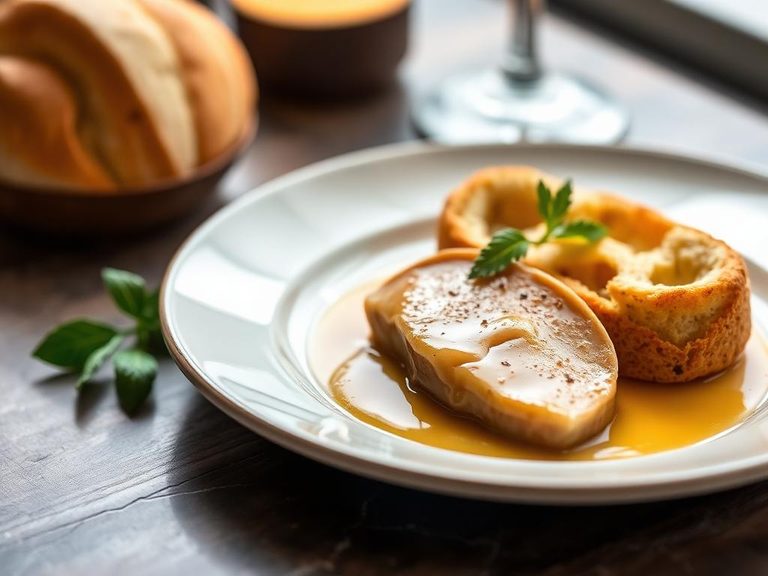
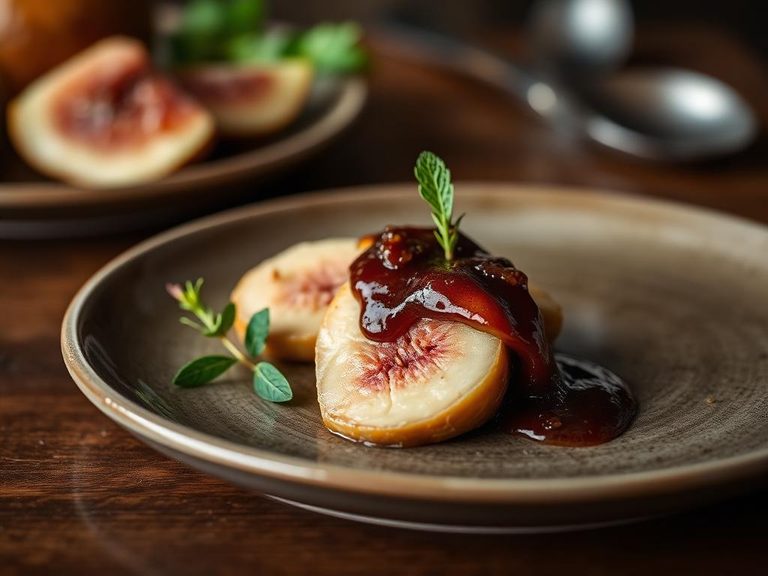
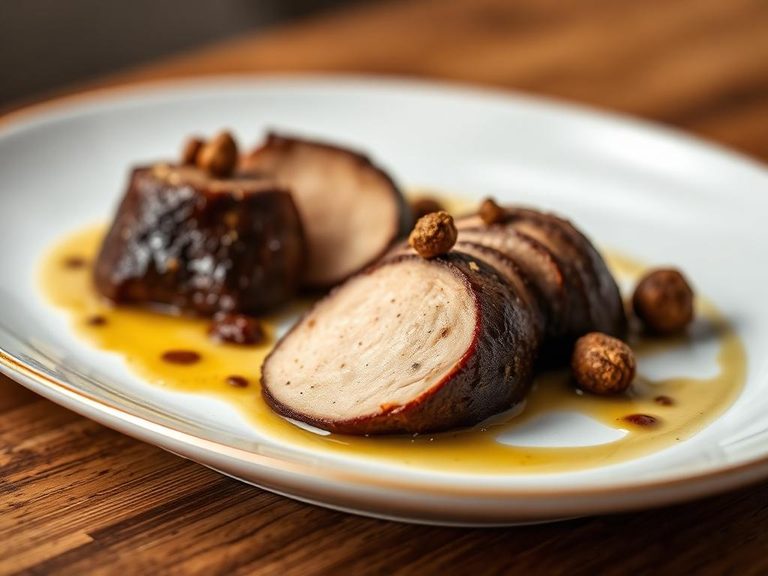
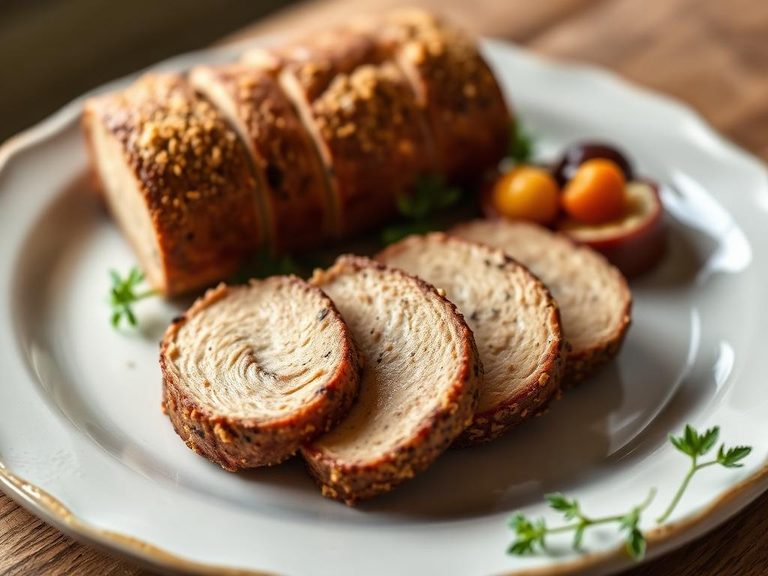
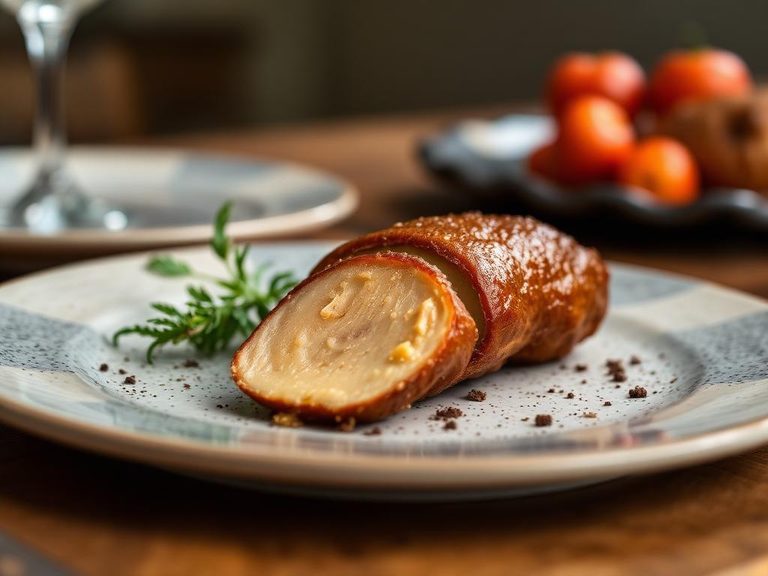
Foie gras with toast is a luxurious French appetizer featuring a generous slice of seared or chilled foie gras (the enlarged liver of a duck or goose) served atop or alongside a piece of toasted bread. It is typically seasoned simply with salt and pepper, sometimes accompanied by a sweet fruit compote or reduction to balance its rich flavor. The dish is a cornerstone of haute cuisine, particularly associated with the regions of Southwest France like Périgord and Gascony.
🍽️ Nutrition at a glance
This dish is extremely high in fat, particularly saturated and monounsaturated fats, with a moderate amount of protein and very few carbohydrates. It is a calorie-dense food, providing a significant amount of energy in a small serving, and is a rich source of vitamins A, B12, and iron.
Nutrition breakdown
| Calories | 450 kcal |
| Protein | 10 g |
| Carbs | 12 g |
| Fat | 42 g |
| Fiber | 1 g |
| Sugar | 2 g |
| Sodium | 280 mg |
| Vitamin A | 3150 IU |
| Vitamin B12 | 4.5 mcg |
| Iron | 3.5 mg |
| Riboflavin (B2) | 0.5 mg |
| Niacin (B3) | 4.0 mg |
| Copper | 0.3 mg |
| Selenium | 15 mcg |
| Phosphorus | 180 mg |
Per 1 slice (85 g) of seared foie gras with 1 slice (30 g) of toasted baguette · estimated, varies by recipe
💡 What's interesting
Foie gras production involves a controversial practice known as gavage (force-feeding), which has led to bans in some regions. Nutritionally, its high fat content makes it a very efficient source of energy, and its flavor profile is prized for its buttery, velvety texture and complex, savory taste.