

Pasta with Sliced Franks in Tomato Sauce, canned entree
Whole food · Meals, Entrees, and Side Dishes
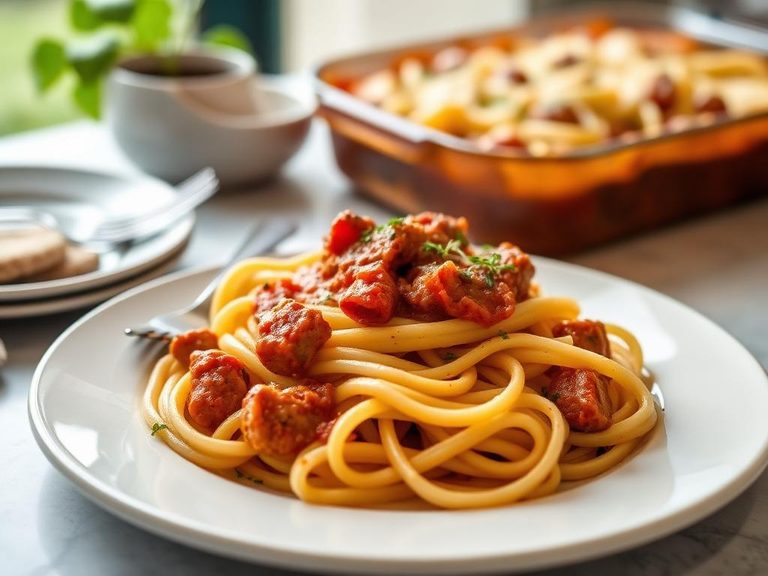
This is a classic canned entree featuring soft pasta shapes and sliced frankfurters in a mild, sweet tomato sauce. The texture is tender and uniform, with the sauce providing a tangy, slightly savory backdrop to the processed meat and pasta. It is a low-calorie, convenient option, offering a modest protein boost from the franks while remaining relatively low in fat.
Calorie split: 19% protein · 57% carbs · 24% fat
↓ Full nutrition💚 Why it's loved
People love it for its nostalgic, comforting simplicity and the familiar, mild flavors that are easy to eat. It's a go-to for a quick, no-fuss meal, especially for children or those seeking a simple, satisfying bite.
⚠️ Watch-outs & how to enjoy it better
The primary concern is the likely high sodium content from the canned sauce and processed franks, which can contribute to water retention and elevated blood pressure. To counteract this, pair it with a potassium-rich side like steamed spinach or a fresh salad, and practice portion control by limiting the serving to about 150g. Additionally, the pasta and sauce can cause a moderate blood-sugar spike, so combining it with a source of fat or fiber, like a side of avocado or a handful of nuts, can help slow digestion.
Key benefits
- Low calorie density (90 kcal/100g) for portion control
- Provides a quick source of energy from carbohydrates
- Contains a modest amount of protein from the franks
- Highly convenient and requires no preparation
- Long shelf life due to canning
🍽️ Popular dishes
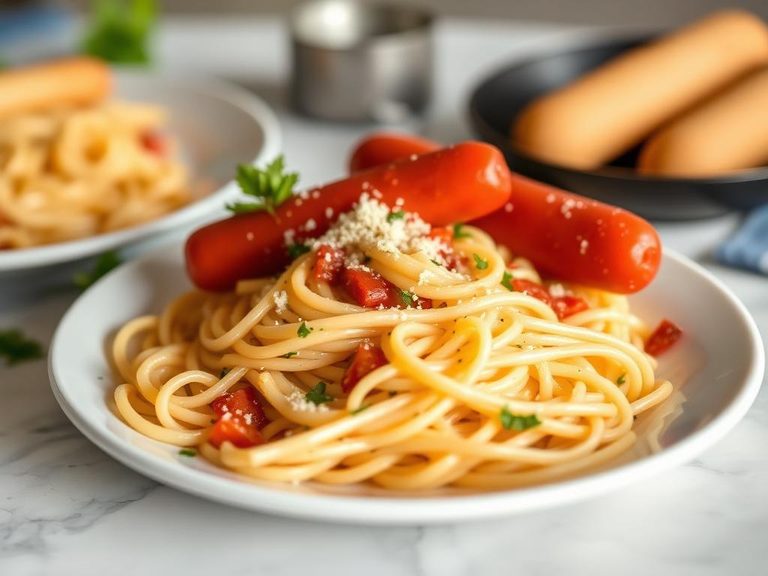
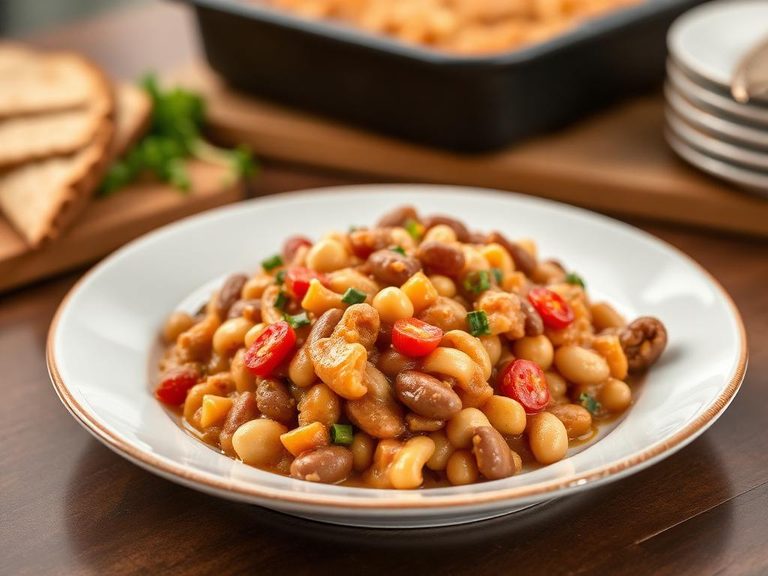
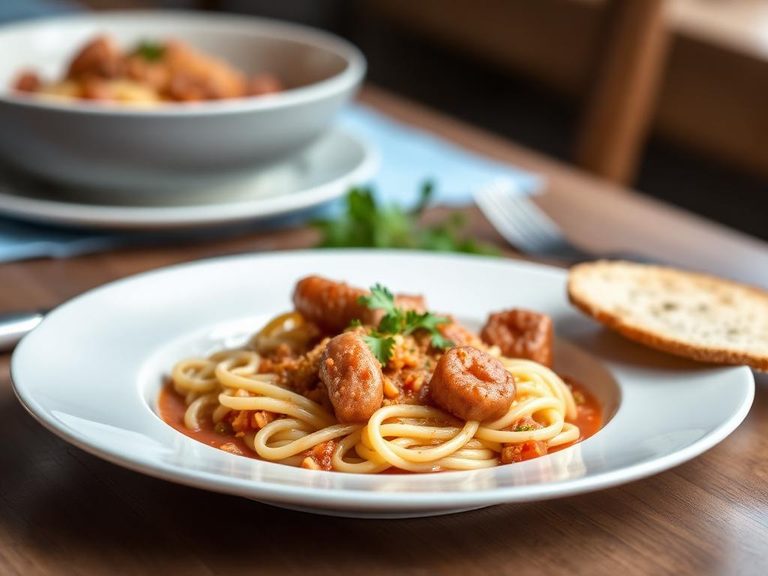
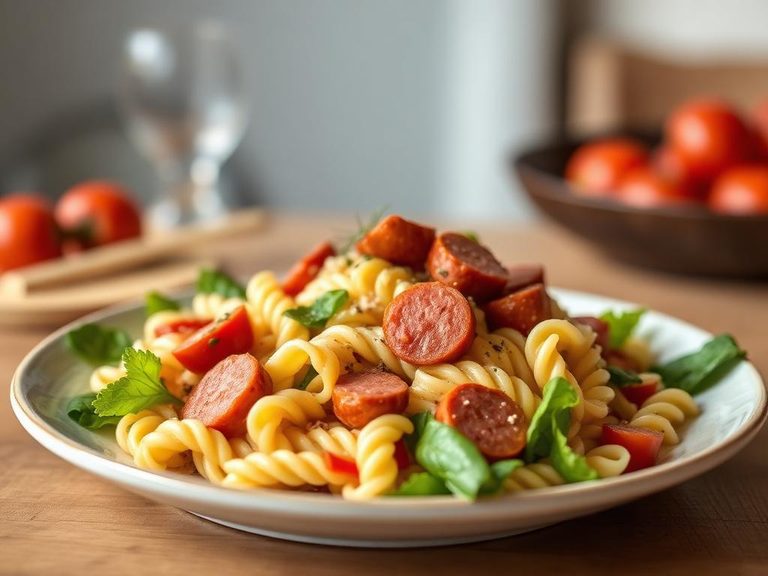
🌍 Where it's eaten
💡 Did you know?
The concept of combining pasta and sausage in a tomato sauce is a staple in Italian-American cuisine, but this specific canned version is a distinctly American invention, popularized in the mid-20th century as a convenient, shelf-stable meal for busy households.
Full nutrition (USDA data · scales with serving)
| Water | 78.2 g |
| Energy | 90.0 kcal |
| Energy | 375 kj |
| Protein | 4.4 g |
| Total lipid (fat) | 2.4 g |
| Ash | 2.4 g |
| Carbohydrate, by difference | 12.7 g |
| Fiber, total dietary | 1.6 g |
| Total Sugars | 3.2 g |
| Starch | 3.8 g |
| Calcium, Ca | 60.0 mg |
| Iron, Fe | 0.91 mg |
| Magnesium, Mg | 14.0 mg |
| Phosphorus, P | 43.0 mg |
| Potassium, K | 191 mg |
| Sodium, Na | 287 mg |
| Zinc, Zn | 0.52 mg |
| Copper, Cu | 0.14 mg |
| Manganese, Mn | 0.13 mg |
| Selenium, Se | 8.0 ug |
| Vitamin C, total ascorbic acid | 3.8 mg |
| Thiamin | 0.08 mg |
| Riboflavin | 0.07 mg |
| Niacin | 1.2 mg |
| Pantothenic acid | 0.24 mg |
| Vitamin B-6 | 0.07 mg |
| Folate, total | 40.0 ug |
| Folic acid | 13.0 ug |
| Folate, food | 27.0 ug |
| Folate, DFE | 49.0 ug |
| Choline, total | 12.0 mg |
| Vitamin B-12 | 0.19 ug |
| Vitamin B-12, added | 0.00 ug |
| Vitamin A, RAE | 13.0 ug |
| Retinol | 4.0 ug |
| Carotene, beta | 110 ug |
| Carotene, alpha | 0.00 ug |
| Cryptoxanthin, beta | 1.0 ug |
| Vitamin A, IU | 198 iu |
| Lycopene | 7506 ug |
| Lutein + zeaxanthin | 5.0 ug |
| Vitamin E (alpha-tocopherol) | 0.74 mg |
| Vitamin E, added | 0.00 mg |
| Vitamin D (D2 + D3), International Units | 16.0 iu |
| Vitamin D (D2 + D3) | 0.40 ug |
| Vitamin K (phylloquinone) | 1.6 ug |
| Alcohol, ethyl | 0.00 g |
| Caffeine | 0.00 mg |
| Theobromine | 0.00 mg |
Fat & fatty acid profile (per 100g)
| Fatty acids, total saturated | 0.79 g |
| SFA 4:0 | 0.00 g |
| SFA 6:0 | 0.00 g |
| SFA 8:0 | 0.00 g |
| SFA 10:0 | 0.01 g |
| SFA 12:0 | 0.01 g |
| SFA 13:0 | 0.00 g |
| SFA 14:0 | 0.04 g |
| SFA 15:0 | 0.00 g |
| SFA 16:0 | 0.47 g |
| SFA 17:0 | 0.00 g |
| SFA 18:0 | 0.26 g |
| SFA 20:0 | 0.00 g |
| SFA 22:0 | 0.00 g |
| SFA 24:0 | 0.00 g |
| Fatty acids, total monounsaturated | 1.0 g |
| MUFA 14:1 | 0.00 g |
| MUFA 15:1 | 0.00 g |
| MUFA 16:1 | 0.09 g |
| MUFA 17:1 | 0.00 g |
| MUFA 18:1 | 0.90 g |
| MUFA 20:1 | 0.01 g |
| MUFA 22:1 | 0.03 g |
| MUFA 24:1 c | 0.00 g |
| Fatty acids, total polyunsaturated | 0.33 g |
| PUFA 18:2 | 0.28 g |
| PUFA 18:3 | 0.05 g |
| PUFA 18:4 | 0.00 g |
| PUFA 20:2 n-6 c,c | 0.00 g |
| PUFA 20:3 | 0.00 g |
| PUFA 20:4 | 0.00 g |
| PUFA 20:5 n-3 (EPA) | 0.00 g |
| PUFA 22:5 n-3 (DPA) | 0.00 g |
| PUFA 22:6 n-3 (DHA) | 0.00 g |
| Cholesterol | 9.0 mg |
FAQ
Is this a good source of protein?
It provides a moderate amount of protein (4.37g per 100g), primarily from the frankfurters. While not a high-protein meal on its own, it can contribute to daily intake, especially when paired with other protein sources.
How does the sugar content compare to other canned pasta dishes?
With 3.17g of sugar per 100g, it has a moderate sugar level, likely from added sugars in the tomato sauce. This is comparable to many canned pasta entrees, but it's worth noting for those monitoring sugar intake.
Can this be part of a balanced diet?
Yes, in moderation. Its low calorie count makes it a suitable option for a light meal or snack, but it should be balanced with vegetables, whole grains, and lean proteins to ensure a well-rounded diet.
Nutrient density (calculated · NRF9.3)
Nutrient Rich Foods index: beneficial nutrients (protein, fiber, vitamins, minerals) minus saturated fat, added sugar & sodium, per 100 kcal.
NRF9.3 index — Fulgoni, Keast & Drewnowski, 2009. Computed from USDA nutrients.
Weight-loss friendliness (composite index)
Energy density 0.90 kcal/g · 19% calories from protein · 1.6 g fiber · 3.2 g sugar per 100 g.
Composite of energy density (Rolls et al., 1999), protein & fiber satiety, minus sugar. A calculated heuristic — ranks satiety-per-calorie, not a clinical measure.
Dietary load (calculated from USDA values)
Potential renal acid load. Positive = acid-forming, negative = alkaline-forming.
Sodium-to-potassium ratio: 1.50 (lower is better — aim for ≤ 1)
Sodium:potassium per WHO potassium guidance. Computed from USDA nutrients.