

Ostrich, outside leg, raw
Whole food · Poultry Products

Photo: Wikipedia
Ostrich outside leg is a remarkably lean, deep-red meat that resembles beef in color but cooks with the speed and tenderness of poultry. Its flavor is clean, mild, and subtly sweet, with a fine-grained, tender texture that lacks the gamey notes of other exotic meats. Nutritionally, it's a powerhouse, offering an exceptional protein-to-fat ratio with virtually no carbohydrates, making it a standout choice for high-protein, low-fat diets.
Calorie split: 84% protein · 0% carbs · 16% fat
↓ Full nutrition💚 Why it's loved
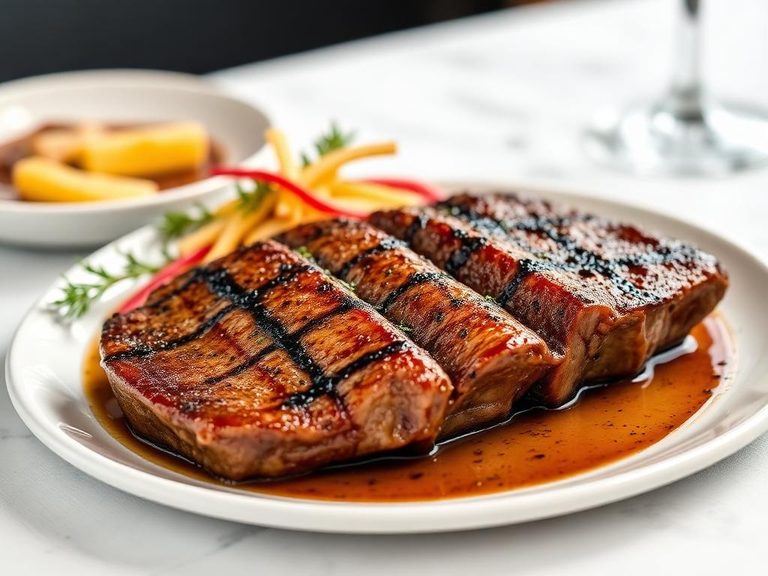
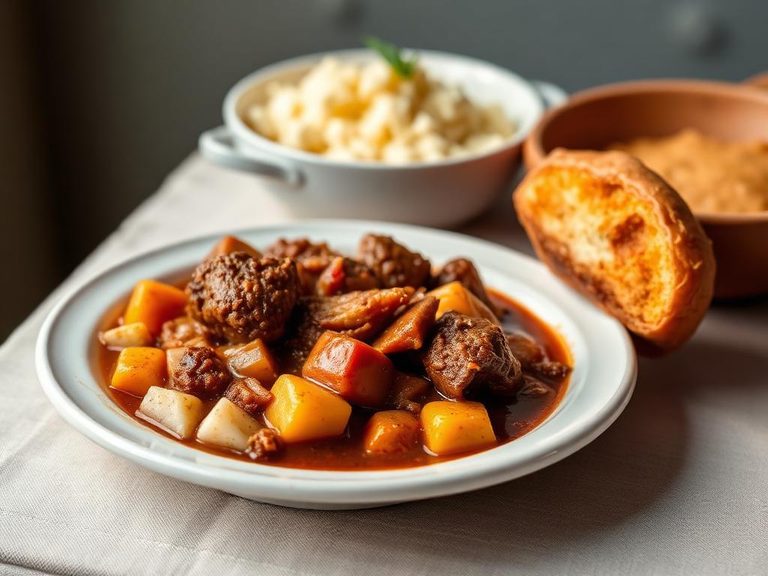
People love ostrich for its unique position as a red meat that's as lean as chicken breast, offering a rich, beef-like flavor without the heavy fat content. Its versatility allows it to be grilled, pan-seared, or stewed, making it a favorite for health-conscious cooks seeking a gourmet twist on familiar dishes.
⚠️ Watch-outs & how to enjoy it better
The primary downside is its leanness, which can lead to dry, tough meat if overcooked; it's best served rare to medium-rare. Those on iron-restricted diets should be cautious, as ostrich is very high in iron. To counteract dryness, marinate the meat, use a quick, high-heat cooking method, and avoid cooking past medium. Pair with a healthy fat source like avocado or olive oil to enhance nutrient absorption and mouthfeel.
Key benefits
- Extremely high in protein (22.86g per 100g) for muscle repair and satiety.
- Very low in fat (1.96g per 100g) and calories (115 kcal per 100g).
- Naturally zero in carbohydrates, sugar, and fiber.
- Rich in iron and B vitamins, supporting energy metabolism.
- Leaner than most red meats like beef, pork, or lamb.
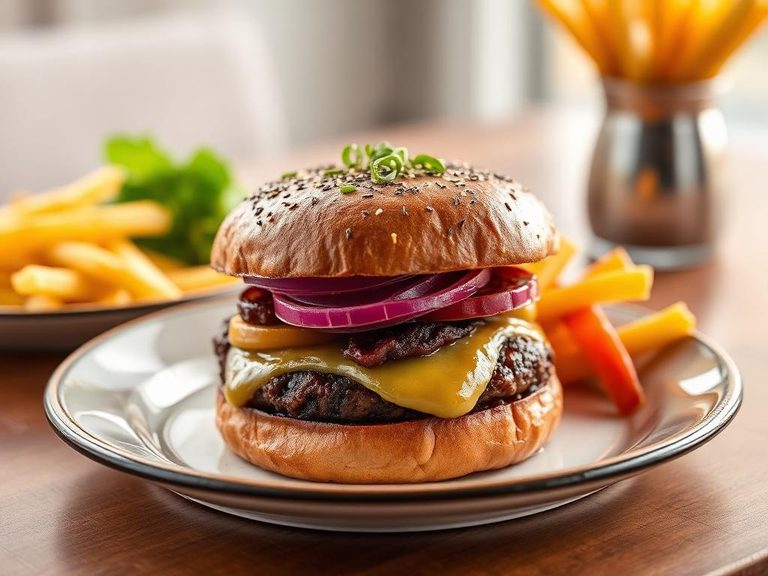
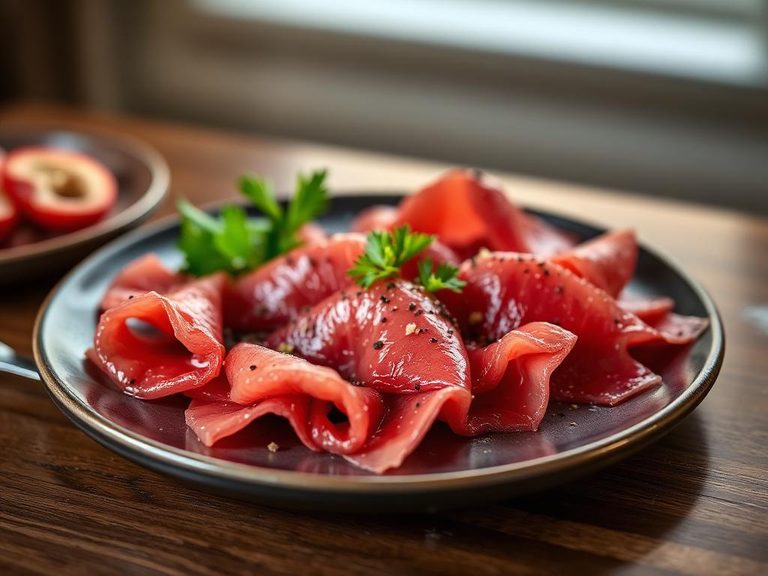
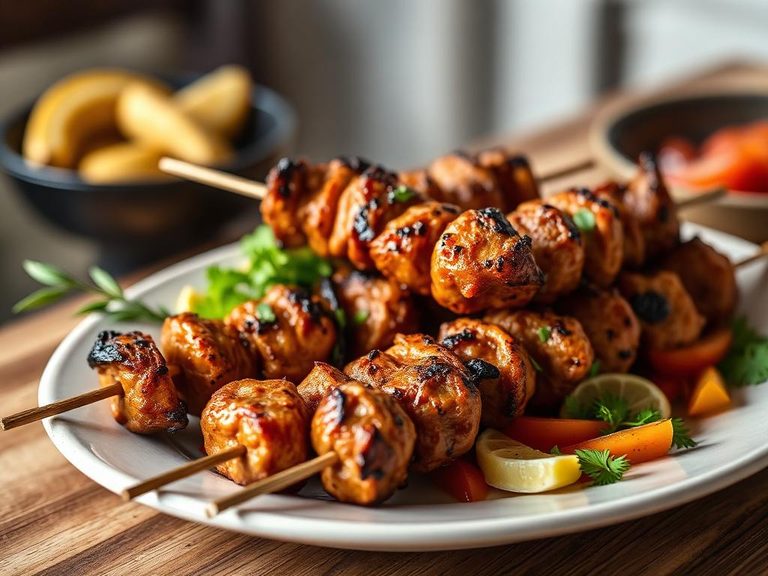
🍽️ Popular dishes
🌍 Where it's eaten
💡 Did you know?
Ostrich meat is so lean that it can be compared to skinless chicken breast, yet it has the deep red color and flavor profile of beef.
Full nutrition (USDA data · scales with serving)
| Water | 75.6 g |
| Energy | 115 kcal |
| Energy | 482 kj |
| Protein | 22.9 g |
| Total lipid (fat) | 2.0 g |
| Ash | 0.62 g |
| Carbohydrate, by difference | 0.00 g |
| Fiber, total dietary | 0.00 g |
| Total Sugars | 0.00 g |
| Calcium, Ca | 5.0 mg |
| Iron, Fe | 2.6 mg |
| Magnesium, Mg | 23.0 mg |
| Phosphorus, P | 221 mg |
| Potassium, K | 322 mg |
| Sodium, Na | 90.0 mg |
| Zinc, Zn | 3.9 mg |
| Copper, Cu | 0.14 mg |
| Manganese, Mn | 0.02 mg |
| Selenium, Se | 36.6 ug |
| Vitamin C, total ascorbic acid | 0.00 mg |
| Thiamin | 0.20 mg |
| Riboflavin | 0.30 mg |
| Niacin | 4.9 mg |
| Pantothenic acid | 1.2 mg |
| Vitamin B-6 | 0.54 mg |
| Folate, total | 8.0 ug |
| Folic acid | 0.00 ug |
| Folate, food | 8.0 ug |
| Folate, DFE | 8.0 ug |
| Vitamin B-12 | 5.2 ug |
| Vitamin A, RAE | 0.00 ug |
| Retinol | 0.00 ug |
| Carotene, beta | 0.00 ug |
| Carotene, alpha | 0.00 ug |
| Cryptoxanthin, beta | 0.00 ug |
| Vitamin A, IU | 0.00 iu |
| Lycopene | 0.00 ug |
| Lutein + zeaxanthin | 0.00 ug |
| Vitamin E (alpha-tocopherol) | 0.20 mg |
| Alcohol, ethyl | 0.00 g |
| Caffeine | 0.00 mg |
| Theobromine | 0.00 mg |
Fat & fatty acid profile (per 100g)
| Fatty acids, total saturated | 0.61 g |
| SFA 14:0 | 0.01 g |
| SFA 16:0 | 0.42 g |
| SFA 18:0 | 0.18 g |
| Fatty acids, total monounsaturated | 0.59 g |
| MUFA 16:1 | 0.12 g |
| MUFA 18:1 | 0.47 g |
| Fatty acids, total polyunsaturated | 0.43 g |
| PUFA 18:2 | 0.26 g |
| PUFA 18:3 | 0.01 g |
| PUFA 20:4 | 0.16 g |
| Cholesterol | 65.0 mg |
Amino acid profile (per 100g)
| Tryptophan | 0.20 g |
| Threonine | 1.0 g |
| Isoleucine | 1.1 g |
| Leucine | 1.9 g |
| Lysine | 2.0 g |
| Methionine | 0.64 g |
| Cystine | 0.23 g |
| Phenylalanine | 0.94 g |
| Tyrosine | 0.74 g |
| Valine | 1.1 g |
| Arginine | 1.6 g |
| Histidine | 0.57 g |
| Alanine | 1.5 g |
| Aspartic acid | 2.1 g |
| Glutamic acid | 3.5 g |
| Glycine | 1.5 g |
| Proline | 1.2 g |
| Serine | 0.92 g |
| Hydroxyproline | 0.41 g |
FAQ
How does ostrich meat taste compared to beef?
Ostrich meat has a flavor similar to lean beef but is milder, slightly sweeter, and less gamey. Its texture is finer and more tender, resembling a cross between beef and turkey.
Is ostrich meat healthy?
Yes, it's exceptionally healthy. It's very high in protein, low in fat and calories, and contains zero carbs or sugar. It's also a good source of iron and B vitamins, making it ideal for high-protein, low-fat diets.
How should I cook ostrich to avoid it becoming dry?
Because it's so lean, ostrich cooks quickly and can dry out easily. It's best cooked to rare or medium-rare (internal temp of 130-145°F). Use high-heat methods like grilling or pan-searing, and consider marinating to add moisture and flavor.
Nutrient density (calculated · NRF9.3)
Nutrient Rich Foods index: beneficial nutrients (protein, fiber, vitamins, minerals) minus saturated fat, added sugar & sodium, per 100 kcal.
NRF9.3 index — Fulgoni, Keast & Drewnowski, 2009. Computed from USDA nutrients.
Weight-loss friendliness (composite index)
Energy density 1.15 kcal/g · 80% calories from protein · 0.0 g fiber · 0.0 g sugar per 100 g.
Composite of energy density (Rolls et al., 1999), protein & fiber satiety, minus sugar. A calculated heuristic — ranks satiety-per-calorie, not a clinical measure.
Dietary load (calculated from USDA values)
Potential renal acid load. Positive = acid-forming, negative = alkaline-forming.
Sodium-to-potassium ratio: 0.28 (lower is better — aim for ≤ 1)
Sodium:potassium per WHO potassium guidance. Computed from USDA nutrients.