

Ostrich, inside strip, cooked
Whole food · Poultry Products

Photo: Wikipedia
Ostrich inside strip is a lean, deep-red cut of meat from the inner thigh, prized for its remarkably tender, fine-grained texture that closely resembles high-quality beef tenderloin. When cooked, it offers a rich, slightly sweet, and clean flavor without the gamey notes of other exotic meats. Its standout nutritional profile is its exceptional protein density, packing nearly 30 grams per 100 grams with minimal fat and zero carbohydrates.
Calorie split: 75% protein · 0% carbs · 25% fat
↓ Full nutrition💚 Why it's loved
Chefs and health-conscious eaters adore it for its beef-like versatility and ability to take on marinades and seasonings beautifully. It's celebrated as a sustainable, ethical red meat that delivers a gourmet experience without the environmental footprint.
⚠️ Watch-outs & how to enjoy it better
Its extreme leanness means it can dry out quickly if overcooked, which is a common pitfall for first-time preparers. Those watching iron intake should note its high heme iron content. To counteract dryness, cook quickly to medium-rare, use a meat thermometer, and let it rest before slicing against the grain.
Key benefits
- Extremely high in complete protein for muscle maintenance
- Very low in fat, especially saturated fat
- Naturally zero carbohydrates and sugar
- Good source of iron and B vitamins like B12
- Lean alternative to red meat for heart-healthy diets
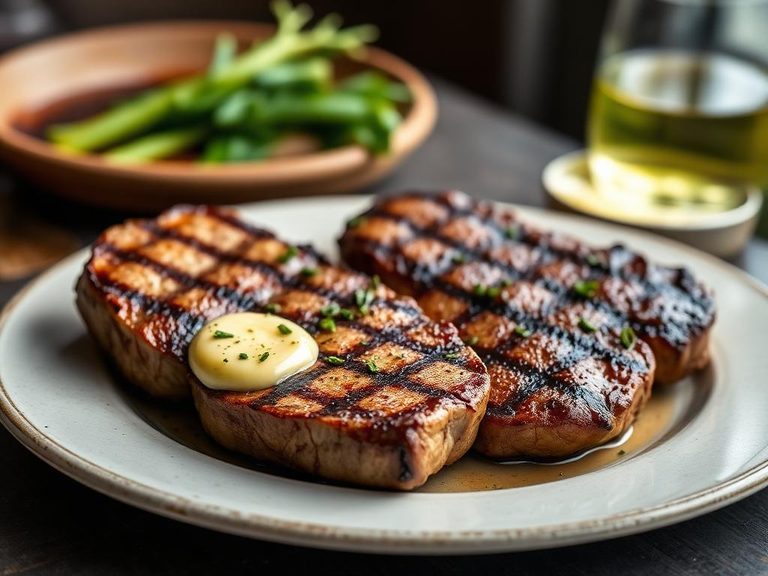
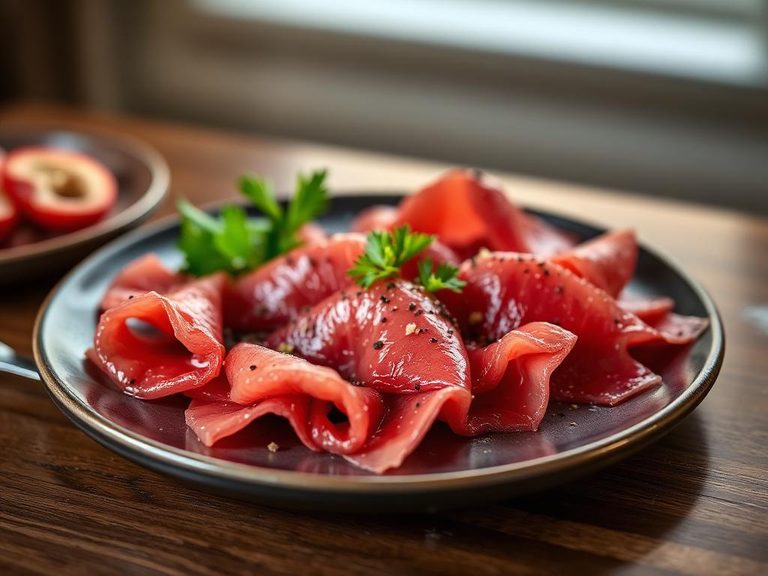
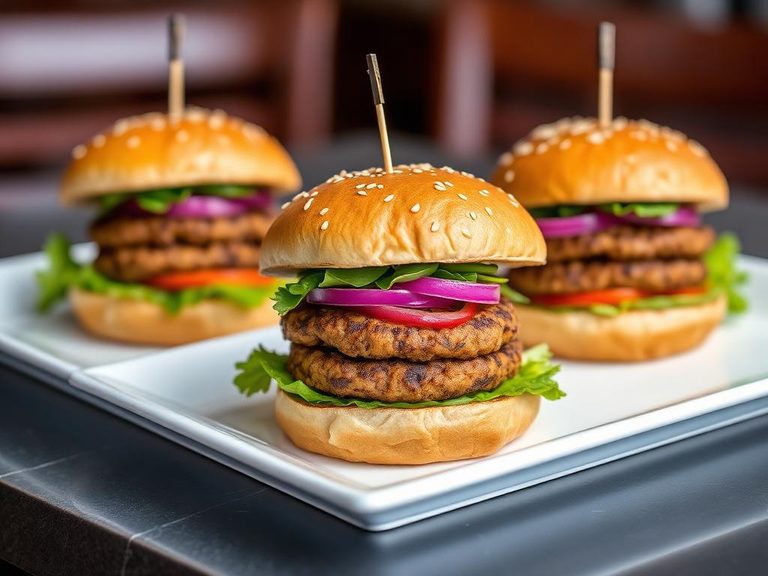
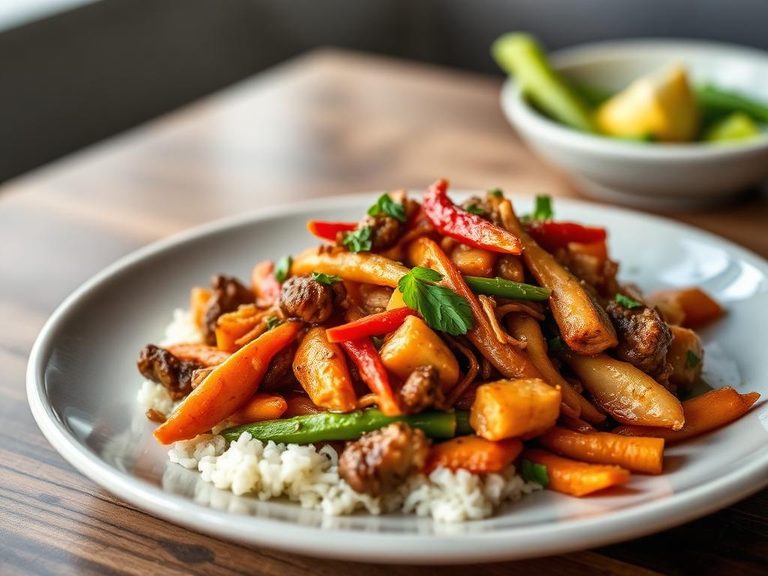
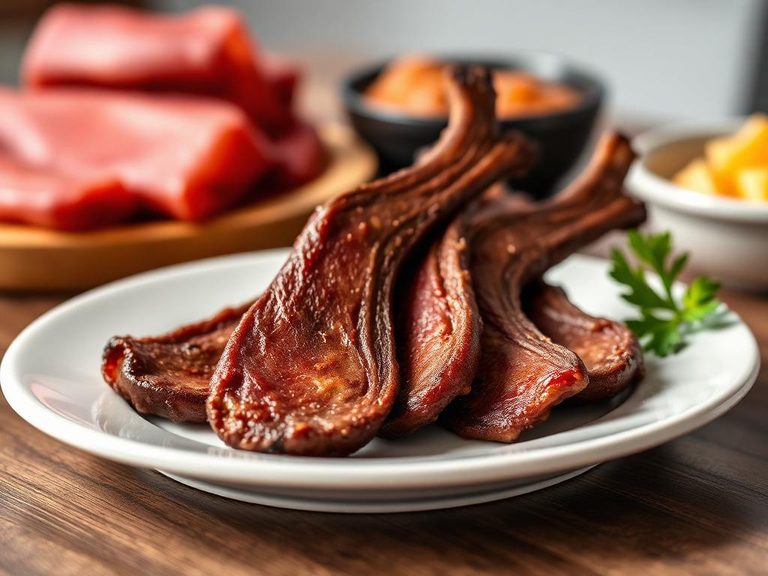
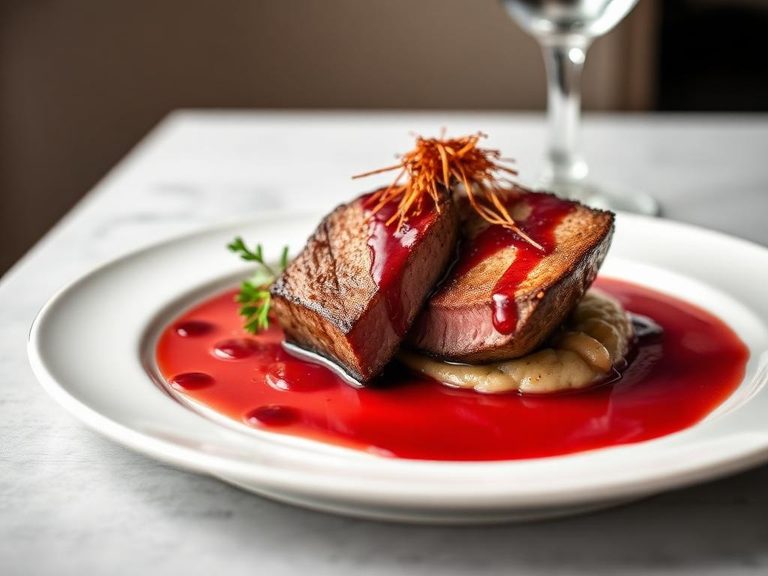
🍽️ Popular dishes
🌍 Where it's eaten
💡 Did you know?
Ostrich meat is so lean that it's classified as poultry by the USDA, not red meat, despite its dark color and beef-like taste.
Full nutrition (USDA data · scales with serving)
| Water | 66.5 g |
| Energy | 164 kcal |
| Energy | 685 kj |
| Protein | 29.4 g |
| Total lipid (fat) | 4.3 g |
| Ash | 0.85 g |
| Carbohydrate, by difference | 0.00 g |
| Fiber, total dietary | 0.00 g |
| Total Sugars | 0.00 g |
| Calcium, Ca | 5.0 mg |
| Iron, Fe | 4.8 mg |
| Magnesium, Mg | 26.0 mg |
| Phosphorus, P | 253 mg |
| Potassium, K | 366 mg |
| Sodium, Na | 73.0 mg |
| Zinc, Zn | 4.9 mg |
| Copper, Cu | 0.15 mg |
| Manganese, Mn | 0.02 mg |
| Selenium, Se | 37.9 ug |
| Vitamin C, total ascorbic acid | 0.00 mg |
| Thiamin | 0.24 mg |
| Riboflavin | 0.30 mg |
| Niacin | 7.4 mg |
| Pantothenic acid | 1.4 mg |
| Vitamin B-6 | 0.56 mg |
| Folate, total | 16.0 ug |
| Folic acid | 0.00 ug |
| Folate, food | 16.0 ug |
| Folate, DFE | 16.0 ug |
| Vitamin B-12 | 6.4 ug |
| Vitamin A, RAE | 0.00 ug |
| Retinol | 0.00 ug |
| Carotene, beta | 0.00 ug |
| Carotene, alpha | 0.00 ug |
| Cryptoxanthin, beta | 0.00 ug |
| Vitamin A, IU | 0.00 iu |
| Lycopene | 0.00 ug |
| Lutein + zeaxanthin | 0.00 ug |
| Vitamin E (alpha-tocopherol) | 0.24 mg |
| Alcohol, ethyl | 0.00 g |
| Caffeine | 0.00 mg |
| Theobromine | 0.00 mg |
Fat & fatty acid profile (per 100g)
| Fatty acids, total saturated | 1.7 g |
| SFA 14:0 | 0.04 g |
| SFA 16:0 | 1.2 g |
| SFA 18:0 | 0.44 g |
| Fatty acids, total monounsaturated | 1.7 g |
| MUFA 16:1 | 0.38 g |
| MUFA 18:1 | 1.4 g |
| Fatty acids, total polyunsaturated | 0.74 g |
| PUFA 18:2 | 0.54 g |
| PUFA 18:3 | 0.04 g |
| PUFA 20:4 | 0.16 g |
| Cholesterol | 97.0 mg |
Amino acid profile (per 100g)
| Tryptophan | 0.26 g |
| Threonine | 1.3 g |
| Isoleucine | 1.4 g |
| Leucine | 2.4 g |
| Lysine | 2.6 g |
| Methionine | 0.82 g |
| Cystine | 0.30 g |
| Phenylalanine | 1.2 g |
| Tyrosine | 0.95 g |
| Valine | 1.4 g |
| Arginine | 2.0 g |
| Histidine | 0.74 g |
| Alanine | 1.9 g |
| Aspartic acid | 2.7 g |
| Glutamic acid | 4.5 g |
| Glycine | 2.0 g |
| Proline | 1.5 g |
| Serine | 1.2 g |
| Hydroxyproline | 0.52 g |
FAQ
How does ostrich meat taste compared to beef?
It tastes very similar to lean beef, like tenderloin, but is slightly sweeter and cleaner, with a finer grain and no gamey flavor.
What's the best way to cook ostrich inside strip?
Quick, high-heat methods like grilling, pan-searing, or broiling are ideal. Cook to an internal temperature of 130-135°F (54-57°C) for medium-rare to prevent drying out.
Is ostrich meat sustainable?
Yes, ostrich farming is considered highly sustainable. The birds require less land, water, and feed per pound of meat compared to traditional cattle, and they produce fewer greenhouse gases.
Nutrient density (calculated · NRF9.3)
Nutrient Rich Foods index: beneficial nutrients (protein, fiber, vitamins, minerals) minus saturated fat, added sugar & sodium, per 100 kcal.
NRF9.3 index — Fulgoni, Keast & Drewnowski, 2009. Computed from USDA nutrients.
Weight-loss friendliness (composite index)
Energy density 1.64 kcal/g · 72% calories from protein · 0.0 g fiber · 0.0 g sugar per 100 g.
Composite of energy density (Rolls et al., 1999), protein & fiber satiety, minus sugar. A calculated heuristic — ranks satiety-per-calorie, not a clinical measure.
Dietary load (calculated from USDA values)
Potential renal acid load. Positive = acid-forming, negative = alkaline-forming.
Sodium-to-potassium ratio: 0.20 (lower is better — aim for ≤ 1)
Sodium:potassium per WHO potassium guidance. Computed from USDA nutrients.