

Liver cheese, pork
Whole food · Sausages and Luncheon Meats

Photo: Wikipedia
Liver cheese, or Leberkäse, is a finely ground, bouncy-textured German meatloaf made from pork, liver, and bacon, baked until a golden-brown crust forms on its smooth, pink interior. It has a rich, savory, slightly mineral flavor from the liver and a dense, uniform texture similar to a firm pâté or bologna. Nutritionally, it's a protein powerhouse with a significant fat content, offering a dense source of energy and iron.
Calorie split: 20% protein · 3% carbs · 77% fat
↓ Full nutrition💚 Why it's loved
People love it for its comforting, umami-packed flavor and incredibly versatile nature—it can be sliced thick for a hearty sandwich, pan-fried until crispy, or cubed into a salad. It's a beloved staple of German delis and beer gardens, evoking a sense of traditional, hearty comfort food.
⚠️ Watch-outs & how to enjoy it better
Its high fat and sodium content can be a concern for those monitoring heart health or blood pressure. The liver content, while nutritious, gives it a distinct mineral taste that some find off-putting, and it is a common allergen for those sensitive to pork or organ meats. To mitigate, enjoy it in moderation as part of a balanced meal, pair it with fiber-rich vegetables like sauerkraut or a fresh salad, and opt for lower-sodium versions if available.
Key benefits
- Excellent source of complete protein for muscle maintenance
- Rich in heme iron, which is highly bioavailable
- Provides significant B vitamins, especially B12 and niacin
- A dense, calorie-efficient food for energy needs
- Contains zinc and selenium from pork and organ meats
🍽️ Popular dishes
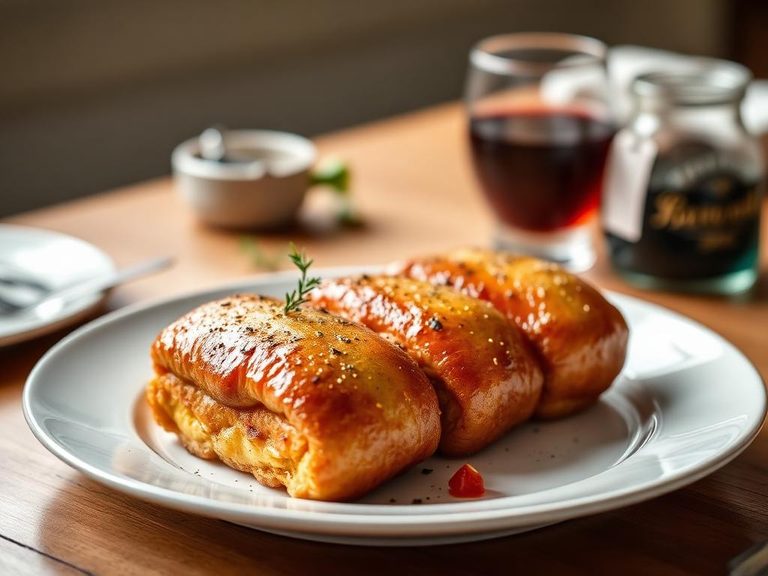
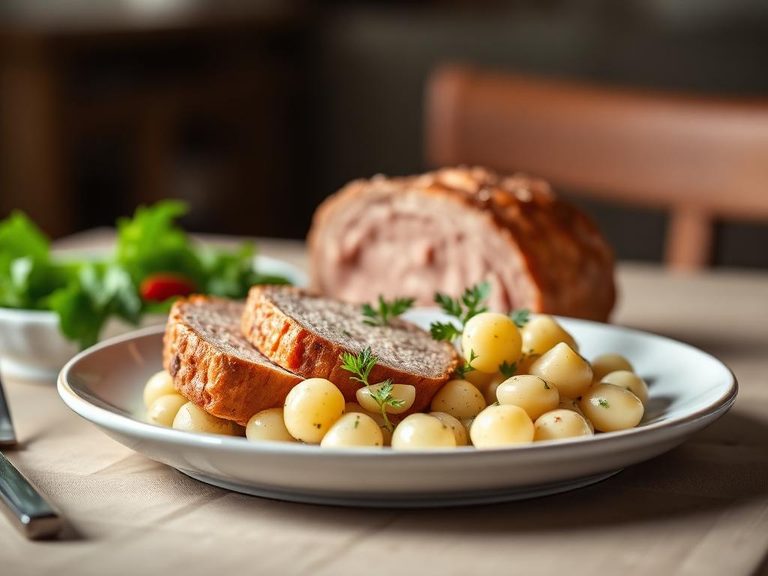
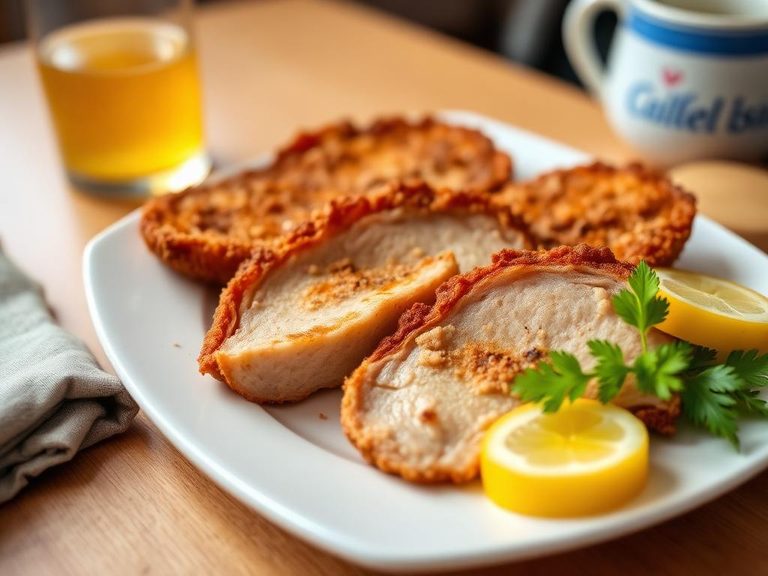
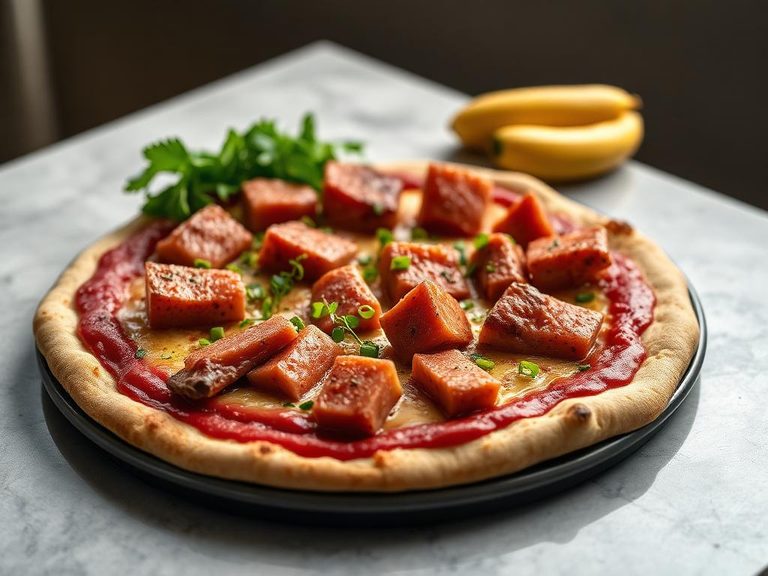
🌍 Where it's eaten
💡 Did you know?
Despite its name, traditional German 'Leberkäse' (literally 'liver cheese') often contains no cheese at all; the name likely refers to its smooth, cheese-like texture when baked.
Full nutrition (USDA data · scales with serving)
| Water | 53.6 g |
| Energy | 304 kcal |
| Energy | 1272 kj |
| Protein | 15.2 g |
| Total lipid (fat) | 25.6 g |
| Ash | 3.5 g |
| Carbohydrate, by difference | 2.1 g |
| Fiber, total dietary | 0.00 g |
| Calcium, Ca | 8.0 mg |
| Iron, Fe | 10.8 mg |
| Magnesium, Mg | 12.0 mg |
| Phosphorus, P | 207 mg |
| Potassium, K | 226 mg |
| Sodium, Na | 1225 mg |
| Zinc, Zn | 3.7 mg |
| Copper, Cu | 0.38 mg |
| Manganese, Mn | 0.20 mg |
| Selenium, Se | 36.5 ug |
| Vitamin C, total ascorbic acid | 3.0 mg |
| Thiamin | 0.21 mg |
| Riboflavin | 2.2 mg |
| Niacin | 11.8 mg |
| Pantothenic acid | 3.5 mg |
| Vitamin B-6 | 0.47 mg |
| Folate, total | 104 ug |
| Folic acid | 0.00 ug |
| Folate, food | 104 ug |
| Folate, DFE | 104 ug |
| Vitamin B-12 | 24.6 ug |
| Vitamin A, RAE | 5252 ug |
| Retinol | 5252 ug |
| Vitamin A, IU | 17490 iu |
Fat & fatty acid profile (per 100g)
| Fatty acids, total saturated | 9.0 g |
| SFA 4:0 | 0.00 g |
| SFA 6:0 | 0.00 g |
| SFA 8:0 | 0.00 g |
| SFA 10:0 | 0.05 g |
| SFA 12:0 | 0.04 g |
| SFA 14:0 | 0.32 g |
| SFA 16:0 | 5.5 g |
| SFA 18:0 | 3.0 g |
| Fatty acids, total monounsaturated | 12.3 g |
| MUFA 16:1 | 0.94 g |
| MUFA 18:1 | 11.3 g |
| MUFA 20:1 | 0.00 g |
| MUFA 22:1 | 0.00 g |
| Fatty acids, total polyunsaturated | 3.4 g |
| PUFA 18:2 | 3.1 g |
| PUFA 18:3 | 0.33 g |
| PUFA 18:4 | 0.00 g |
| PUFA 20:4 | 0.00 g |
| PUFA 20:5 n-3 (EPA) | 0.00 g |
| PUFA 22:5 n-3 (DPA) | 0.00 g |
| PUFA 22:6 n-3 (DHA) | 0.00 g |
| Cholesterol | 174 mg |
Amino acid profile (per 100g)
| Tryptophan | 0.21 g |
| Threonine | 0.65 g |
| Isoleucine | 0.63 g |
| Leucine | 1.3 g |
| Lysine | 1.2 g |
| Methionine | 0.34 g |
| Cystine | 0.33 g |
| Phenylalanine | 0.72 g |
| Tyrosine | 0.47 g |
| Valine | 0.81 g |
| Arginine | 0.83 g |
| Histidine | 0.39 g |
| Alanine | 0.93 g |
| Aspartic acid | 1.4 g |
| Glutamic acid | 1.8 g |
| Glycine | 0.94 g |
| Proline | 0.72 g |
| Serine | 0.69 g |
FAQ
Is liver cheese the same as liver pâté?
No. Liver cheese (Leberkäse) is a baked, emulsified meatloaf with a firm, sliceable texture. Liver pâté is typically a spreadable paste made from finely chopped or puréed liver, often with a smoother, softer consistency.
Does it contain dairy or gluten?
Traditional recipes are dairy-free and gluten-free, as they are made from meat, liver, spices, and sometimes bread crumbs as a binder. Always check labels for specific brands or regional variations.
How is it best reheated?
Pan-frying slices in a little butter or oil until crispy on the edges is the most popular method, enhancing its flavor and texture. It can also be baked or microwaved, though microwaving may soften the texture.
Nutrient density (calculated · NRF9.3)
Nutrient Rich Foods index: beneficial nutrients (protein, fiber, vitamins, minerals) minus saturated fat, added sugar & sodium, per 100 kcal.
NRF9.3 index — Fulgoni, Keast & Drewnowski, 2009. Computed from USDA nutrients.
Weight-loss friendliness (composite index)
Energy density 3.04 kcal/g · 20% calories from protein · 0.0 g fiber · 0.0 g sugar per 100 g.
Composite of energy density (Rolls et al., 1999), protein & fiber satiety, minus sugar. A calculated heuristic — ranks satiety-per-calorie, not a clinical measure.
Dietary load (calculated from USDA values)
Potential renal acid load. Positive = acid-forming, negative = alkaline-forming.
Sodium-to-potassium ratio: 5.42 (lower is better — aim for ≤ 1)
Sodium:potassium per WHO potassium guidance. Computed from USDA nutrients.