

Kohlrabi, cooked, boiled, drained, with salt
Whole food · Vegetables and Vegetable Products

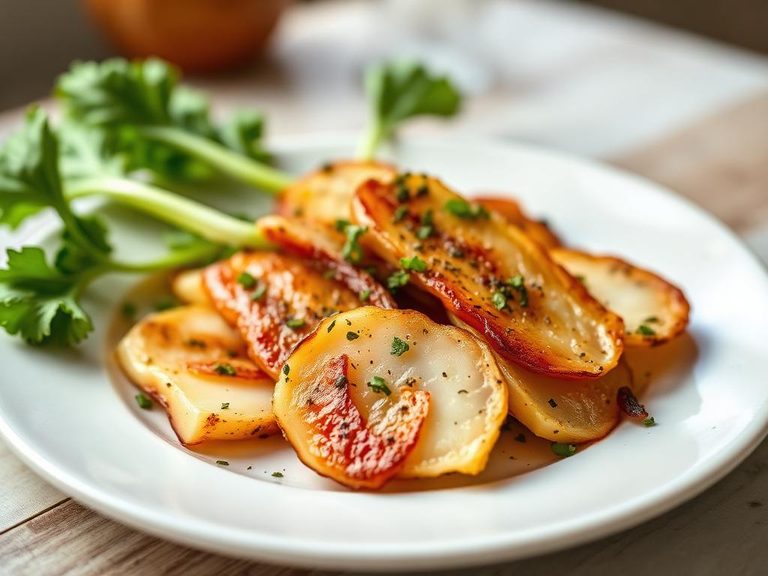
Photo: Wikipedia
Kohlrabi, when boiled and drained, transforms into a tender, mild-mannered vegetable with a subtly sweet, earthy flavor reminiscent of a broccoli stem crossed with a mild turnip. Its texture becomes pleasantly soft yet retains a slight, satisfying bite. Nutritionally, it's a low-calorie powerhouse, offering a solid dose of fiber and a notable amount of vitamin C for immune support.
Calorie split: 21% protein · 77% carbs · 3% fat
↓ Full nutrition💚 Why it's loved
People love its mild, versatile flavor that readily absorbs seasonings and sauces, making it a blank canvas in the kitchen. Its satisfying texture and ability to be a lighter substitute for potatoes or pasta in dishes are also big draws.
⚠️ Watch-outs & how to enjoy it better
Boiled kohlrabi can become waterlogged and bland if overcooked, losing its appealing texture. Its high fiber content may cause digestive discomfort in some individuals if introduced too quickly. To counteract blandness, season generously or finish with a quick sauté in butter or olive oil. To ease digestion, start with smaller portions and ensure it's cooked until tender.
Key benefits
- Excellent source of immune-boosting Vitamin C
- High in dietary fiber for digestive health
- Very low in calories and fat
- Provides essential minerals like potassium
- Contains glucosinolates, compounds studied for health benefits
🍽️ Popular dishes
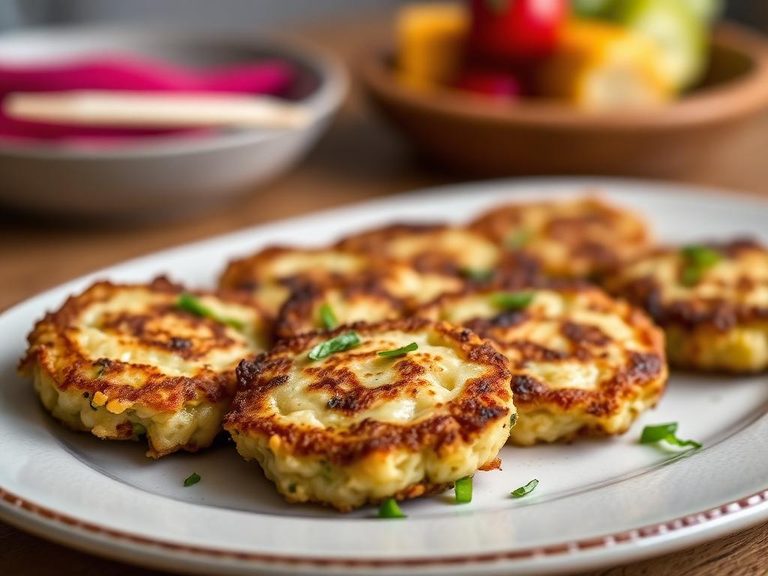
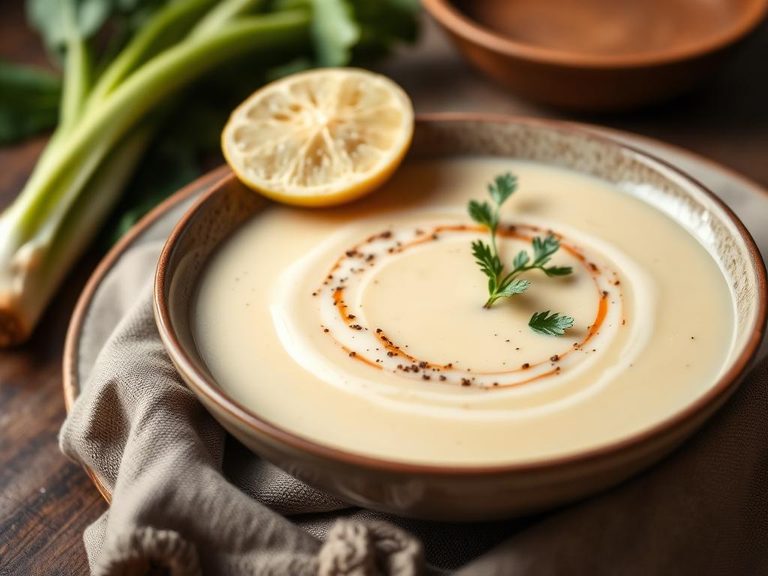
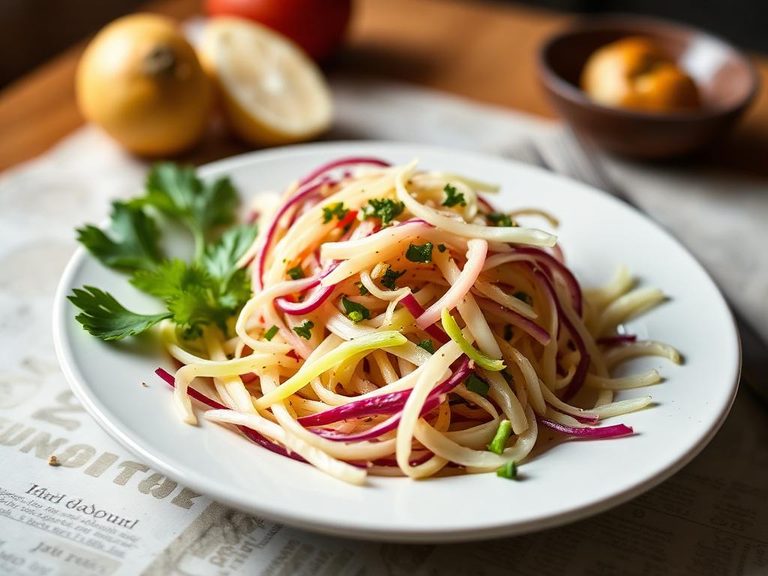
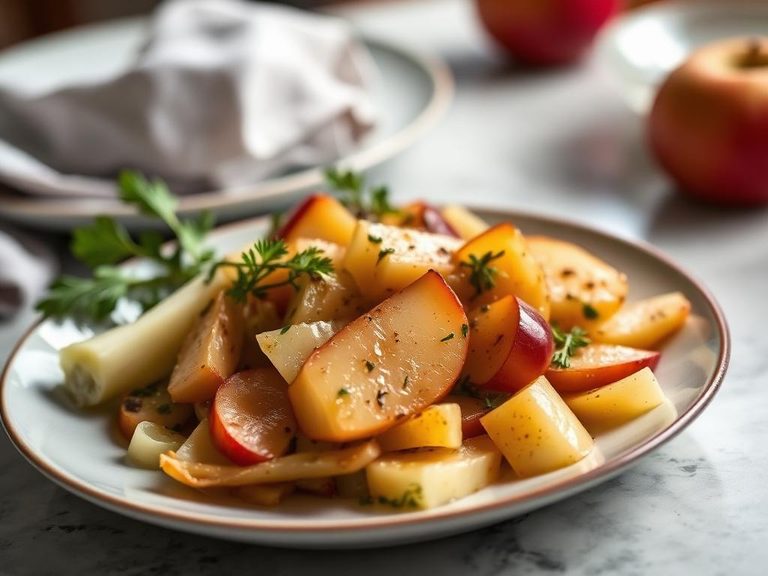
🌍 Where it's eaten
💡 Did you know?
Despite its alien appearance, kohlrabi is a cultivar of wild cabbage, making it a close relative of broccoli, kale, and Brussels sprouts.
Full nutrition (USDA data · scales with serving)
| Water | 90.3 g |
| Energy | 29.0 kcal |
| Energy | 121 kj |
| Protein | 1.8 g |
| Total lipid (fat) | 0.11 g |
| Ash | 1.1 g |
| Carbohydrate, by difference | 6.7 g |
| Fiber, total dietary | 1.1 g |
| Total Sugars | 2.8 g |
| Calcium, Ca | 25.0 mg |
| Iron, Fe | 0.40 mg |
| Magnesium, Mg | 19.0 mg |
| Phosphorus, P | 45.0 mg |
| Potassium, K | 340 mg |
| Sodium, Na | 257 mg |
| Zinc, Zn | 0.31 mg |
| Copper, Cu | 0.13 mg |
| Manganese, Mn | 0.14 mg |
| Selenium, Se | 0.80 ug |
| Vitamin C, total ascorbic acid | 54.0 mg |
| Thiamin | 0.04 mg |
| Riboflavin | 0.02 mg |
| Niacin | 0.39 mg |
| Pantothenic acid | 0.16 mg |
| Vitamin B-6 | 0.15 mg |
| Folate, total | 12.0 ug |
| Folic acid | 0.00 ug |
| Folate, food | 12.0 ug |
| Folate, DFE | 12.0 ug |
| Choline, total | 13.2 mg |
| Vitamin B-12 | 0.00 ug |
| Vitamin B-12, added | 0.00 ug |
| Vitamin A, RAE | 2.0 ug |
| Retinol | 0.00 ug |
| Carotene, beta | 21.0 ug |
| Carotene, alpha | 0.00 ug |
| Cryptoxanthin, beta | 0.00 ug |
| Vitamin A, IU | 35.0 iu |
| Lycopene | 0.00 ug |
| Lutein + zeaxanthin | 0.00 ug |
| Vitamin E (alpha-tocopherol) | 0.52 mg |
| Vitamin E, added | 0.00 mg |
| Vitamin D (D2 + D3), International Units | 0.00 iu |
| Vitamin D (D2 + D3) | 0.00 ug |
| Vitamin K (phylloquinone) | 0.10 ug |
| Caffeine | 0.00 mg |
| Theobromine | 0.00 mg |
Fat & fatty acid profile (per 100g)
| Fatty acids, total saturated | 0.01 g |
| SFA 8:0 | 0.00 g |
| SFA 10:0 | 0.00 g |
| SFA 12:0 | 0.00 g |
| SFA 14:0 | 0.00 g |
| SFA 16:0 | 0.01 g |
| SFA 18:0 | 0.00 g |
| Fatty acids, total monounsaturated | 0.01 g |
| MUFA 16:1 | 0.00 g |
| MUFA 18:1 | 0.01 g |
| Fatty acids, total polyunsaturated | 0.05 g |
| PUFA 18:2 | 0.02 g |
| PUFA 18:3 | 0.03 g |
| PUFA 20:4 | 0.00 g |
| Fatty acids, total trans | 0.00 g |
| Cholesterol | 0.00 mg |
Amino acid profile (per 100g)
| Tryptophan | 0.01 g |
| Threonine | 0.05 g |
| Isoleucine | 0.08 g |
| Leucine | 0.07 g |
| Lysine | 0.06 g |
| Methionine | 0.01 g |
| Cystine | 0.01 g |
| Phenylalanine | 0.04 g |
| Valine | 0.05 g |
| Arginine | 0.11 g |
| Histidine | 0.02 g |
FAQ
What does boiled kohlrabi taste like?
It has a mild, slightly sweet and earthy flavor, often compared to a broccoli stem or a mild turnip, but less peppery than a radish.
How do I prevent boiled kohlrabi from getting mushy?
Cut it into uniform pieces and boil just until tender when pierced with a fork, usually 8-12 minutes. Immediately drain well to stop the cooking process.
Is boiled kohlrabi good for weight loss?
Yes, it's an excellent choice. At only 29 calories per 100g with 1.1g of fiber, it's very filling for very few calories.
Nutrient density (calculated · NRF9.3)
Nutrient Rich Foods index: beneficial nutrients (protein, fiber, vitamins, minerals) minus saturated fat, added sugar & sodium, per 100 kcal.
NRF9.3 index — Fulgoni, Keast & Drewnowski, 2009. Computed from USDA nutrients.
Weight-loss friendliness (composite index)
Energy density 0.29 kcal/g · 25% calories from protein · 1.1 g fiber · 2.8 g sugar per 100 g.
Composite of energy density (Rolls et al., 1999), protein & fiber satiety, minus sugar. A calculated heuristic — ranks satiety-per-calorie, not a clinical measure.
Dietary load (calculated from USDA values)
Potential renal acid load. Positive = acid-forming, negative = alkaline-forming.
Sodium-to-potassium ratio: 0.76 (lower is better — aim for ≤ 1)
Sodium:potassium per WHO potassium guidance. Computed from USDA nutrients.