

Ice cream sundae, caramel topping
Common food

Photo: Wikipedia
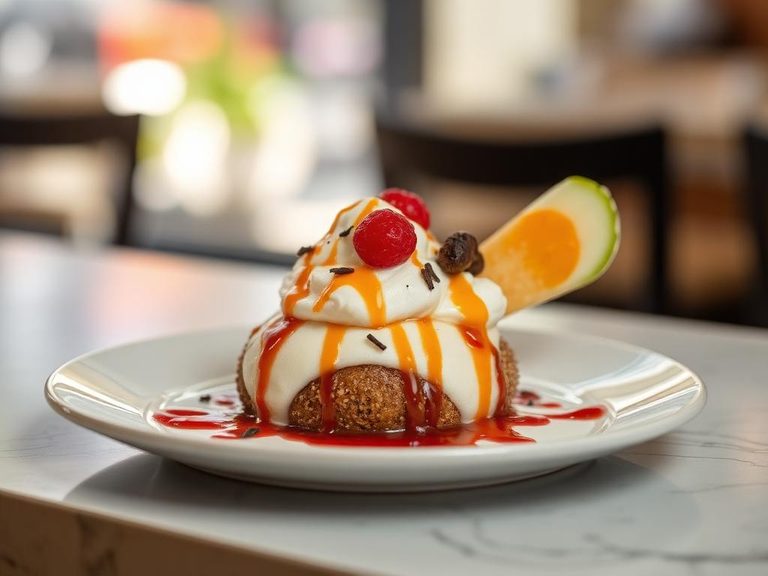
A classic ice cream sundae is a luxurious dessert of vanilla ice cream crowned with a rich, glossy caramel topping that pools and hardens slightly into a sweet, buttery shell. The experience is a delightful contrast of cold, creamy smoothness and the warm, buttery depth of caramel, offering a pure sugar rush balanced by dairy fat.
Calorie split: 5% protein · 56% carbs · 38% fat
↓ Full nutrition💚 Why it's loved
People love it for the nostalgic, indulgent combination of cold cream and warm, buttery caramel—a simple yet decadent pleasure. Its versatility allows for endless customization, making it a beloved canvas for personal preference.
⚠️ Watch-outs & how to enjoy it better
Its high sugar and calorie content can cause rapid blood-sugar spikes, making it a poor choice for diabetics or those monitoring glycemic load. To counteract, pair it with a source of protein (like nuts) or extra fiber, and practice strict portion control.
Key benefits
- Quick source of energy from simple carbohydrates.
- Provides calcium and some protein from the ice cream base.
- Can be a comforting treat for mood and morale.
- The fat content helps slow sugar absorption slightly.
- Highly customizable with toppings for texture and flavor.
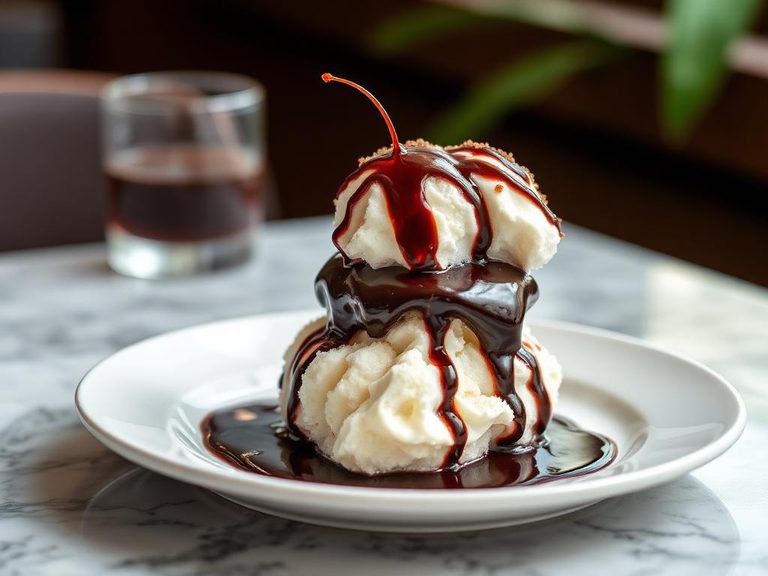
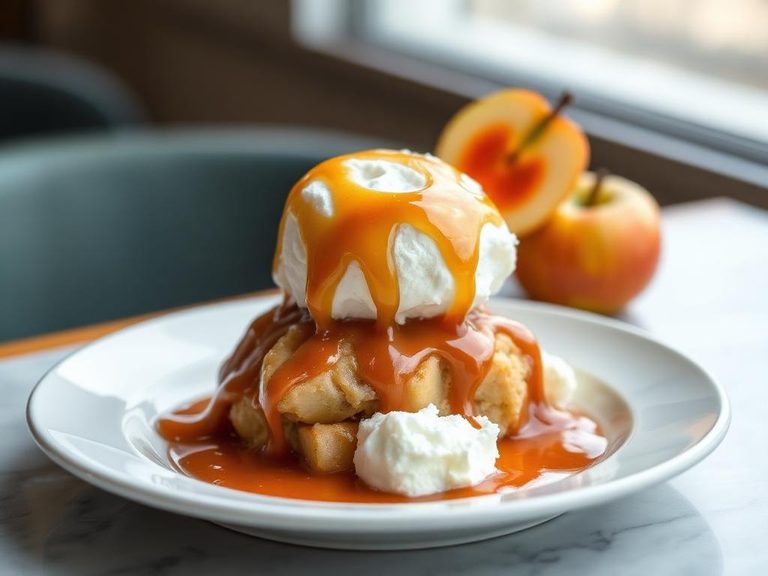
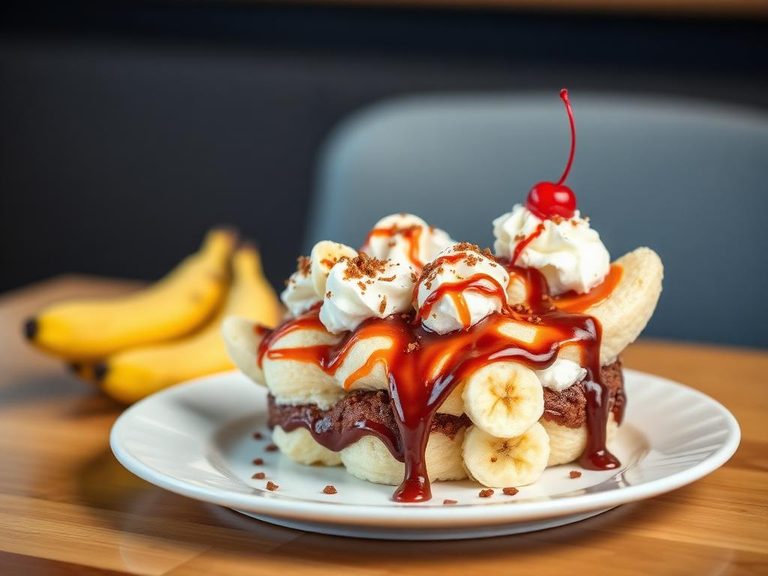
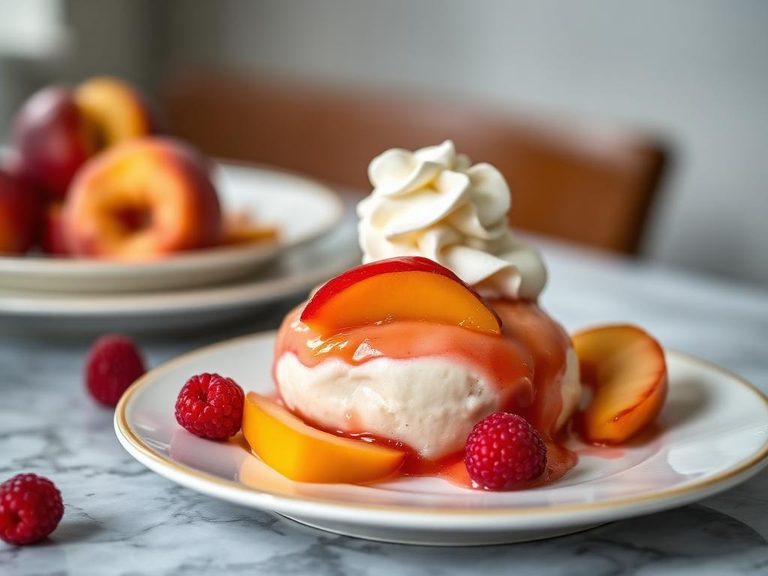
🍽️ Popular dishes
🌍 Where it's eaten
💡 Did you know?
The sundae is believed to have originated in the late 19th century as a 'Sunday Soda,' a special treat served only on Sundays to skirt strict blue laws that banned serving ice cream sodas on the Sabbath.
Full nutrition (USDA data · scales with serving)
| Water | 56.3 g |
| Energy | 213 kcal |
| Protein | 3.0 g |
| Total lipid (fat) | 9.2 g |
| Carbohydrate, by difference | 30.6 g |
| Fiber, total dietary | 0.50 g |
| Total Sugars | 28.8 g |
| Calcium, Ca | 108 mg |
| Iron, Fe | 0.07 mg |
| Magnesium, Mg | 12.0 mg |
| Phosphorus, P | 89.0 mg |
| Potassium, K | 166 mg |
| Sodium, Na | 136 mg |
| Zinc, Zn | 0.52 mg |
| Copper, Cu | 0.02 mg |
| Selenium, Se | 1.7 ug |
| Vitamin C, total ascorbic acid | 0.60 mg |
| Thiamin | 0.03 mg |
| Riboflavin | 0.18 mg |
| Niacin | 0.09 mg |
| Vitamin B-6 | 0.04 mg |
| Folate, total | 4.0 ug |
| Folic acid | 0.00 ug |
| Folate, food | 4.0 ug |
| Folate, DFE | 4.0 ug |
| Choline, total | 21.4 mg |
| Vitamin B-12 | 0.33 ug |
| Vitamin B-12, added | 0.00 ug |
| Vitamin A, RAE | 101 ug |
| Retinol | 100 ug |
| Carotene, beta | 14.0 ug |
| Carotene, alpha | 0.00 ug |
| Cryptoxanthin, beta | 0.00 ug |
| Lycopene | 0.00 ug |
| Lutein + zeaxanthin | 0.00 ug |
| Vitamin E (alpha-tocopherol) | 0.26 mg |
| Vitamin E, added | 0.00 mg |
| Vitamin D (D2 + D3) | 0.20 ug |
| Vitamin K (phylloquinone) | 0.30 ug |
| Alcohol, ethyl | 0.00 g |
| Caffeine | 0.00 mg |
| Theobromine | 0.00 mg |
Fat & fatty acid profile (per 100g)
| Fatty acids, total saturated | 5.6 g |
| SFA 4:0 | 0.29 g |
| SFA 6:0 | 0.17 g |
| SFA 8:0 | 0.10 g |
| SFA 10:0 | 0.23 g |
| SFA 12:0 | 0.26 g |
| SFA 14:0 | 0.94 g |
| SFA 16:0 | 2.5 g |
| SFA 18:0 | 1.1 g |
| Fatty acids, total monounsaturated | 2.4 g |
| MUFA 16:1 | 0.17 g |
| MUFA 18:1 | 2.3 g |
| MUFA 20:1 | 0.00 g |
| MUFA 22:1 | 0.00 g |
| Fatty acids, total polyunsaturated | 0.38 g |
| PUFA 18:2 | 0.23 g |
| PUFA 18:3 | 0.14 g |
| PUFA 18:4 | 0.00 g |
| PUFA 20:4 | 0.00 g |
| PUFA 20:5 n-3 (EPA) | 0.00 g |
| PUFA 22:5 n-3 (DPA) | 0.00 g |
| PUFA 22:6 n-3 (DHA) | 0.00 g |
| Cholesterol | 36.0 mg |
Amino acid profile (per 100g)
Estimated from Ice creams, vanilla, rich — USDA does not publish this profile for Ice cream sundae.
| Tryptophan | 0.04 g |
| Threonine | 0.14 g |
| Isoleucine | 0.18 g |
| Leucine | 0.30 g |
| Lysine | 0.25 g |
| Methionine | 0.08 g |
| Cystine | 0.03 g |
| Phenylalanine | 0.15 g |
| Tyrosine | 0.14 g |
| Valine | 0.20 g |
| Arginine | 0.14 g |
| Histidine | 0.08 g |
| Alanine | 0.14 g |
| Glutamic acid | 0.65 g |
| Glycine | 0.15 g |
| Proline | 0.34 g |
| Serine | 0.17 g |
FAQ
Is the caramel topping the same as butterscotch?
Not exactly. Caramel is made by heating sugar until it melts and browns, often with cream and butter. Butterscotch is similar but traditionally starts with brown sugar and butter, giving it a distinct, richer flavor.
Can I make a healthier version?
Yes. Use a lower-sugar ice cream or frozen yogurt base, and make a topping with reduced sugar, perhaps using dates or a small amount of maple syrup. Add fresh fruit for fiber and nuts for protein.
Why does the caramel sometimes get hard on the ice cream?
When hot caramel sauce hits cold ice cream, it rapidly cools and can crystallize, forming a delightful crunchy shell. The sugar content and temperature difference are key to this effect.
Nutrient density (calculated · NRF9.3)
Nutrient Rich Foods index: beneficial nutrients (protein, fiber, vitamins, minerals) minus saturated fat, added sugar & sodium, per 100 kcal.
NRF9.3 index — Fulgoni, Keast & Drewnowski, 2009. Computed from USDA nutrients.
Weight-loss friendliness (composite index)
Energy density 2.13 kcal/g · 6% calories from protein · 0.5 g fiber · 28.8 g sugar per 100 g.
Composite of energy density (Rolls et al., 1999), protein & fiber satiety, minus sugar. A calculated heuristic — ranks satiety-per-calorie, not a clinical measure.
Dietary load (calculated from USDA values)
Potential renal acid load. Positive = acid-forming, negative = alkaline-forming.
Sodium-to-potassium ratio: 0.82 (lower is better — aim for ≤ 1)
Sodium:potassium per WHO potassium guidance. Computed from USDA nutrients.