

Ice cream, fried
Common food

Photo: Wikipedia
Fried ice cream is a dessert of paradox: a ball of frozen ice cream, coated in a crispy, cinnamon-sugar shell and flash-fried for mere seconds, creating a hot, crunchy exterior that shatters to reveal a cold, creamy center. The nutrition profile is dense, with a single 100g serving packing over 30g of carbohydrates and 15g of fat, primarily from the sugary coating and frying oil.
Calorie split: 6% protein · 46% carbs · 48% fat
↓ Full nutrition💚 Why it's loved
People adore it for the dramatic contrast of temperatures and textures—the initial crunch giving way to smooth, cold cream. It's a nostalgic, theatrical treat often associated with festive occasions and Mexican-American restaurant culture.
⚠️ Watch-outs & how to enjoy it better
The high sugar and fat content can lead to rapid blood-sugar spikes and is not suitable for those monitoring calorie or fat intake. The frying process also makes it a common allergen risk due to potential cross-contact with gluten (from coatings) or nuts. To counteract, opt for a smaller portion, share it, and pair it with a protein-rich drink like milk to help moderate the glycemic response.
Key benefits
- Provides a quick source of energy from carbohydrates and fats
- Contains small amounts of protein and calcium from the dairy base
- Offers a unique sensory experience combining hot, cold, crunchy, and creamy textures
- Can be a celebratory or shareable dessert centerpiece
🍽️ Popular dishes
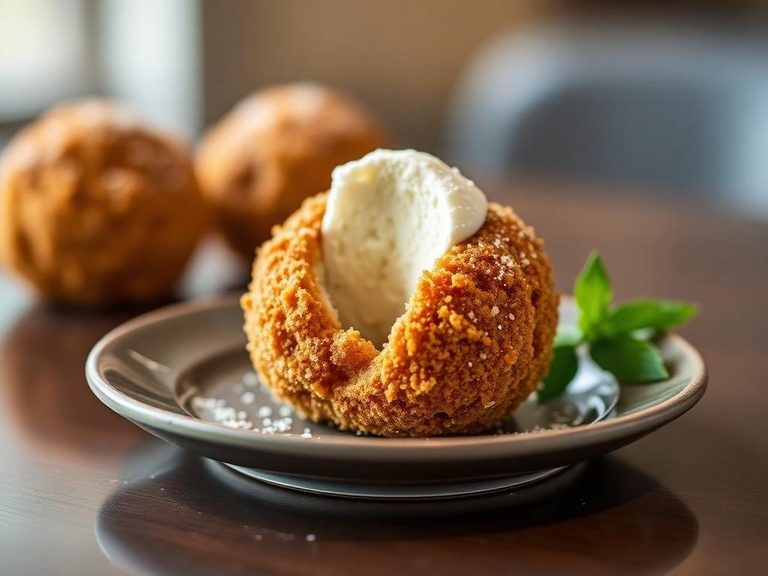
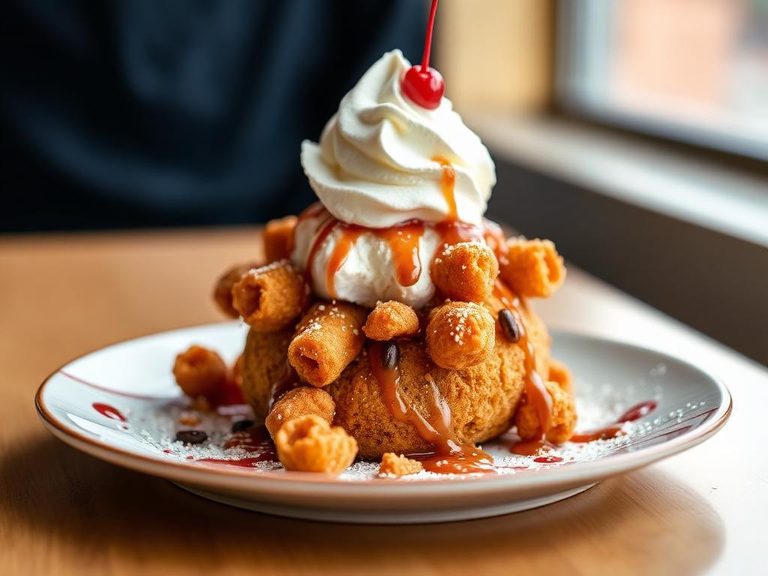
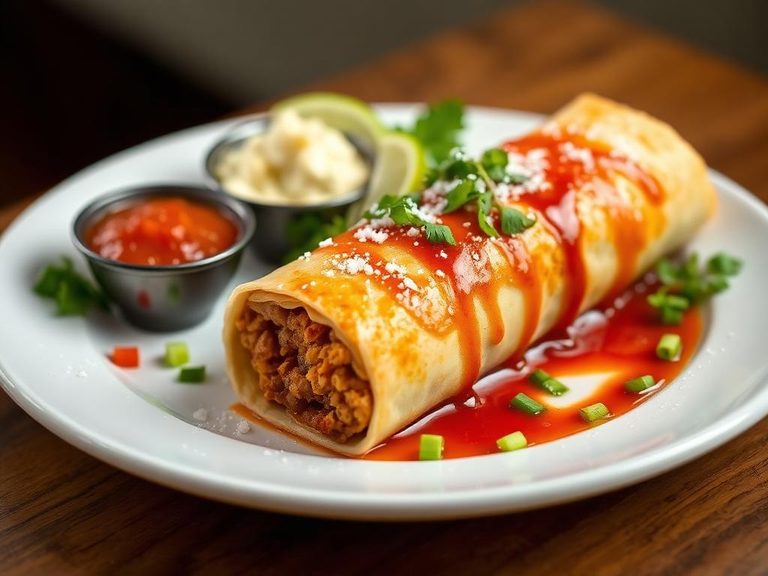
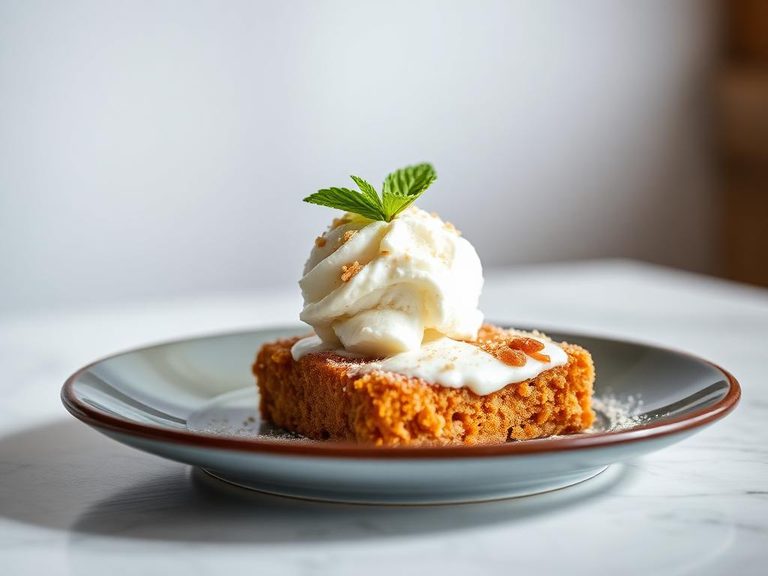

🌍 Where it's eaten
💡 Did you know?
Despite its name, true fried ice cream isn't submerged in oil; the ice cream ball is frozen solid, quickly coated, and flash-fried for just 10-20 seconds in very hot oil, which crisps the shell without melting the core.
Full nutrition (USDA data · scales with serving)
| Water | 47.1 g |
| Energy | 282 kcal |
| Protein | 3.9 g |
| Total lipid (fat) | 15.2 g |
| Carbohydrate, by difference | 32.8 g |
| Fiber, total dietary | 1.2 g |
| Total Sugars | 20.9 g |
| Calcium, Ca | 112 mg |
| Iron, Fe | 0.79 mg |
| Magnesium, Mg | 18.0 mg |
| Phosphorus, P | 115 mg |
| Potassium, K | 184 mg |
| Sodium, Na | 159 mg |
| Zinc, Zn | 0.71 mg |
| Copper, Cu | 0.05 mg |
| Selenium, Se | 2.6 ug |
| Vitamin C, total ascorbic acid | 0.50 mg |
| Thiamin | 0.08 mg |
| Riboflavin | 0.24 mg |
| Niacin | 0.93 mg |
| Vitamin B-6 | 0.07 mg |
| Folate, total | 21.0 ug |
| Folic acid | 14.0 ug |
| Folate, food | 7.0 ug |
| Folate, DFE | 31.0 ug |
| Choline, total | 20.9 mg |
| Vitamin B-12 | 0.30 ug |
| Vitamin B-12, added | 0.00 ug |
| Vitamin A, RAE | 90.0 ug |
| Retinol | 88.0 ug |
| Carotene, beta | 15.0 ug |
| Carotene, alpha | 0.00 ug |
| Cryptoxanthin, beta | 0.00 ug |
| Lycopene | 0.00 ug |
| Lutein + zeaxanthin | 15.0 ug |
| Vitamin E (alpha-tocopherol) | 0.81 mg |
| Vitamin E, added | 0.00 mg |
| Vitamin D (D2 + D3) | 0.20 ug |
| Vitamin K (phylloquinone) | 5.5 ug |
| Alcohol, ethyl | 0.00 g |
| Caffeine | 0.00 mg |
| Theobromine | 0.00 mg |
Fat & fatty acid profile (per 100g)
| Fatty acids, total saturated | 6.7 g |
| SFA 4:0 | 0.28 g |
| SFA 6:0 | 0.16 g |
| SFA 8:0 | 0.09 g |
| SFA 10:0 | 0.21 g |
| SFA 12:0 | 0.24 g |
| SFA 14:0 | 0.87 g |
| SFA 16:0 | 3.1 g |
| SFA 18:0 | 1.6 g |
| Fatty acids, total monounsaturated | 4.7 g |
| MUFA 16:1 | 0.16 g |
| MUFA 18:1 | 4.5 g |
| MUFA 20:1 | 0.01 g |
| MUFA 22:1 | 0.00 g |
| Fatty acids, total polyunsaturated | 2.7 g |
| PUFA 18:2 | 2.4 g |
| PUFA 18:3 | 0.34 g |
| PUFA 18:4 | 0.00 g |
| PUFA 20:4 | 0.00 g |
| PUFA 20:5 n-3 (EPA) | 0.00 g |
| PUFA 22:5 n-3 (DPA) | 0.00 g |
| PUFA 22:6 n-3 (DHA) | 0.00 g |
| Cholesterol | 34.0 mg |
Amino acid profile (per 100g)
Estimated from Ice creams, vanilla, rich — USDA does not publish this profile for Ice cream.
| Tryptophan | 0.04 g |
| Threonine | 0.14 g |
| Isoleucine | 0.18 g |
| Leucine | 0.30 g |
| Lysine | 0.25 g |
| Methionine | 0.08 g |
| Cystine | 0.03 g |
| Phenylalanine | 0.15 g |
| Tyrosine | 0.14 g |
| Valine | 0.20 g |
| Arginine | 0.14 g |
| Histidine | 0.08 g |
| Alanine | 0.14 g |
| Glutamic acid | 0.65 g |
| Glycine | 0.15 g |
| Proline | 0.34 g |
| Serine | 0.17 g |
FAQ
How is fried ice cream made without melting?
The ice cream is frozen extremely hard, often with liquid nitrogen or in a deep freeze. It's then quickly coated in a batter or crumbs (like cornflakes) and fried for a very short time in hot oil, which crisps the outside while the insulation of the coating protects the cold interior.
Is fried ice cream gluten-free?
Not typically. The crispy coating often contains flour, cornflakes, or cookie crumbs that contain gluten. Gluten-free versions can be made using crushed gluten-free cereals or nuts.
What is the most common ice cream flavor used for frying?
Vanilla is the most traditional and widely used base because its mild flavor complements the sweet, cinnamon-sugar coating and various toppings without competing.
Nutrient density (calculated · NRF9.3)
Nutrient Rich Foods index: beneficial nutrients (protein, fiber, vitamins, minerals) minus saturated fat, added sugar & sodium, per 100 kcal.
NRF9.3 index — Fulgoni, Keast & Drewnowski, 2009. Computed from USDA nutrients.
Weight-loss friendliness (composite index)
Energy density 2.82 kcal/g · 6% calories from protein · 1.2 g fiber · 20.9 g sugar per 100 g.
Composite of energy density (Rolls et al., 1999), protein & fiber satiety, minus sugar. A calculated heuristic — ranks satiety-per-calorie, not a clinical measure.
Dietary load (calculated from USDA values)
Potential renal acid load. Positive = acid-forming, negative = alkaline-forming.
Sodium-to-potassium ratio: 0.86 (lower is better — aim for ≤ 1)
Sodium:potassium per WHO potassium guidance. Computed from USDA nutrients.