

Grape juice, white, with added vitamin C, from concentrate, shelf stable
Whole food · Fruits and Fruit Juices

Photo: Wikipedia
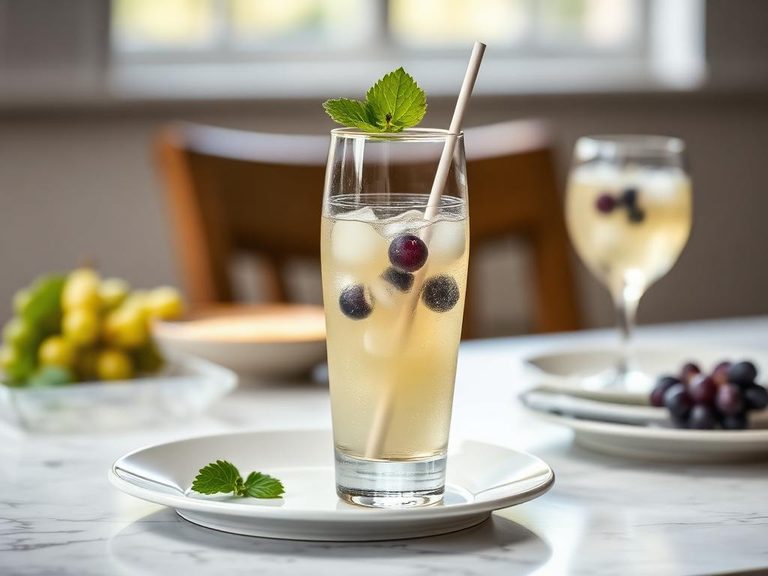
This is a clear, pale golden beverage made from concentrated white grape juice, fortified with vitamin C to preserve its color and add a nutritional boost. It delivers a clean, sweet, and mildly floral grape flavor with a smooth, non-pulpy texture. Nutritionally, it's a quick source of carbohydrates for energy, with added vitamin C being its primary micronutrient contribution.
Calorie split: 1% protein · 96% carbs · 4% fat
↓ Full nutrition💚 Why it's loved
People love its pure, refreshing sweetness and the nostalgic, comforting taste of white grapes. It's a versatile staple, enjoyed chilled on its own, mixed into spritzers, or used as a natural sweetener in dressings and sauces.
⚠️ Watch-outs & how to enjoy it better
Due to its high carbohydrate content and lack of fiber, it can cause rapid blood-sugar spikes, making it a concern for individuals managing diabetes or insulin resistance. To mitigate this, consume it in small portions (e.g., 4-6 oz) and pair it with a source of protein or healthy fat, like a handful of nuts or a cheese stick, to slow sugar absorption.
Key benefits
- Provides quick energy from natural fruit carbohydrates.
- Fortified with vitamin C, an antioxidant that supports immune function.
- Shelf-stable and convenient for long-term storage.
- Offers a hydrating, caffeine-free alternative to soda.
- Can be used as a base for homemade sports drinks or marinades.
🍽️ Popular dishes
🌍 Where it's eaten
💡 Did you know?
The 'white' in white grape juice refers to the green-skinned grape varieties used (like Thompson Seedless or Niagara), which produce a juice that is actually pale yellow or golden, not truly white.
Full nutrition (USDA data · scales with serving)
| Water | 83.7 g |
| Energy (Atwater General Factors) | 66.1 kcal |
| Energy (Atwater Specific Factors) | 64.6 kcal |
| Nitrogen | 0.01 g |
| Protein | 0.09 g |
| Total lipid (fat) | 0.27 g |
| Ash | 0.14 g |
| Carbohydrate, by difference | 15.8 g |
| Sugars, Total | 14.4 g |
| Sucrose | 0.00 g |
| Glucose | 7.1 g |
| Fructose | 7.4 g |
| Lactose | 0.00 g |
| Maltose | 0.00 g |
| Galactose | 0.00 g |
| Citric acid | 217 mg |
| Malic acid | 89.2 mg |
| Oxalic acid | 0.00 mg |
| Quinic acid | 0.00 mg |
| Calcium, Ca | 7.3 mg |
| Iron, Fe | 0.12 mg |
| Magnesium, Mg | 4.3 mg |
| Phosphorus, P | 12.6 mg |
| Potassium, K | 49.0 mg |
| Sodium, Na | 7.2 mg |
| Zinc, Zn | 0.02 mg |
| Copper, Cu | 0.00 mg |
| Manganese, Mn | 0.06 mg |
| Vitamin C, total ascorbic acid | 55.3 mg |
| Thiamin | 0.00 mg |
| Niacin | 0.01 mg |
| Vitamin B-6 | 0.01 mg |
| Folate, total | 1.7 ug |
Fat & fatty acid profile (per 100g)
Estimated from Grapefruit, sections, canned, juice pack, solids and liquids — USDA does not publish this profile for Grape juice.
| Fatty acids, total saturated | 0.01 g |
| SFA 4:0 | 0.00 g |
| SFA 6:0 | 0.00 g |
| SFA 8:0 | 0.00 g |
| SFA 10:0 | 0.00 g |
| SFA 12:0 | 0.00 g |
| SFA 14:0 | 0.00 g |
| SFA 16:0 | 0.01 g |
| SFA 18:0 | 0.00 g |
| Fatty acids, total monounsaturated | 0.01 g |
| MUFA 16:1 | 0.00 g |
| MUFA 18:1 | 0.01 g |
| MUFA 20:1 | 0.00 g |
| MUFA 22:1 | 0.00 g |
| Fatty acids, total polyunsaturated | 0.02 g |
| PUFA 18:2 | 0.02 g |
| PUFA 18:3 | 0.00 g |
| PUFA 18:4 | 0.00 g |
| PUFA 20:4 | 0.00 g |
| PUFA 20:5 n-3 (EPA) | 0.00 g |
| PUFA 22:5 n-3 (DPA) | 0.00 g |
| PUFA 22:6 n-3 (DHA) | 0.00 g |
| Fatty acids, total trans | 0.00 g |
| Cholesterol | 0.00 mg |
Amino acid profile (per 100g)
Estimated from Grapefruit, sections, canned, juice pack, solids and liquids — USDA does not publish this profile for Grape juice.
| Tryptophan | 0.01 g |
| Threonine | 0.01 g |
| Isoleucine | 0.01 g |
| Leucine | 0.01 g |
| Lysine | 0.02 g |
| Methionine | 0.01 g |
| Cystine | 0.01 g |
| Phenylalanine | 0.04 g |
| Tyrosine | 0.01 g |
| Valine | 0.01 g |
| Arginine | 0.08 g |
| Histidine | 0.01 g |
| Alanine | 0.02 g |
| Aspartic acid | 0.13 g |
| Glutamic acid | 0.18 g |
| Glycine | 0.01 g |
| Proline | 0.06 g |
| Serine | 0.03 g |
FAQ
Is white grape juice with added vitamin C the same as 100% grape juice?
Not exactly. This product is made from concentrate (water removed, then added back) and has vitamin C added, often as a preservative and nutrient boost. 100% grape juice may be from concentrate or not, but the key is it contains no added sugars or other ingredients beyond grape juice.
Why is vitamin C added to this juice?
Vitamin C (ascorbic acid) acts as an antioxidant to prevent the juice from oxidizing and turning brown, preserving its pale color and fresh taste. It also fortifies the beverage with a nutrient that can be lost during processing.
Can I use this for cooking or baking?
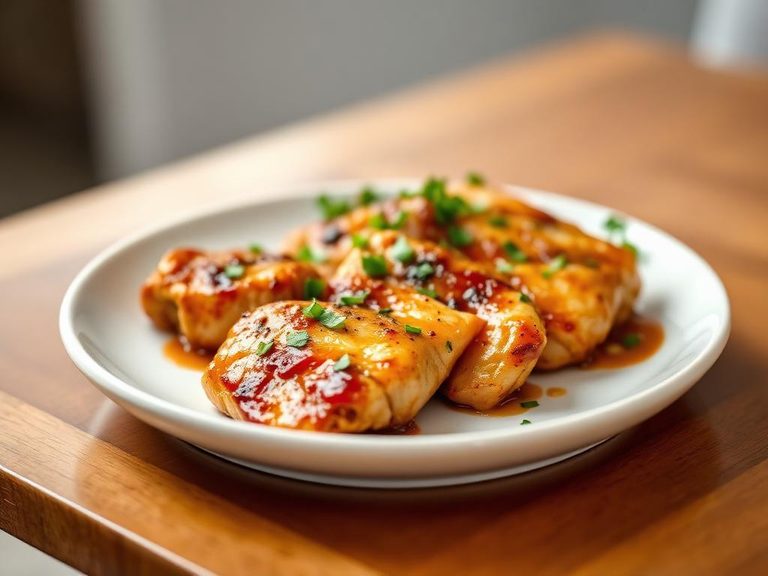
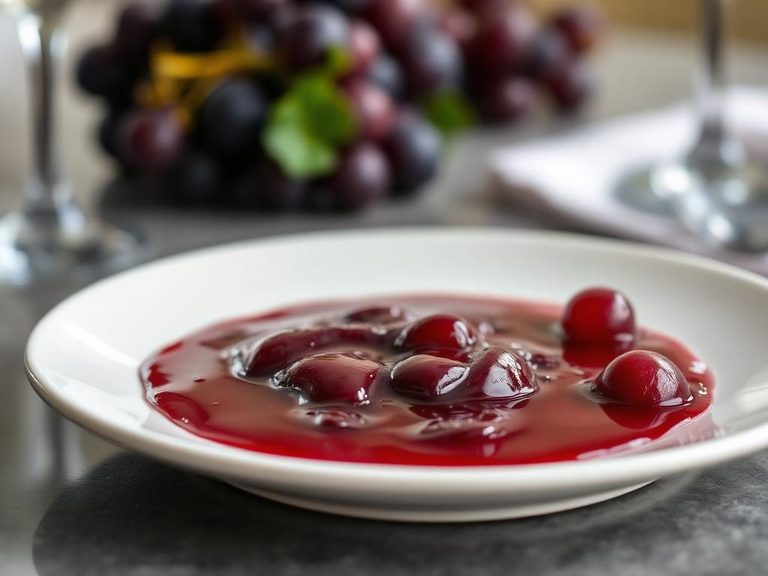
Absolutely. Its clean, sweet flavor makes it excellent for reducing into a glaze for meats like pork or chicken, poaching fruits, or as a liquid sweetener in some baking recipes. It's a versatile pantry staple.
Nutrient density (calculated · NRF9.3)
Nutrient Rich Foods index: beneficial nutrients (protein, fiber, vitamins, minerals) minus saturated fat, added sugar & sodium, per 100 kcal.
NRF9.3 index — Fulgoni, Keast & Drewnowski, 2009. Computed from USDA nutrients.
Weight-loss friendliness (composite index)
Energy density 0.66 kcal/g · 1% calories from protein · 0.0 g fiber · 0.0 g sugar per 100 g.
Composite of energy density (Rolls et al., 1999), protein & fiber satiety, minus sugar. A calculated heuristic — ranks satiety-per-calorie, not a clinical measure.
Dietary load (calculated from USDA values)
Potential renal acid load. Positive = acid-forming, negative = alkaline-forming.
Sodium-to-potassium ratio: 0.15 (lower is better — aim for ≤ 1)
Sodium:potassium per WHO potassium guidance. Computed from USDA nutrients.