

Goose, liver, raw
Whole food · Poultry Products

Photo: Wikipedia
Raw goose liver is a rich, buttery organ meat with a delicate, creamy texture and a deep, mineral-rich flavor. It is exceptionally nutrient-dense, providing a potent source of high-quality protein, essential vitamins like B12, and key minerals such as iron and copper in a low-carb package.
Calorie split: 51% protein · 20% carbs · 30% fat
↓ Full nutrition💚 Why it's loved
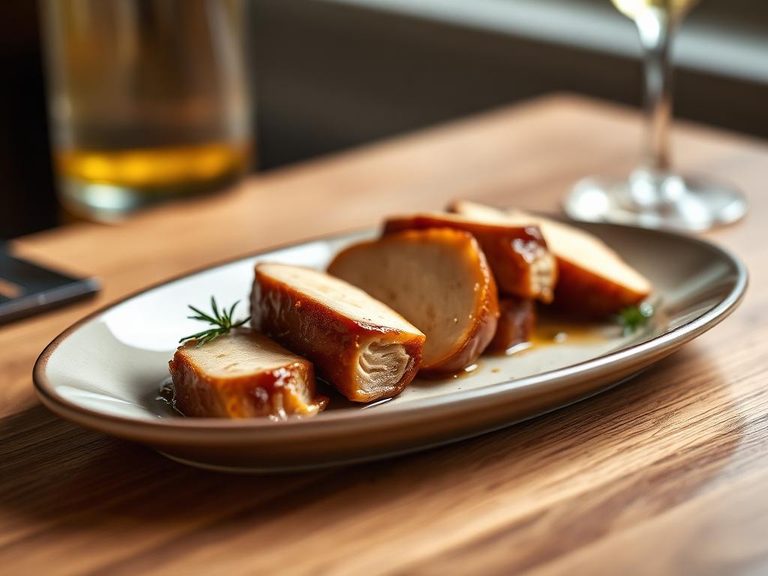
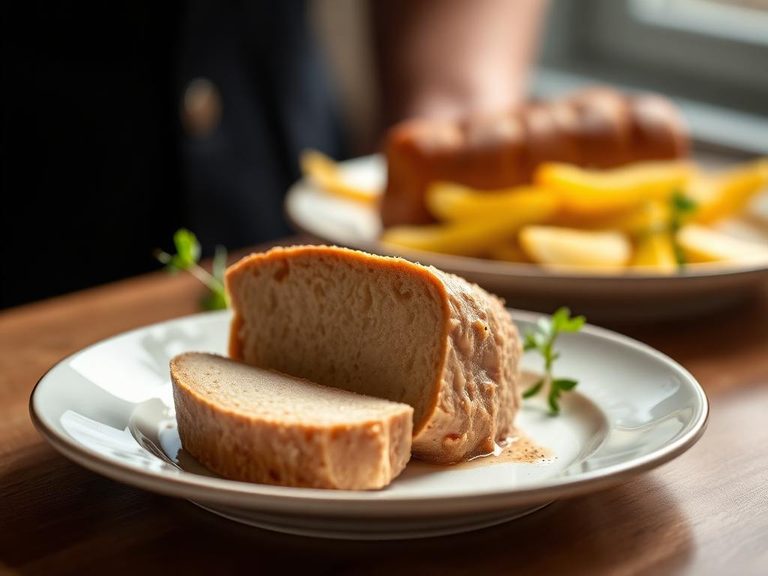
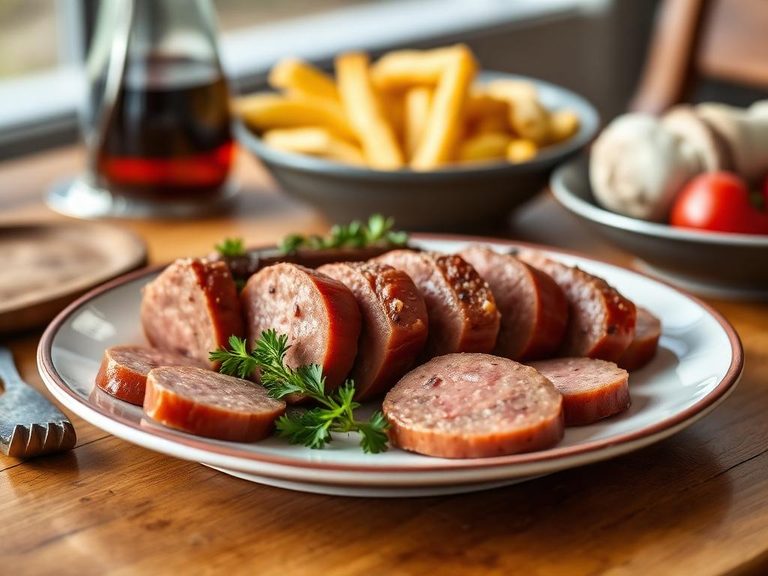
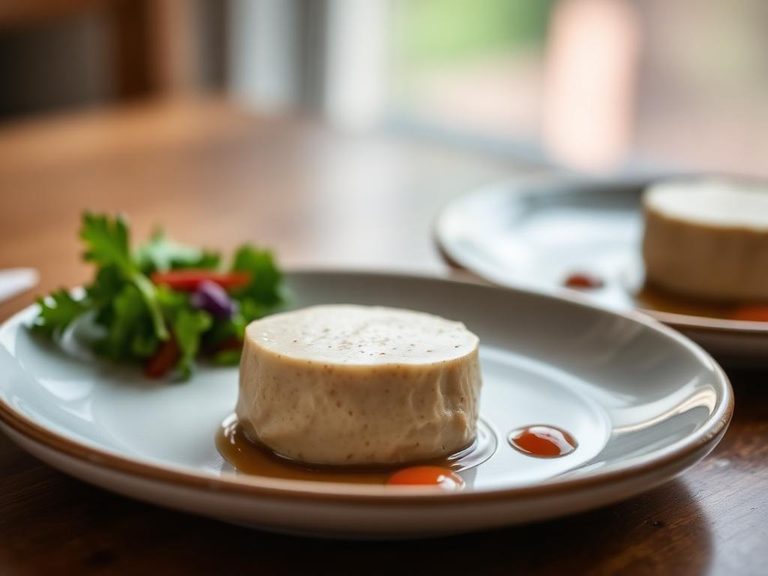
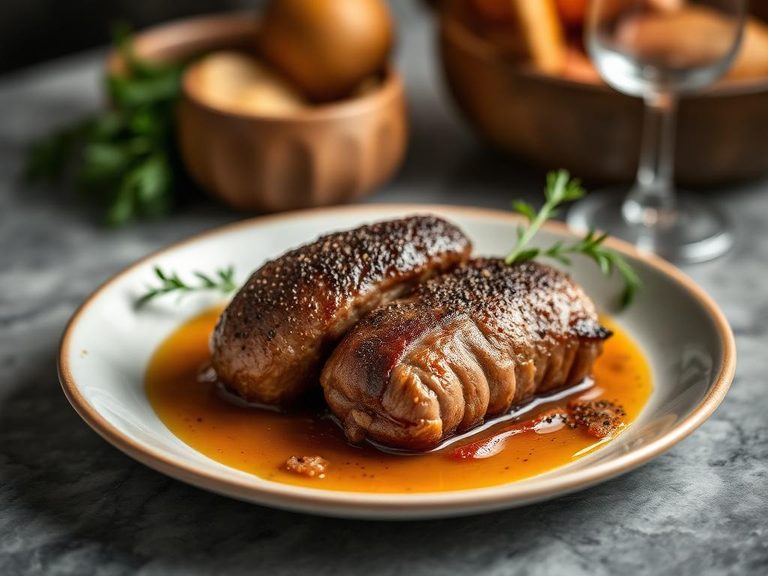
People cherish it for its luxurious, melt-in-the-mouth texture and profound umami flavor, which forms the base of iconic dishes like foie gras. Its culinary versatility allows it to be transformed into smooth pâtés, rich terrines, or seared as a decadent centerpiece.
⚠️ Watch-outs & how to enjoy it better
It is very high in cholesterol and purines, which may be a concern for individuals with specific health conditions like gout or cardiovascular issues. To mitigate this, practice strict portion control and balance it with fiber-rich vegetables or whole grains in the same meal to help manage absorption.
Key benefits
- Excellent source of high-quality protein for muscle maintenance.
- Rich in vitamin B12, crucial for nerve function and red blood cell formation.
- Provides significant heme iron, which is more easily absorbed than plant-based iron.
- Contains copper, an essential mineral for energy production and connective tissue health.
🍽️ Popular dishes
🌍 Where it's eaten
💡 Did you know?
The practice of producing foie gras (fattened liver) dates back to ancient Egypt, where wild geese were observed to gorge before migration, a technique later adopted by the Romans.
Full nutrition (USDA data · scales with serving)
| Water | 71.8 g |
| Energy | 133 kcal |
| Energy | 556 kj |
| Protein | 16.4 g |
| Total lipid (fat) | 4.3 g |
| Ash | 1.3 g |
| Carbohydrate, by difference | 6.3 g |
| Fiber, total dietary | 0.00 g |
| Calcium, Ca | 43.0 mg |
| Iron, Fe | 30.5 mg |
| Magnesium, Mg | 24.0 mg |
| Phosphorus, P | 261 mg |
| Potassium, K | 230 mg |
| Sodium, Na | 140 mg |
| Zinc, Zn | 3.1 mg |
| Copper, Cu | 7.5 mg |
| Manganese, Mn | 0.00 mg |
| Selenium, Se | 68.1 ug |
| Vitamin C, total ascorbic acid | 4.5 mg |
| Thiamin | 0.56 mg |
| Riboflavin | 0.89 mg |
| Niacin | 6.5 mg |
| Pantothenic acid | 6.2 mg |
| Vitamin B-6 | 0.76 mg |
| Folate, total | 738 ug |
| Folic acid | 0.00 ug |
| Folate, food | 738 ug |
| Folate, DFE | 738 ug |
| Vitamin B-12 | 54.0 ug |
| Vitamin A, RAE | 9309 ug |
| Retinol | 9309 ug |
| Vitamin A, IU | 30998 iu |
Fat & fatty acid profile (per 100g)
| Fatty acids, total saturated | 1.6 g |
| SFA 10:0 | 0.00 g |
| SFA 12:0 | 0.00 g |
| SFA 14:0 | 0.01 g |
| SFA 16:0 | 0.80 g |
| SFA 18:0 | 0.76 g |
| Fatty acids, total monounsaturated | 0.81 g |
| MUFA 16:1 | 0.06 g |
| MUFA 18:1 | 0.74 g |
| MUFA 20:1 | 0.01 g |
| MUFA 22:1 | 0.00 g |
| Fatty acids, total polyunsaturated | 0.26 g |
| PUFA 18:2 | 0.18 g |
| PUFA 18:3 | 0.01 g |
| PUFA 20:4 | 0.07 g |
| PUFA 20:5 n-3 (EPA) | 0.00 g |
| PUFA 22:5 n-3 (DPA) | 0.00 g |
| PUFA 22:6 n-3 (DHA) | 0.00 g |
| Cholesterol | 515 mg |
Amino acid profile (per 100g)
| Tryptophan | 0.23 g |
| Threonine | 0.73 g |
| Isoleucine | 0.87 g |
| Leucine | 1.5 g |
| Lysine | 1.2 g |
| Methionine | 0.39 g |
| Cystine | 0.22 g |
| Phenylalanine | 0.81 g |
| Tyrosine | 0.58 g |
| Valine | 1.0 g |
| Arginine | 1.0 g |
| Histidine | 0.43 g |
| Alanine | 0.95 g |
| Aspartic acid | 1.6 g |
| Glutamic acid | 2.1 g |
| Glycine | 0.95 g |
| Proline | 0.81 g |
| Serine | 0.70 g |
FAQ
Is raw goose liver safe to eat?
While some cuisines serve it raw in preparations like tartare, it must be of impeccable freshness and sourced from a trusted supplier to minimize foodborne illness risk. Cooking is the more common and safer method.
How does goose liver differ from chicken liver?
Goose liver is significantly larger, richer, higher in fat, and has a more delicate, buttery flavor compared to the stronger, more mineral taste and firmer texture of chicken liver.
What is the best way to cook goose liver?
The classic method is a quick sear in a very hot pan with butter or fat for just 1-2 minutes per side, leaving the center pink and creamy. Overcooking makes it grainy and tough.
Nutrient density (calculated · NRF9.3)
Nutrient Rich Foods index: beneficial nutrients (protein, fiber, vitamins, minerals) minus saturated fat, added sugar & sodium, per 100 kcal.
NRF9.3 index — Fulgoni, Keast & Drewnowski, 2009. Computed from USDA nutrients.
Weight-loss friendliness (composite index)
Energy density 1.33 kcal/g · 49% calories from protein · 0.0 g fiber · 0.0 g sugar per 100 g.
Composite of energy density (Rolls et al., 1999), protein & fiber satiety, minus sugar. A calculated heuristic — ranks satiety-per-calorie, not a clinical measure.
Dietary load (calculated from USDA values)
Potential renal acid load. Positive = acid-forming, negative = alkaline-forming.
Sodium-to-potassium ratio: 0.61 (lower is better — aim for ≤ 1)
Sodium:potassium per WHO potassium guidance. Computed from USDA nutrients.