

Frozen novelties, ice type, pop, with low calorie sweetener
Whole food · Sweets
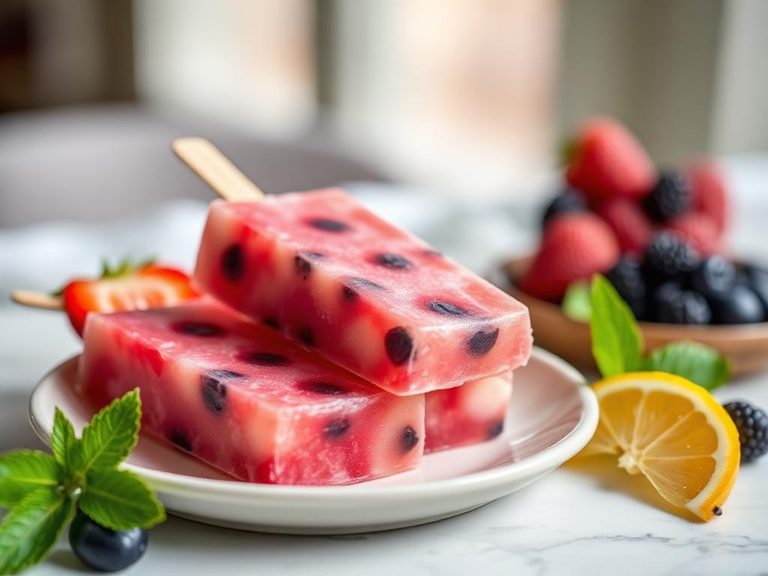
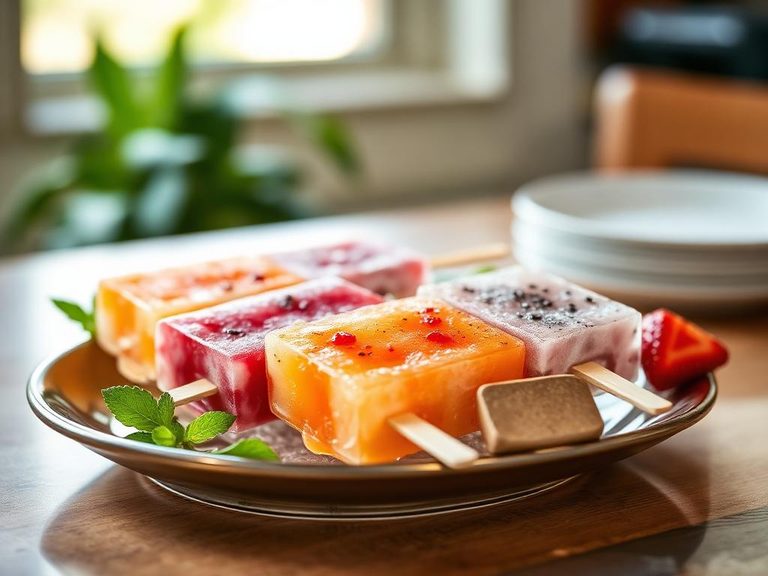
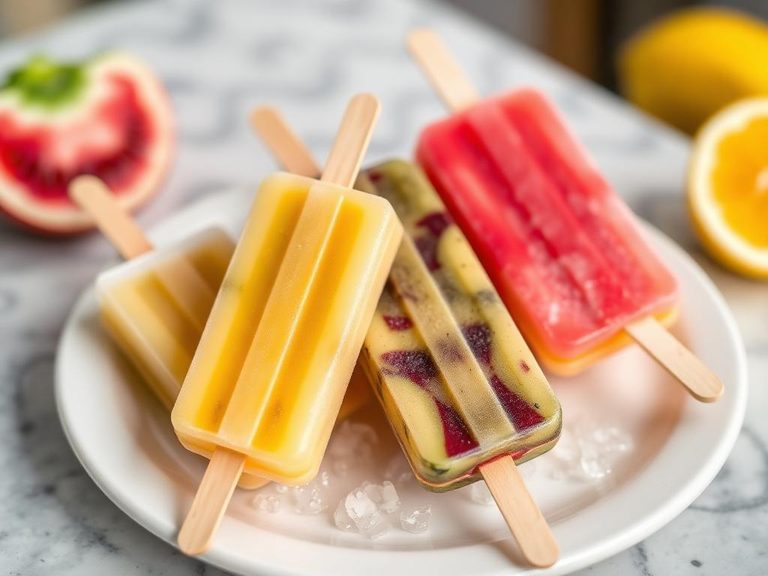
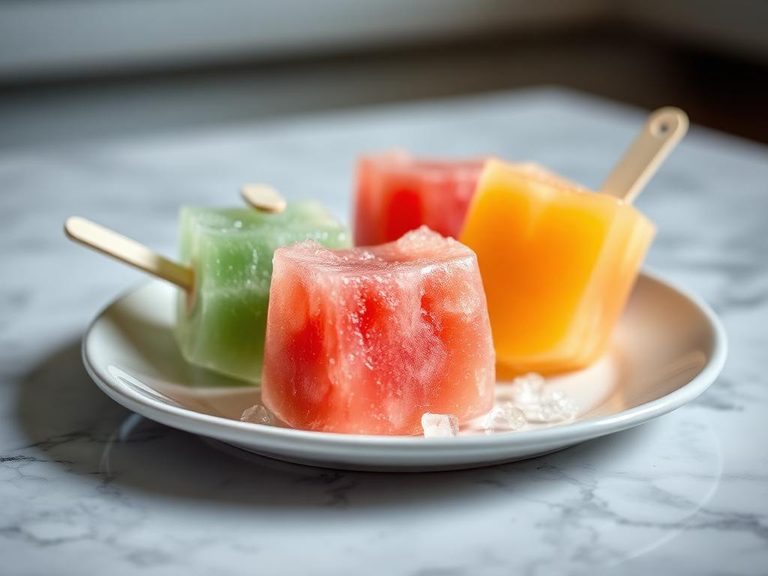
This is a classic, water-based ice pop on a stick, engineered for maximum refreshment with minimal calories. Its texture is a clean, crystalline crunch that melts quickly on the tongue, delivering a burst of straightforward fruit or candy flavor. Nutritionally, it's a near-zero fat, low-protein treat, with almost all its energy coming from a small amount of carbohydrates, primarily from added sweeteners.
Calorie split: 0% protein · 100% carbs · 0% fat
↓ Full nutrition💚 Why it's loved
People adore it for its nostalgic, uncomplicated joy—a cool, sticky-handed reminder of childhood summers. It's the ultimate no-fuss, hydrating dessert that satisfies a sweet craving without heaviness.
⚠️ Watch-outs & how to enjoy it better
The primary downside is the use of low-calorie sweeteners (like aspartame or sucralose), which some people prefer to avoid or find leaves an aftertaste. For those monitoring blood sugar, the sweeteners won't spike it, but the product offers no nutritional benefit. Tip: Enjoy it as an occasional treat within a balanced diet, and consider it a fun way to increase fluid intake rather than a source of nutrients.
Key benefits
- Extremely low in calories (24 kcal per 100g)
- Fat-free and cholesterol-free
- Provides quick hydration and a cooling sensation
- A simple, portion-controlled treat for calorie-conscious diets
- Often fortified with Vitamin C
🍽️ Popular dishes
🌍 Where it's eaten
💡 Did you know?
The original 'Popsicle' was invented accidentally in 1905 by 11-year-old Frank Epperson, who left a cup of powdered soda mix with a stirring stick on his porch overnight during a cold snap.
Full nutrition (USDA data · scales with serving)
| Water | 94.0 g |
| Energy | 24.0 kcal |
| Energy | 99.0 kj |
| Protein | 0.00 g |
| Total lipid (fat) | 0.00 g |
| Ash | 0.06 g |
| Carbohydrate, by difference | 5.9 g |
| Fiber, total dietary | 0.00 g |
| Total Sugars | 1.5 g |
| Sucrose | 0.70 g |
| Glucose | 0.47 g |
| Fructose | 0.34 g |
| Lactose | 0.00 g |
| Maltose | 0.00 g |
| Calcium, Ca | 0.00 mg |
| Iron, Fe | 0.67 mg |
| Magnesium, Mg | 1.0 mg |
| Phosphorus, P | 0.00 mg |
| Potassium, K | 11.0 mg |
| Sodium, Na | 10.0 mg |
| Zinc, Zn | 0.47 mg |
| Copper, Cu | 0.00 mg |
| Manganese, Mn | 0.00 mg |
| Selenium, Se | 0.00 ug |
| Fluoride, F | 88.9 ug |
| Vitamin C, total ascorbic acid | 10.4 mg |
| Thiamin | 0.00 mg |
| Riboflavin | 0.00 mg |
| Niacin | 0.00 mg |
| Pantothenic acid | 0.00 mg |
| Vitamin B-6 | 0.00 mg |
| Folate, total | 0.00 ug |
| Folic acid | 0.00 ug |
| Folate, food | 0.00 ug |
| Folate, DFE | 0.00 ug |
| Choline, total | 0.00 mg |
| Vitamin B-12 | 0.00 ug |
| Vitamin B-12, added | 0.00 ug |
| Vitamin A, RAE | 0.00 ug |
| Retinol | 0.00 ug |
| Carotene, beta | 0.00 ug |
| Carotene, alpha | 0.00 ug |
| Cryptoxanthin, beta | 0.00 ug |
| Vitamin A, IU | 0.00 iu |
| Lycopene | 0.00 ug |
| Lutein + zeaxanthin | 0.00 ug |
| Vitamin E (alpha-tocopherol) | 0.00 mg |
| Vitamin E, added | 0.00 mg |
| Vitamin D (D2 + D3), International Units | 0.00 iu |
| Vitamin D (D2 + D3) | 0.00 ug |
| Vitamin K (phylloquinone) | 0.00 ug |
| Alcohol, ethyl | 0.00 g |
| Caffeine | 0.00 mg |
| Theobromine | 0.00 mg |
Fat & fatty acid profile (per 100g)
| Fatty acids, total saturated | 0.00 g |
| SFA 4:0 | 0.00 g |
| SFA 6:0 | 0.00 g |
| SFA 8:0 | 0.00 g |
| SFA 10:0 | 0.00 g |
| SFA 12:0 | 0.00 g |
| SFA 14:0 | 0.00 g |
| SFA 16:0 | 0.00 g |
| SFA 18:0 | 0.00 g |
| Fatty acids, total monounsaturated | 0.00 g |
| MUFA 16:1 | 0.00 g |
| MUFA 18:1 | 0.00 g |
| MUFA 20:1 | 0.00 g |
| MUFA 22:1 | 0.00 g |
| Fatty acids, total polyunsaturated | 0.00 g |
| PUFA 18:2 | 0.00 g |
| PUFA 18:3 | 0.00 g |
| PUFA 18:4 | 0.00 g |
| PUFA 20:4 | 0.00 g |
| PUFA 20:5 n-3 (EPA) | 0.00 g |
| PUFA 22:5 n-3 (DPA) | 0.00 g |
| PUFA 22:6 n-3 (DHA) | 0.00 g |
| Cholesterol | 0.00 mg |
FAQ
Are these popsicles sugar-free?
They are typically 'low calorie' or 'reduced sugar,' meaning they use low-calorie sweeteners (like aspartame, sucralose, or stevia) to replace most or all of the sugar. They are not necessarily 'sugar-free' in the strictest sense, as they may contain small amounts of sugar or other carbohydrates.
Why is there no protein or fat?
These pops are made from water, sweeteners, flavorings, and sometimes fruit juice or citric acid. They are designed to be a light, hydrating treat, not a source of macronutrients like protein or fat.
Can diabetics eat these?
Because they use low-calorie sweeteners and contain minimal carbohydrates, they generally have a negligible impact on blood sugar and are often considered a suitable frozen treat option for people with diabetes. However, individual responses can vary, so it's always best to check the specific nutrition label and consult with a healthcare provider.
Nutrient density (calculated · NRF9.3)
Nutrient Rich Foods index: beneficial nutrients (protein, fiber, vitamins, minerals) minus saturated fat, added sugar & sodium, per 100 kcal.
NRF9.3 index — Fulgoni, Keast & Drewnowski, 2009. Computed from USDA nutrients.
Weight-loss friendliness (composite index)
Energy density 0.24 kcal/g · 0% calories from protein · 0.0 g fiber · 1.5 g sugar per 100 g.
Composite of energy density (Rolls et al., 1999), protein & fiber satiety, minus sugar. A calculated heuristic — ranks satiety-per-calorie, not a clinical measure.
Dietary load (calculated from USDA values)
Potential renal acid load. Positive = acid-forming, negative = alkaline-forming.
Sodium-to-potassium ratio: 0.91 (lower is better — aim for ≤ 1)
Sodium:potassium per WHO potassium guidance. Computed from USDA nutrients.