

Fish, salmon, sockeye, canned, without salt, drained solids with bone
Whole food · Finfish and Shellfish Products

Photo: Wikipedia
This is canned sockeye salmon, a vibrant, deep-red fish packed with bones for added calcium. The texture is tender yet firm, with a rich, robust flavor that's less mild than pink salmon. It's a nutritional powerhouse, offering an exceptional 20.47 grams of protein and healthy fats per 100g serving.
Calorie split: 55% protein · 0% carbs · 45% fat
↓ Full nutrition💚 Why it's loved
People love its deep, savory flavor and the satisfying, flaky texture that holds up in salads or sandwiches. It's a beloved pantry staple for its incredible convenience and nutrient density, often evoking nostalgic, simple meals.
⚠️ Watch-outs & how to enjoy it better
The soft, edible bones and stronger fish flavor can be off-putting to some. To counteract the texture, you can mash the salmon thoroughly to blend the bones in, or choose boneless varieties. The strong flavor pairs excellently with acidic ingredients like lemon juice or a creamy base like mayonnaise to balance it.
Key benefits
- Excellent source of high-quality protein for muscle maintenance.
- Rich in omega-3 fatty acids for heart and brain health.
- Bones provide a significant, bioavailable calcium boost.
- Zero carbohydrates, making it ideal for low-carb diets.
- Convenient, shelf-stable source of nutrients.
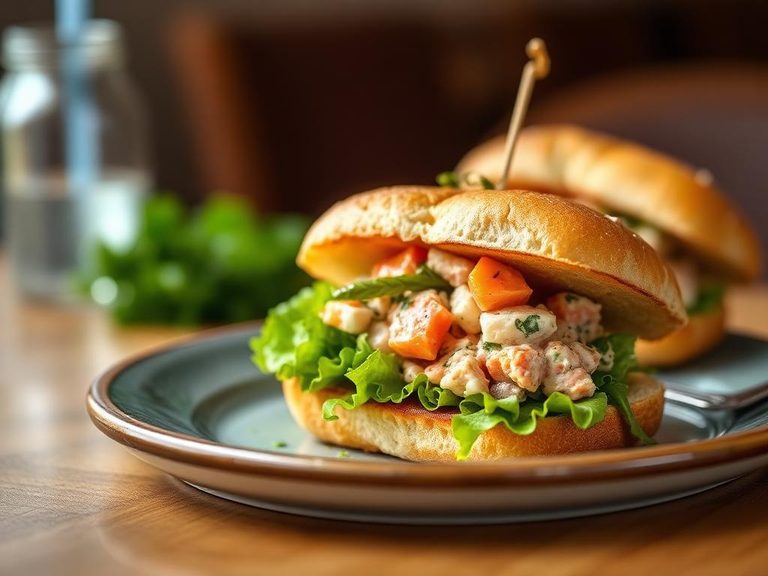
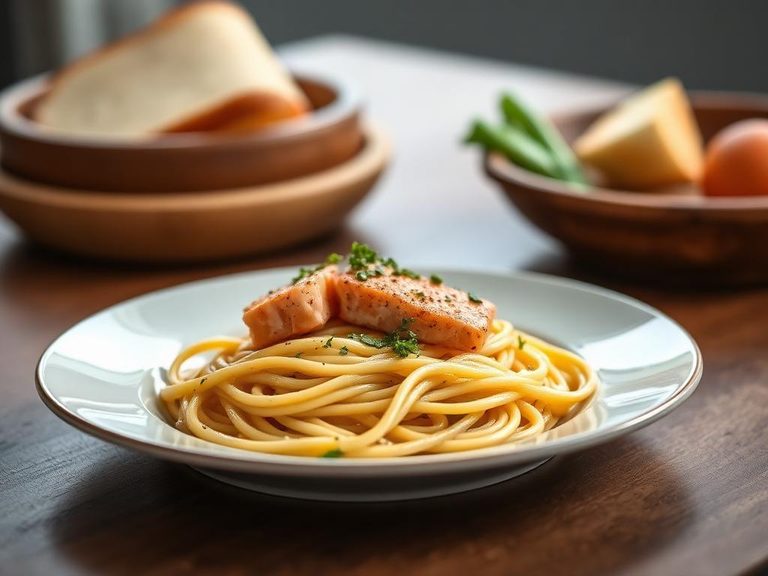
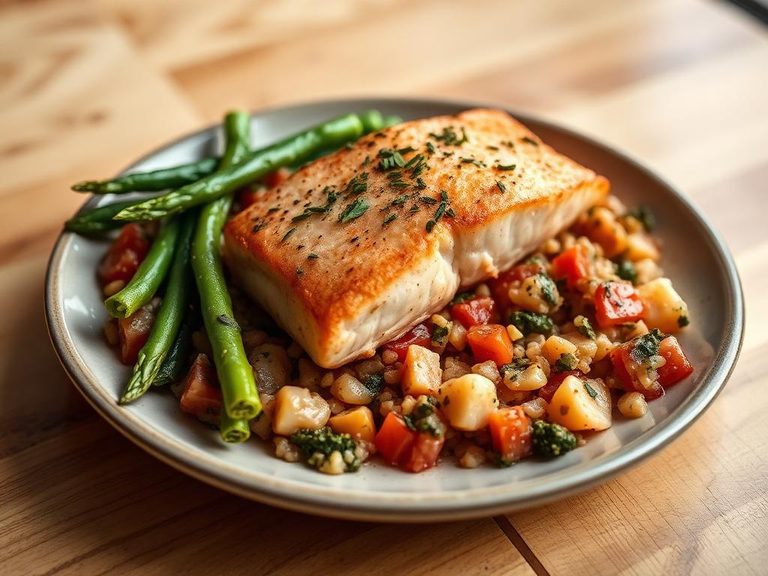
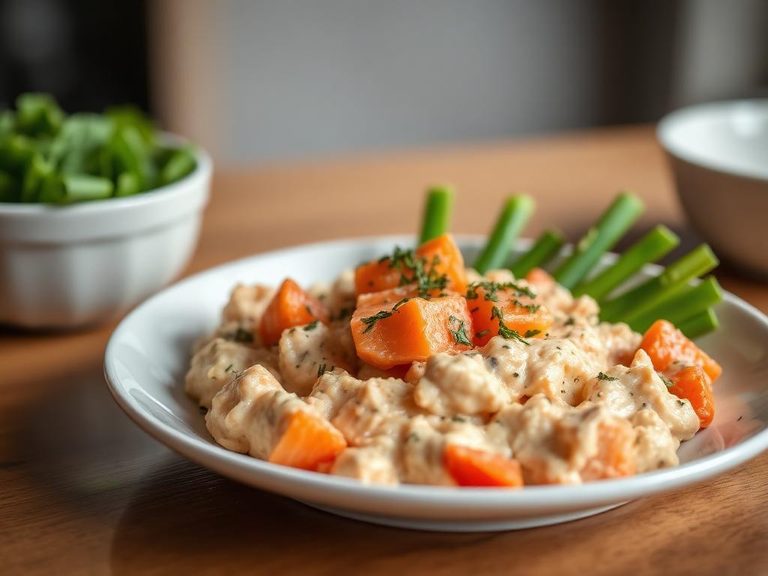
🍽️ Popular dishes


🌍 Where it's eaten
💡 Did you know?
The deep red color of sockeye salmon flesh comes from their diet of krill and plankton, which are rich in carotenoid pigments like astaxanthin.
Full nutrition (USDA data · scales with serving)
| Water | 68.7 g |
| Energy | 153 kcal |
| Energy | 640 kj |
| Protein | 20.5 g |
| Total lipid (fat) | 7.3 g |
| Ash | 2.7 g |
| Carbohydrate, by difference | 0.00 g |
| Fiber, total dietary | 0.00 g |
| Calcium, Ca | 239 mg |
| Iron, Fe | 1.1 mg |
| Magnesium, Mg | 29.0 mg |
| Phosphorus, P | 326 mg |
| Potassium, K | 377 mg |
| Sodium, Na | 75.0 mg |
| Zinc, Zn | 1.0 mg |
| Copper, Cu | 0.08 mg |
| Manganese, Mn | 0.03 mg |
| Selenium, Se | 35.4 ug |
| Vitamin C, total ascorbic acid | 0.00 mg |
| Thiamin | 0.02 mg |
| Riboflavin | 0.19 mg |
| Niacin | 5.5 mg |
| Pantothenic acid | 0.55 mg |
| Vitamin B-6 | 0.30 mg |
| Folate, total | 10.0 ug |
| Folic acid | 0.00 ug |
| Folate, food | 10.0 ug |
| Folate, DFE | 10.0 ug |
| Vitamin B-12 | 0.30 ug |
| Vitamin A, RAE | 53.0 ug |
| Retinol | 53.0 ug |
| Vitamin A, IU | 176 iu |
Fat & fatty acid profile (per 100g)
| Fatty acids, total saturated | 1.6 g |
| SFA 14:0 | 0.36 g |
| SFA 16:0 | 1.1 g |
| SFA 18:0 | 0.20 g |
| Fatty acids, total monounsaturated | 2.8 g |
| MUFA 16:1 | 0.41 g |
| MUFA 18:1 | 1.5 g |
| MUFA 20:1 | 0.92 g |
| MUFA 22:1 | 0.39 g |
| Fatty acids, total polyunsaturated | 2.3 g |
| PUFA 18:2 | 0.09 g |
| PUFA 18:3 | 0.09 g |
| PUFA 18:4 | 0.11 g |
| PUFA 20:4 | 0.37 g |
| PUFA 20:5 n-3 (EPA) | 0.49 g |
| PUFA 22:5 n-3 (DPA) | 0.08 g |
| PUFA 22:6 n-3 (DHA) | 0.66 g |
| Cholesterol | 44.0 mg |
Amino acid profile (per 100g)
| Tryptophan | 0.23 g |
| Threonine | 0.90 g |
| Isoleucine | 0.94 g |
| Leucine | 1.7 g |
| Lysine | 1.9 g |
| Methionine | 0.61 g |
| Cystine | 0.22 g |
| Phenylalanine | 0.80 g |
| Tyrosine | 0.69 g |
| Valine | 1.1 g |
| Arginine | 1.2 g |
| Histidine | 0.60 g |
| Alanine | 1.2 g |
| Aspartic acid | 2.1 g |
| Glutamic acid | 3.1 g |
| Glycine | 0.98 g |
| Proline | 0.72 g |
| Serine | 0.83 g |
FAQ
Are the bones safe to eat?
Yes, the bones are soft, edible, and an excellent source of calcium. They are easily mashed and blended into the salmon.
How is it different from pink salmon?
Sockeye has a deeper red color, firmer texture, and a more pronounced, richer flavor compared to the milder, lighter pink salmon.
Is it high in sodium?
This specific product is 'without salt,' so it is very low in sodium. Always check the label, as many canned salmon products are salted.
Nutrient density (calculated · NRF9.3)
Nutrient Rich Foods index: beneficial nutrients (protein, fiber, vitamins, minerals) minus saturated fat, added sugar & sodium, per 100 kcal.
NRF9.3 index — Fulgoni, Keast & Drewnowski, 2009. Computed from USDA nutrients.
Weight-loss friendliness (composite index)
Energy density 1.53 kcal/g · 54% calories from protein · 0.0 g fiber · 0.0 g sugar per 100 g.
Composite of energy density (Rolls et al., 1999), protein & fiber satiety, minus sugar. A calculated heuristic — ranks satiety-per-calorie, not a clinical measure.
Dietary load (calculated from USDA values)
Potential renal acid load. Positive = acid-forming, negative = alkaline-forming.
Sodium-to-potassium ratio: 0.20 (lower is better — aim for ≤ 1)
Sodium:potassium per WHO potassium guidance. Computed from USDA nutrients.