

Fish oil, herring
Whole food · Fats and Oils

Photo: Wikipedia
Herring oil is a rich, golden-yellow liquid fat rendered from the fatty tissues of herring, a small, oily forage fish. It has a pronounced, savory, and slightly fishy flavor with a smooth, oily mouthfeel, often described as more robust and less refined than milder fish oils. Nutritionally, it is a concentrated source of energy (902 kcal/100g) and is exceptionally high in omega-3 fatty acids, particularly EPA and DHA.
Calorie split: 0% protein · 0% carbs · 100% fat
↓ Full nutrition💚 Why it's loved
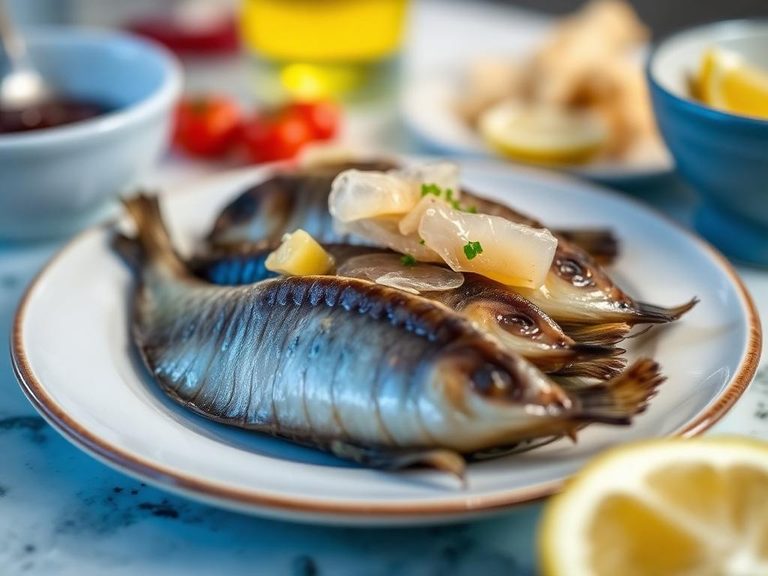
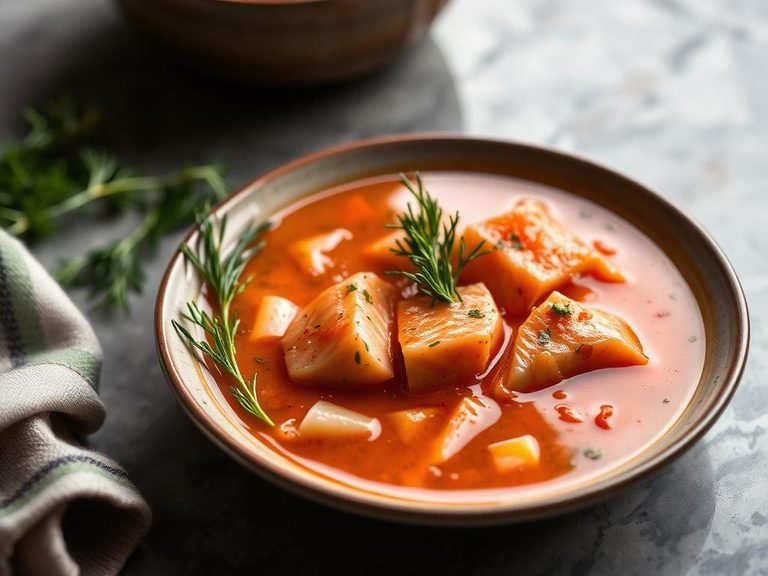
People love herring oil for its potent, authentic marine flavor that is a cornerstone of traditional Nordic and Baltic cuisines, adding depth to pickled herring, soups, and marinades. It's also prized as a potent, natural supplement for its high omega-3 content.
⚠️ Watch-outs & how to enjoy it better
The strong, distinctive fishy taste can be overpowering or off-putting to those unaccustomed to oily fish flavors. As a pure fat, it is extremely calorie-dense, so portion control is key to avoid excessive calorie intake. To counteract this, use it as a flavoring oil in small drizzles or dressings rather than a primary cooking fat, and always store it refrigerated to prevent rancidity.
Key benefits
- Rich source of long-chain omega-3 fatty acids (EPA & DHA).
- Provides a high concentration of vitamin D and vitamin A.
- Contains natural antioxidants like astaxanthin and selenium.
- Traditional component of Nordic and Baltic coastal diets.
- Used as a dietary supplement for heart and brain health.
🍽️ Popular dishes

🌍 Where it's eaten
💡 Did you know?
Historically, herring oil was so vital in Northern Europe that it was used not just for food, but also to fuel lamps and lubricate machinery, earning it the nickname 'liquid gold' in some coastal communities.
Full nutrition (USDA data · scales with serving)
| Water | 0.00 g |
| Energy | 902 kcal |
| Energy | 3774 kj |
| Protein | 0.00 g |
| Total lipid (fat) | 100 g |
| Ash | 0.00 g |
| Carbohydrate, by difference | 0.00 g |
| Fiber, total dietary | 0.00 g |
| Calcium, Ca | 0.00 mg |
| Iron, Fe | 0.00 mg |
| Magnesium, Mg | 0.00 mg |
| Phosphorus, P | 0.00 mg |
| Potassium, K | 0.00 mg |
| Sodium, Na | 0.00 mg |
| Zinc, Zn | 0.00 mg |
| Copper, Cu | 0.00 mg |
| Manganese, Mn | 0.00 mg |
| Selenium, Se | 0.00 ug |
| Vitamin C, total ascorbic acid | 0.00 mg |
| Thiamin | 0.00 mg |
| Riboflavin | 0.00 mg |
| Niacin | 0.00 mg |
| Pantothenic acid | 0.00 mg |
| Vitamin B-6 | 0.00 mg |
| Folate, total | 0.00 ug |
| Folic acid | 0.00 ug |
| Folate, food | 0.00 ug |
| Folate, DFE | 0.00 ug |
| Vitamin B-12 | 0.00 ug |
| Vitamin A, RAE | 0.00 ug |
| Retinol | 0.00 ug |
| Vitamin A, IU | 0.00 iu |
Fat & fatty acid profile (per 100g)
| Fatty acids, total saturated | 21.3 g |
| SFA 12:0 | 0.16 g |
| SFA 14:0 | 7.2 g |
| SFA 16:0 | 11.7 g |
| SFA 18:0 | 0.82 g |
| Fatty acids, total monounsaturated | 56.6 g |
| MUFA 16:1 | 9.6 g |
| MUFA 18:1 | 12.0 g |
| MUFA 20:1 | 13.6 g |
| MUFA 22:1 | 20.6 g |
| Fatty acids, total polyunsaturated | 15.6 g |
| PUFA 18:2 | 1.1 g |
| PUFA 18:3 | 0.76 g |
| PUFA 18:4 | 2.3 g |
| PUFA 20:4 | 0.29 g |
| PUFA 20:5 n-3 (EPA) | 6.3 g |
| PUFA 22:5 n-3 (DPA) | 0.62 g |
| PUFA 22:6 n-3 (DHA) | 4.2 g |
| Cholesterol | 766 mg |
Amino acid profile (per 100g)
Estimated from Fish, tuna, white, canned in oil, without salt, drained solids — USDA does not publish this profile for Fish oil.
| Tryptophan | 0.30 g |
| Threonine | 1.2 g |
| Isoleucine | 1.2 g |
| Leucine | 2.2 g |
| Lysine | 2.4 g |
| Methionine | 0.79 g |
| Cystine | 0.28 g |
| Phenylalanine | 1.0 g |
| Tyrosine | 0.90 g |
| Valine | 1.4 g |
| Arginine | 1.6 g |
| Histidine | 0.78 g |
| Alanine | 1.6 g |
| Aspartic acid | 2.7 g |
| Glutamic acid | 4.0 g |
| Glycine | 1.3 g |
| Proline | 0.94 g |
| Serine | 1.1 g |
FAQ
How is herring oil different from cod liver oil?
Both are fish oils rich in omega-3s, but herring oil typically has a milder flavor and a different ratio of EPA to DHA. Cod liver oil is uniquely high in vitamins A and D, while herring oil provides a more balanced profile of omega-3s with less intense vitamin concentrations.
Can I cook with herring oil at high heat?
It's not recommended for high-heat frying due to its relatively low smoke point and delicate omega-3 fats, which can break down. It's best used as a finishing oil, in dressings, or for low-heat sautéing to preserve its nutritional benefits and flavor.
What does rancid herring oil smell like?
Fresh herring oil has a clean, marine scent. Rancid oil develops a sharp, bitter, paint-like, or strongly 'fishy' odor that is unpleasant. Always store it in a dark, airtight container in the refrigerator and check the smell before use.
Nutrient density (calculated · NRF9.3)
Nutrient Rich Foods index: beneficial nutrients (protein, fiber, vitamins, minerals) minus saturated fat, added sugar & sodium, per 100 kcal.
NRF9.3 index — Fulgoni, Keast & Drewnowski, 2009. Computed from USDA nutrients.
Weight-loss friendliness (composite index)
Energy density 9.02 kcal/g · 0% calories from protein · 0.0 g fiber · 0.0 g sugar per 100 g.
Composite of energy density (Rolls et al., 1999), protein & fiber satiety, minus sugar. A calculated heuristic — ranks satiety-per-calorie, not a clinical measure.
Dietary load (calculated from USDA values)
Potential renal acid load. Positive = acid-forming, negative = alkaline-forming.
Sodium:potassium per WHO potassium guidance. Computed from USDA nutrients.