

Corn chips, flavored (Fritos)
Common food
Photo: Wikipedia
Fritos are golden, crunchy strips of fried corn masa, offering a deeply savory, salty, and toasty corn flavor with an unmistakable, satisfying crunch. Nutritionally, they are a calorie-dense, high-fat snack, delivering over 33 grams of fat and 56 grams of carbohydrates per 100 grams, making them a potent energy source.
Calorie split: 4% protein · 41% carbs · 54% fat
↓ Full nutrition💚 Why it's loved
People adore Fritos for their intensely savory, corn-forward flavor and uniquely hearty crunch that holds up in dips and casseroles. They are a nostalgic, iconic American snack, beloved for their simplicity and role in classic dishes like Frito Pie.
⚠️ Watch-outs & how to enjoy it better
The high fat, sodium, and calorie density can contribute to blood sugar spikes and aren't ideal for low-fat or low-sodium diets. To counteract, practice strict portion control (e.g., a single serving is about 28g) and pair them with protein-rich foods like chili or cheese to slow digestion and enhance satiety.
Key benefits
- Provides quick energy from carbohydrates and fats
- Contains some dietary fiber (4g per 100g)
- Offers a small amount of plant-based protein
- Gluten-free corn-based snack
- Long shelf life and pantry stability
🍽️ Popular dishes
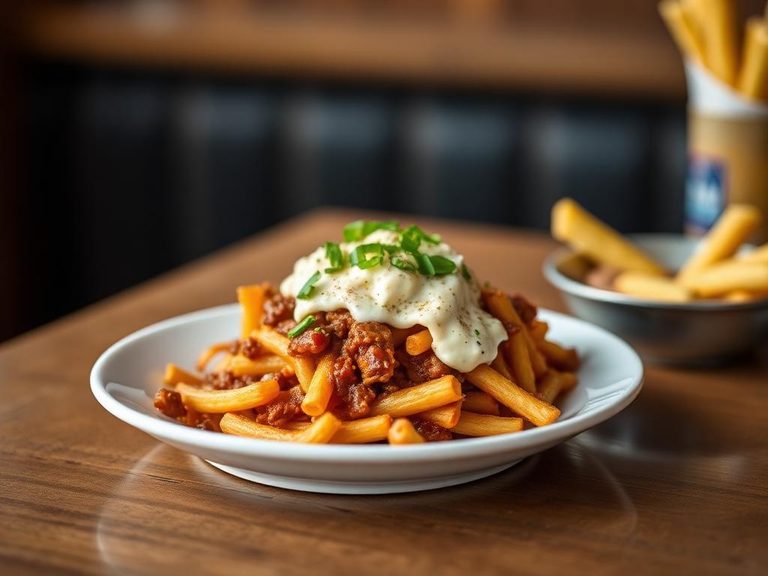
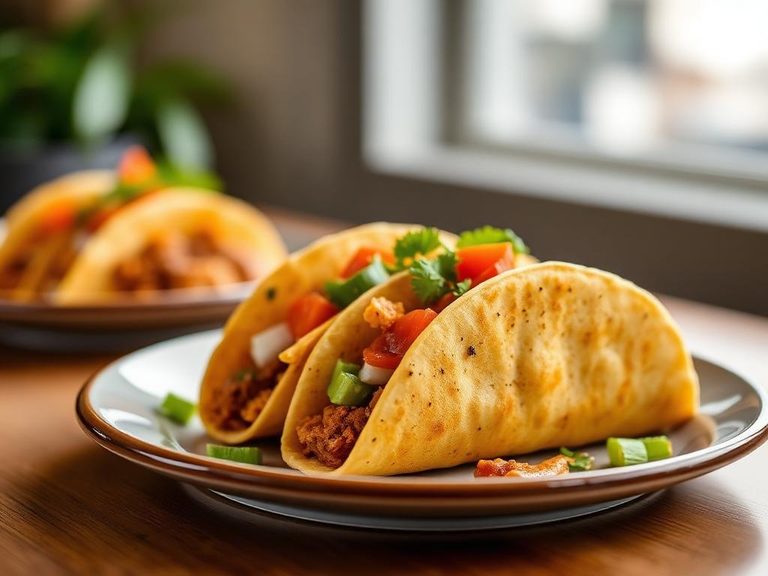
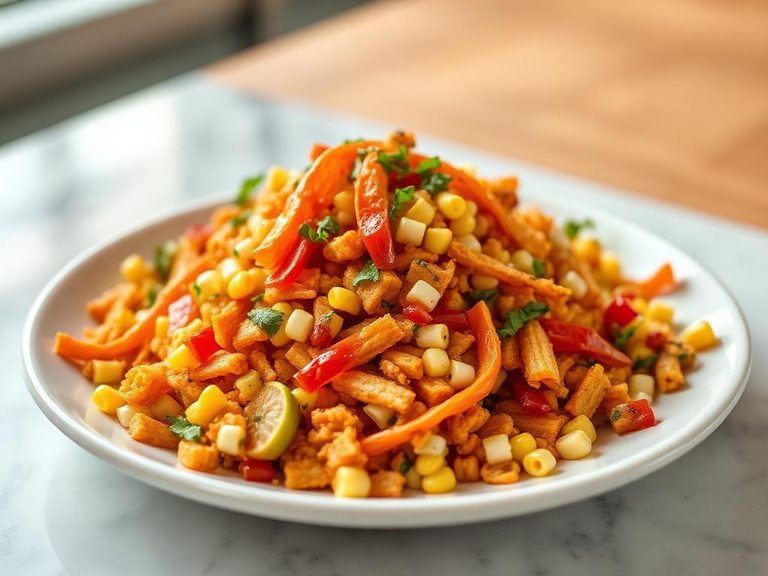
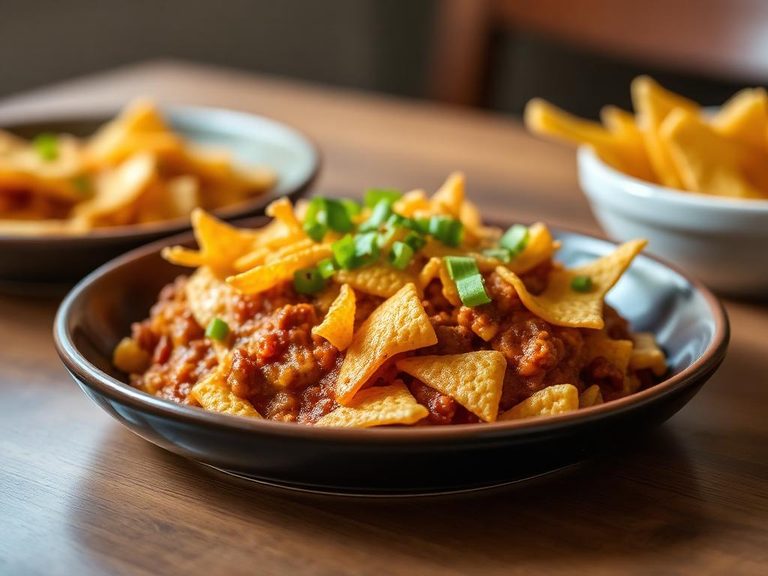
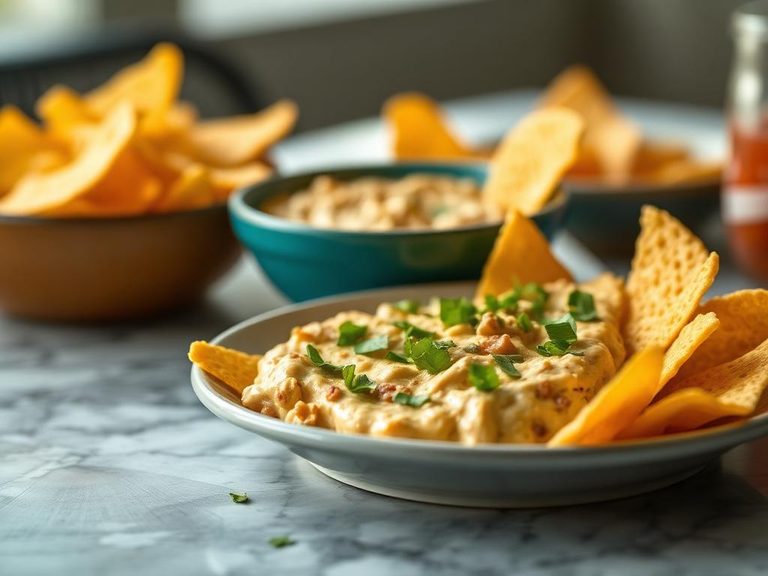
🌍 Where it's eaten
💡 Did you know?
The Frito was invented in 1932 by Charles Elmer Doolin, who bought the recipe for $100 and began selling the chips from his mother's small San Antonio cafe.
Full nutrition (USDA data · scales with serving)
| Water | 1.1 g |
| Energy | 536 kcal |
| Protein | 6.1 g |
| Total lipid (fat) | 33.2 g |
| Carbohydrate, by difference | 57.0 g |
| Fiber, total dietary | 4.0 g |
| Total Sugars | 0.27 g |
| Calcium, Ca | 138 mg |
| Iron, Fe | 1.2 mg |
| Magnesium, Mg | 72.0 mg |
| Phosphorus, P | 193 mg |
| Potassium, K | 143 mg |
| Sodium, Na | 704 mg |
| Zinc, Zn | 1.3 mg |
| Copper, Cu | 0.10 mg |
| Selenium, Se | 7.6 ug |
| Vitamin C, total ascorbic acid | 0.00 mg |
| Thiamin | 0.05 mg |
| Riboflavin | 0.08 mg |
| Niacin | 0.84 mg |
| Vitamin B-6 | 0.17 mg |
| Folate, total | 8.0 ug |
| Folic acid | 0.00 ug |
| Folate, food | 8.0 ug |
| Folate, DFE | 8.0 ug |
| Choline, total | 12.0 mg |
| Vitamin B-12 | 0.00 ug |
| Vitamin B-12, added | 0.00 ug |
| Vitamin A, RAE | 3.0 ug |
| Retinol | 0.00 ug |
| Carotene, beta | 20.0 ug |
| Carotene, alpha | 2.0 ug |
| Cryptoxanthin, beta | 41.0 ug |
| Lycopene | 0.00 ug |
| Lutein + zeaxanthin | 524 ug |
| Vitamin E (alpha-tocopherol) | 7.2 mg |
| Vitamin E, added | 0.00 mg |
| Vitamin D (D2 + D3) | 0.00 ug |
| Vitamin K (phylloquinone) | 6.3 ug |
| Alcohol, ethyl | 0.00 g |
| Caffeine | 0.00 mg |
| Theobromine | 0.00 mg |
Fat & fatty acid profile (per 100g)
| Fatty acids, total saturated | 4.3 g |
| SFA 4:0 | 0.00 g |
| SFA 6:0 | 0.00 g |
| SFA 8:0 | 0.01 g |
| SFA 10:0 | 0.00 g |
| SFA 12:0 | 0.00 g |
| SFA 14:0 | 0.01 g |
| SFA 16:0 | 3.5 g |
| SFA 18:0 | 0.55 g |
| Fatty acids, total monounsaturated | 9.1 g |
| MUFA 16:1 | 0.03 g |
| MUFA 18:1 | 8.9 g |
| MUFA 20:1 | 0.10 g |
| MUFA 22:1 | 0.00 g |
| Fatty acids, total polyunsaturated | 16.4 g |
| PUFA 18:2 | 16.1 g |
| PUFA 18:3 | 0.28 g |
| PUFA 18:4 | 0.00 g |
| PUFA 20:4 | 0.01 g |
| PUFA 20:5 n-3 (EPA) | 0.01 g |
| PUFA 22:5 n-3 (DPA) | 0.00 g |
| PUFA 22:6 n-3 (DHA) | 0.00 g |
| Cholesterol | 0.00 mg |
Amino acid profile (per 100g)
Estimated from Snacks, corn-based, extruded, chips, plain — USDA does not publish this profile for Corn chips.
| Tryptophan | 0.05 g |
| Threonine | 0.25 g |
| Isoleucine | 0.23 g |
| Leucine | 0.80 g |
| Lysine | 0.18 g |
| Methionine | 0.14 g |
| Cystine | 0.12 g |
| Phenylalanine | 0.32 g |
| Tyrosine | 0.27 g |
| Valine | 0.33 g |
| Arginine | 0.33 g |
| Histidine | 0.20 g |
| Alanine | 0.49 g |
| Aspartic acid | 0.46 g |
| Glutamic acid | 1.2 g |
| Glycine | 0.27 g |
| Proline | 0.57 g |
| Serine | 0.31 g |
FAQ
Are Fritos gluten-free?
Yes, classic Fritos are made from corn, salt, and oil, and are certified gluten-free. However, always check the packaging for specific flavor varieties or cross-contamination warnings.
Why are Fritos sometimes called 'corn chips' instead of 'tortilla chips'?
Fritos are made from ground corn (masa) that is extruded and fried, creating a dense, curled strip. Tortilla chips are typically cut from a thin, flat corn tortilla and fried, resulting in a different texture and shape.
What is the best way to store Fritos to keep them fresh?
Store them in their original sealed bag or an airtight container at room temperature. Once opened, they can lose their crunch within a few days if exposed to air and humidity.
Nutrient density (calculated · NRF9.3)
Nutrient Rich Foods index: beneficial nutrients (protein, fiber, vitamins, minerals) minus saturated fat, added sugar & sodium, per 100 kcal.
NRF9.3 index — Fulgoni, Keast & Drewnowski, 2009. Computed from USDA nutrients.
Weight-loss friendliness (composite index)
Energy density 5.36 kcal/g · 5% calories from protein · 4.0 g fiber · 0.3 g sugar per 100 g.
Composite of energy density (Rolls et al., 1999), protein & fiber satiety, minus sugar. A calculated heuristic — ranks satiety-per-calorie, not a clinical measure.
Dietary load (calculated from USDA values)
Potential renal acid load. Positive = acid-forming, negative = alkaline-forming.
Sodium-to-potassium ratio: 4.92 (lower is better — aim for ≤ 1)
Sodium:potassium per WHO potassium guidance. Computed from USDA nutrients.