

Chicken, capons, giblets, raw
Whole food · Poultry Products

Photo: Wikipedia
Chicken capon giblets are the edible internal organs—typically heart, liver, gizzard, and neck—of a capon, a castrated rooster prized for its tender, flavorful meat. They offer a rich, mineral-forward taste with a varied texture, from the firm chew of the gizzard to the creamy, iron-rich liver. Nutritionally, they are a powerhouse of high-quality protein and essential minerals like iron and B12.
Calorie split: 58% protein · 5% carbs · 37% fat
↓ Full nutrition💚 Why it's loved
People love giblets for their deep, savory umami flavor that forms the soul of traditional gravies and stuffings. They are a cherished, economical way to add profound richness and a taste of heritage to holiday meals and home cooking.
⚠️ Watch-outs & how to enjoy it better
The strong, mineral-rich taste of liver can be off-putting to some, and giblets are high in dietary cholesterol, so those monitoring their intake should consume them in moderation. To balance, pair them with fiber-rich vegetables like roasted Brussels sprouts or a leafy green salad, and consider using them as a flavoring component in sauces rather than the main protein.
Key benefits
- Excellent source of complete, high-quality protein
- Rich in heme iron, which is easily absorbed by the body
- Good source of B vitamins, especially B12 and riboflavin
- Contains essential minerals like selenium and zinc
- Low in carbohydrates and sugar
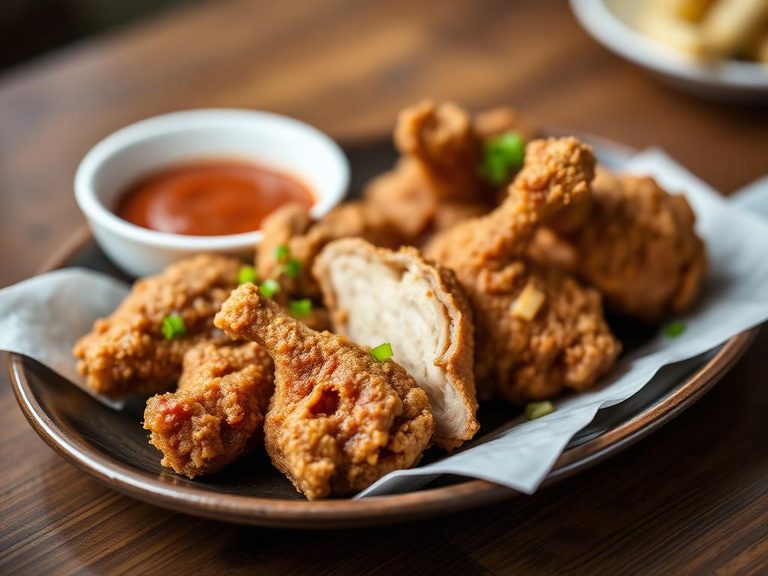
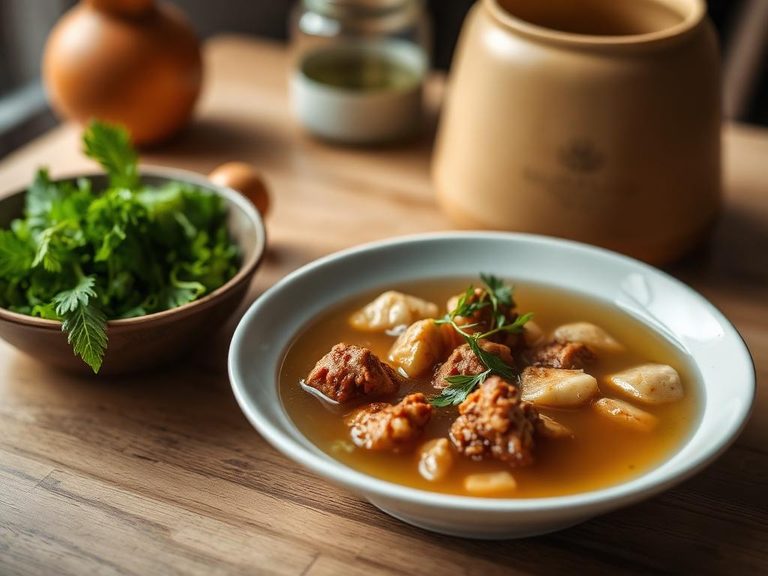
🍽️ Popular dishes
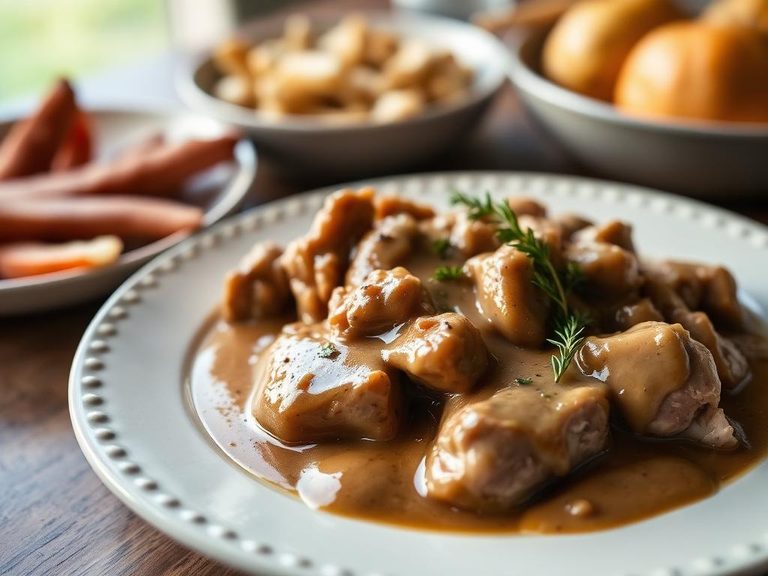
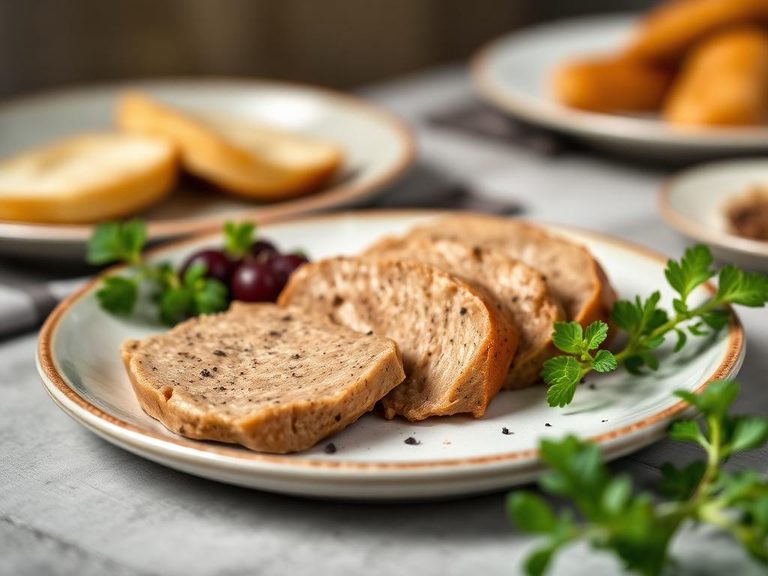
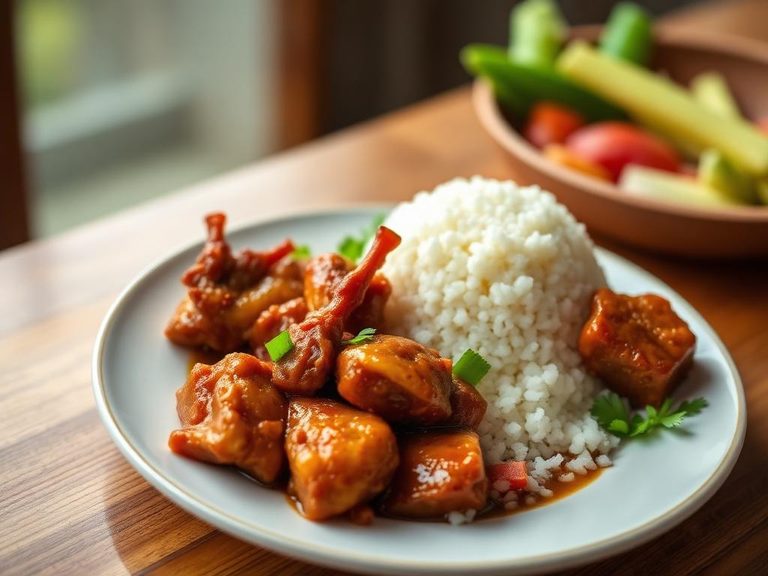
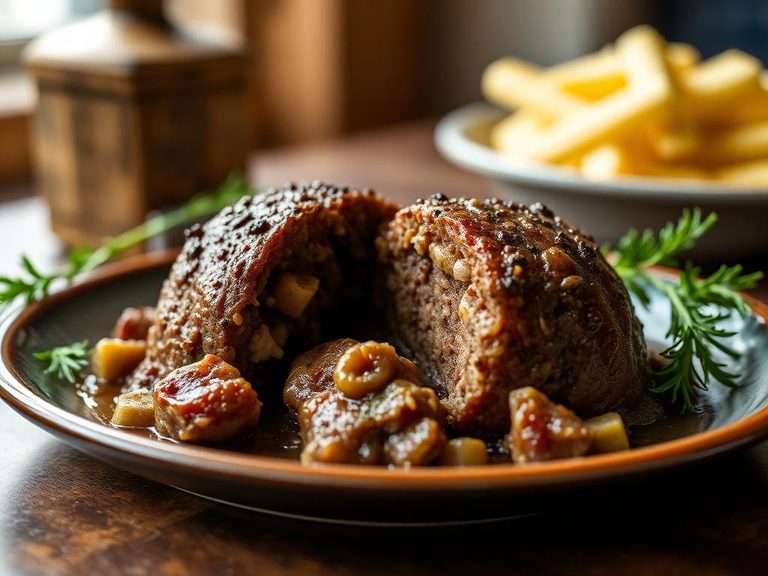
🌍 Where it's eaten
💡 Did you know?
A capon is created by surgically removing the testes of a young rooster, a process called caponization, which redirects the bird's energy from aggression to fat and muscle development, resulting in exceptionally tender and succulent meat.
Full nutrition (USDA data · scales with serving)
| Water | 74.1 g |
| Energy | 130 kcal |
| Energy | 544 kj |
| Protein | 18.3 g |
| Total lipid (fat) | 5.2 g |
| Ash | 1.0 g |
| Carbohydrate, by difference | 1.4 g |
| Fiber, total dietary | 0.00 g |
| Calcium, Ca | 10.0 mg |
| Iron, Fe | 6.3 mg |
| Magnesium, Mg | 18.0 mg |
| Phosphorus, P | 207 mg |
| Potassium, K | 226 mg |
| Sodium, Na | 77.0 mg |
| Zinc, Zn | 3.4 mg |
| Copper, Cu | 0.27 mg |
| Manganese, Mn | 0.16 mg |
| Selenium, Se | 55.3 ug |
| Vitamin C, total ascorbic acid | 18.4 mg |
| Thiamin | 0.10 mg |
| Riboflavin | 1.1 mg |
| Niacin | 7.0 mg |
| Pantothenic acid | 3.6 mg |
| Vitamin B-6 | 0.47 mg |
| Folate, total | 394 ug |
| Folic acid | 0.00 ug |
| Folate, food | 394 ug |
| Folate, DFE | 394 ug |
| Vitamin B-12 | 12.9 ug |
| Vitamin A, RAE | 4374 ug |
| Retinol | 4374 ug |
| Vitamin A, IU | 14566 iu |
Fat & fatty acid profile (per 100g)
| Fatty acids, total saturated | 1.6 g |
| SFA 10:0 | 0.00 g |
| SFA 12:0 | 0.00 g |
| SFA 14:0 | 0.02 g |
| SFA 16:0 | 0.91 g |
| SFA 18:0 | 0.60 g |
| Fatty acids, total monounsaturated | 1.3 g |
| MUFA 16:1 | 0.18 g |
| MUFA 18:1 | 1.1 g |
| MUFA 20:1 | 0.01 g |
| MUFA 22:1 | 0.00 g |
| Fatty acids, total polyunsaturated | 1.2 g |
| PUFA 18:2 | 0.81 g |
| PUFA 18:3 | 0.03 g |
| PUFA 20:4 | 0.28 g |
| PUFA 20:5 n-3 (EPA) | 0.01 g |
| PUFA 22:5 n-3 (DPA) | 0.00 g |
| PUFA 22:6 n-3 (DHA) | 0.04 g |
| Cholesterol | 292 mg |
Amino acid profile (per 100g)
| Tryptophan | 0.22 g |
| Threonine | 0.83 g |
| Isoleucine | 0.93 g |
| Leucine | 1.5 g |
| Lysine | 1.3 g |
| Methionine | 0.45 g |
| Cystine | 0.24 g |
| Phenylalanine | 0.84 g |
| Tyrosine | 0.61 g |
| Valine | 1.0 g |
| Arginine | 1.2 g |
| Histidine | 0.44 g |
| Alanine | 0.93 g |
| Aspartic acid | 1.7 g |
| Glutamic acid | 2.7 g |
| Glycine | 1.0 g |
| Proline | 0.93 g |
| Serine | 0.80 g |
FAQ
What exactly are giblets?
Giblets are the edible internal organs of poultry. For a chicken or capon, this typically includes the heart, liver, gizzard, and often the neck. They are usually sold separately or packaged inside the bird's cavity.
How do I clean and prepare them?
Rinse them thoroughly under cold water. The liver should be trimmed of any green bile sacs or connective tissue. The gizzard must be cut open and the inner yellow lining peeled away and discarded. The heart and neck require little prep beyond rinsing.
Are giblets safe to eat?
Yes, when handled and cooked properly. They should be kept refrigerated or frozen, and cooked to an internal temperature of 165°F (74°C) to ensure safety, just like other poultry meat.
Nutrient density (calculated · NRF9.3)
Nutrient Rich Foods index: beneficial nutrients (protein, fiber, vitamins, minerals) minus saturated fat, added sugar & sodium, per 100 kcal.
NRF9.3 index — Fulgoni, Keast & Drewnowski, 2009. Computed from USDA nutrients.
Weight-loss friendliness (composite index)
Energy density 1.30 kcal/g · 56% calories from protein · 0.0 g fiber · 0.0 g sugar per 100 g.
Composite of energy density (Rolls et al., 1999), protein & fiber satiety, minus sugar. A calculated heuristic — ranks satiety-per-calorie, not a clinical measure.
Dietary load (calculated from USDA values)
Potential renal acid load. Positive = acid-forming, negative = alkaline-forming.
Sodium-to-potassium ratio: 0.34 (lower is better — aim for ≤ 1)
Sodium:potassium per WHO potassium guidance. Computed from USDA nutrients.