

Chicken, broilers or fryers, wing, meat only, cooked, fried
Whole food · Poultry Products
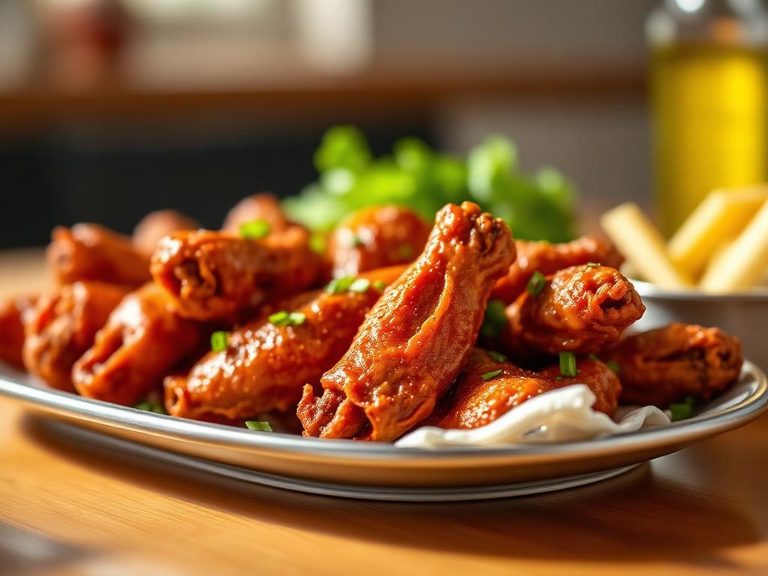
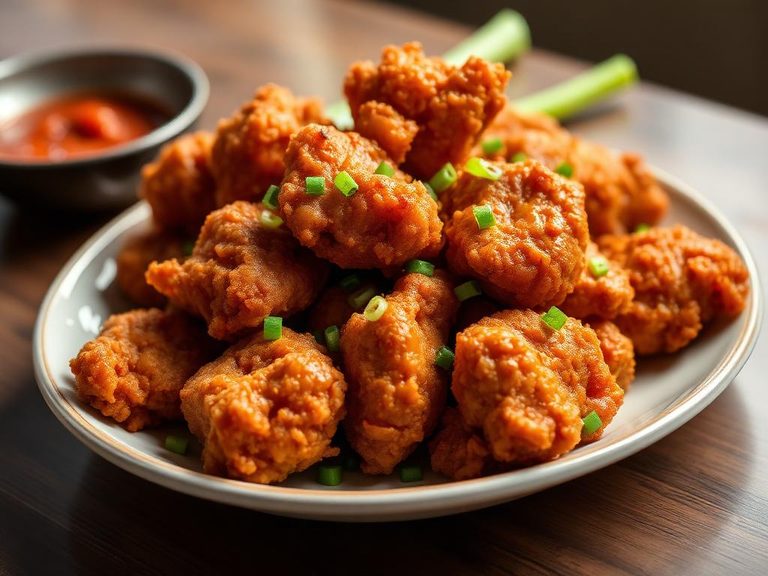
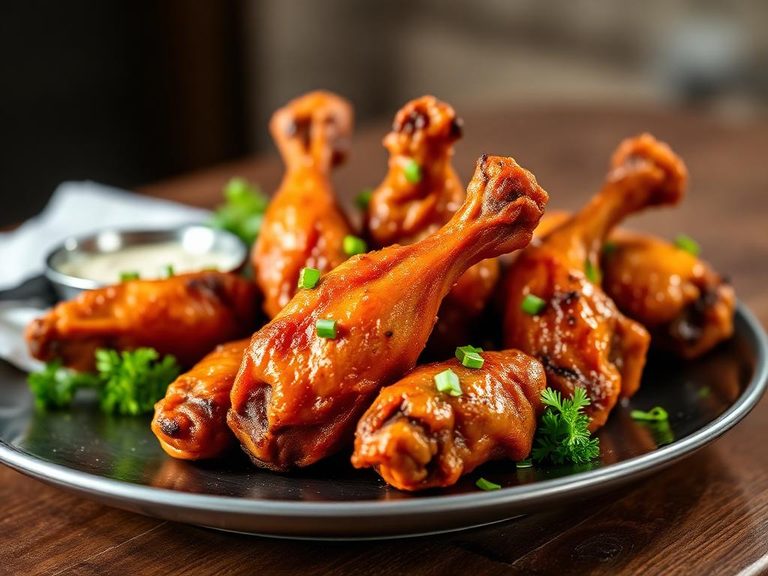
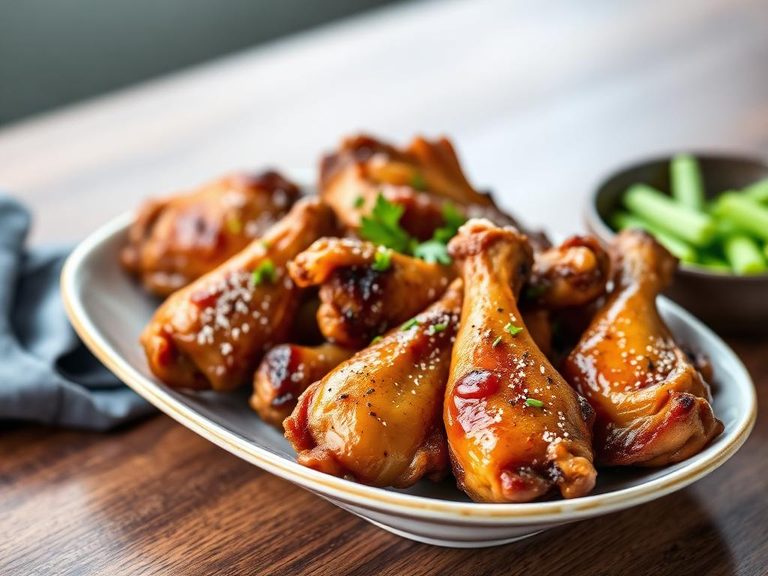
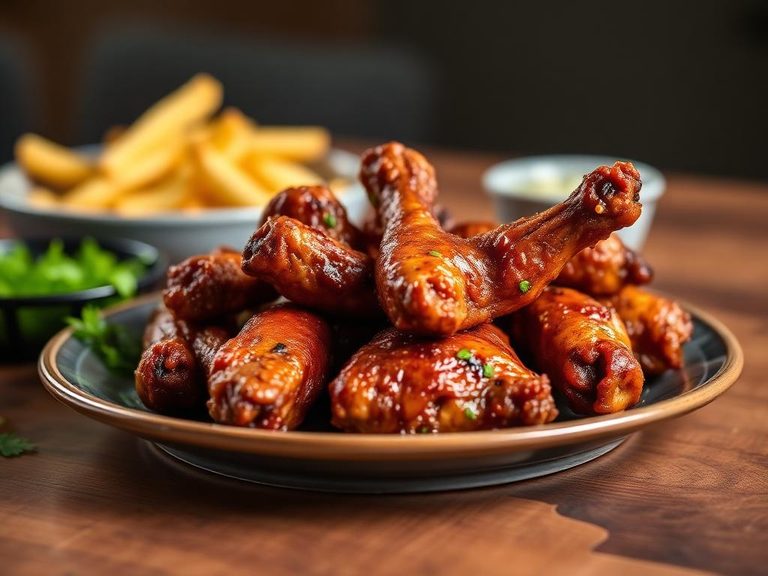
This is the lean, meaty portion of a chicken wing, deep-fried until the exterior is golden and crisp while the interior remains juicy and tender. It delivers a concentrated, savory chicken flavor with a satisfying, slightly chewy texture that is a hallmark of fried poultry. With over 30 grams of protein per 100 grams and virtually no carbohydrates, it is a high-protein, low-carb staple for many diets.
Calorie split: 59% protein · 0% carbs · 41% fat
↓ Full nutrition💚 Why it's loved
People love fried chicken wings for their irresistible combination of crispy skin and succulent meat, often enhanced by bold sauces and seasonings. They are a cultural icon, central to social gatherings, sports events, and comfort food traditions worldwide.
⚠️ Watch-outs & how to enjoy it better
The deep-frying process adds significant saturated fat and calories, which can be a concern for those managing heart health or weight. To counteract this, pair with a large portion of non-starchy vegetables (like celery sticks or a side salad) and choose a vinegar-based or dry-rub sauce over sugary glazes to reduce added sugars. Always practice portion control, limiting intake to 3-4 wings per serving.
Key benefits
- Excellent source of complete protein for muscle maintenance and growth.
- Very low in carbohydrates, making it suitable for keto and low-carb diets.
- Rich in essential minerals like selenium and phosphorus.
- Provides a good source of niacin (vitamin B3) for energy metabolism.
- Highly satiating due to its protein and fat content.
🍽️ Popular dishes
🌍 Where it's eaten
💡 Did you know?
The invention of the Buffalo wing is credited to Teressa Bellissimo at the Anchor Bar in Buffalo, New York, in 1964, who created them as a late-night snack for her son and his friends.
Full nutrition (USDA data · scales with serving)
| Water | 59.8 g |
| Energy | 211 kcal |
| Energy | 883 kj |
| Protein | 30.1 g |
| Total lipid (fat) | 9.2 g |
| Ash | 0.87 g |
| Carbohydrate, by difference | 0.00 g |
| Fiber, total dietary | 0.00 g |
| Calcium, Ca | 15.0 mg |
| Iron, Fe | 1.1 mg |
| Magnesium, Mg | 21.0 mg |
| Phosphorus, P | 164 mg |
| Potassium, K | 208 mg |
| Sodium, Na | 91.0 mg |
| Zinc, Zn | 2.1 mg |
| Copper, Cu | 0.05 mg |
| Manganese, Mn | 0.02 mg |
| Selenium, Se | 25.4 ug |
| Vitamin C, total ascorbic acid | 0.00 mg |
| Thiamin | 0.05 mg |
| Riboflavin | 0.13 mg |
| Niacin | 7.2 mg |
| Pantothenic acid | 0.99 mg |
| Vitamin B-6 | 0.59 mg |
| Folate, total | 4.0 ug |
| Folic acid | 0.00 ug |
| Folate, food | 4.0 ug |
| Folate, DFE | 4.0 ug |
| Vitamin B-12 | 0.34 ug |
| Retinol | 18.0 ug |
| Vitamin A, IU | 61.0 iu |
| Vitamin D (D2 + D3), International Units | 3.0 iu |
| Vitamin D (D2 + D3) | 0.10 ug |
| Vitamin D3 (cholecalciferol) | 0.10 ug |
Fat & fatty acid profile (per 100g)
| Fatty acids, total saturated | 2.5 g |
| SFA 10:0 | 0.00 g |
| SFA 12:0 | 0.01 g |
| SFA 14:0 | 0.07 g |
| SFA 16:0 | 1.6 g |
| SFA 18:0 | 0.72 g |
| Fatty acids, total monounsaturated | 3.1 g |
| MUFA 16:1 | 0.28 g |
| MUFA 18:1 | 2.7 g |
| MUFA 20:1 | 0.04 g |
| MUFA 22:1 | 0.00 g |
| Fatty acids, total polyunsaturated | 2.1 g |
| PUFA 18:2 | 1.6 g |
| PUFA 18:3 | 0.08 g |
| PUFA 20:4 | 0.17 g |
| PUFA 20:5 n-3 (EPA) | 0.02 g |
| PUFA 22:5 n-3 (DPA) | 0.04 g |
| PUFA 22:6 n-3 (DHA) | 0.07 g |
| Cholesterol | 84.0 mg |
Amino acid profile (per 100g)
| Tryptophan | 0.35 g |
| Threonine | 1.3 g |
| Isoleucine | 1.6 g |
| Leucine | 2.3 g |
| Lysine | 2.6 g |
| Methionine | 0.83 g |
| Cystine | 0.39 g |
| Phenylalanine | 1.2 g |
| Tyrosine | 1.0 g |
| Valine | 1.5 g |
| Arginine | 1.8 g |
| Histidine | 0.94 g |
| Alanine | 1.6 g |
| Aspartic acid | 2.7 g |
| Glutamic acid | 4.5 g |
| Glycine | 1.5 g |
| Proline | 1.2 g |
| Serine | 1.0 g |
FAQ
Is fried chicken wing meat healthier than the skin?
Yes, the meat itself is leaner and lower in fat than the skin, which contains most of the saturated fat and calories from frying. Removing the skin reduces the fat content significantly.
Can I make fried chicken wings healthier at home?
Absolutely. Use an air fryer or oven-bake them to reduce oil usage. Marinate in herbs and spices instead of sugary sauces, and pair with a side of vegetables to balance the meal.
How does the protein content compare to other chicken cuts?
Fried wing meat has a slightly higher protein density per 100g than breast meat due to lower water content, but it also has more fat. It's an excellent protein source, especially for those who enjoy the richer flavor.
Nutrient density (calculated · NRF9.3)
Nutrient Rich Foods index: beneficial nutrients (protein, fiber, vitamins, minerals) minus saturated fat, added sugar & sodium, per 100 kcal.
NRF9.3 index — Fulgoni, Keast & Drewnowski, 2009. Computed from USDA nutrients.
Weight-loss friendliness (composite index)
Energy density 2.11 kcal/g · 57% calories from protein · 0.0 g fiber · 0.0 g sugar per 100 g.
Composite of energy density (Rolls et al., 1999), protein & fiber satiety, minus sugar. A calculated heuristic — ranks satiety-per-calorie, not a clinical measure.
Dietary load (calculated from USDA values)
Potential renal acid load. Positive = acid-forming, negative = alkaline-forming.
Sodium-to-potassium ratio: 0.44 (lower is better — aim for ≤ 1)
Sodium:potassium per WHO potassium guidance. Computed from USDA nutrients.