

Brussels sprouts, frozen, cooked, fat added
Common food

Photo: Wikipedia
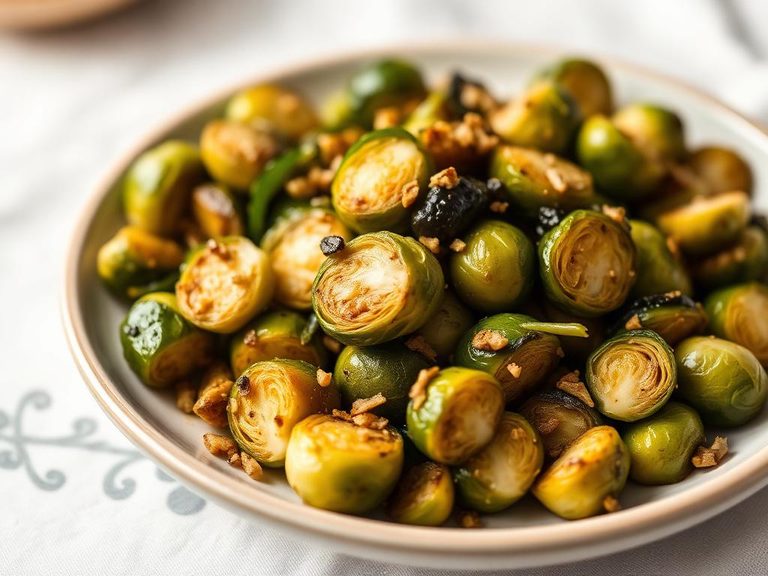
Frozen, cooked Brussels sprouts with added fat offer a tender, slightly caramelized bite, balancing their signature earthy, nutty flavor with a richer mouthfeel. This preparation method preserves the vegetable's compact, cabbage-like structure while softening its intensity. Nutritionally, they are a notable source of fiber and vitamin K, with a modest calorie count.
Calorie split: 19% protein · 44% carbs · 36% fat
↓ Full nutrition💚 Why it's loved
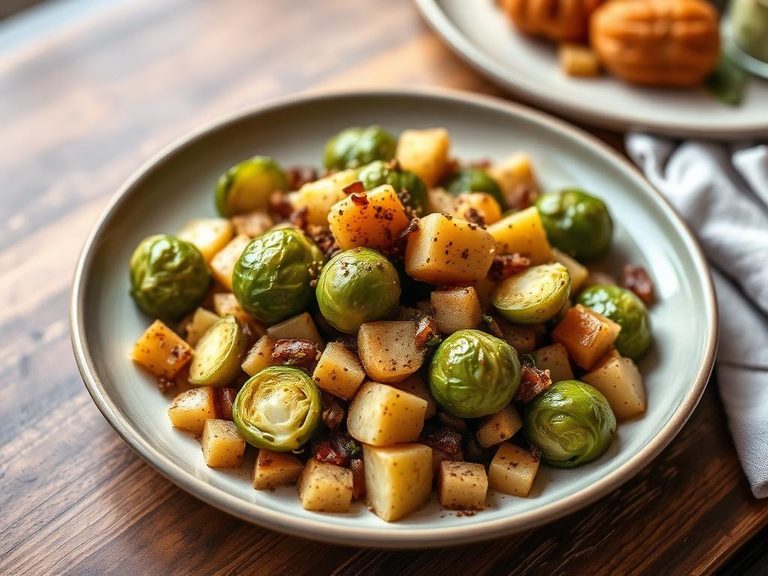
People love them for their deep, savory flavor that caramelizes beautifully when roasted or sautéed, transforming from bitter to sweet. They are incredibly versatile, easily pairing with bacon, balsamic, or cheese, making them a staple in holiday feasts and weeknight dinners alike.
⚠️ Watch-outs & how to enjoy it better
Some find the sulfurous compounds can cause digestive discomfort or bloating, and the added fat increases calorie density. To counteract, start with smaller portions, pair with digestive-friendly spices like ginger or fennel, and opt for steaming or boiling with minimal added fat if sensitive.
Key benefits
- High in dietary fiber (4g per 100g)
- Good source of plant-based protein (3.53g per 100g)
- Rich in vitamin K and vitamin C
- Contains antioxidants like kaempferol
- Convenient and reduces food waste
🍽️ Popular dishes
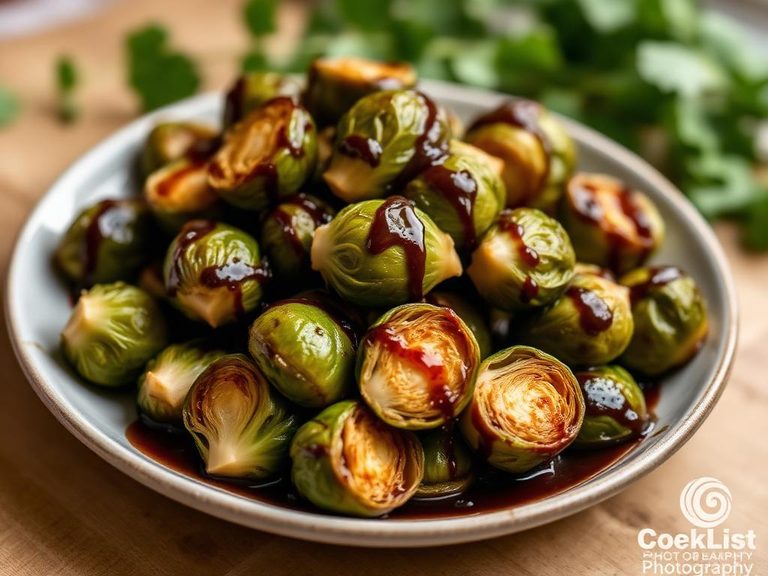
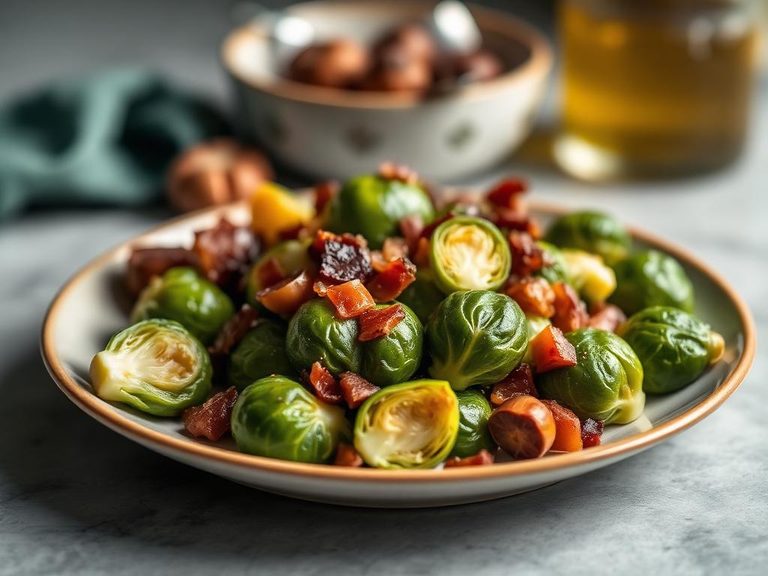
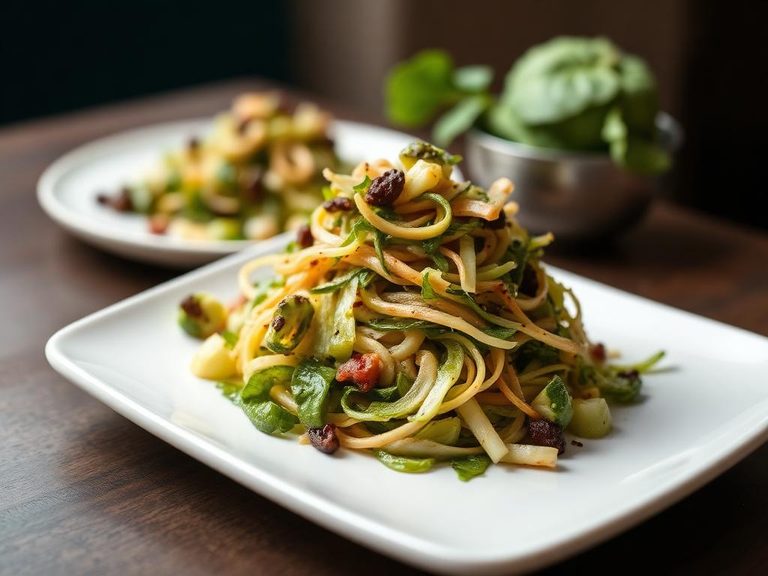
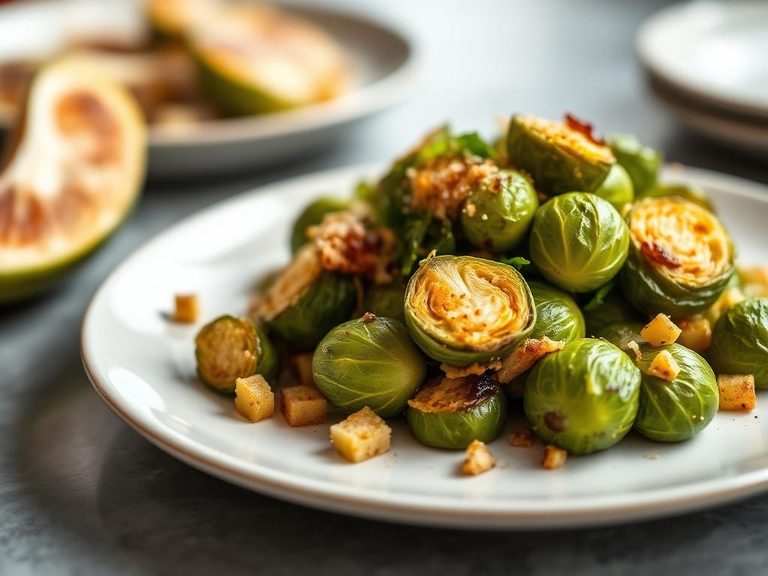
🌍 Where it's eaten
💡 Did you know?
Brussels sprouts are a cultivar group of wild cabbage, and their name comes from their popularity in Brussels, Belgium, where they were cultivated as early as the 16th century.
Full nutrition (USDA data · scales with serving)
| Water | 84.3 g |
| Energy | 64.0 kcal |
| Protein | 3.5 g |
| Total lipid (fat) | 2.9 g |
| Carbohydrate, by difference | 8.1 g |
| Fiber, total dietary | 4.0 g |
| Total Sugars | 2.0 g |
| Calcium, Ca | 26.0 mg |
| Iron, Fe | 0.47 mg |
| Magnesium, Mg | 17.0 mg |
| Phosphorus, P | 54.0 mg |
| Potassium, K | 281 mg |
| Sodium, Na | 136 mg |
| Zinc, Zn | 0.23 mg |
| Copper, Cu | 0.03 mg |
| Selenium, Se | 0.60 ug |
| Vitamin C, total ascorbic acid | 44.2 mg |
| Thiamin | 0.10 mg |
| Riboflavin | 0.11 mg |
| Niacin | 0.52 mg |
| Vitamin B-6 | 0.30 mg |
| Folate, total | 98.0 ug |
| Folic acid | 0.00 ug |
| Folate, food | 98.0 ug |
| Folate, DFE | 98.0 ug |
| Choline, total | 17.8 mg |
| Vitamin B-12 | 0.00 ug |
| Vitamin B-12, added | 0.00 ug |
| Vitamin A, RAE | 56.0 ug |
| Retinol | 11.0 ug |
| Carotene, beta | 542 ug |
| Carotene, alpha | 0.00 ug |
| Cryptoxanthin, beta | 0.00 ug |
| Lycopene | 0.00 ug |
| Lutein + zeaxanthin | 1492 ug |
| Vitamin E (alpha-tocopherol) | 0.88 mg |
| Vitamin E, added | 0.00 mg |
| Vitamin D (D2 + D3) | 0.00 ug |
| Vitamin K (phylloquinone) | 189 ug |
| Alcohol, ethyl | 0.00 g |
| Caffeine | 0.00 mg |
| Theobromine | 0.00 mg |
Fat & fatty acid profile (per 100g)
| Fatty acids, total saturated | 0.74 g |
| SFA 4:0 | 0.02 g |
| SFA 6:0 | 0.01 g |
| SFA 8:0 | 0.01 g |
| SFA 10:0 | 0.02 g |
| SFA 12:0 | 0.02 g |
| SFA 14:0 | 0.07 g |
| SFA 16:0 | 0.43 g |
| SFA 18:0 | 0.14 g |
| Fatty acids, total monounsaturated | 0.93 g |
| MUFA 16:1 | 0.02 g |
| MUFA 18:1 | 0.89 g |
| MUFA 20:1 | 0.01 g |
| MUFA 22:1 | 0.00 g |
| Fatty acids, total polyunsaturated | 0.92 g |
| PUFA 18:2 | 0.71 g |
| PUFA 18:3 | 0.21 g |
| PUFA 18:4 | 0.00 g |
| PUFA 20:4 | 0.00 g |
| PUFA 20:5 n-3 (EPA) | 0.00 g |
| PUFA 22:5 n-3 (DPA) | 0.00 g |
| PUFA 22:6 n-3 (DHA) | 0.00 g |
| Cholesterol | 2.0 mg |
Amino acid profile (per 100g)
Estimated from Brussels sprouts, cooked, boiled, drained, with salt — USDA does not publish this profile for Brussels sprouts.
| Tryptophan | 0.03 g |
| Threonine | 0.09 g |
| Isoleucine | 0.10 g |
| Leucine | 0.11 g |
| Lysine | 0.12 g |
| Methionine | 0.02 g |
| Cystine | 0.02 g |
| Phenylalanine | 0.07 g |
| Valine | 0.12 g |
| Arginine | 0.15 g |
| Histidine | 0.06 g |
FAQ
Are frozen Brussels sprouts as nutritious as fresh?
Yes, they are often equally nutritious. Flash-freezing shortly after harvest locks in vitamins and minerals, sometimes preserving them better than fresh sprouts that have been stored for days.
How can I reduce the bitterness in Brussels sprouts?
Cooking methods like roasting or sautéing with fat (like olive oil or bacon) caramelize their natural sugars, reducing bitterness. Adding a touch of sweetness, such as balsamic vinegar or maple syrup, also helps balance the flavor.
Can Brussels sprouts cause gas or bloating?
Yes, they contain raffinose, a complex sugar that can be hard to digest. Soaking before cooking, chewing thoroughly, and gradually increasing intake can help minimize digestive discomfort.
Nutrient density (calculated · NRF9.3)
Nutrient Rich Foods index: beneficial nutrients (protein, fiber, vitamins, minerals) minus saturated fat, added sugar & sodium, per 100 kcal.
NRF9.3 index — Fulgoni, Keast & Drewnowski, 2009. Computed from USDA nutrients.
Weight-loss friendliness (composite index)
Energy density 0.64 kcal/g · 22% calories from protein · 4.0 g fiber · 2.0 g sugar per 100 g.
Composite of energy density (Rolls et al., 1999), protein & fiber satiety, minus sugar. A calculated heuristic — ranks satiety-per-calorie, not a clinical measure.
Dietary load (calculated from USDA values)
Potential renal acid load. Positive = acid-forming, negative = alkaline-forming.
Sodium-to-potassium ratio: 0.48 (lower is better — aim for ≤ 1)
Sodium:potassium per WHO potassium guidance. Computed from USDA nutrients.