

Brussels sprouts, fresh, cooked, no added fat
Common food

Photo: Wikipedia
Brussels sprouts are miniature, cabbage-like buds from the Brassica family, typically steamed or roasted to a tender-crisp texture with a nutty, slightly sweet, and earthy flavor. Nutritionally, they are a low-calorie powerhouse, delivering a solid 3.51 grams of protein and an impressive 3.9 grams of fiber per 100 grams, all while containing virtually no fat.
Calorie split: 26% protein · 69% carbs · 5% fat
↓ Full nutrition💚 Why it's loved
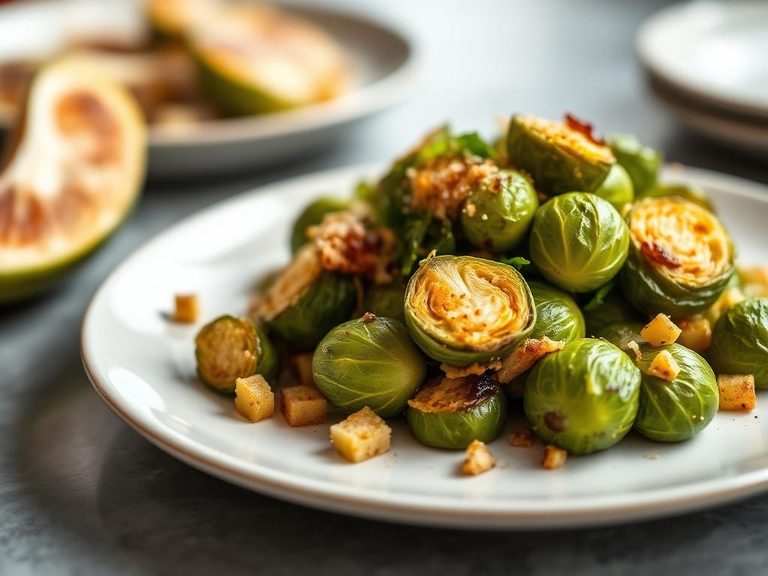
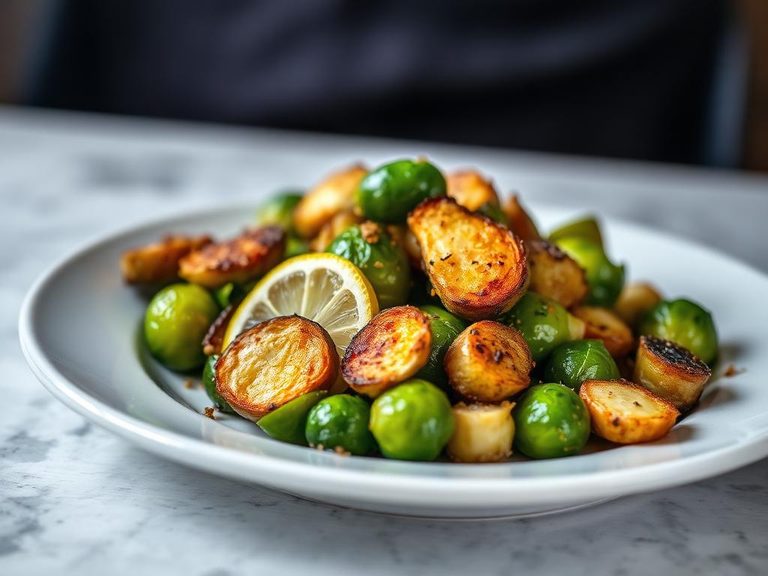
People love them for their transformation when roasted—caramelized edges bring out a deep, nutty sweetness that contrasts beautifully with their tender core. They are also celebrated for their versatility, easily starring in hearty winter salads, pasta dishes, or as a simple, savory side.
⚠️ Watch-outs & how to enjoy it better
When overcooked, they can develop a strong sulfurous odor and bitter taste, which is a common complaint. For those sensitive to FODMAPs (fermentable carbs), the fiber and fructans in Brussels sprouts may cause digestive discomfort; starting with a smaller portion and ensuring they are thoroughly cooked can help.
Key benefits
- Excellent source of dietary fiber for digestive health.
- High in vitamin K, essential for blood clotting and bone health.
- Rich in vitamin C, a potent antioxidant.
- Provides plant-based protein with minimal calories.
- Contains glucosinolates, compounds studied for their potential health benefits.
🍽️ Popular dishes
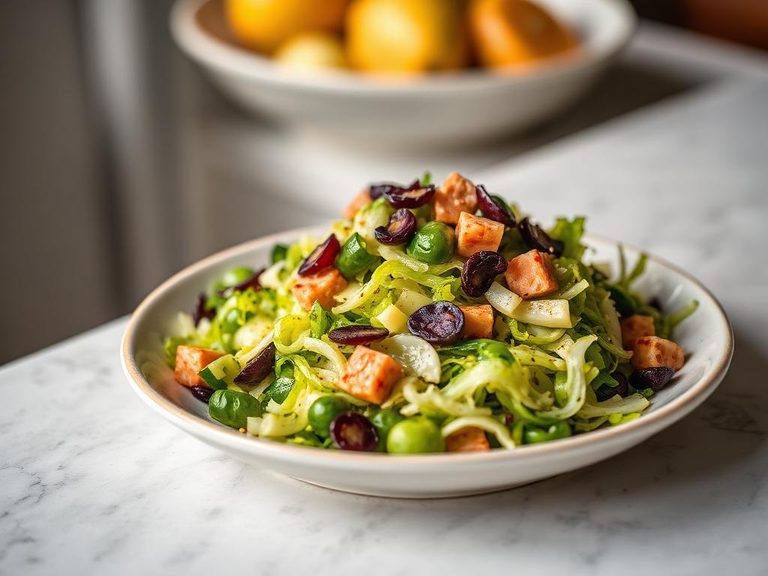
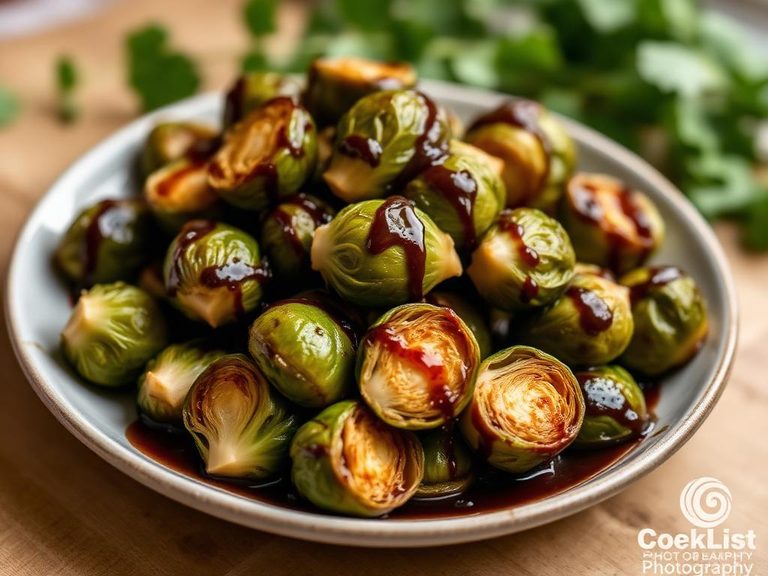
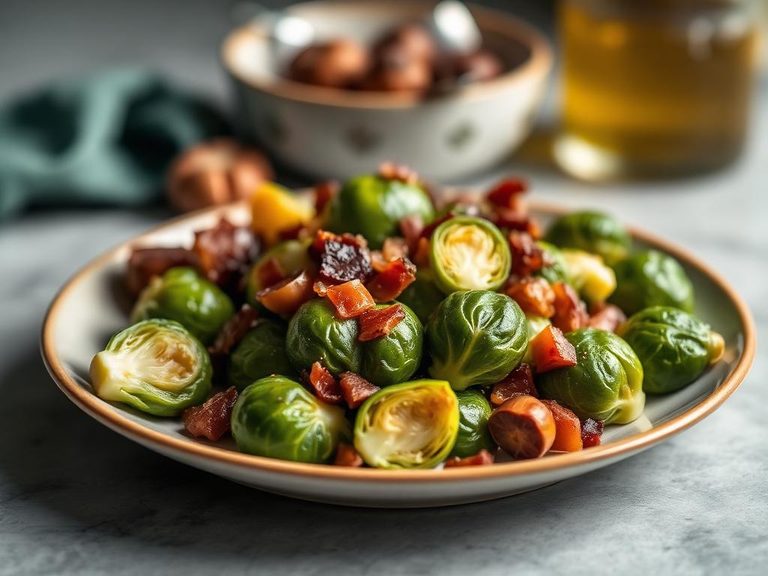
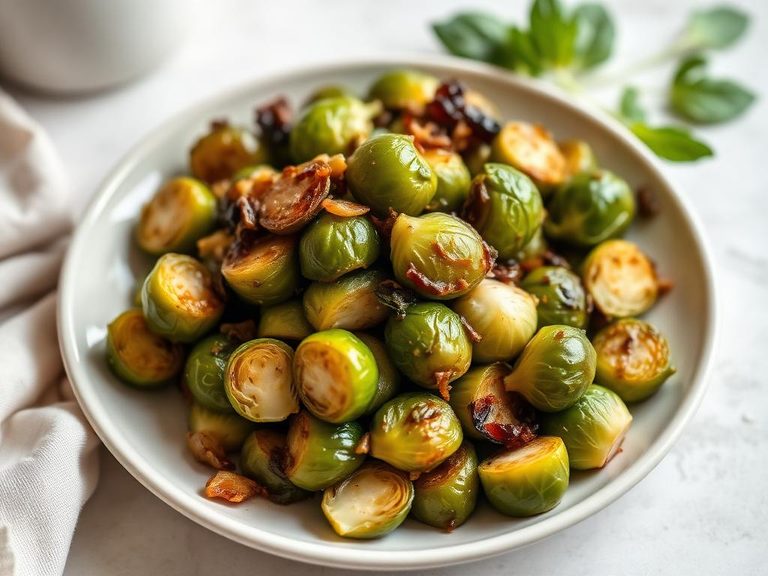
🌍 Where it's eaten
💡 Did you know?
The vegetable is named after Brussels, Belgium, where its cultivation was popularized in the 16th century, though its wild ancestors originated in the Mediterranean region.
Full nutrition (USDA data · scales with serving)
| Water | 85.2 g |
| Energy | 45.0 kcal |
| Protein | 3.5 g |
| Total lipid (fat) | 0.31 g |
| Carbohydrate, by difference | 9.3 g |
| Fiber, total dietary | 3.9 g |
| Total Sugars | 2.3 g |
| Calcium, Ca | 44.0 mg |
| Iron, Fe | 1.4 mg |
| Magnesium, Mg | 24.0 mg |
| Phosphorus, P | 72.0 mg |
| Potassium, K | 404 mg |
| Sodium, Na | 147 mg |
| Zinc, Zn | 0.44 mg |
| Copper, Cu | 0.07 mg |
| Selenium, Se | 1.7 ug |
| Vitamin C, total ascorbic acid | 75.0 mg |
| Thiamin | 0.13 mg |
| Riboflavin | 0.09 mg |
| Niacin | 0.73 mg |
| Vitamin B-6 | 0.20 mg |
| Folate, total | 54.0 ug |
| Folic acid | 0.00 ug |
| Folate, food | 54.0 ug |
| Folate, DFE | 54.0 ug |
| Choline, total | 19.8 mg |
| Vitamin B-12 | 0.00 ug |
| Vitamin B-12, added | 0.00 ug |
| Vitamin A, RAE | 37.0 ug |
| Retinol | 0.00 ug |
| Carotene, beta | 444 ug |
| Carotene, alpha | 6.0 ug |
| Cryptoxanthin, beta | 0.00 ug |
| Lycopene | 0.00 ug |
| Lutein + zeaxanthin | 1569 ug |
| Vitamin E (alpha-tocopherol) | 0.91 mg |
| Vitamin E, added | 0.00 mg |
| Vitamin D (D2 + D3) | 0.00 ug |
| Vitamin K (phylloquinone) | 184 ug |
| Alcohol, ethyl | 0.00 g |
| Caffeine | 0.00 mg |
| Theobromine | 0.00 mg |
Fat & fatty acid profile (per 100g)
| Fatty acids, total saturated | 0.06 g |
| SFA 4:0 | 0.00 g |
| SFA 6:0 | 0.00 g |
| SFA 8:0 | 0.00 g |
| SFA 10:0 | 0.00 g |
| SFA 12:0 | 0.00 g |
| SFA 14:0 | 0.00 g |
| SFA 16:0 | 0.06 g |
| SFA 18:0 | 0.00 g |
| Fatty acids, total monounsaturated | 0.02 g |
| MUFA 16:1 | 0.00 g |
| MUFA 18:1 | 0.02 g |
| MUFA 20:1 | 0.00 g |
| MUFA 22:1 | 0.00 g |
| Fatty acids, total polyunsaturated | 0.16 g |
| PUFA 18:2 | 0.05 g |
| PUFA 18:3 | 0.10 g |
| PUFA 18:4 | 0.00 g |
| PUFA 20:4 | 0.00 g |
| PUFA 20:5 n-3 (EPA) | 0.00 g |
| PUFA 22:5 n-3 (DPA) | 0.00 g |
| PUFA 22:6 n-3 (DHA) | 0.00 g |
| Cholesterol | 0.00 mg |
Amino acid profile (per 100g)
Estimated from Brussels sprouts, cooked, boiled, drained, with salt — USDA does not publish this profile for Brussels sprouts.
| Tryptophan | 0.03 g |
| Threonine | 0.09 g |
| Isoleucine | 0.10 g |
| Leucine | 0.11 g |
| Lysine | 0.12 g |
| Methionine | 0.02 g |
| Cystine | 0.02 g |
| Phenylalanine | 0.07 g |
| Valine | 0.12 g |
| Arginine | 0.15 g |
| Histidine | 0.06 g |
FAQ
How do I prevent Brussels sprouts from tasting bitter?
Avoid overcooking. High-heat methods like roasting or pan-frying for a shorter time promote caramelization, which brings out natural sweetness and reduces bitterness.
Are Brussels sprouts good for low-carb diets?
Yes, they are an excellent low-carb vegetable. With only 9.3 grams of carbs and 3.9 grams of fiber per 100g, they have a net carb count of just 5.4 grams, making them suitable for keto and low-carb lifestyles.
Why do Brussels sprouts sometimes cause gas?
They contain raffinose, a complex sugar that can be difficult to digest, and are high in fiber. Thorough cooking and starting with smaller portions can help minimize digestive discomfort.
Nutrient density (calculated · NRF9.3)
Nutrient Rich Foods index: beneficial nutrients (protein, fiber, vitamins, minerals) minus saturated fat, added sugar & sodium, per 100 kcal.
NRF9.3 index — Fulgoni, Keast & Drewnowski, 2009. Computed from USDA nutrients.
Weight-loss friendliness (composite index)
Energy density 0.45 kcal/g · 31% calories from protein · 3.9 g fiber · 2.3 g sugar per 100 g.
Composite of energy density (Rolls et al., 1999), protein & fiber satiety, minus sugar. A calculated heuristic — ranks satiety-per-calorie, not a clinical measure.
Dietary load (calculated from USDA values)
Potential renal acid load. Positive = acid-forming, negative = alkaline-forming.
Sodium-to-potassium ratio: 0.36 (lower is better — aim for ≤ 1)
Sodium:potassium per WHO potassium guidance. Computed from USDA nutrients.